Starting seeds indoors: what, when and which plants?
Most seeds are sown straight outside, where the plants will grow. But some vegetables are best started indoors in pots first.
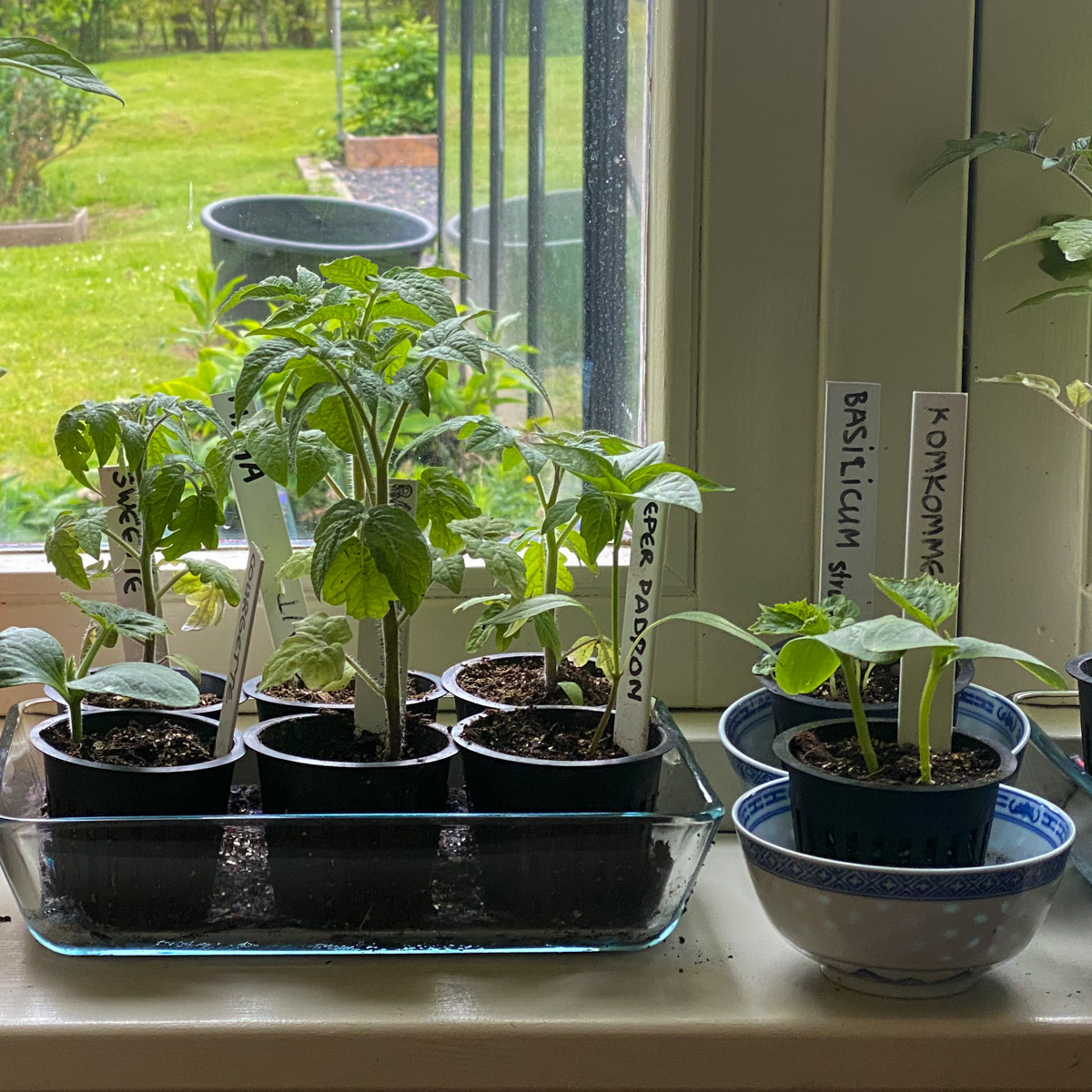
You start these seeds indoors because they germinate faster there and, with the right care, grow into strong young plants.
You can plant them in your raised bed later, once the weather is better or warmer.
You can plant them in your raised bed later, once the weather is better or warmer.
Which instructions do you need?
Already know what you are looking for? Go straight to the right guide:
Starting tomatoes indoors? Begin with starting tomatoes indoors. Once your plants are bigger, read repotting tomato seedlings.
Courgettes, cucumbers or pumpkins? Read how to start courgettes, cucumbers and pumpkins indoors.
Starting other varieties indoors for a short time? See starting seeds briefly before moving them outside.
Have your seedlings emerged? Here is how to keep them healthy on the windowsill.
Almost ready to go outside? Harden them off first, then plant out your summer vegetables.
Starting tomatoes indoors? Begin with starting tomatoes indoors. Once your plants are bigger, read repotting tomato seedlings.
Courgettes, cucumbers or pumpkins? Read how to start courgettes, cucumbers and pumpkins indoors.
Starting other varieties indoors for a short time? See starting seeds briefly before moving them outside.
Have your seedlings emerged? Here is how to keep them healthy on the windowsill.
Almost ready to go outside? Harden them off first, then plant out your summer vegetables.
Does starting seeds indoors take much work?
More than sowing directly outside.
When you sow directly, the seed goes straight into your raised bed in the right place. It germinates there, the seedling emerges and the plant stays in that spot until harvest. That takes very little work.
When you start seeds indoors, you sow them in small pots. The seedlings emerge there.
Some varieties can move outside quite soon. That is fairly easy, and I will explain it later.
Other varieties need to stay indoors for a while, either in a greenhouse or on a windowsill. You have to give those plants just the right amount of light, nutrients and warmth until they are large and strong enough to plant in your raised bed.
That takes more work. To raise outdoor plants successfully indoors, the conditions have to be right, and that is easier said than done on a windowsill.
When you sow directly, the seed goes straight into your raised bed in the right place. It germinates there, the seedling emerges and the plant stays in that spot until harvest. That takes very little work.
When you start seeds indoors, you sow them in small pots. The seedlings emerge there.
Some varieties can move outside quite soon. That is fairly easy, and I will explain it later.
Other varieties need to stay indoors for a while, either in a greenhouse or on a windowsill. You have to give those plants just the right amount of light, nutrients and warmth until they are large and strong enough to plant in your raised bed.
That takes more work. To raise outdoor plants successfully indoors, the conditions have to be right, and that is easier said than done on a windowsill.
Isn't it just a seed in a pot?
Yes, but there is a little more to it.
The first stage, germination, is not too difficult. A seed needs warmth and moisture.
If it is too dry or too cold, nothing happens. That is why seeds do not germinate outdoors in winter. But too wet and too warm is not good either: newly germinated seeds can quickly develop mould.
The first stage, germination, is not too difficult. A seed needs warmth and moisture.
If it is too dry or too cold, nothing happens. That is why seeds do not germinate outdoors in winter. But too wet and too warm is not good either: newly germinated seeds can quickly develop mould.
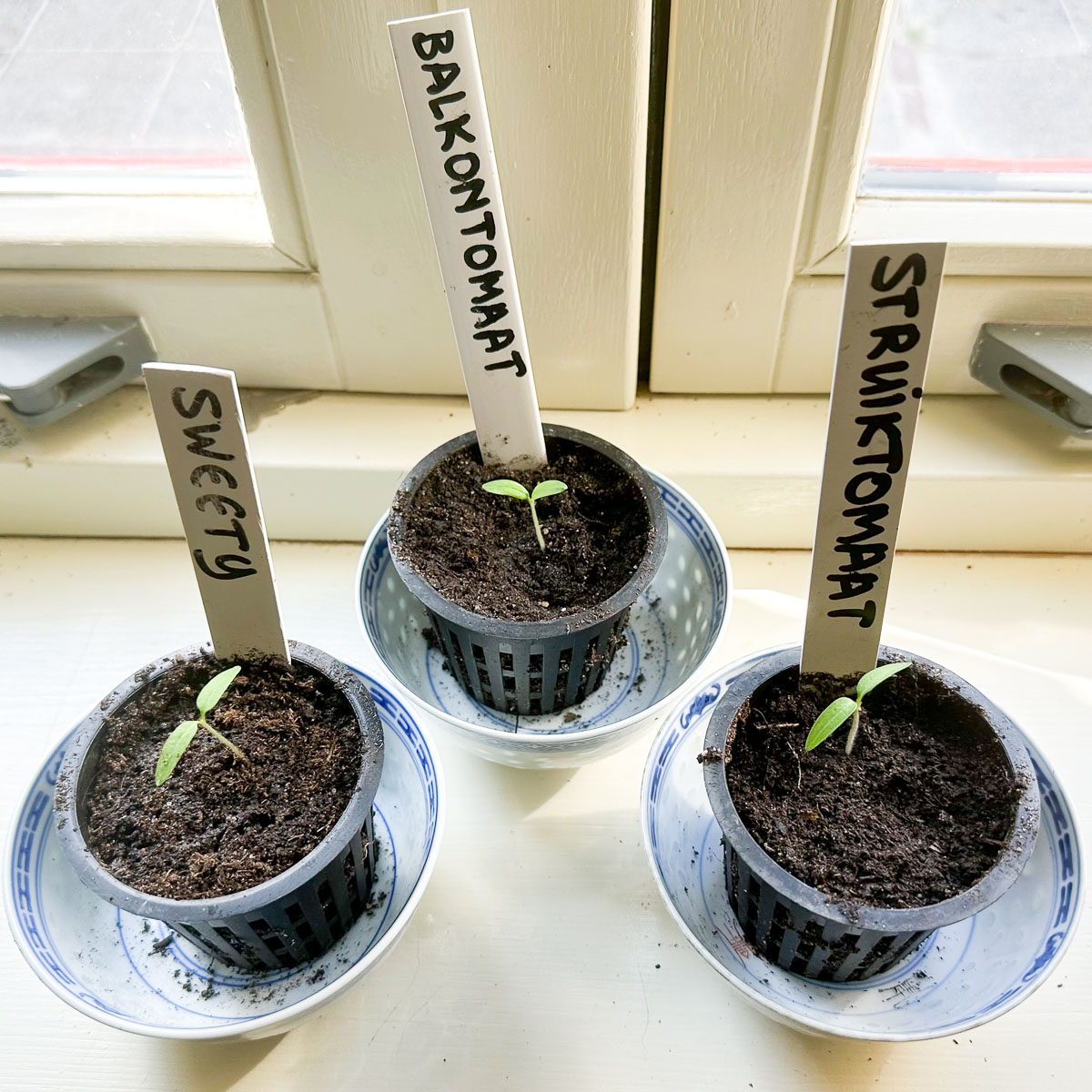
Young plants also need three things:
1. Enough daylight
If the light comes from above, there is no problem. Most of us have to make do with a bright windowsill. To stop the plants leaning towards the window, turn the pots a quarter turn every day.
If you use the app, it will remind you each day.
1. Enough daylight
If the light comes from above, there is no problem. Most of us have to make do with a bright windowsill. To stop the plants leaning towards the window, turn the pots a quarter turn every day.
If you use the app, it will remind you each day.
2. The right temperature
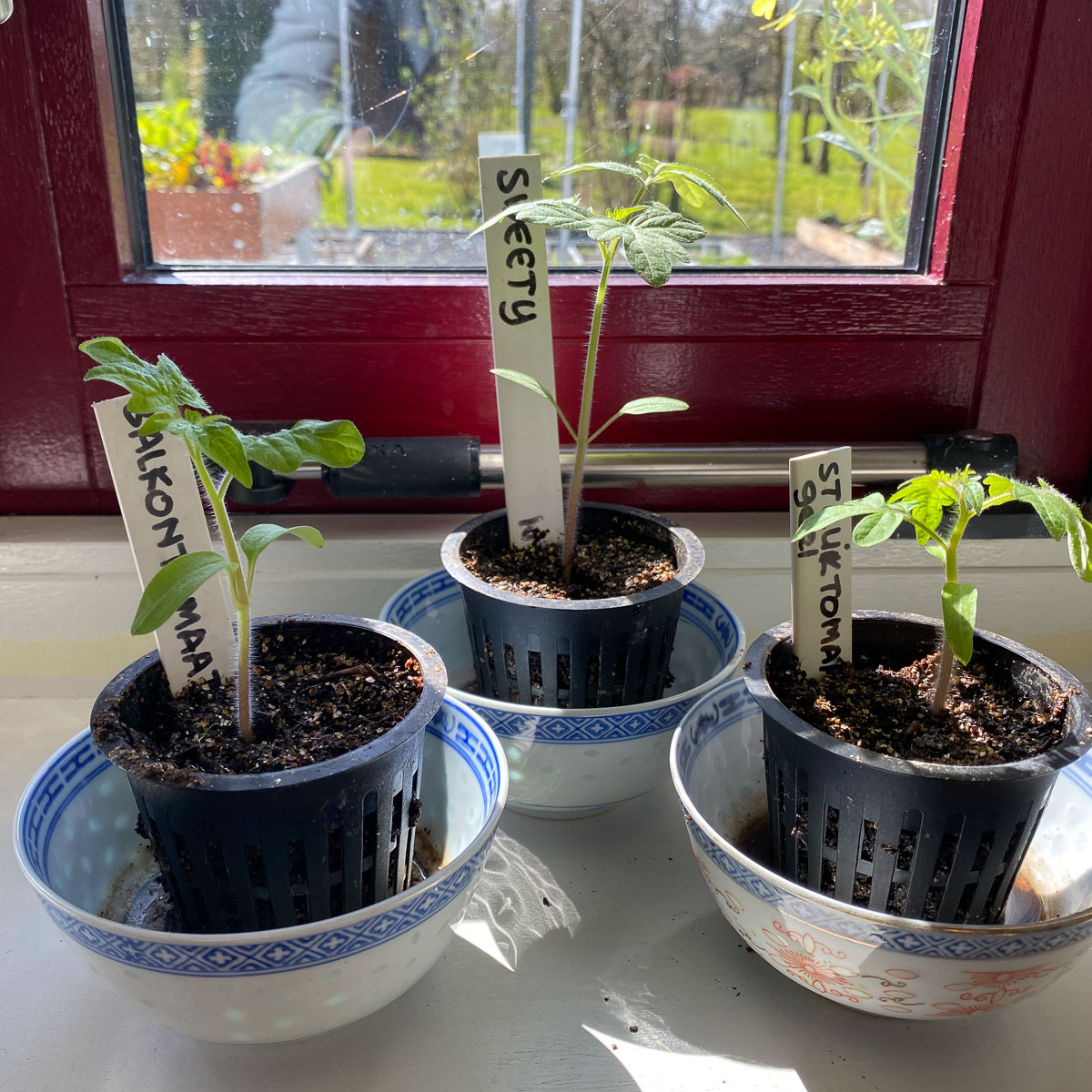
A sunny windowsill can quickly become too warm. The seedlings then grow too fast and develop long, weak stems, like these:
A sunny windowsill can quickly become too warm. The seedlings then grow too fast and develop long, weak stems, like these:
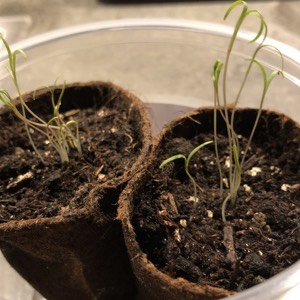
A temperature of around 15°C is much better. Experienced gardeners therefore move seedlings to a bright, unheated bedroom, utility room window or greenhouse as soon as they emerge.
3. Enough nutrients and moisture, but not too much
A seedling needs very few nutrients, and ordinary potting compost can easily contain too much. Think of it like a baby: you would not serve one a three-course meal. A special seed-starting mix, such as MM seed-starting mix, is better because it contains fewer nutrients.
As the plant grows, and if it still has to stay indoors for several weeks, it will need more nutrients. Tomatoes, for example, can spend two months on the windowsill. Halfway through, move them to a larger pot filled with ordinary MM-Mix.
3. Enough nutrients and moisture, but not too much
A seedling needs very few nutrients, and ordinary potting compost can easily contain too much. Think of it like a baby: you would not serve one a three-course meal. A special seed-starting mix, such as MM seed-starting mix, is better because it contains fewer nutrients.
As the plant grows, and if it still has to stay indoors for several weeks, it will need more nutrients. Tomatoes, for example, can spend two months on the windowsill. Halfway through, move them to a larger pot filled with ordinary MM-Mix.
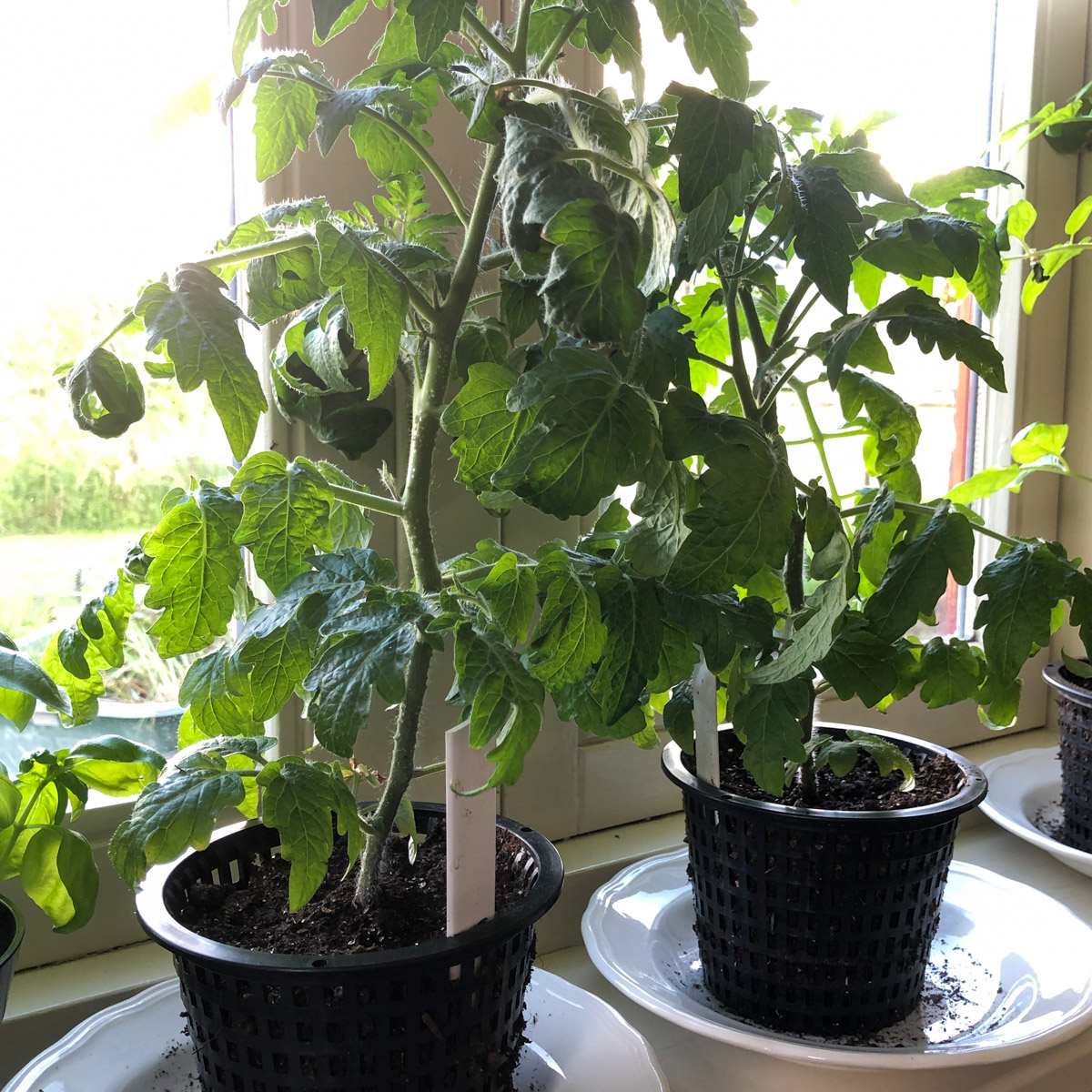
The same applies to water: without moisture, a plant dies. But too much is no good either. If the roots stay wet all the time, they can easily rot.
What else do you need to do?
Keep caring for your plants until they are large enough and it is warm enough outside. For vegetables that cannot tolerate the cold, that is mid-May at the earliest.
First let them get used to outdoor conditions for a few days. This is called hardening off.
First let them get used to outdoor conditions for a few days. This is called hardening off.
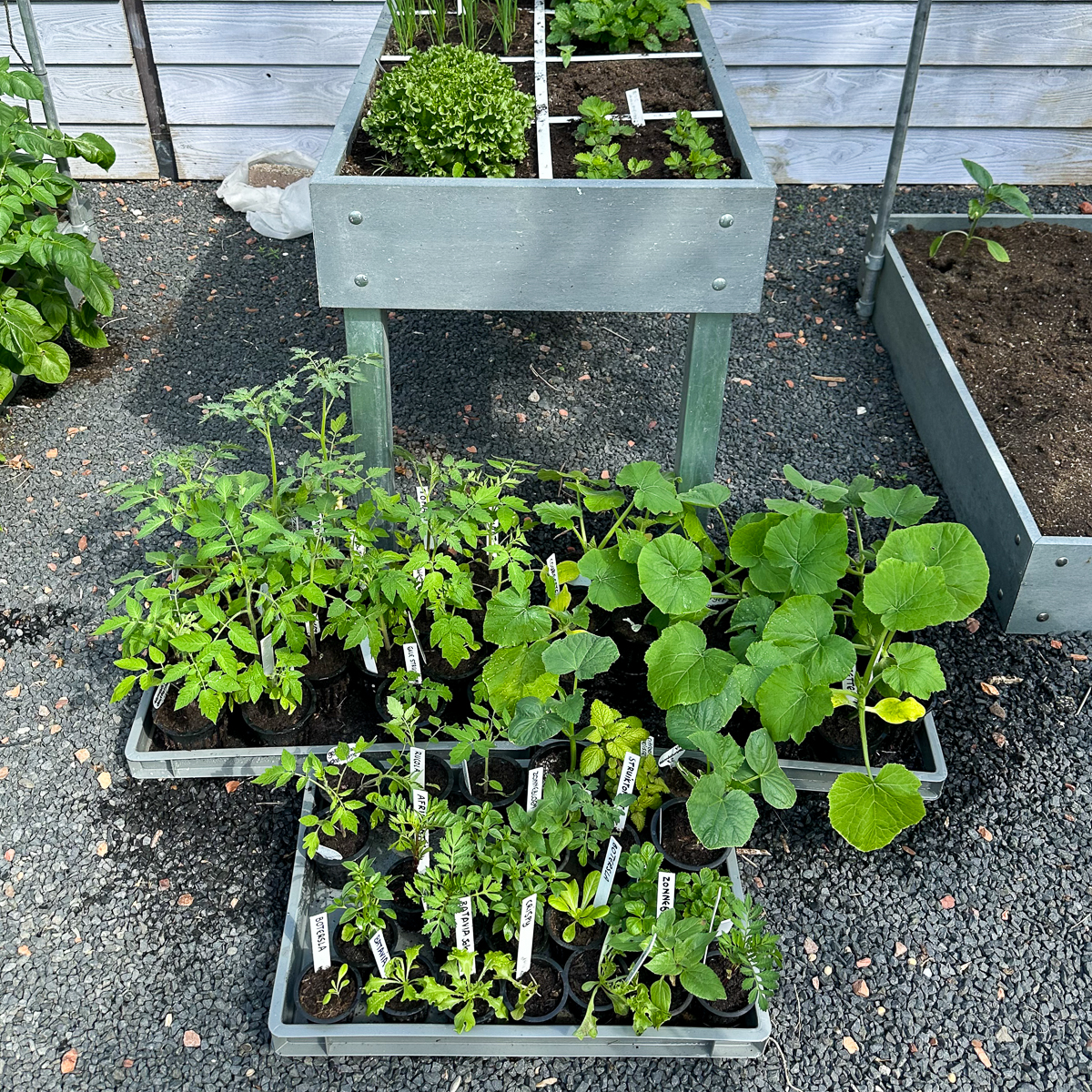
After about five days, plant them in the chosen spot in your raised bed.
Transplanting always disturbs the roots a little, even if you are very careful. Most plants recover within a week and then continue growing.
Transplanting always disturbs the roots a little, even if you are very careful. Most plants recover within a week and then continue growing.
So you are not a fan of starting seeds indoors?
I am, but only when it is worthwhile. I certainly do not do it for varieties that can just as easily be sown directly in the raised bed.
For some plants, such as summer vegetables, you cannot really avoid it. For others it is not essential, but it is still a clever thing to do.
Let me take you through them:
For some plants, such as summer vegetables, you cannot really avoid it. For others it is not essential, but it is still a clever thing to do.
Let me take you through them:
Plants that stay indoors for quite a while
Tomatoes
I start my tomatoes indoors around the end of March.
That is necessary because tomatoes can easily take four months to grow from a seed into a plant with ripe fruit. Throughout that time, the plant needs plenty of warmth and sunlight.
If you wait until it is warm enough outside, around the end of May, you are too late. The days already begin to shorten in September and temperatures soon fall, so the harvest will be disappointing.
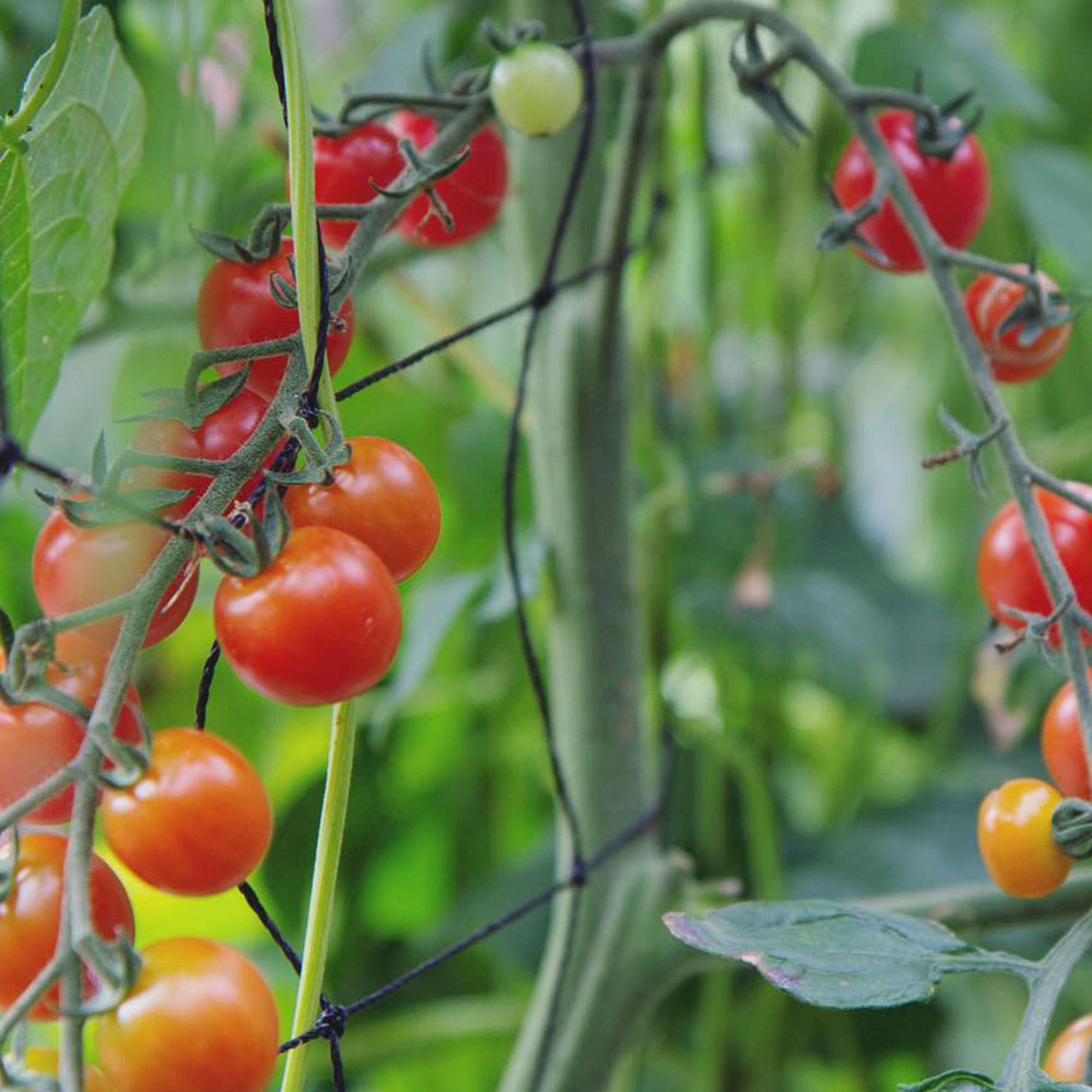
Start them indoors around the end of March and you can put a good-sized tomato plant in your raised bed by late May. You can then harvest masses of tomatoes from late July until mid-October.
That is necessary because tomatoes can easily take four months to grow from a seed into a plant with ripe fruit. Throughout that time, the plant needs plenty of warmth and sunlight.
If you wait until it is warm enough outside, around the end of May, you are too late. The days already begin to shorten in September and temperatures soon fall, so the harvest will be disappointing.
Start them indoors around the end of March and you can put a good-sized tomato plant in your raised bed by late May. You can then harvest masses of tomatoes from late July until mid-October.
Courgettes, cucumbers and pumpkins
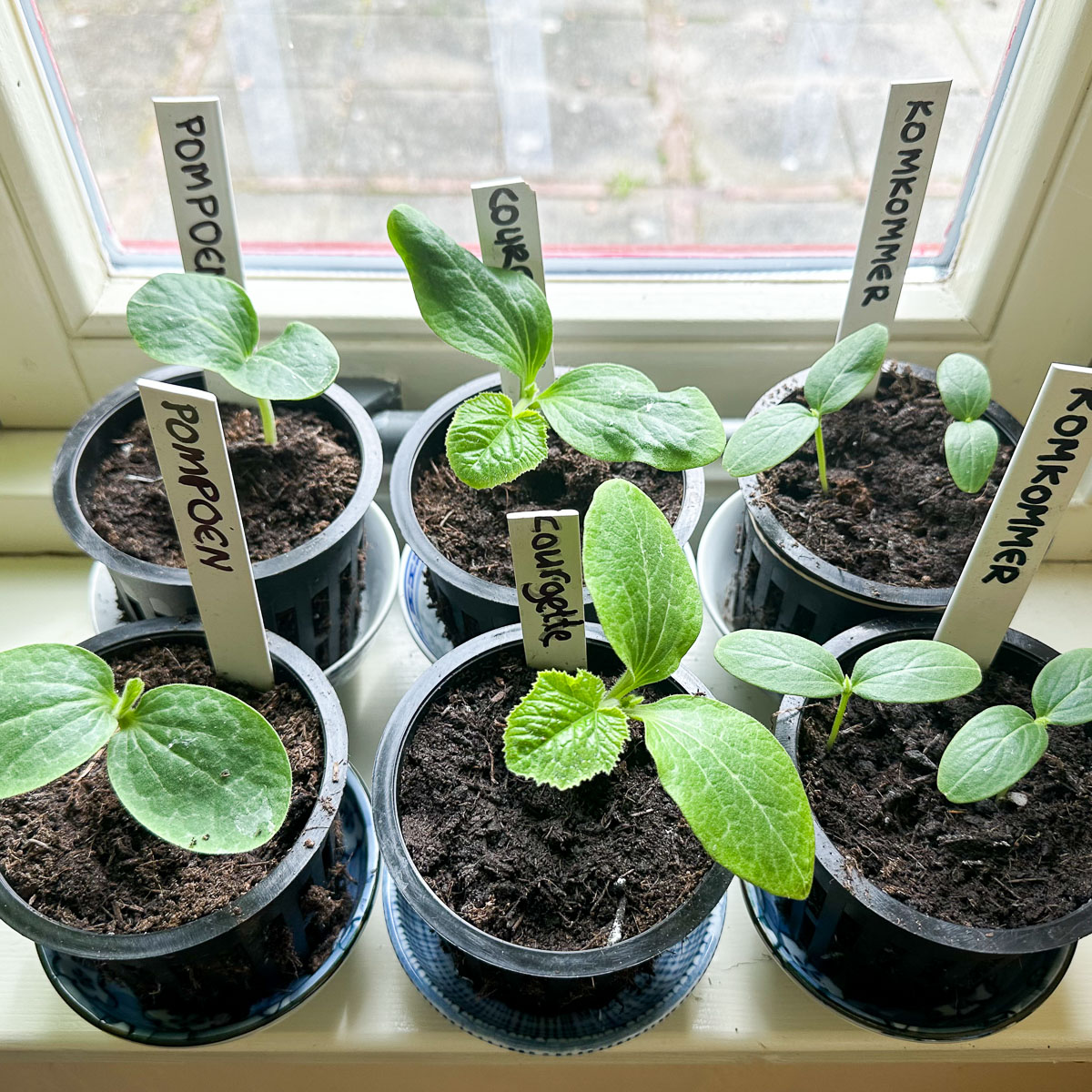
I start cucumbers, courgettes and pumpkins indoors between late April and mid-May. Their seeds also need plenty of warmth to germinate, so this has to be done indoors.
Once they emerge, the seedlings grow quickly. Sow them in large Airpots and move them to your raised bed in late May.
Starting them indoors also stops birds picking out the seeds and slugs eating the tiny seedlings.
Once they emerge, the seedlings grow quickly. Sow them in large Airpots and move them to your raised bed in late May.
Starting them indoors also stops birds picking out the seeds and slugs eating the tiny seedlings.
Basil
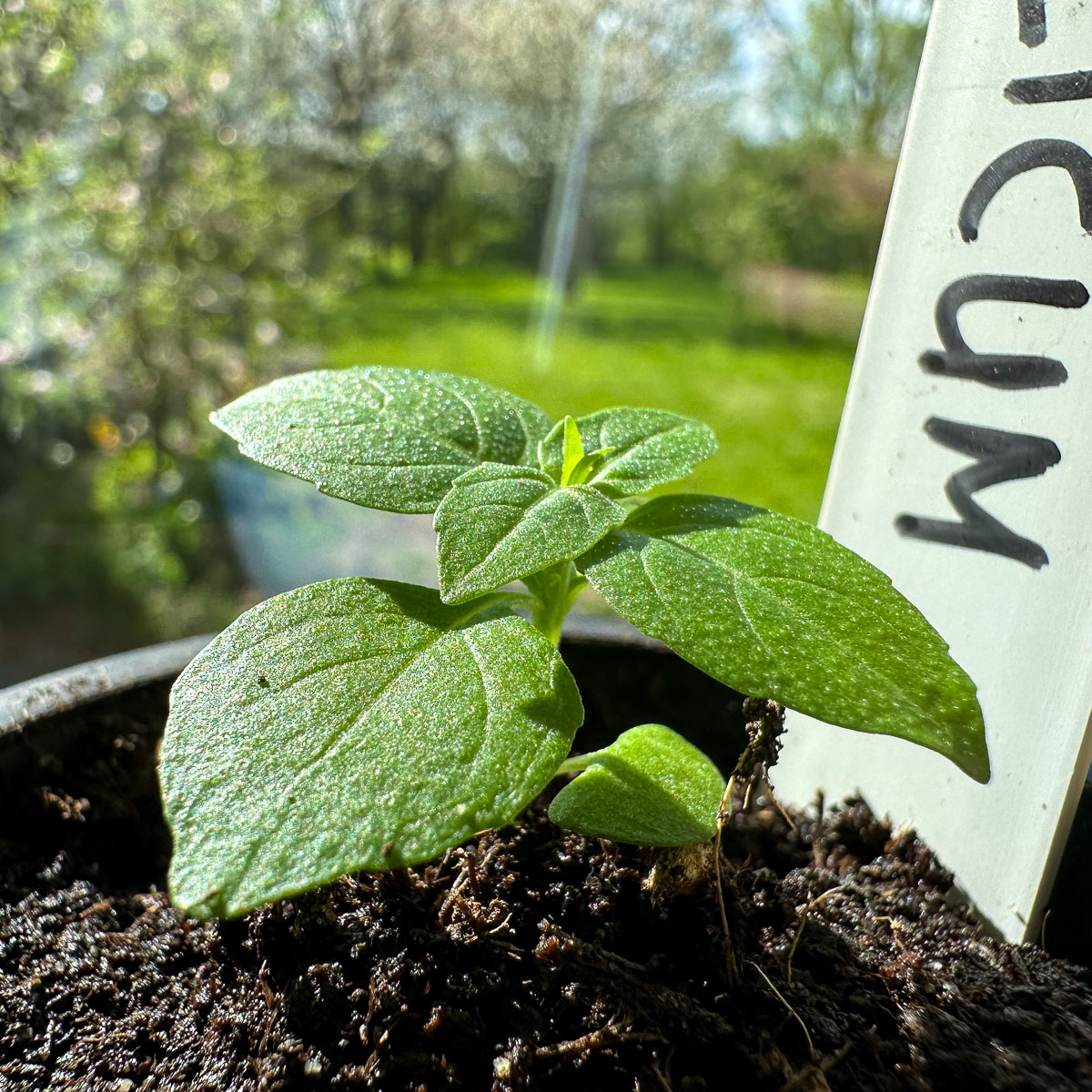
Basil also loves warmth and does surprisingly well on a windowsill, better than almost any other variety.
You can even grow basil as a houseplant. It will not become as large and sturdy as it would outdoors, but you can still enjoy fresh basil in early spring or late autumn.
I also start basil indoors for summer growing, any time from March through July. If there is one thing slugs truly love, it is a young basil plant.
I therefore raise basil on the windowsill and only move it into the garden once it has grown into a reasonably large plant.
You can even grow basil as a houseplant. It will not become as large and sturdy as it would outdoors, but you can still enjoy fresh basil in early spring or late autumn.
I also start basil indoors for summer growing, any time from March through July. If there is one thing slugs truly love, it is a young basil plant.
I therefore raise basil on the windowsill and only move it into the garden once it has grown into a reasonably large plant.
Start indoors, then move outside soon
Some vegetables are started indoors to make sure they germinate well, or because the young plants need extra protection from slugs and other pests.
They need much less warmth and can soon be moved outside or into an unheated greenhouse. Read the full guide here, or continue below for the essentials.
They need much less warmth and can soon be moved outside or into an unheated greenhouse. Read the full guide here, or continue below for the essentials.
More expensive seeds
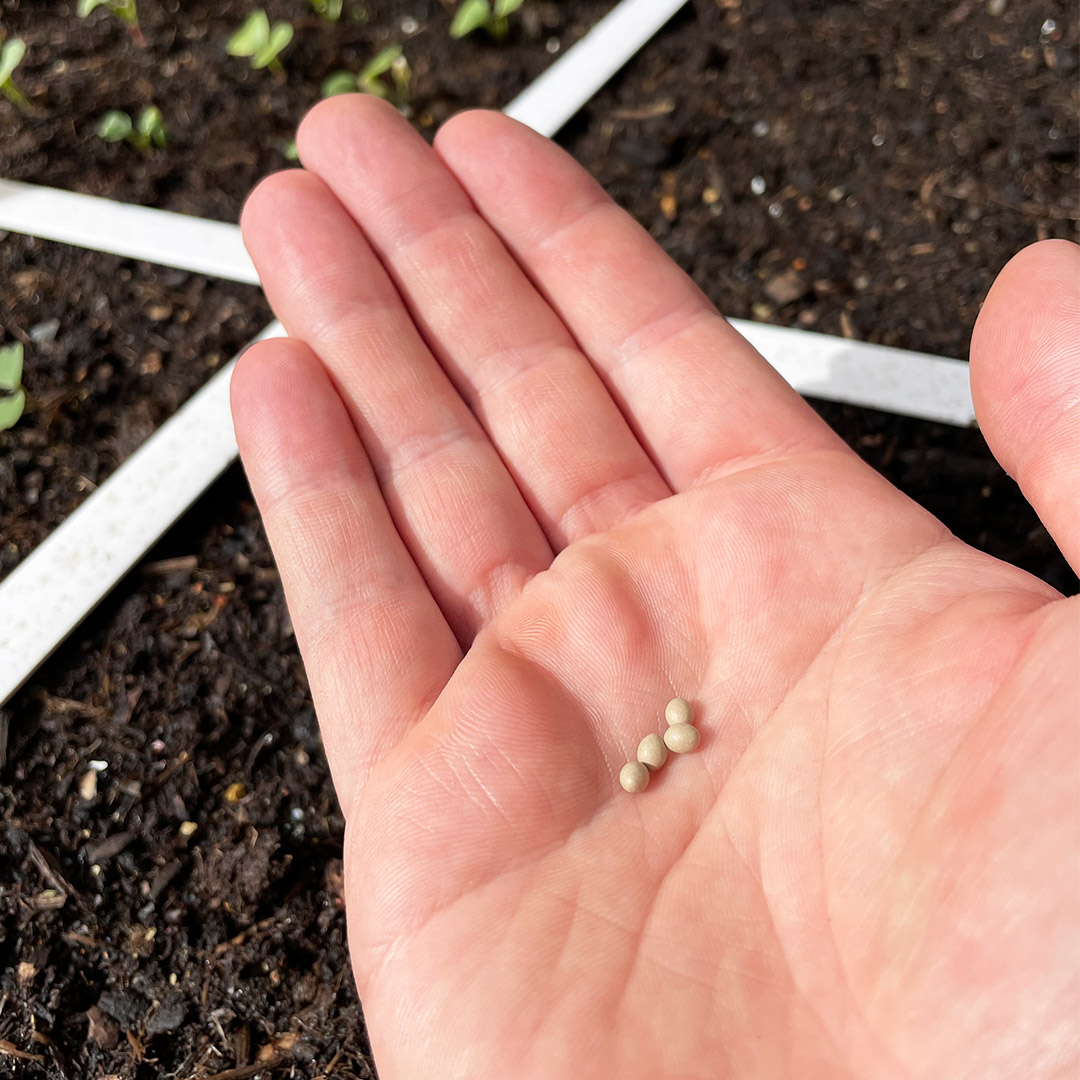
We supply several varieties as clay pellets, including Crystal lettuce and four Salanova lettuces: Crispy, Green Batavia, Red Butterleaf and Oakleaf.
The pellets make sowing much easier, and the primed seeds germinate faster and more reliably than untreated seeds.
These seeds are relatively expensive, but the plants are exceptional. Each head grows large enough to fill a whole square and produces an enormous amount of leaf.
The pellets make sowing much easier, and the primed seeds germinate faster and more reliably than untreated seeds.
These seeds are relatively expensive, but the plants are exceptional. Each head grows large enough to fill a whole square and produces an enormous amount of leaf.
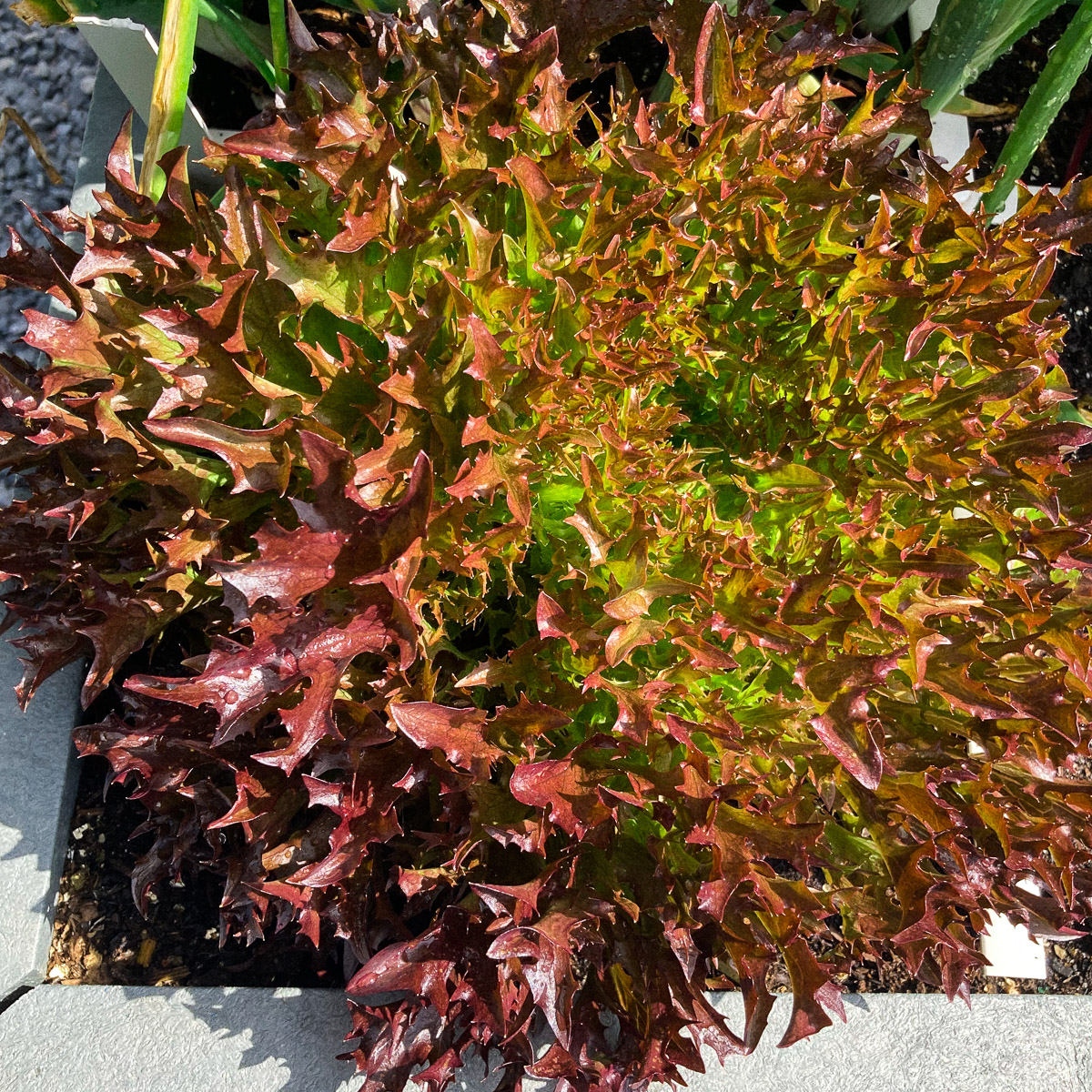
It takes around six to seven weeks before you can begin harvesting one of these lettuces. During the first few weeks, however, the plant is still small and vulnerable to bad weather and pests such as slugs.
These seeds are too valuable to take that risk, so we start them indoors in a bright, fairly cool place. As soon as a seedling is growing well, move its pot outside, preferably into an empty square or an MM-mini.
There is easily room for nine pots:
These seeds are too valuable to take that risk, so we start them indoors in a bright, fairly cool place. As soon as a seedling is growing well, move its pot outside, preferably into an empty square or an MM-mini.
There is easily room for nine pots:
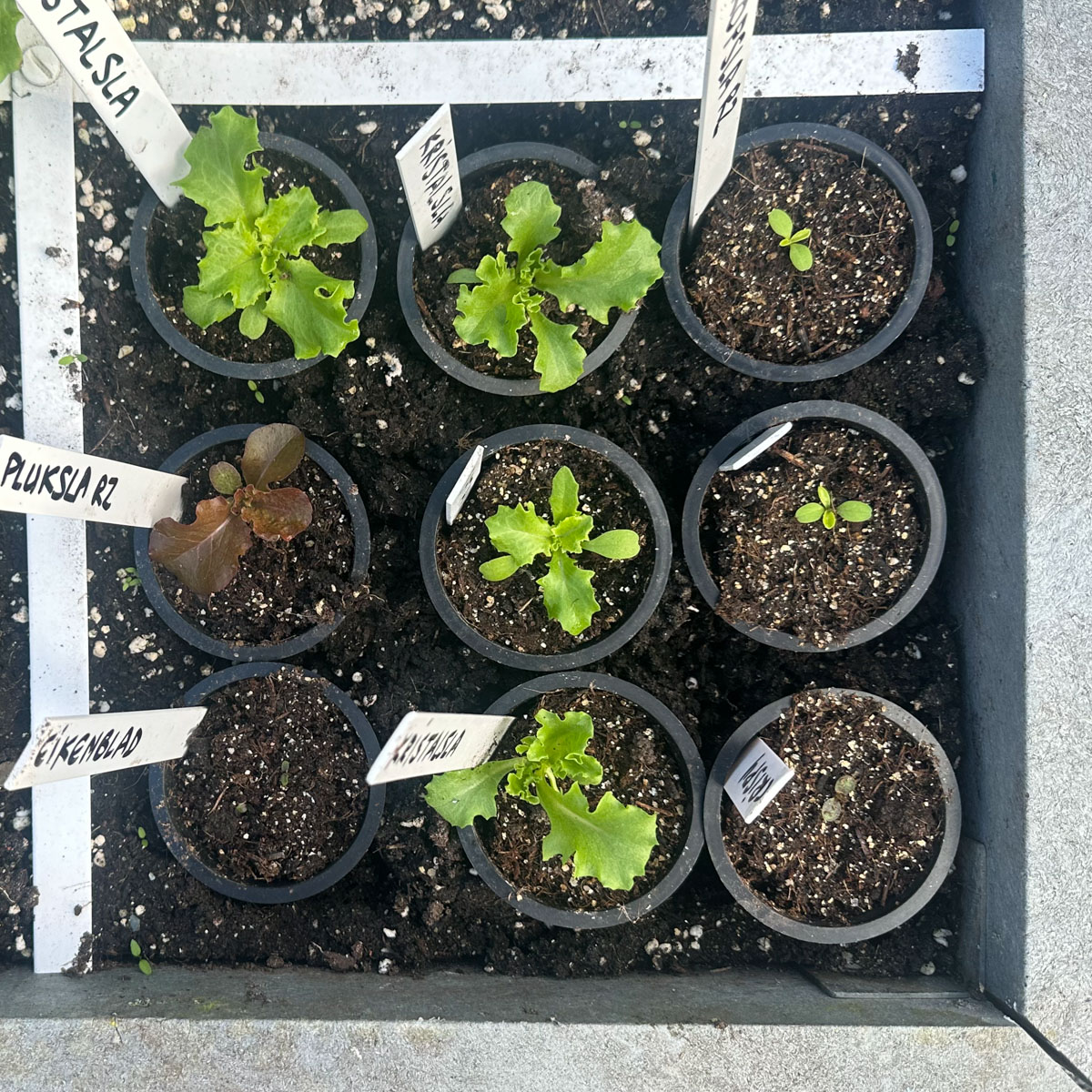
Handy, isn't it? It is much easier to protect one square from rough weather and pests than nine separate squares.
This also helps you make the best use of your raised bed. The young plants do not need their own squares until about four weeks later. In the meantime, you can use those squares for radishes or other quick crops.
This also helps you make the best use of your raised bed. The young plants do not need their own squares until about four weeks later. In the meantime, you can use those squares for radishes or other quick crops.
Een aantal van onze zaden leveren we in kleipillen. Zoals de Kristalsla en de 4 Salanova's (de Crispy, Batavia, Rode botersla en Eikenblad) Dat is niet alleen super handig bij het zaaien, maar de zaden zelf kiemen zo ook veel sneller en beter dan kale zaden.
Dat komt omdat ze eerst afgespoeld worden en daarna alvast een heel klein beetje voorgekiemd. Dat noemen ze ‘primen’. Maar omdat dat de zaden wel wat kwetsbaar maakt, krijgen ze een jasje van klei.
Let op: voorgekiemde zaden blijven minder lang goed dan niet-voorgekiemde zaden. De houdbaarheid van deze pillen is gegarandeerd tot 9 maanden. Je moet ze dus vrij snel zaaien. Maar als je de pillen vochtvrij en koel bewaart in de koelkast, kun je de kiemkracht wel wat rekken: tot zo’n anderhalf jaar.
Om zo veel en zo snel mogelijk te kunnen oogsten van deze zaden, raden we je daarom sterk aan om ze eerst voor te zaaien en pas als klein plantje buiten in je bak uit te planten.
Let op: voorgekiemde zaden blijven minder lang goed dan niet-voorgekiemde zaden. De houdbaarheid van deze pillen is gegarandeerd tot 9 maanden. Je moet ze dus vrij snel zaaien. Maar als je de pillen vochtvrij en koel bewaart in de koelkast, kun je de kiemkracht wel wat rekken: tot zo’n anderhalf jaar.
Om zo veel en zo snel mogelijk te kunnen oogsten van deze zaden, raden we je daarom sterk aan om ze eerst voor te zaaien en pas als klein plantje buiten in je bak uit te planten.
Liquorice mint, Chinese chives, sunflower and African marigold
I use the same approach for Liquorice mint, Chinese chives, Sunflower and African marigold.
The first two can be difficult to germinate and grow very slowly at first. The latter two are started indoors mainly because the small plants are quite vulnerable.
The first two can be difficult to germinate and grow very slowly at first. The latter two are started indoors mainly because the small plants are quite vulnerable.
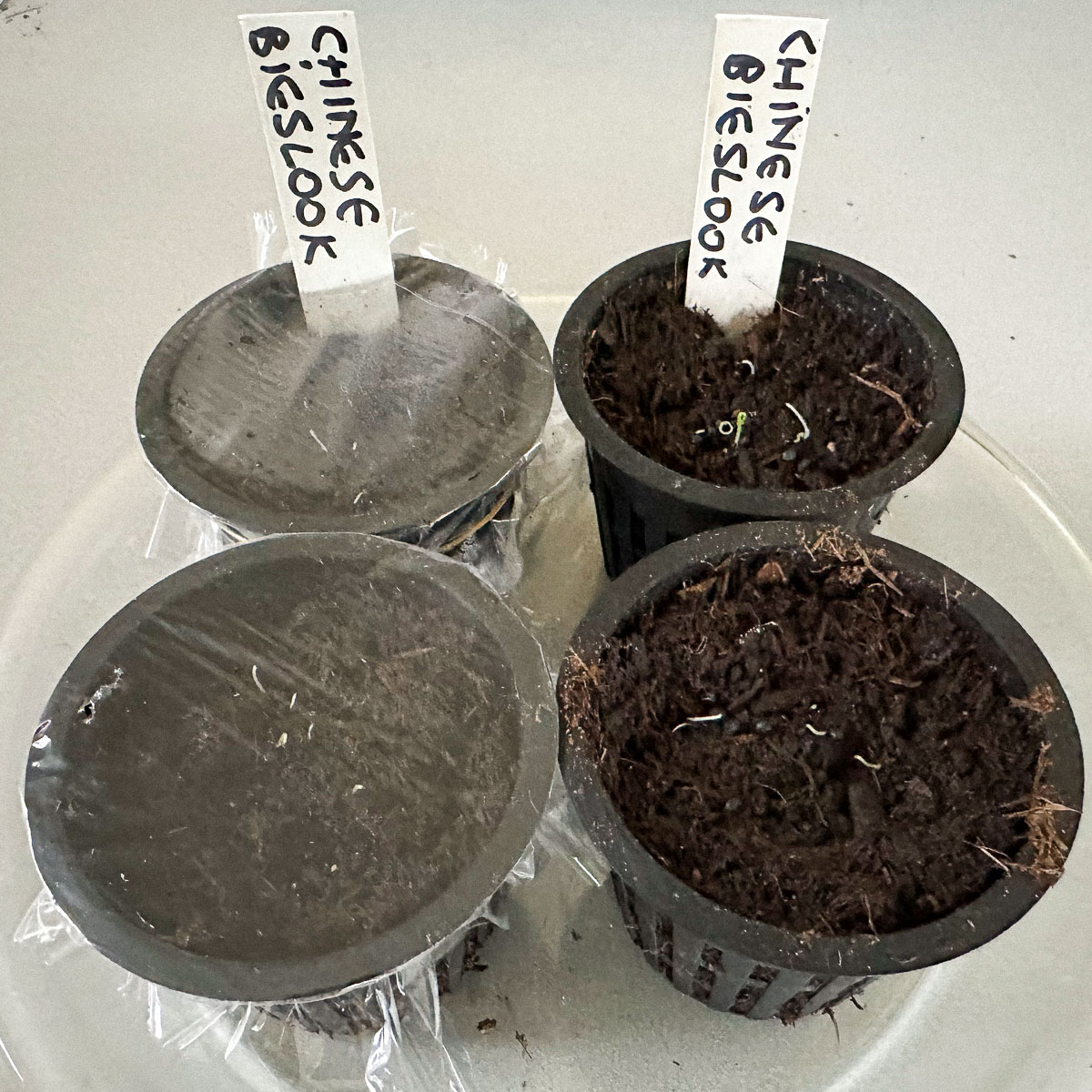
These plants do not cope well with warmth either. As soon as the seedlings have emerged properly, I move them outside, preferably into a protected square like this one.
An unheated greenhouse works too.
An unheated greenhouse works too.
African marigolds
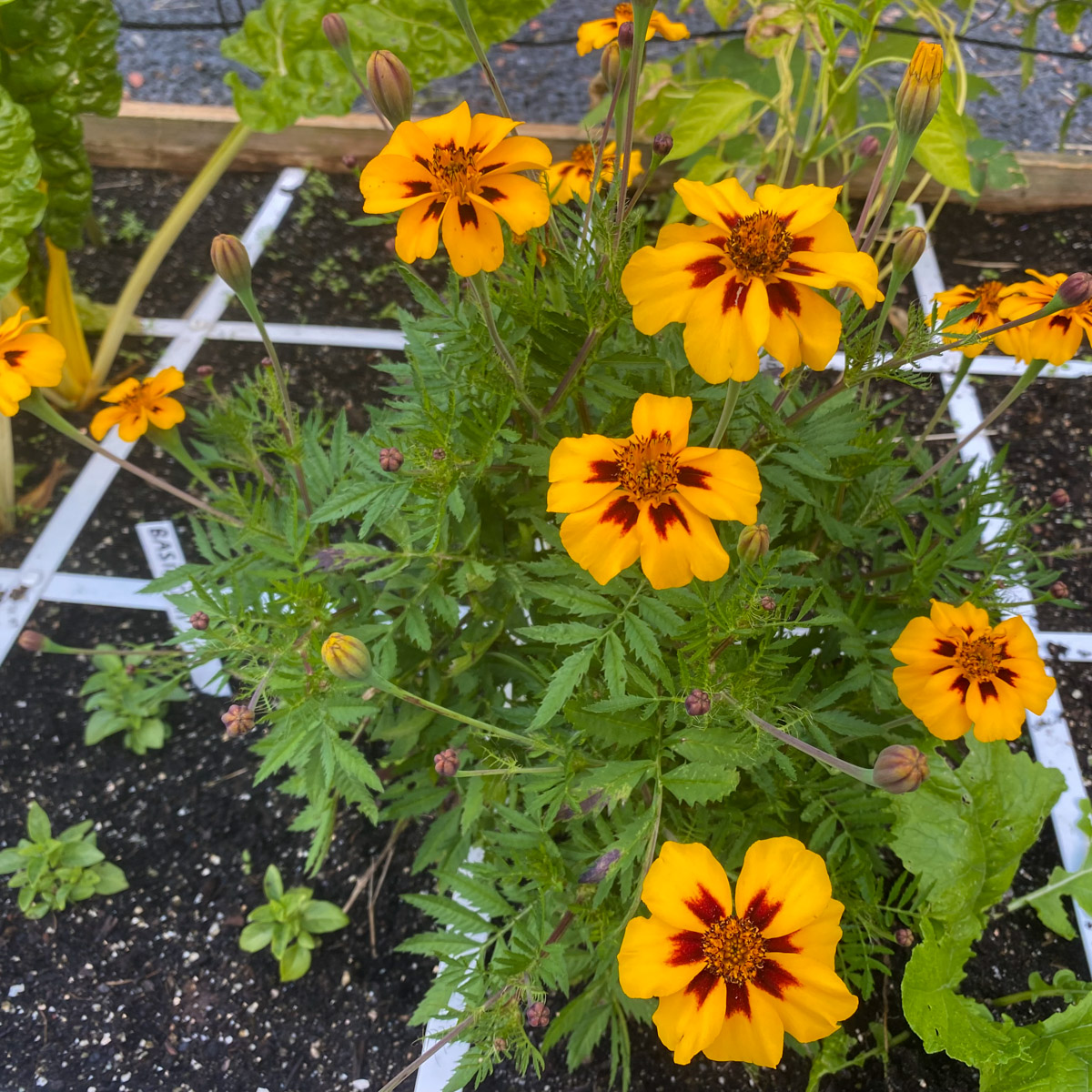
African marigolds make excellent neighbours for other plants: they deter harmful pests, including nematodes in the mix. Bees and bumblebees, on the other hand, love this variety's single flowers.
The small plants are sensitive to cold and can quickly be eaten by slugs. Start them indoors in April and wait until after mid-May before planting them outside.
The small plants are sensitive to cold and can quickly be eaten by slugs. Start them indoors in April and wait until after mid-May before planting them outside.
Starting seeds indoors: the short version
- Start summer vegetables such as tomatoes indoors to get a worthwhile harvest.
- Provide the right conditions: plenty of light, but not too much warmth.
- Raise seedlings in a low-nutrient growing medium such as MM seed-starting mix.
- Let plants raised indoors get used to outdoor conditions before planting them out.
- Seedlings from more expensive seeds and difficult germinators can move outside as soon as they have emerged, or into an unheated greenhouse in very cold or bad weather.
Good luck!

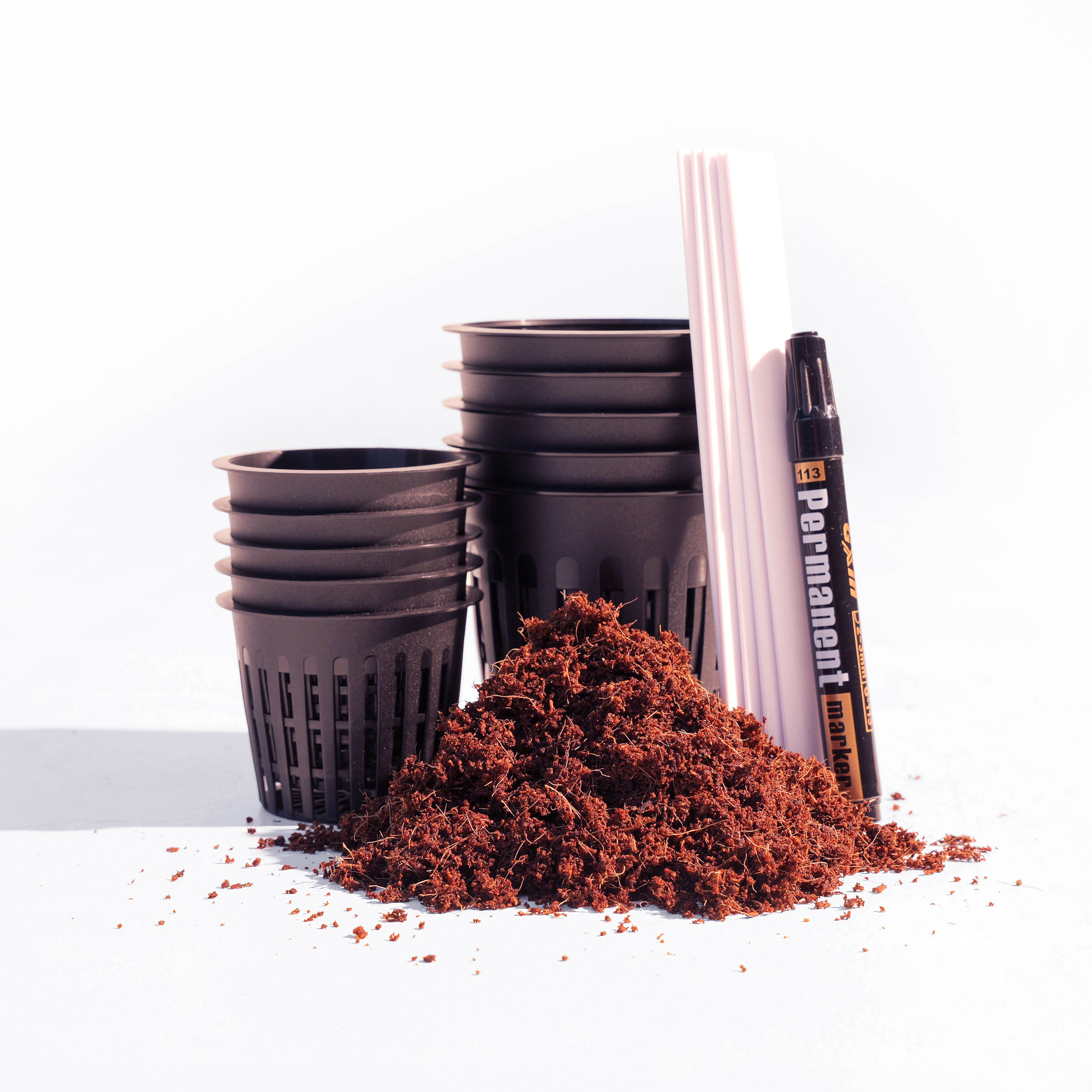
PS: Want to start seeds with our MM seed-starting mix? One bag fills plenty of small Airpots.
You will also find a good-value seed-starting kit in the shop:
You will also find a good-value seed-starting kit in the shop: