
The Makkelijke Moestuin sowing system
In a Makkelijke Moestuin, you sow vegetables in squares instead of rows, placing them in the right position with the right spacing from the start. You also grow as many different vegetables as possible in one raised bed, naturally practising crop rotation.
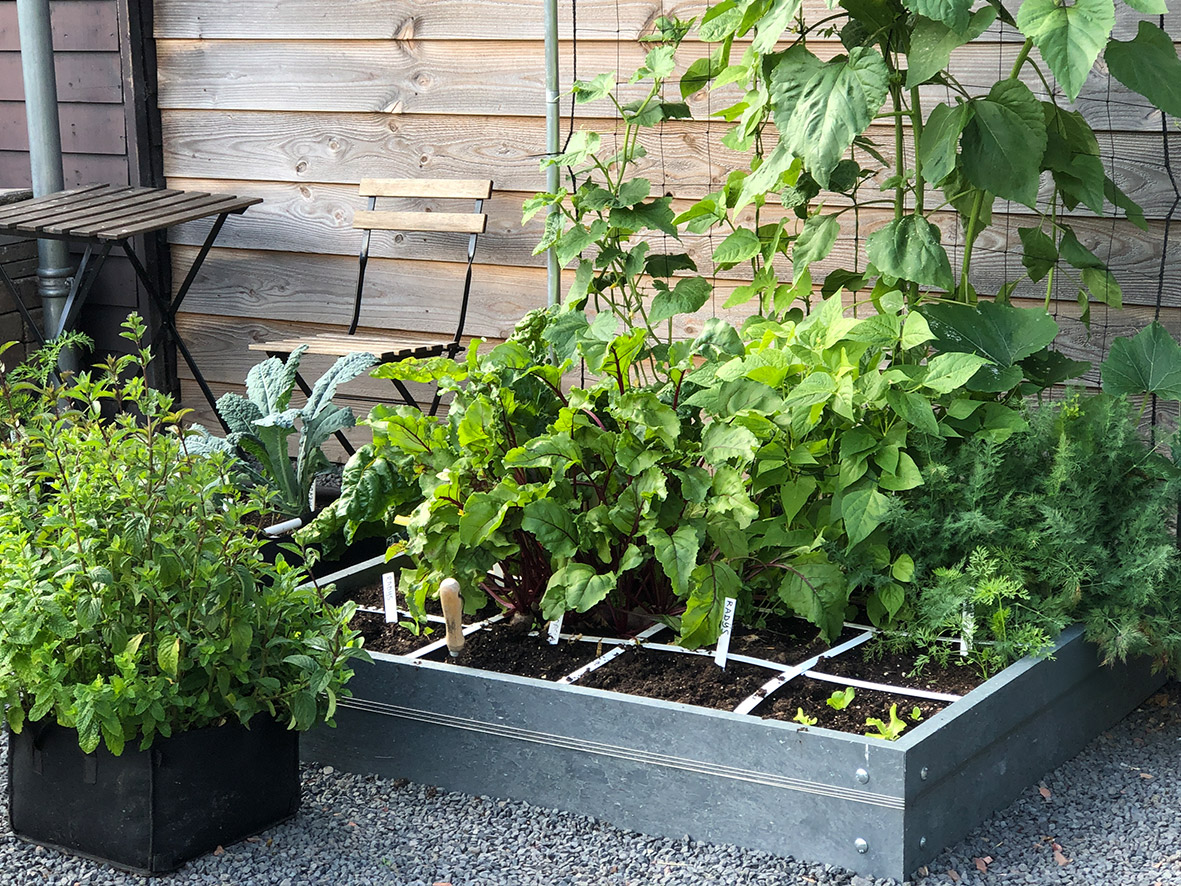
Why does the Makkelijke Moestuin sowing system produce so much?
Our largest raised bed, with 16 squares, measures 120 x 120 cm. It takes up surprisingly little space, yet produces an enormous harvest because you follow a system rather than sowing at random.
You choose productive vegetables and herbs, sow at the right time of year, consider plant height, grow a different vegetable in each square and give every plant exactly enough room.
Does that sound difficult? Not at all. You will soon get the hang of it. And if you use our MM app, you do not even need to think about it because the app works it out for you:
You choose productive vegetables and herbs, sow at the right time of year, consider plant height, grow a different vegetable in each square and give every plant exactly enough room.
Does that sound difficult? Not at all. You will soon get the hang of it. And if you use our MM app, you do not even need to think about it because the app works it out for you:
It is still useful to understand why we do things this way, so let us go through every part of the system.
1. Vegetables that produce a large harvest
You can grow all kinds of vegetables and herbs in a raised bed. But if you want a really large harvest, choose varieties that grow quickly and easily, take up as little room as possible and keep producing for a long time. And of course, they should taste much better than supermarket vegetables.
Many of our vegetables look ordinary but are actually quite special.
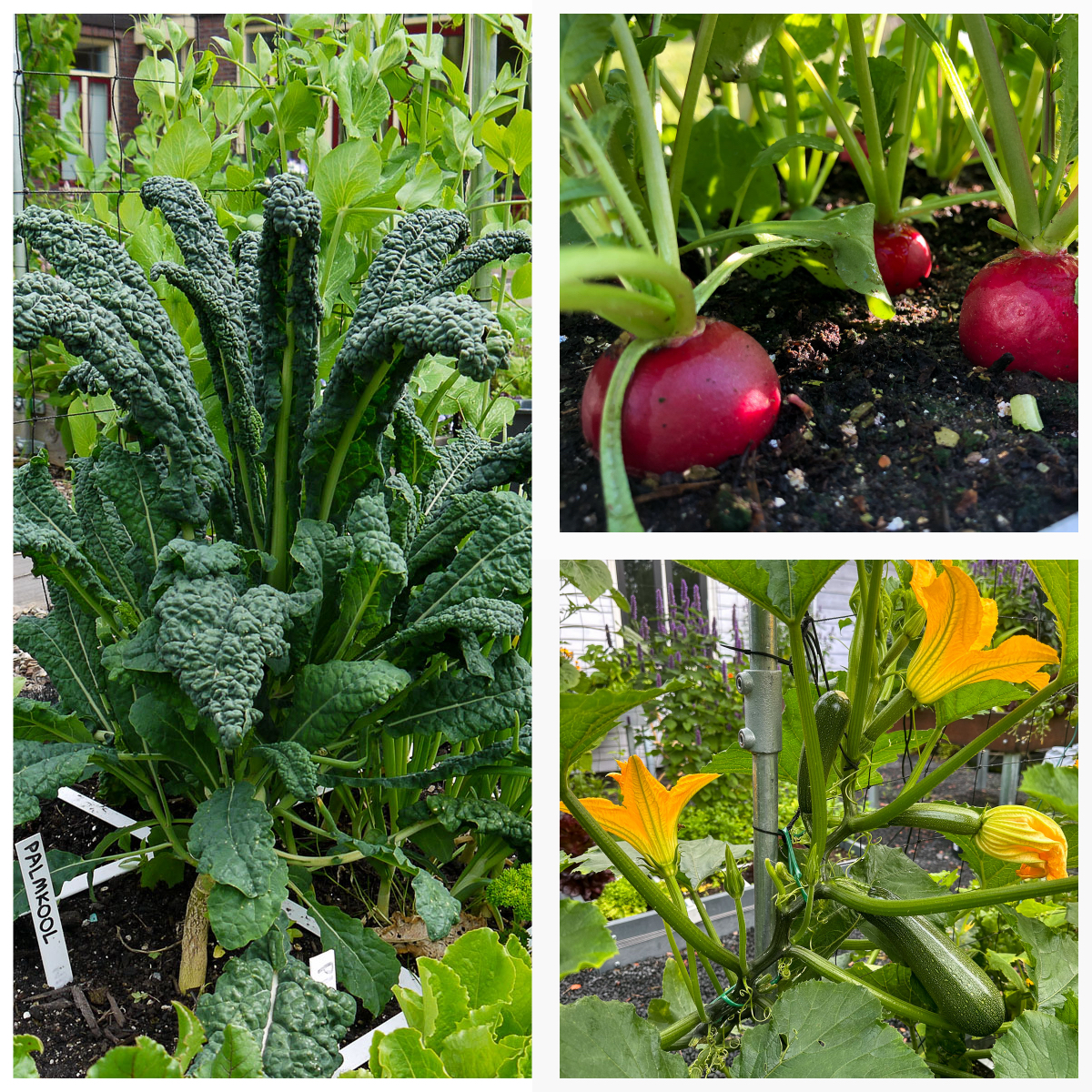
Our courgette grows upwards on a trellis, our radishes become enormous, and our dino kale and cut-and-come-again kale use just one 30 x 30 cm square. Most brassicas would soon need a full square metre.
Many of our vegetables look ordinary but are actually quite special.
Our courgette grows upwards on a trellis, our radishes become enormous, and our dino kale and cut-and-come-again kale use just one 30 x 30 cm square. Most brassicas would soon need a full square metre.
The same applies to lettuce. Our loose-leaf lettuces fill the whole square, but you can harvest an enormous amount of leaf. Because the plants keep growing from the centre, they continue producing for a long time.
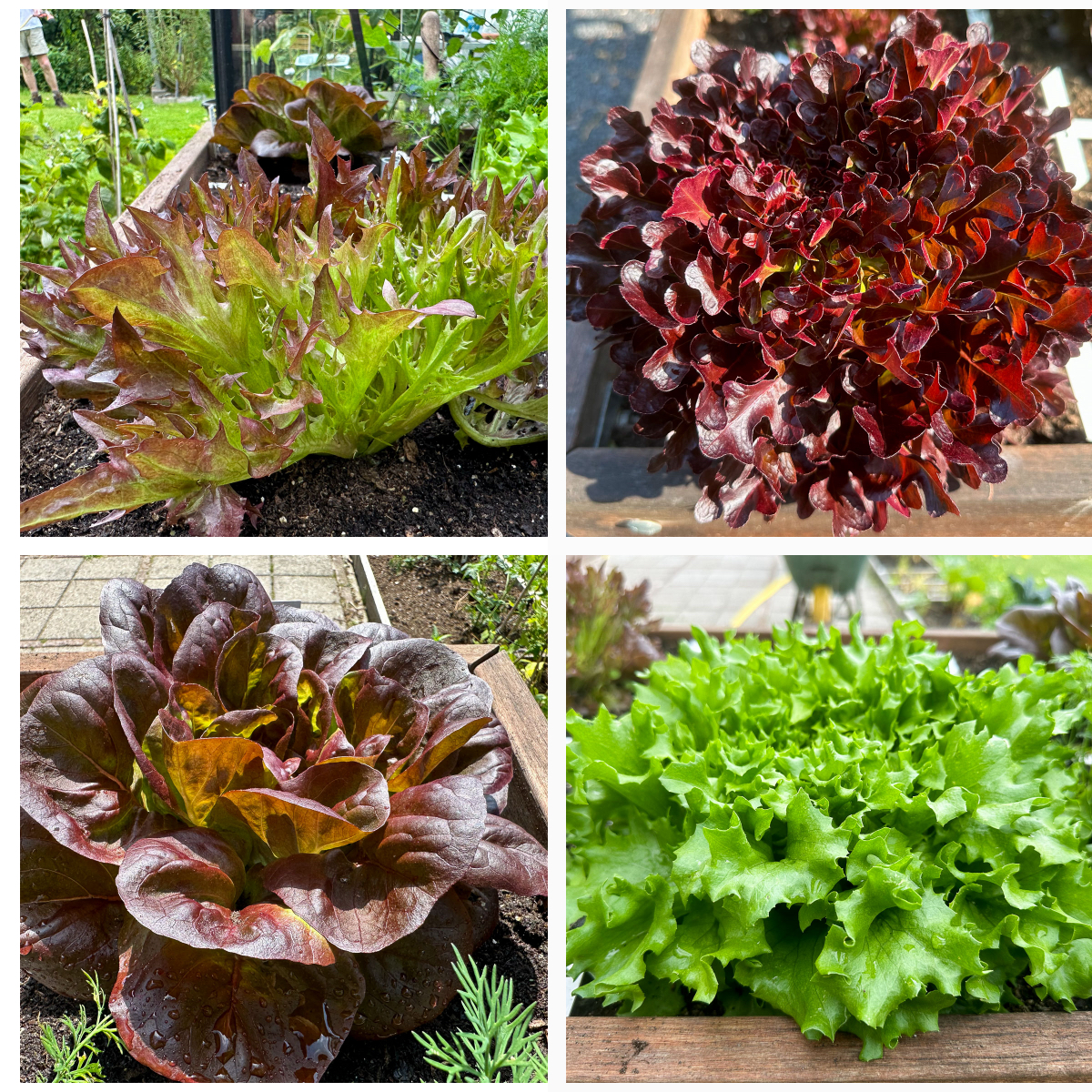
These are only a few examples, but choosing one variety over another really does make a difference.
That is why we are always looking for the best varieties. When we find one, it soon appears in our shop and app.
That is why we are always looking for the best varieties. When we find one, it soon appears in our shop and app.
2. Sow at the right time of year
Some plants need warmth to grow well, while others do not cope with heat.
Sow in the middle of winter and nothing happens because it is too cold and dark. Sow in midsummer and some vegetables struggle because it is too warm.
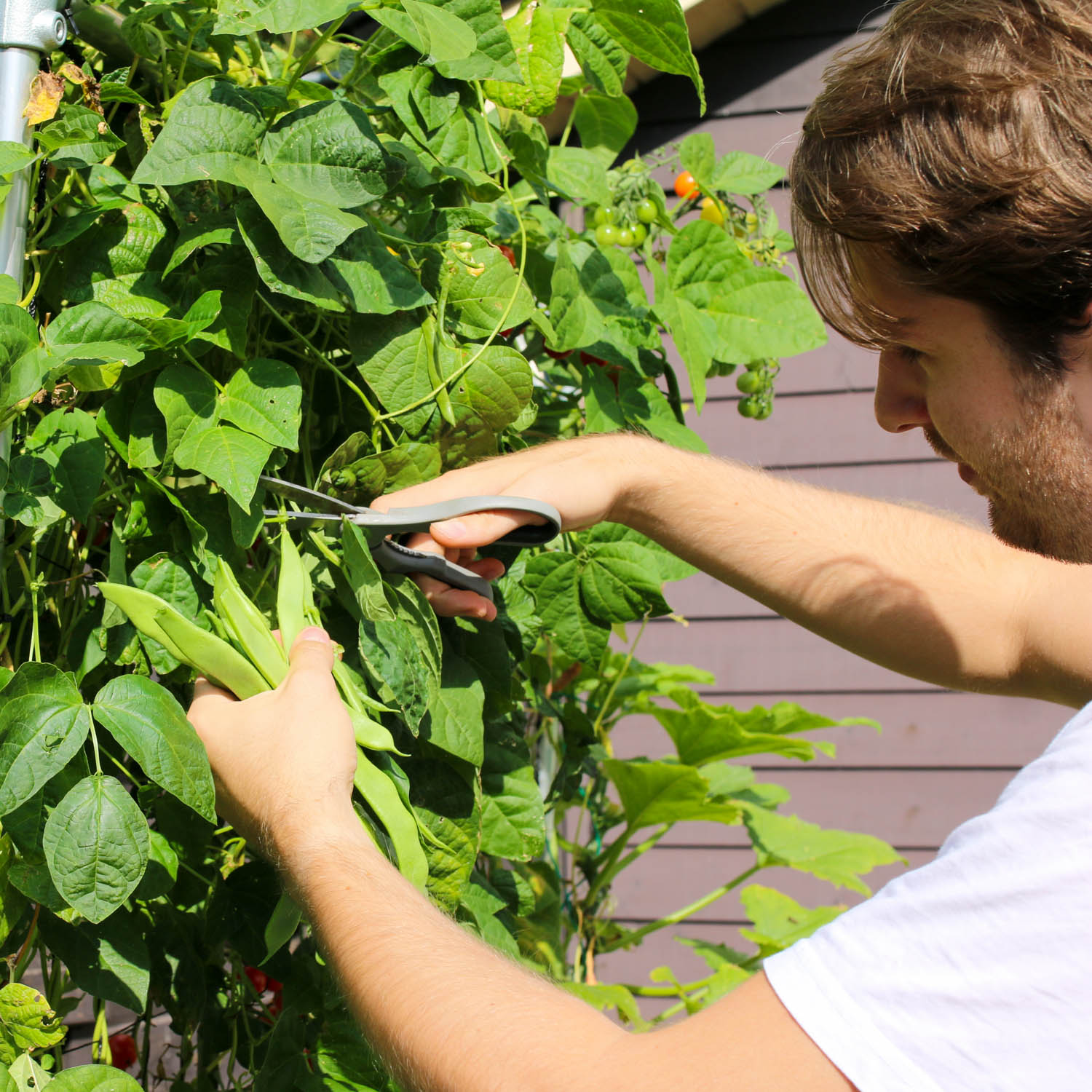
Beans enjoy warmth, so sow them in May and June. They grow well then, and from July onwards you can pick the tastiest beans:
Sow in the middle of winter and nothing happens because it is too cold and dark. Sow in midsummer and some vegetables struggle because it is too warm.
Beans enjoy warmth, so sow them in May and June. They grow well then, and from July onwards you can pick the tastiest beans:
Lamb's lettuce and spinach prefer cooler weather and do less well in summer.
Rocket does not mind: you can sow it from early March through September. Winter purslane is ideal for autumn sowing and can be harvested throughout winter.
Rocket does not mind: you can sow it from early March through September. Winter purslane is ideal for autumn sowing and can be harvested throughout winter.
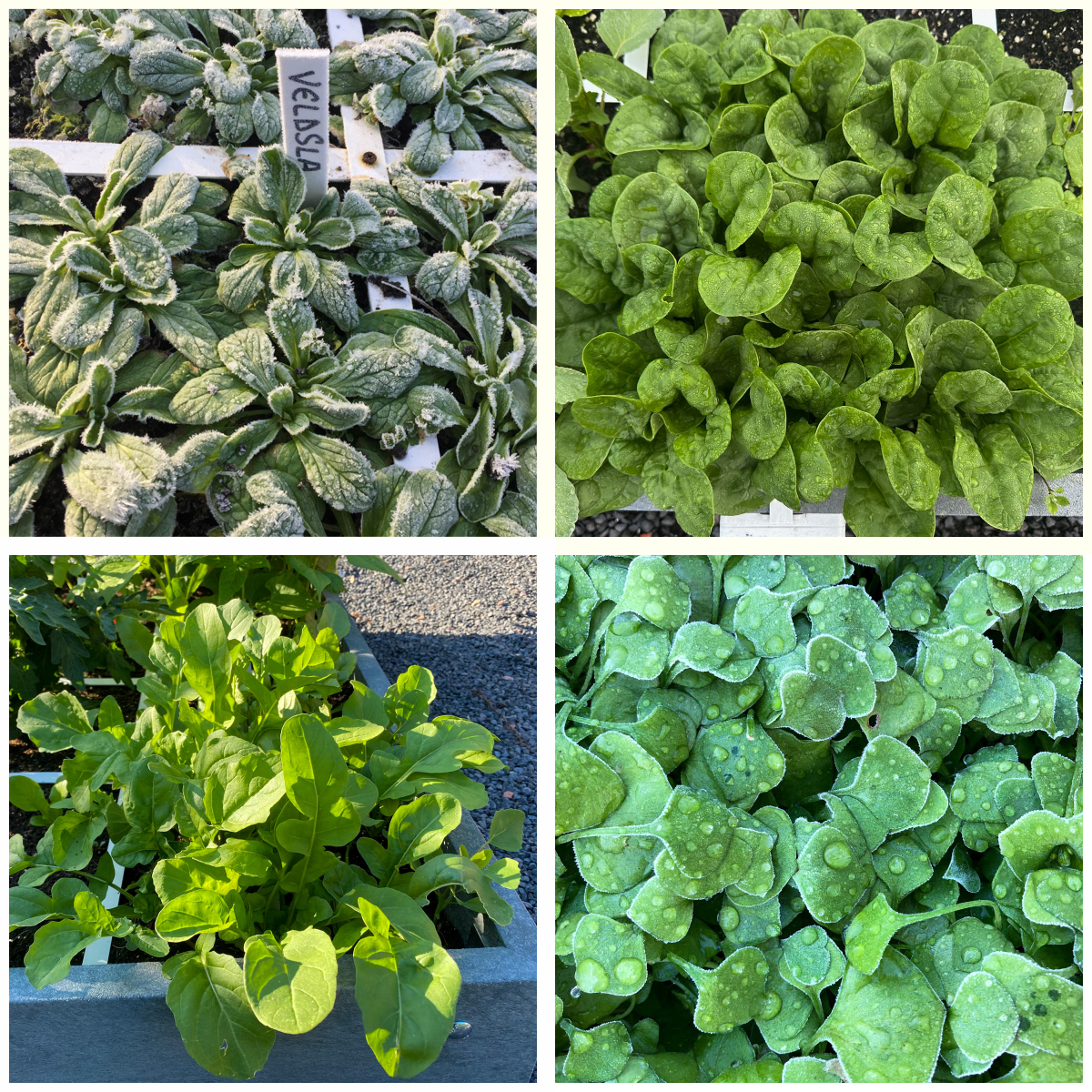
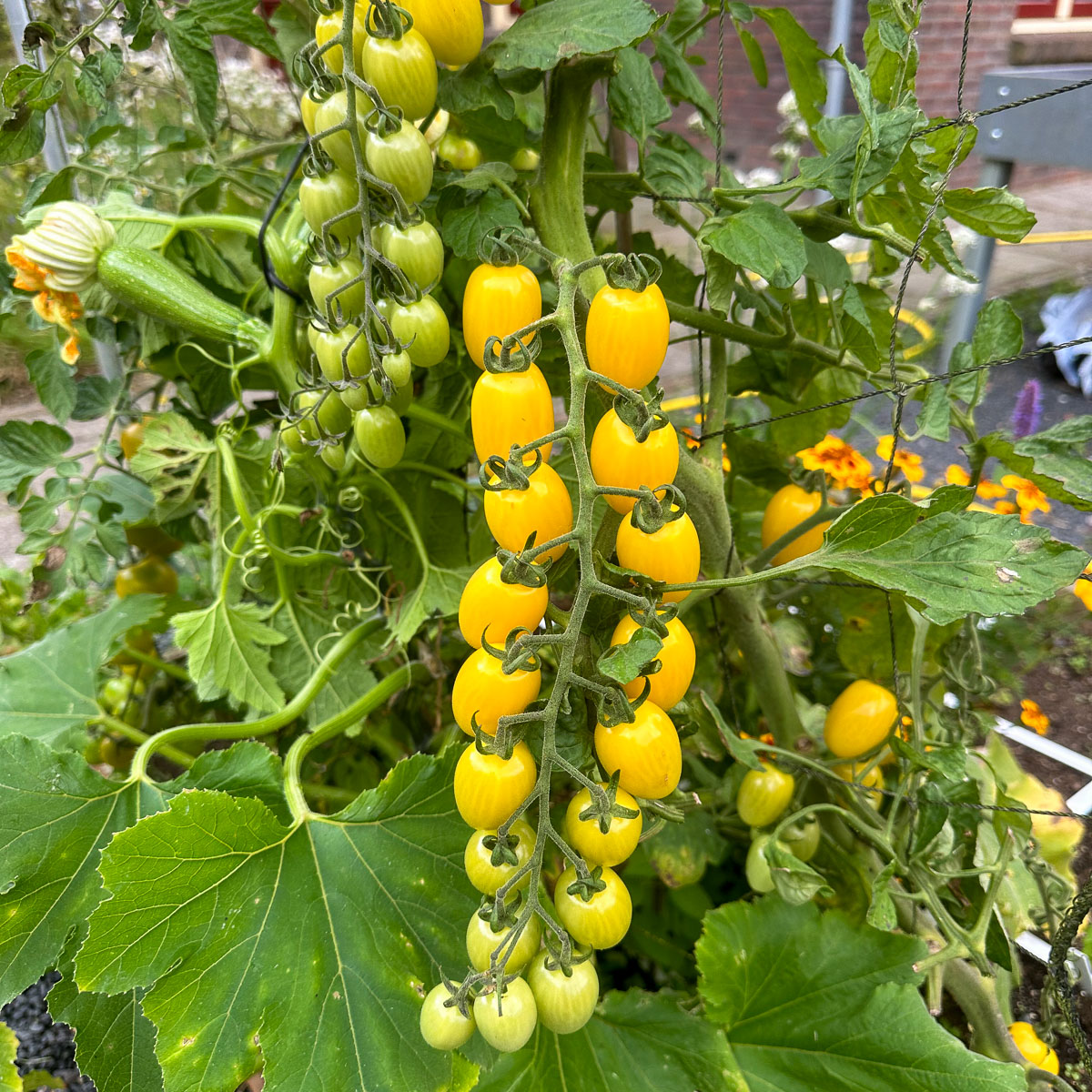
True summer vegetables, such as tomatoes and courgettes, cannot tolerate cold at all and need plenty of warmth while young. Start them indoors and do not move them outside until late May.
3. Plant height determines its position in the raised bed
Plants need sunlight. If taller plants shade them, they will not grow well.
To prevent shade, always put the trellis on the north side of the raised bed, with the front facing south.
To prevent shade, always put the trellis on the north side of the raised bed, with the front facing south.
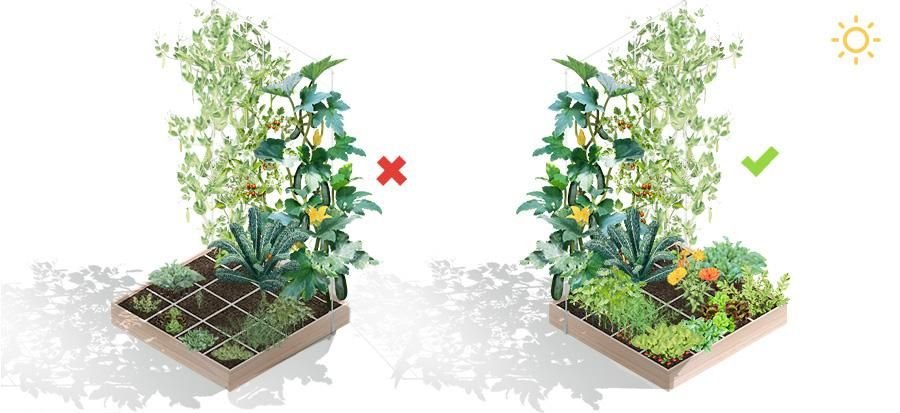
Arrange plants from shortest to tallest. Put the shortest at the front, on the south side, and the tallest at the back.
The example below uses a 16-square raised bed, but the same principle applies to other sizes.
The example below uses a 16-square raised bed, but the same principle applies to other sizes.
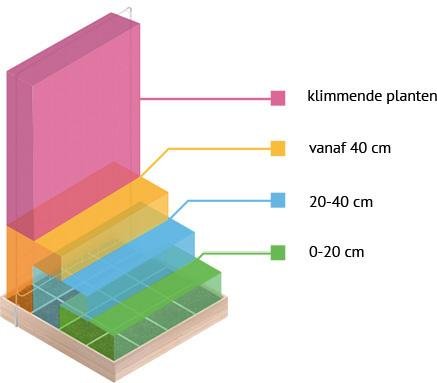
Our seed packets show the maximum plant height.
In the app, select the square you want to sow and it will show which vegetables are best suited to that position.
In the app, select the square you want to sow and it will show which vegetables are best suited to that position.
4. Grow a different vegetable in every square
Growing a different vegetable in each square gives you lots of variety in a small area.
It also looks attractive and prevents you from sowing too much of one thing and having to harvest it all at once. This automatically spreads your harvest over time.
It also looks attractive and prevents you from sowing too much of one thing and having to harvest it all at once. This automatically spreads your harvest over time.
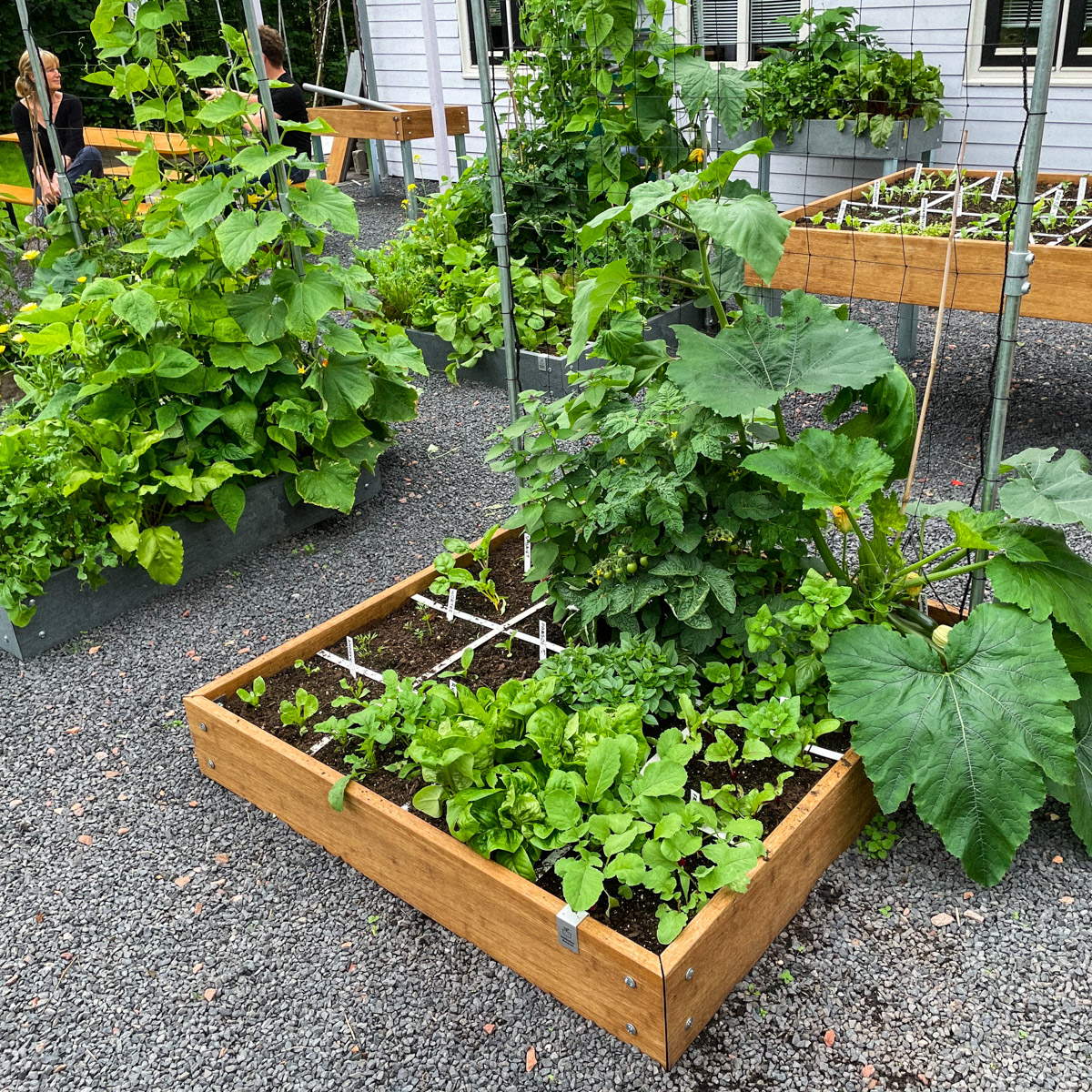
This also reduces problems with diseases and pests. Pests tend to prefer some plants and dislike others, so mixing everything together makes it harder for them to take over.
Add varieties that attract beneficial insects and you gain another layer of help.
Add varieties that attract beneficial insects and you gain another layer of help.
Plant families and crop rotation
There is another reason to mix crops. If you repeatedly grow plants from the same family in the same soil, they gradually perform less well, become weaker and suffer more readily from diseases and pests.
Gardeners with traditional vegetable gardens therefore create detailed plans to move crops to different areas over the years. This is called crop rotation.
We do it differently in the Makkelijke Moestuin. Each family has its own colour:
Gardeners with traditional vegetable gardens therefore create detailed plans to move crops to different areas over the years. This is called crop rotation.
We do it differently in the Makkelijke Moestuin. Each family has its own colour:

Blad: Sla, Spinazie, Snijbiet
Vlinderbloem: Boontjes, peultjes, sugarsnaps
Nachtschade: Tomaat, Aardappel
Kruisbloem: Broccoli, Kool, Rucola, Radijs
Vrucht: Snackkomkommer, Klimcourgette, Baby Pompoen
Wortel: Lente-ui, Wortel, Bieten
Omdat de bovenste balk van onze zakjes zaden ook zo'n kleurtje heeft, weet je in één oogopslag bij welke familie de planten horen.
Zet jij die nu zoveel mogelijk door elkaar - en zet je niet 2x dezelfde familie achter elkaar in hetzelfde vak - dan doe je vanzelf aan een soort wisselteelt.
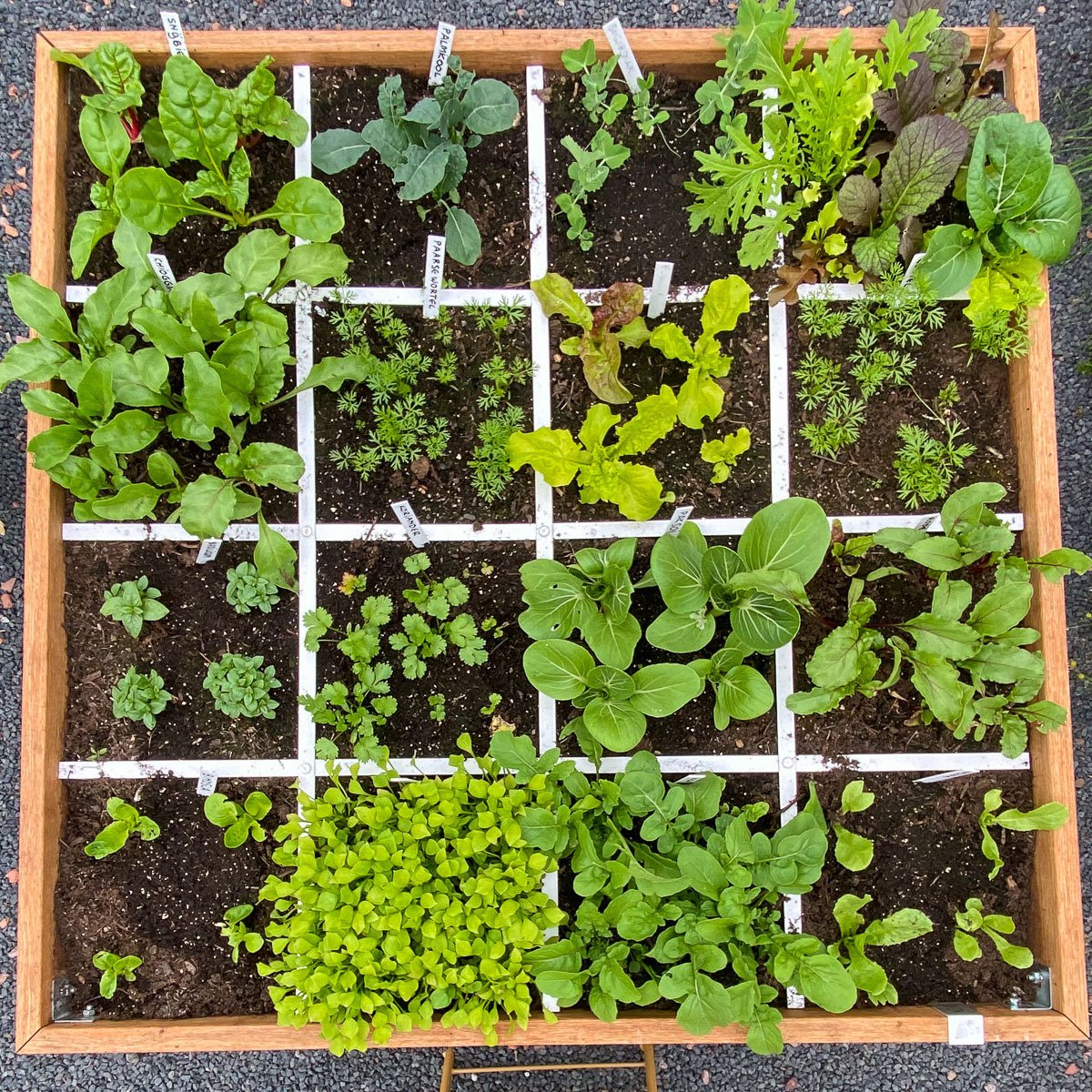
- Leaf: lettuce, spinach and chard
- Legume: beans, snow peas and sugar snaps
- Nightshade: tomatoes and potatoes
- Brassica: broccoli, cabbage, rocket and radishes
- Fruit: snack cucumbers, climbing courgettes and baby pumpkins
- Root: spring onions, carrots and beetroot
The top band on our seed packets uses the same colour, so you can see at a glance which family each plant belongs to.
Mix the colours as much as possible and avoid growing the same family twice in succession in one square. That automatically gives you a simple form of crop rotation.
The app helps here too. After you harvest a square of beetroot from the orange family and want to sow it again, the app suggests a vegetable with a different colour. Lettuce, for example, belongs to the green family.
Mix the colours as much as possible and avoid growing the same family twice in succession in one square. That automatically gives you a simple form of crop rotation.
The app helps here too. After you harvest a square of beetroot from the orange family and want to sow it again, the app suggests a vegetable with a different colour. Lettuce, for example, belongs to the green family.
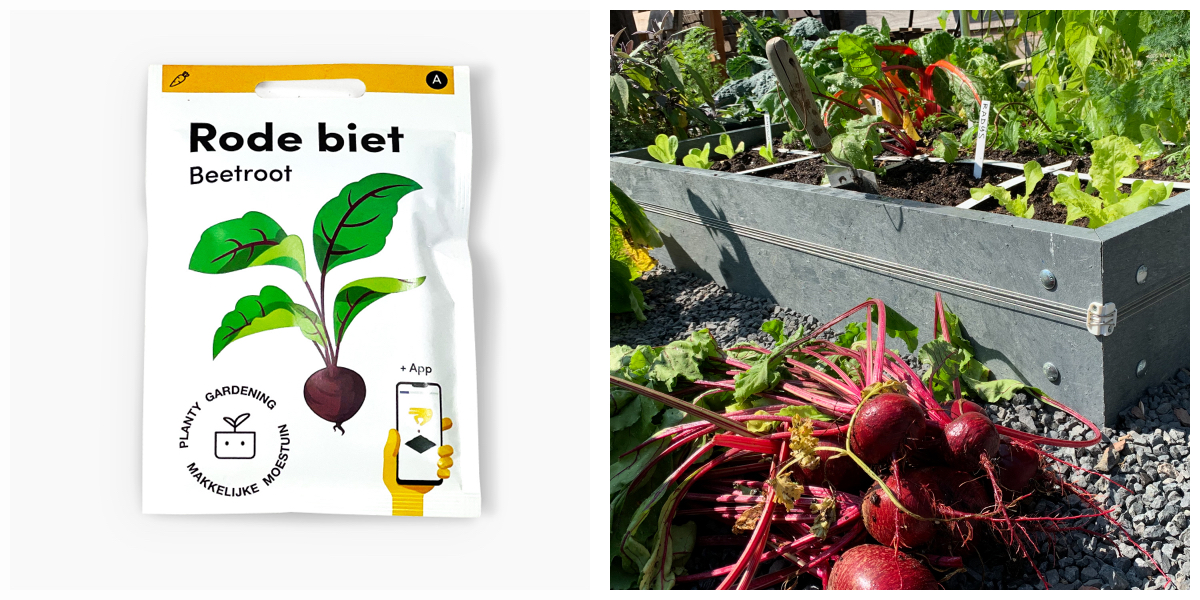
This prevents most problems and helps every plant grow well.
At the end of the year, or at the start of the new season, remove the grid and mix the MM-mix in your raised bed thoroughly. That lets you begin the new year from scratch.
At the end of the year, or at the start of the new season, remove the grid and mix the MM-mix in your raised bed thoroughly. That lets you begin the new year from scratch.
5. Sow at the correct spacing straight away
The 30 x 30 cm squares are exactly the right size for all our vegetables. Large plants need more room, so only one fits in a square, while several smaller plants can share one.
Almost every vegetable fits one of these sizes:
Almost every vegetable fits one of these sizes:
- Small: 16 plants, such as Giant Radish
- Medium: 9 plants, such as beetroot
- Large: 4 plants, such as bok choi
- XL: 1 plant, such as dino kale
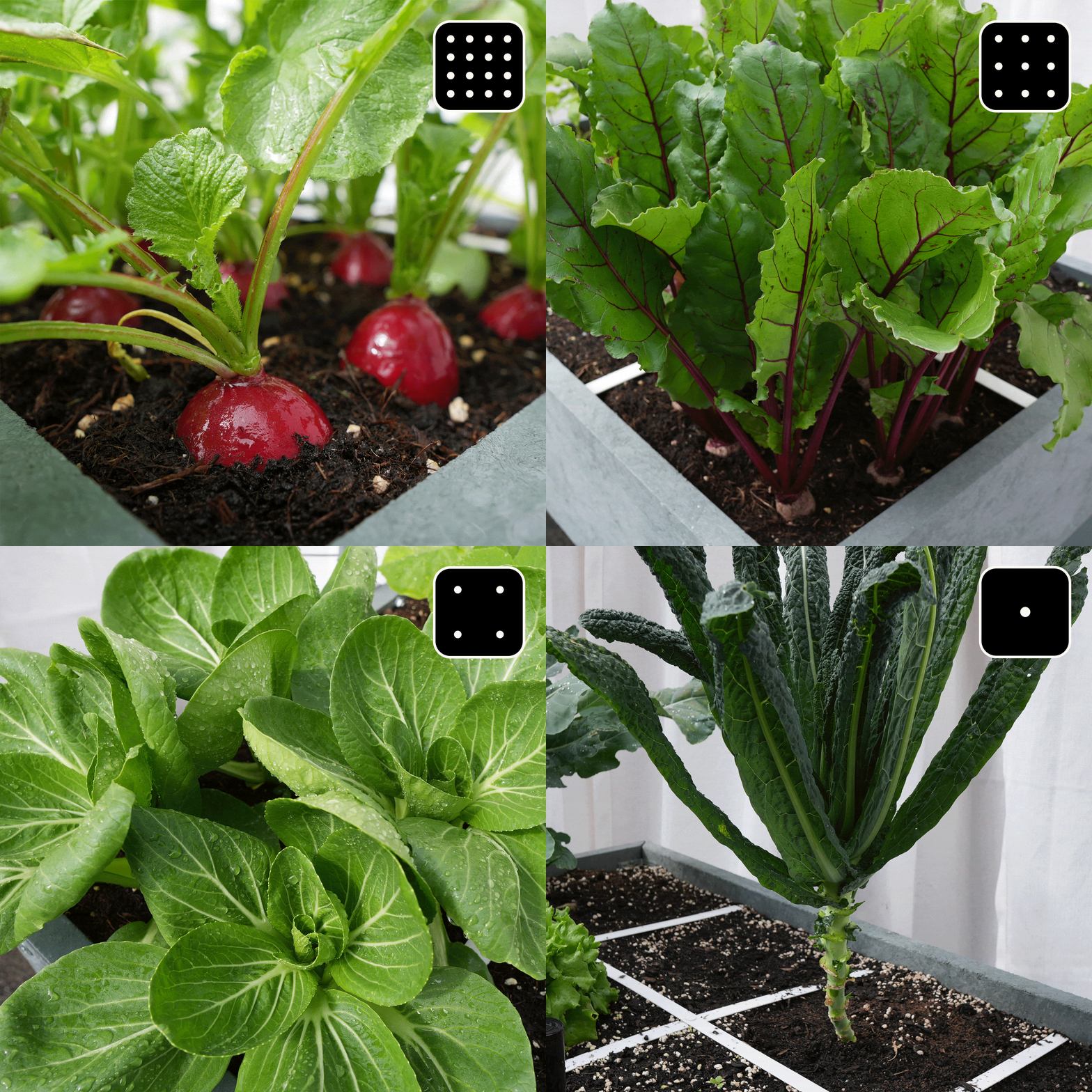
Sow or plant at the final spacing straight away so every plant has enough room to grow. You will then need little or no thinning or transplanting later, saving both work and seeds.
The square symbol on every packet of Makkelijke Moestuin seeds shows how many plants fit in one square:
The square symbol on every packet of Makkelijke Moestuin seeds shows how many plants fit in one square:
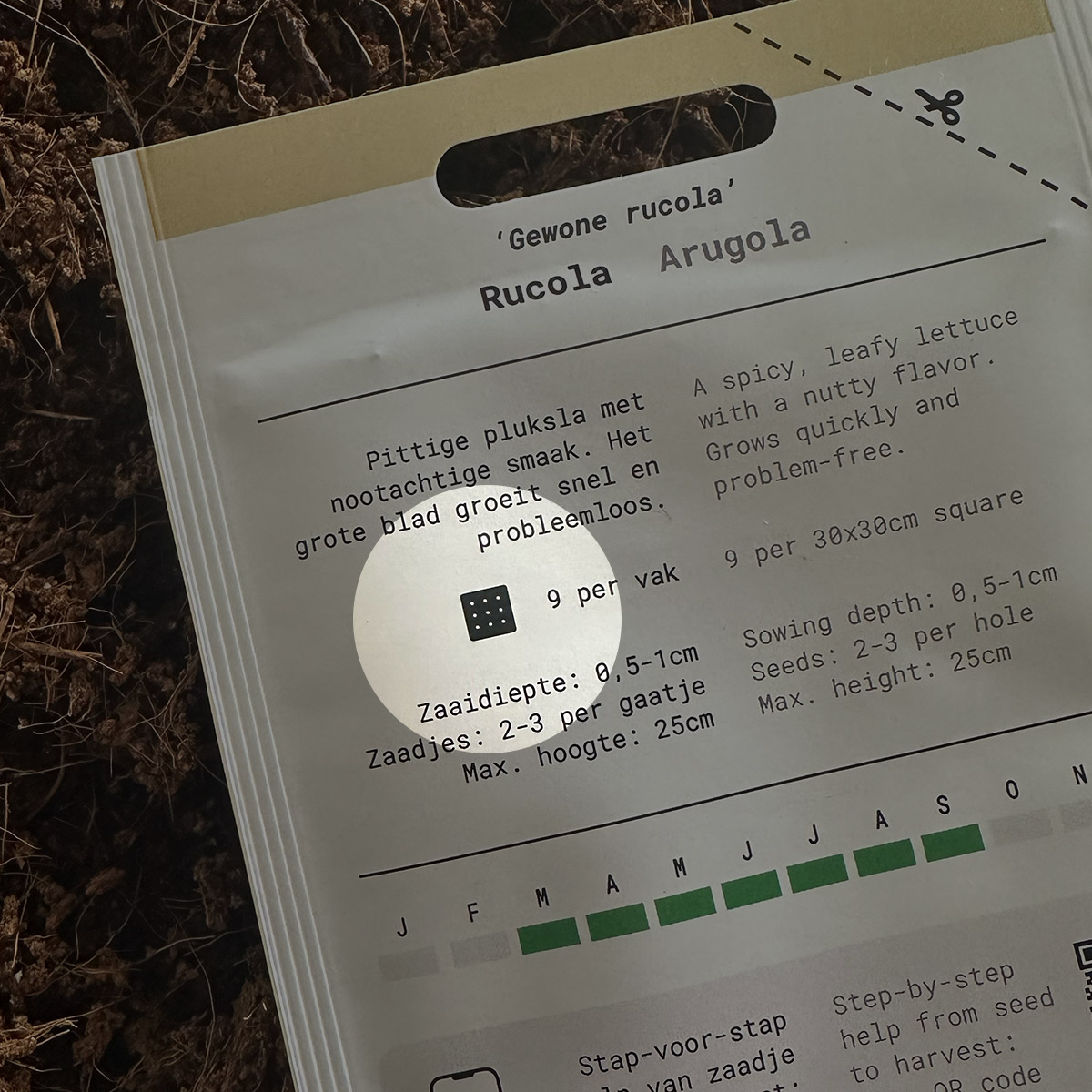
The app shows all this information too.
6. Sow empty squares again straight away
As soon as you completely harvest a square, prepare it immediately for the next round. This keeps every square planted throughout the growing season and makes the best use of the space in your raised bed.
The photo below was taken in late June. The last sugar snaps have just been harvested and their plants removed. Many of the front squares already contain a second crop:
The photo below was taken in late June. The last sugar snaps have just been harvested and their plants removed. Many of the front squares already contain a second crop:
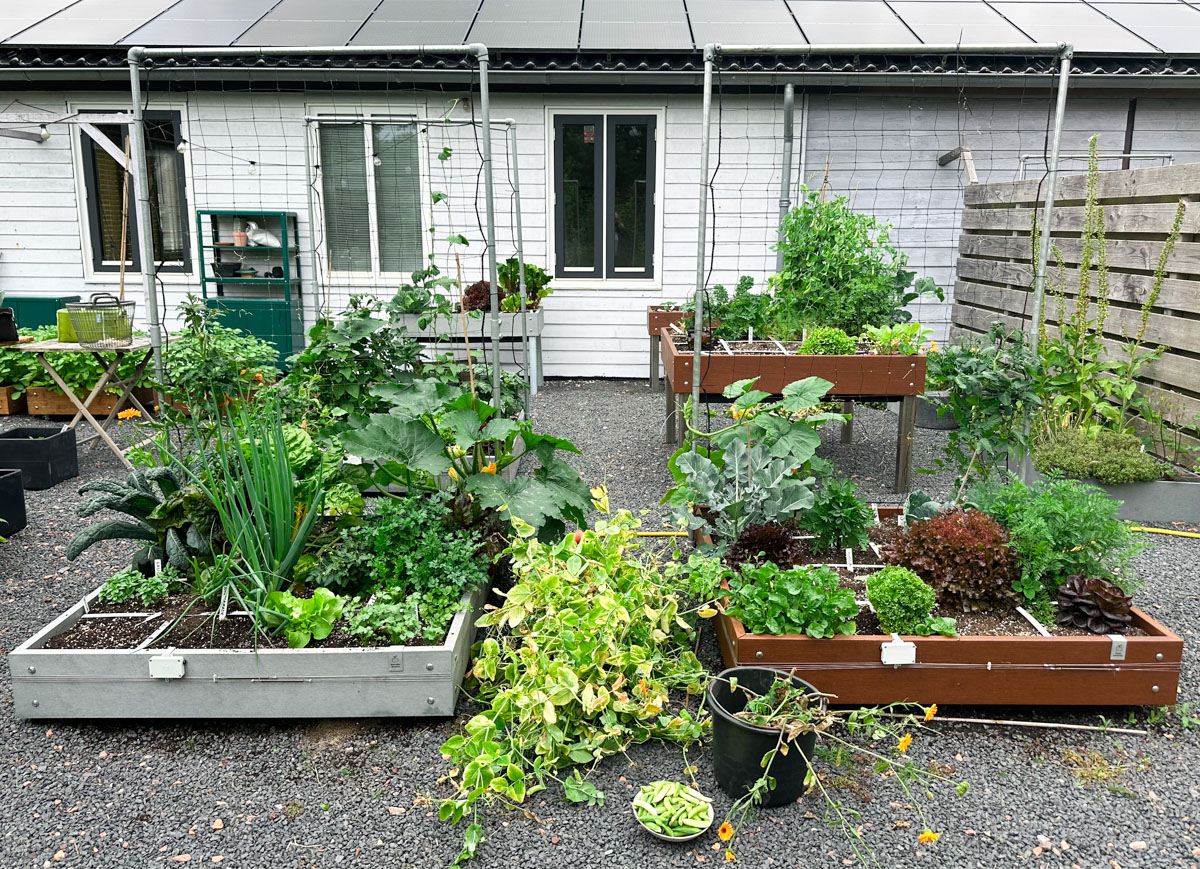
If the weather cooperates, you can start the first sowing on 1 March and continue until October.
Some squares will grow three or four different vegetables in a single year.
Some squares will grow three or four different vegetables in a single year.
Next step
You now know how our sowing system works and why we harvest so much from our raised beds.
The logical next step is the practical part:
The logical next step is the practical part: