
Makkelijke Moestuin vs traditional vegetable garden
To really grow well, plants need these 6 things: sunlight, water, air, space, nutrients, and a bit of attention while they're growing. If they don’t get enough of those, they won’t do well.
In a regular vegetable garden, you have to do a lot for that and it takes up loads of your time. But in a Makkelijke Moestuin, it pretty much happens by itself.
In a regular vegetable garden, you have to do a lot for that and it takes up loads of your time. But in a Makkelijke Moestuin, it pretty much happens by itself.
What you want is this:
You pop a seed in the soil, a few days later you spot a seedling and that grows into a little plant. First it’s small, then it gets bigger and bigger, until it’s big enough to harvest from:
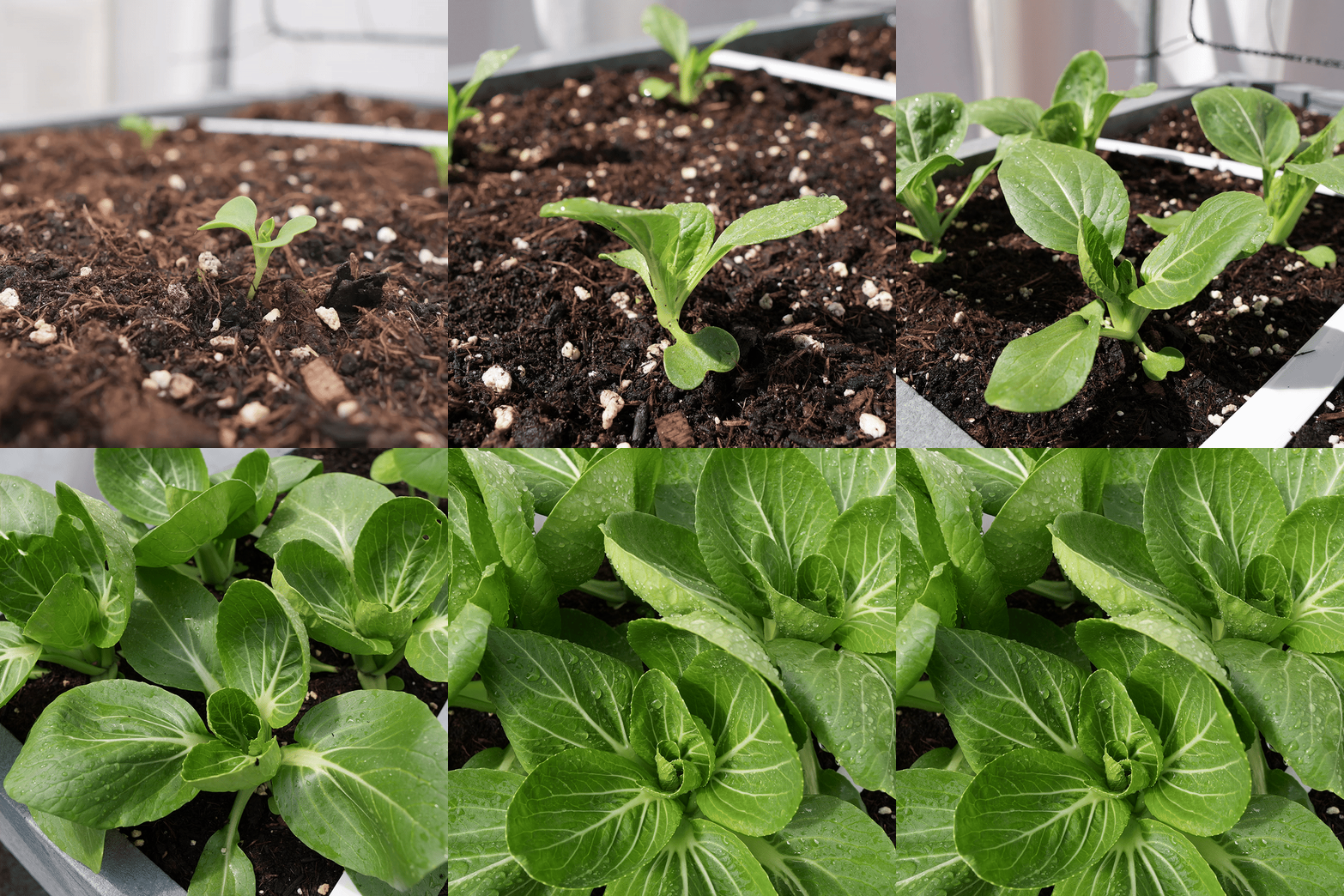
Pak choi: from seedling to edible plant.
I already thought it was magical to see as a kid, and that’s never changed. Otherwise, I’d never have started with the Makkelijke Moestuin.
‘Hang on Jelle, a plant like that will grow without an MM too’
I already thought it was magical to see as a kid, and that’s never changed. Otherwise, I’d never have started with the Makkelijke Moestuin.
‘Hang on Jelle, a plant like that will grow without an MM too’
Yeah, that’s definitely true. Because plants always want to grow, no matter where they are or what the conditions are like. But if you really want them to grow well and get loads of harvest from them, you do need to give them a bit of help.
Because I was too lazy as a teenager to put in loads of effort, I went for a container garden back in 2008. Just like Mel Bartolomew showed in his book 'All New Square Foot Gardening’. That was way easier than a traditional veg patch in the ground.
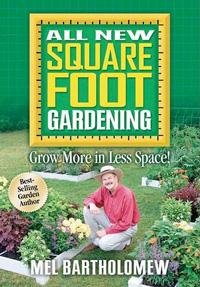
Looking back over the past 18 years, I was already busy making Mels' garden even easier pretty quickly. At first mainly for ourselves, but later also for the visitors of the site.
And when I think about everything you need to do to really help plants grow well, I think the name ‘Makkelijke Moestuin’ is even more fitting now than it was back then.
Why? Because for plants to really grow well, they need this: sunlight, water, air, space, and nutrients. And a bit of love and attention from you:
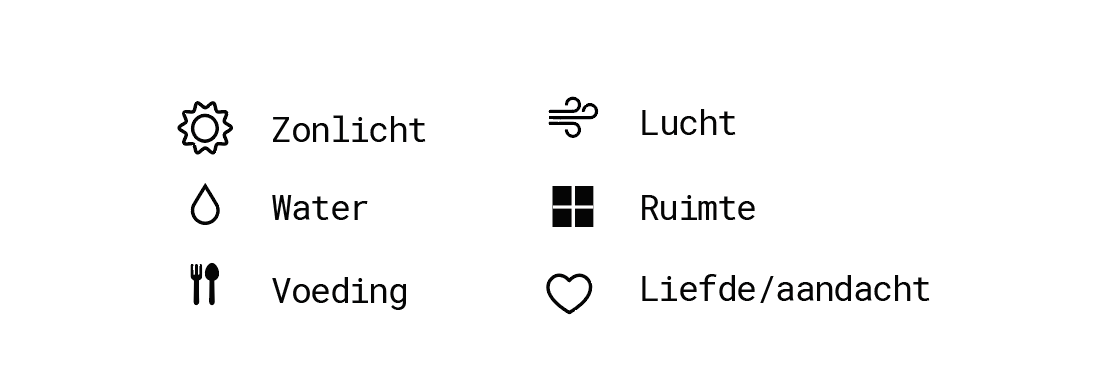
If they don’t get that, they won’t do as well. That’s always the case. Whether they’re in a regular veg garden or in a Makkelijke Moestuin.
The difference is in how you give it to them: with loads of work and mixed results – or with little effort and a big harvest.
The difference between a regular vegetable garden and the MM
1. Sunlight
Plants use sunlight to turn water and air into sugars and starch. That’s called photosynthesis. With enough sunlight, plants grow strong and healthy; with too little sunlight, they become weak and leggy, and their leaves stay small and pale.
In a regular vegetable garden you just have to make do with the spot you’ve got, whether it’s half in the shade or in full sun. Because you usually sow in rows, and not all plants grow at the same pace or to the same height, they often end up shading each other.
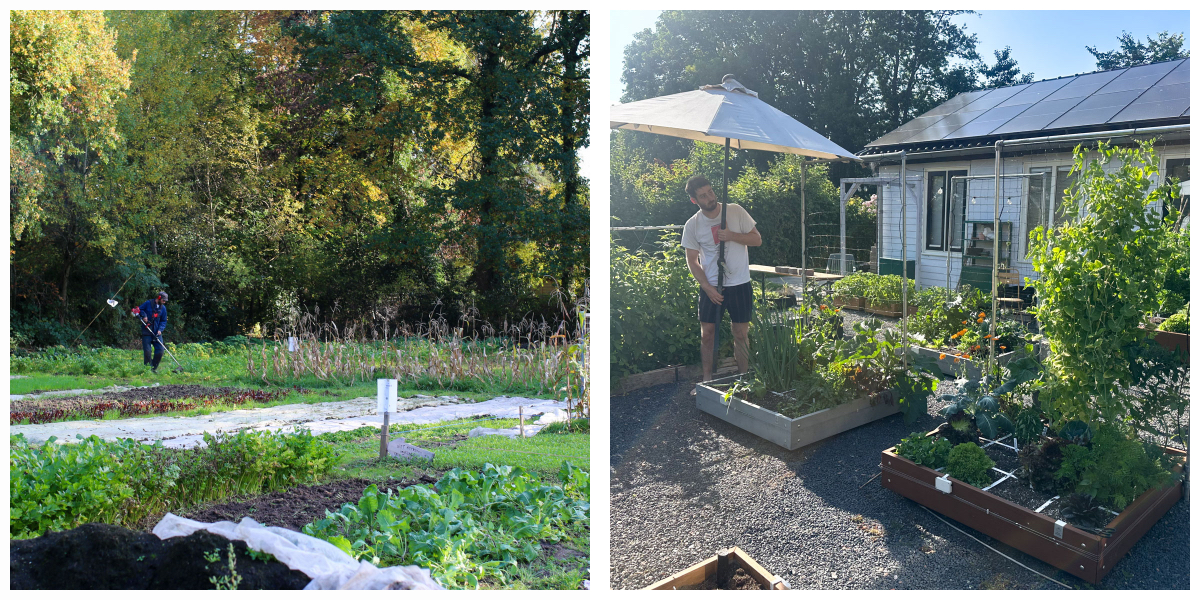
You place a Makkelijke Moestuin in the best spot in your garden. That can be almost anywhere: even on a balcony, the patio or on the roof of a shed.
Because you give each plant its own spot from the start, the low plants go at the front and the taller plants behind them. That way they all get sun. And if there’s too much sun, you can easily give them a bit of extra shade.
Because you give each plant its own spot from the start, the low plants go at the front and the taller plants behind them. That way they all get sun. And if there’s too much sun, you can easily give them a bit of extra shade.
2. Air
Like every living thing, plants need air. But unlike us, they also use it to make their food, together with sunlight and water.
What’s more, they breathe with everything: leaves, stems and roots. So if the soil isn’t airy enough, the roots can’t breathe and the plant won’t grow as well.
What’s more, they breathe with everything: leaves, stems and roots. So if the soil isn’t airy enough, the roots can’t breathe and the plant won’t grow as well.
In an ordinary vegetable garden, you’re dependent on the soil you have. If that’s clay soil and there’s a lot of rain or you walk on it, it quickly becomes too compact. But to be able to reach everything, you have to stand on the soil.
So you need to loosen it regularly again, by digging or hoeing.
So you need to loosen it regularly again, by digging or hoeing.
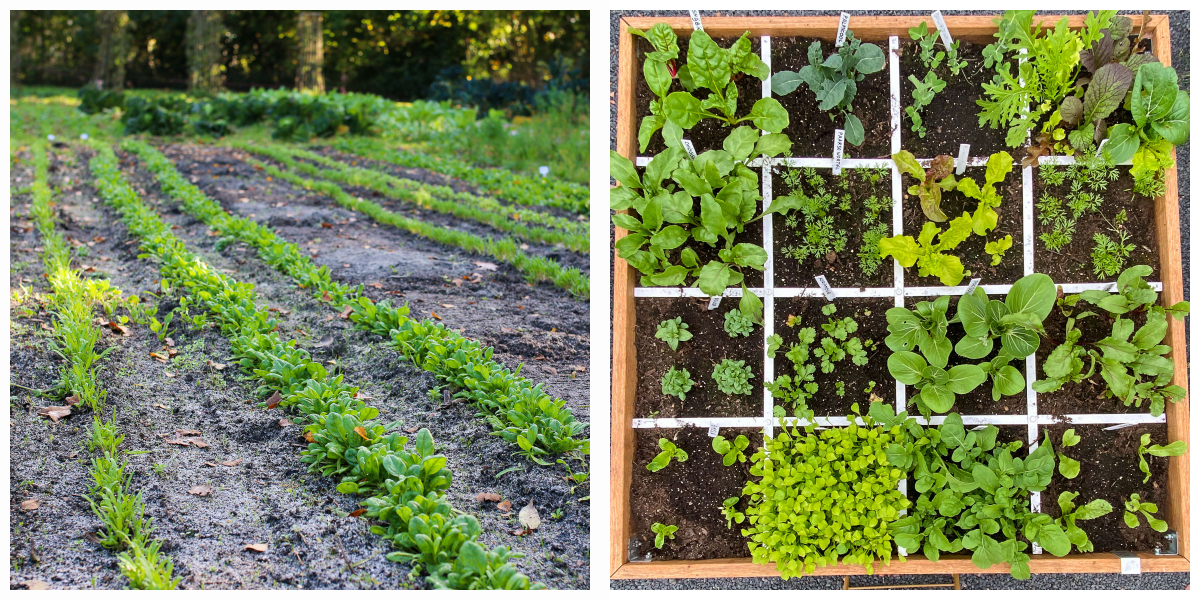
Even the largest Makkelijke Moestuinbak is small enough to reach everything from the outside. So you never need to stand on the mix either. What’s more, the mix itself is already very airy, and excess water drains away easily.
The water reservoirs provide an extra advantage too, because above the water there’s also a layer of air. That way, the roots always get oxygen.
The water reservoirs provide an extra advantage too, because above the water there’s also a layer of air. That way, the roots always get oxygen.
3. Water
Plants use water for three things: to make food, for firmness, and as a means of transport. If they don’t get enough, or get it irregularly, they go into ‘survival mode’: they droop, bolt far too quickly, and produce a smaller harvest or even none at all.
But if the soil is too wet, the roots can no longer breathe and start to rot. So that’s not good either.
But if the soil is too wet, the roots can no longer breathe and start to rot. So that’s not good either.
In an ordinary vegetable garden, you give water with a watering can or a garden hose. Sometimes too little, sometimes too much, and sometimes at the wrong time. In dry periods, that takes up a lot of your time, while in wet periods the soil becomes far too waterlogged:
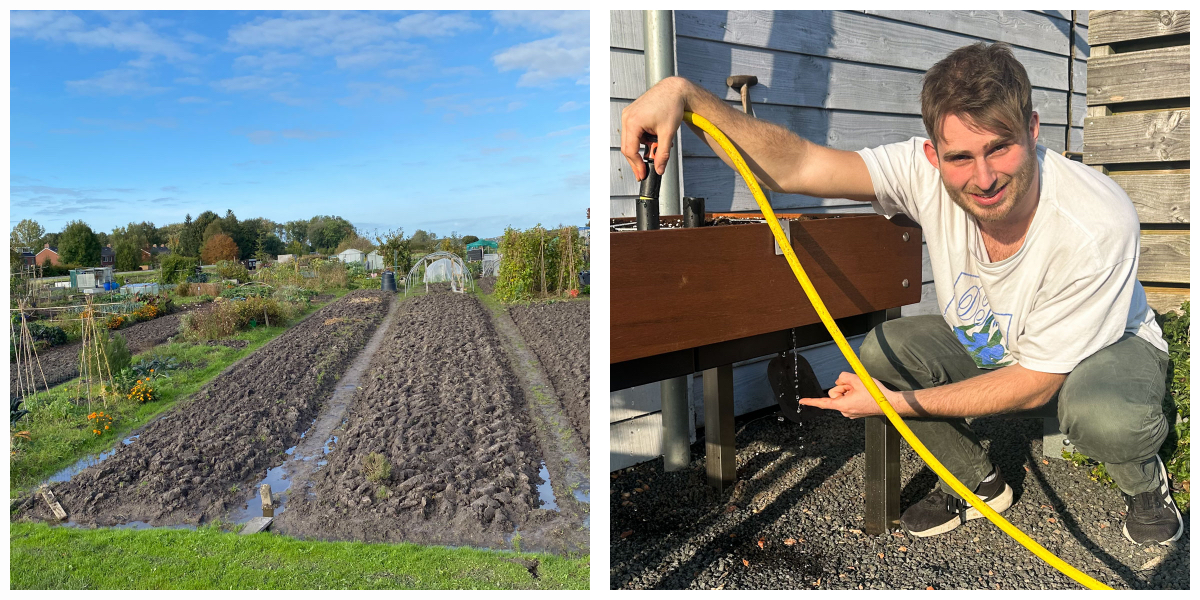
In a Makkelijke Moestuin, the water reservoir more or less takes care of itself. The only thing you need to do is top it up now and then during dry spells. In wet weather, any excess water slowly drains through to the reservoir, and once that’s full, it overflows.
That way, your plants always get exactly what they need, grow better than ever, and you have far less work.
That way, your plants always get exactly what they need, grow better than ever, and you have far less work.
4. Space
Plants need space to grow well and freely. That’s why no plant wants to be too close to another, or have to fight for light, water or nutrients. And definitely not with weeds.
In an ordinary kitchen garden you sow in rows and then have to thin out the seedlings afterwards. Most gardeners find that quite tricky.
And because you’re working in open ground, you also spend a lot of time weeding. Either because working the soil woke the seeds up again, or because it spreads through its roots. Like ground elder or bindweed. Or both.
So those weeds often grow in the rows too, and they’re hard to remove without disturbing your own plants.
And because you’re working in open ground, you also spend a lot of time weeding. Either because working the soil woke the seeds up again, or because it spreads through its roots. Like ground elder or bindweed. Or both.
So those weeds often grow in the rows too, and they’re hard to remove without disturbing your own plants.
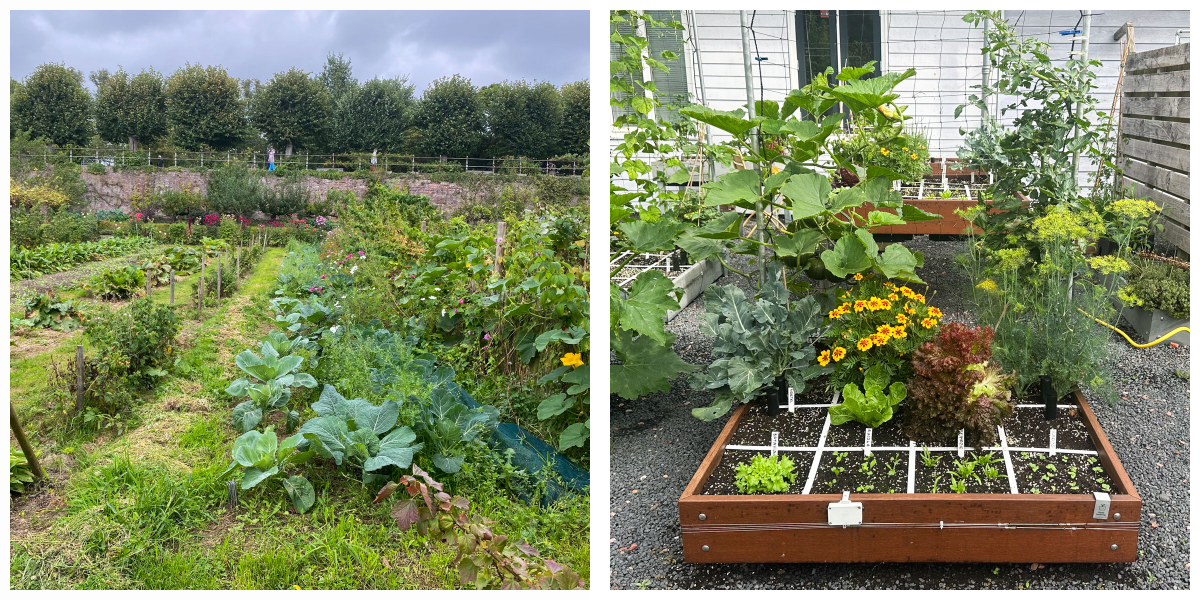
In a Makkelijke Moestuin you sow in sections and straight at the right spacing. So you hardly ever need to thin out.
Weeds hardly occur either, because the MM-mix contains no dormant seeds or roots. They can’t come up from below either: because even a bed on the ground stands either on a water reservoir or on a piece of anti-root fabric.
Weeds hardly occur either, because the MM-mix contains no dormant seeds or roots. They can’t come up from below either: because even a bed on the ground stands either on a water reservoir or on a piece of anti-root fabric.
5. Feeding
Although plants make some of their own food, they also need nutrients from outside: from the soil. Such as the minerals nitrogen, phosphorus, and potassium. If they don’t get enough of these, they grow poorly, the leaves become discoloured, and they produce very little harvest.
In an ordinary vegetable garden you first need to know what’s already in the soil, and then you have to keep adjusting and topping it up. That’s quite complicated, which is why it often hardly happens at all, or it’s done incorrectly.
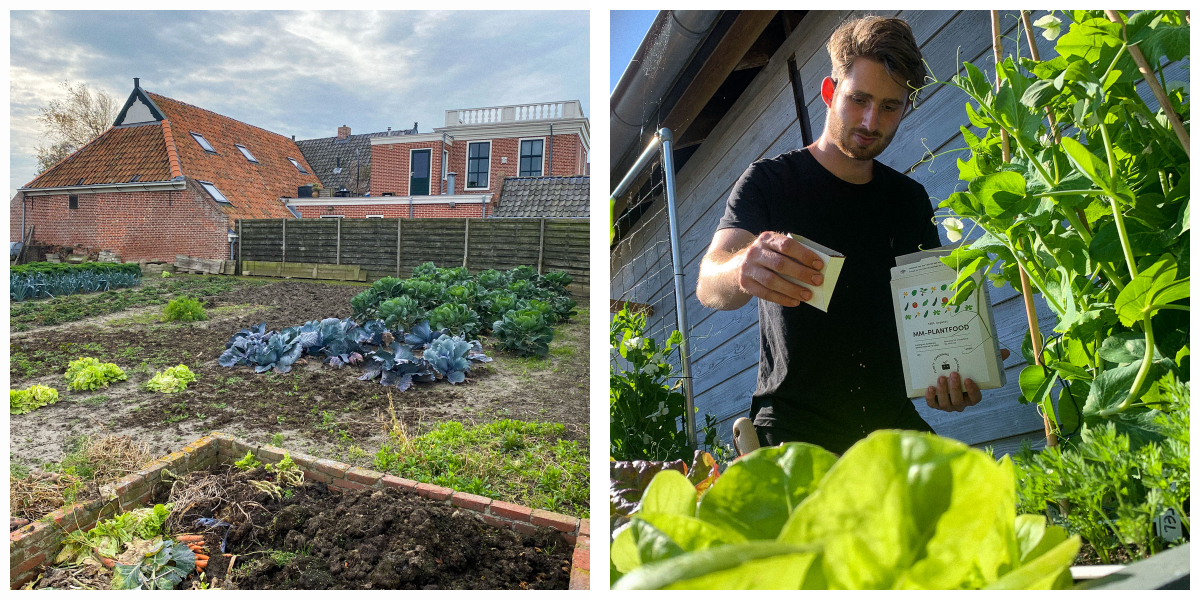
In a Makkelijke Moestuin the nutrients are tailored exactly to the mix and suitable for all vegetables, herbs and flowers. That way, you always give the nutrients in the right composition, in the right amount and at the right time.
6. Love, attention and timing
The trick to a successful vegetable garden is sowing, caring for and harvesting your plants at the right time. And preferably in the right way too. Just think of radishes and tomatoes: they’re completely different.
With an ordinary vegetable garden, that means a lot of trial and error, and it often takes years before you really get the hang of it. But even then, your vegetable garden still needs a lot of attention and every year brings something different.
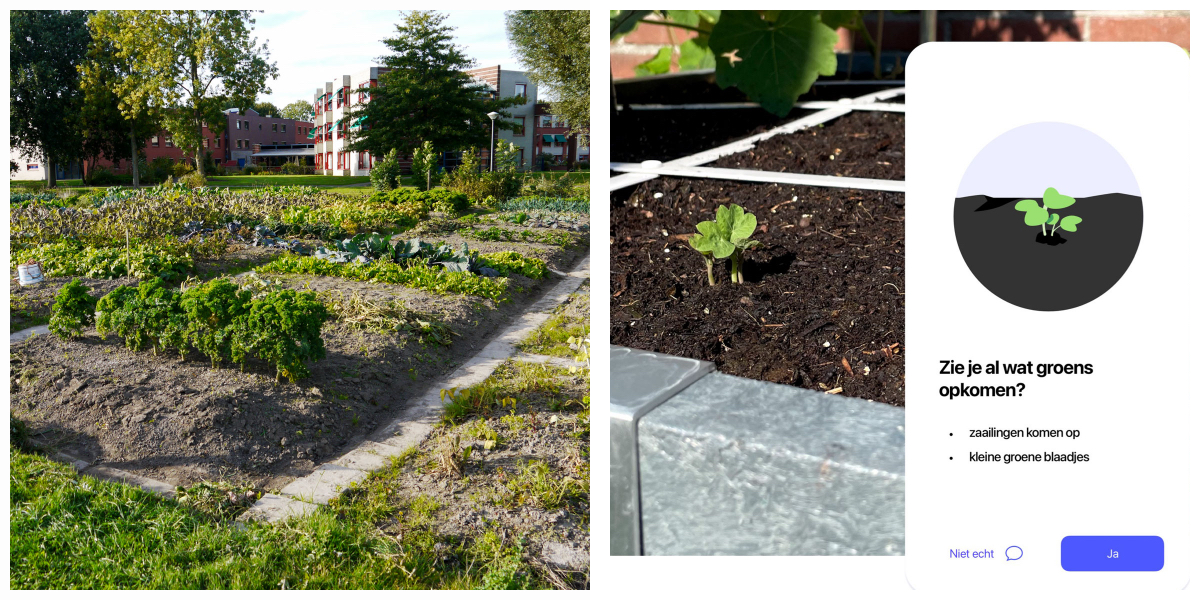
You don’t need any experience for a Makkelijke Moestuin, because you’ve got the app. It guides you from the very start and tells you exactly what to do.
Everything you do in the app, you also do for real in your garden box. Step by step, it takes you from seed to harvest and helps you with anything you come across along the way.
Everything you do in the app, you also do for real in your garden box. Step by step, it takes you from seed to harvest and helps you with anything you come across along the way.
Definitely. Just think about how much space you need, or the tools you use. Sowing and thinning are also much simpler in a Makkelijke Moestuin.
Want to read more about that? You can do that here: Why choose an MM instead of a regular vegetable garden?
Want to read more about that? You can do that here: Why choose an MM instead of a regular vegetable garden?
Success from the start
With a Makkelijke Moestuin, you’ll see results very quickly. And that’s what it’s all about, right? When you get started, we want you to enjoy it and actually harvest plenty too. We’re 100% committed to making that happen.
So first, let me introduce myself and tell you what kind of company Makkelijke Moestuin is.
I got so carried away that I completely forgot 😉
So first, let me introduce myself and tell you what kind of company Makkelijke Moestuin is.
I got so carried away that I completely forgot 😉