
Swipe
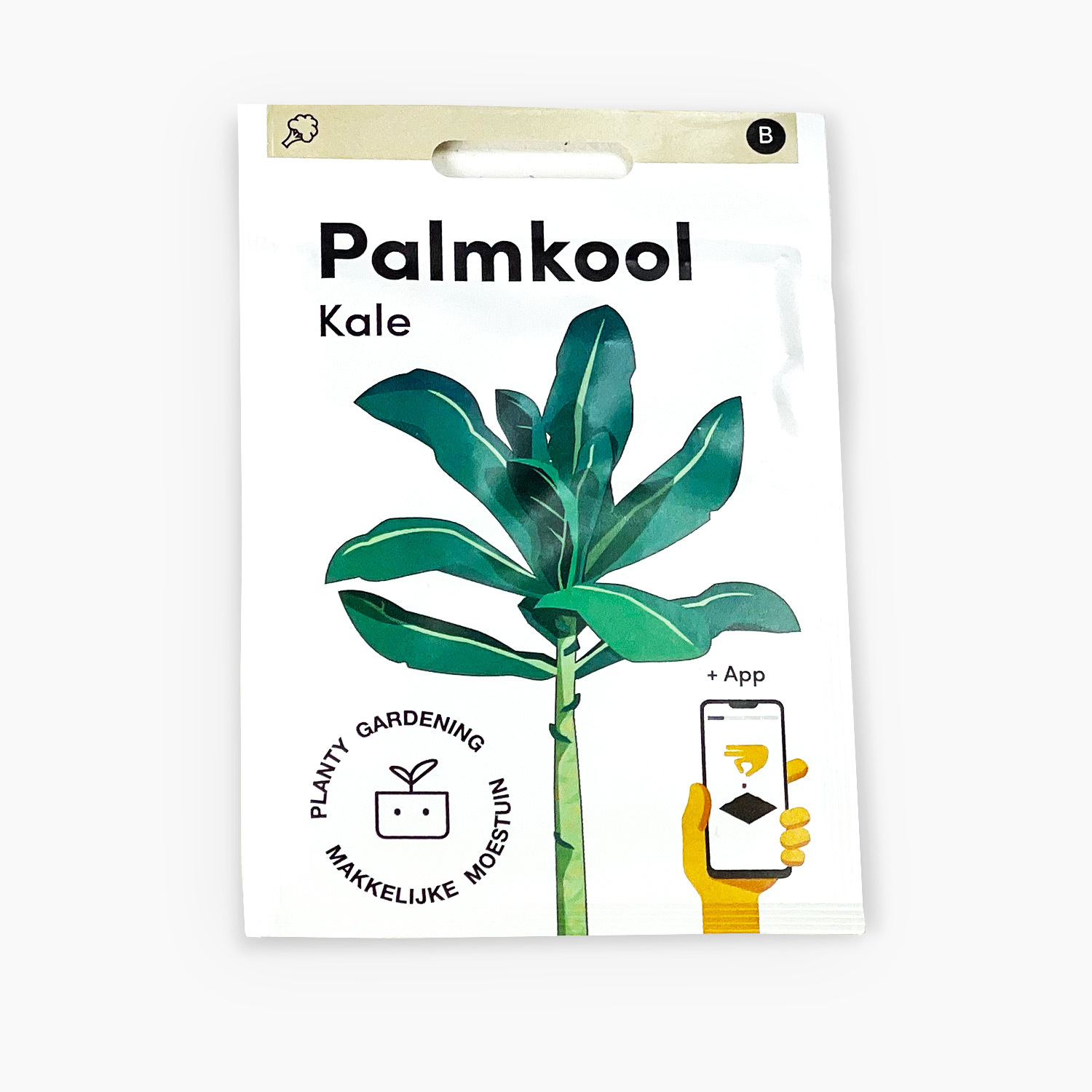
Dino kale
Product information

Sowing in:
J
F
M
A
M
J
J
A
S
O
N
D
€2.79
In Stock
Free delivery from € 30 🇳🇱
Choose your own delivery date
Description
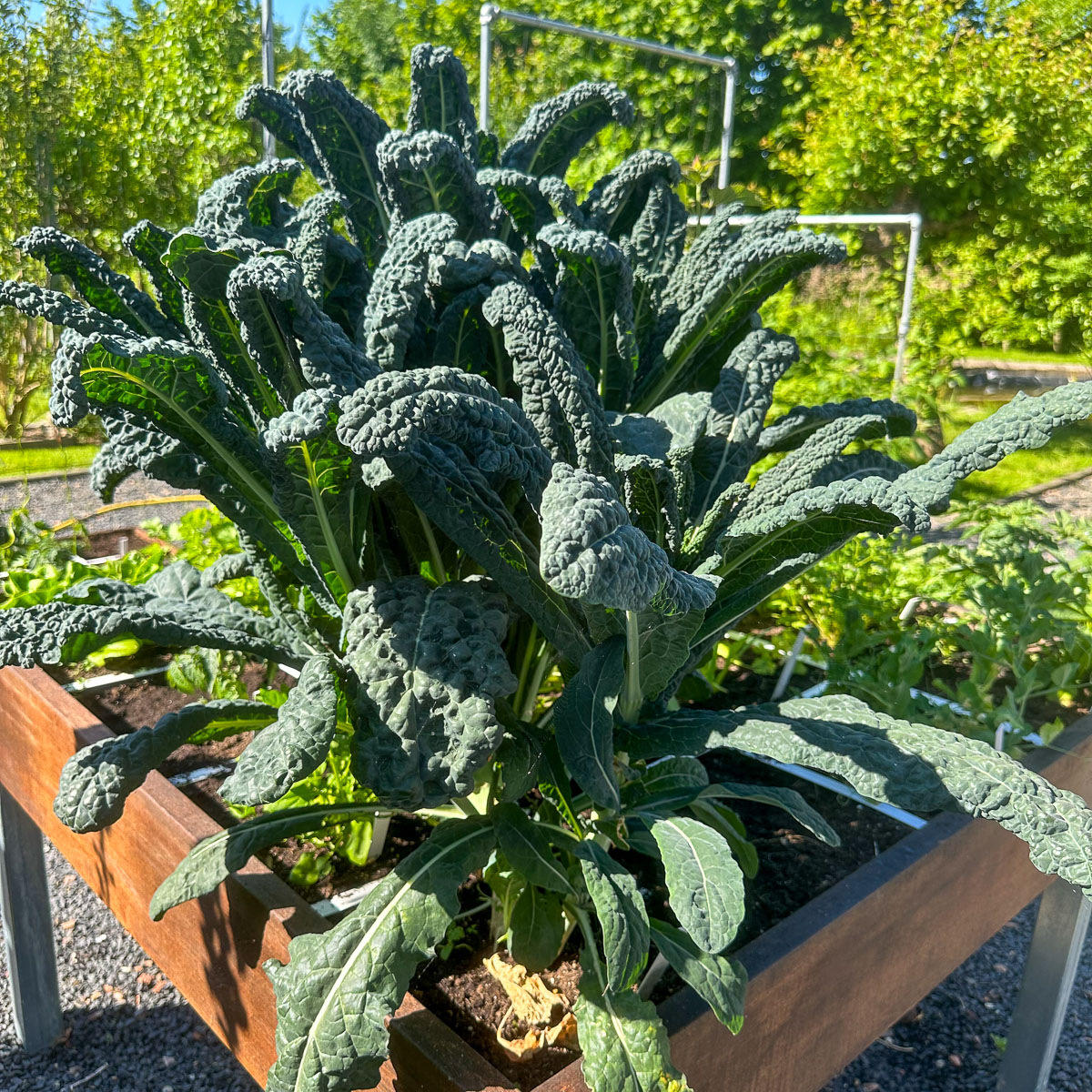
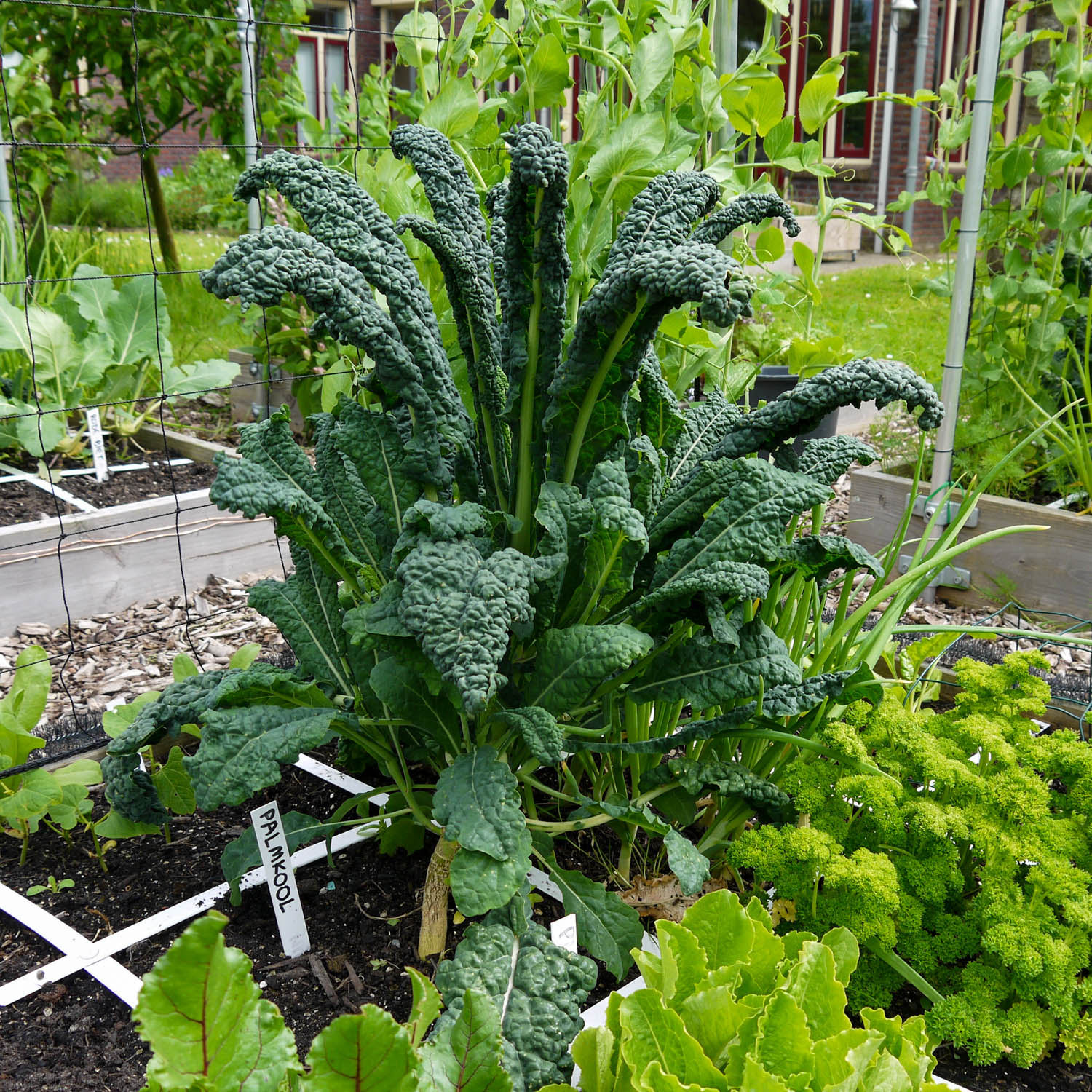
Dino kale is a member of the cabbage family. It grows tall instead of wide, so it doesn't take up as much space as other kale varieties. Beautifully textured, dark blue-green leaves.
Specifications
Sowing time: April - mid-July and September - October
Height: 60-80 cm
Weight: 0.5 grams
Height: 60-80 cm
Weight: 0.5 grams
In the app
Sowing: 1 April - 15 July , 1 September - 15 October

Level 1
seeds sown

Level 2
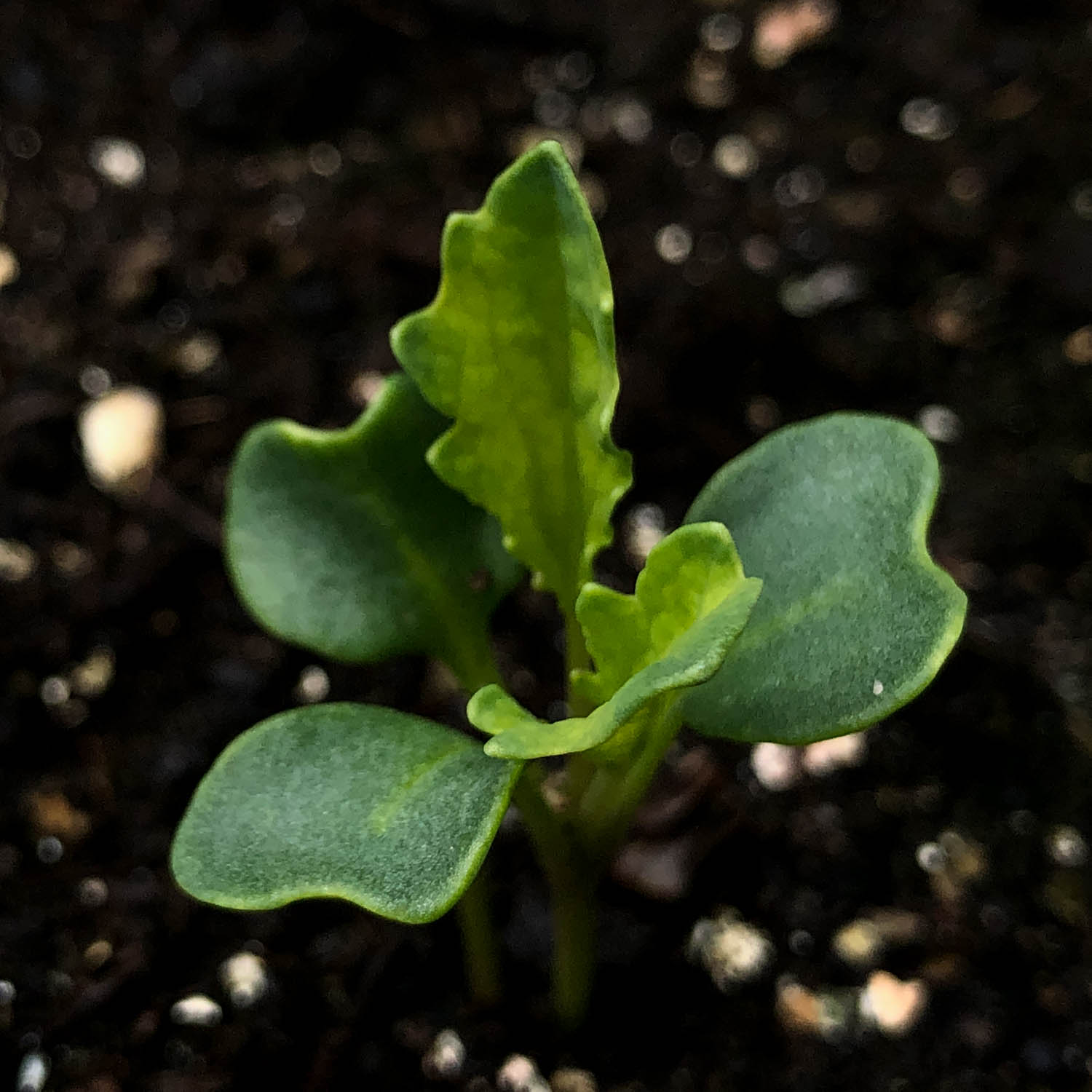
seedling emerging
Level 3
one seedling
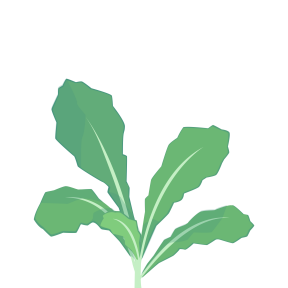
Level 4
small plant
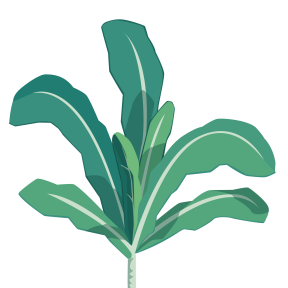
Level 5
small plant
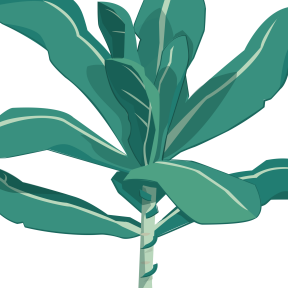
Level 6
first harvest
- Currently only shipping to the Netherlands and Belgium
- Choose your preferred delivery date
- Sent by PostNL or Transmission
- Track & Trace in your inbox
- The app helps you with almost everything you do in your vegetable garden: sowing, tending, and harvesting.
- If something goes wrong, the app tells you what steps to take.
- If that doesn’t work, you can ask us for advice.
- If that still doesn’t help, we’ll look for other solutions together. Until we get it right.
More about our dino kale seeds
Growing dino kale is super simple: sow, grow, and harvest. One plant fits in 1 square vegetable patch. Dino kale can handle cold weather and grows best in cooler temperatures: heat makes the leaves a little bitter.
Protect the plants from snails, caterpillars, and butterflies. They love it. But because dino kale plants are extremely resilient, they even survive insect attacks.
- Species name: Nero di Toscane
- Family: cruciferous
- Number of plants per square patch: 1
- Height: up to 80 cm
- Sowing time: April to mid-July and September to mid-October
- Sowing depth: 0.5 cm
- Germination: 7 to 23°C in 5 - 12 days
- Time to harvest: after 6 weeks
- Sunlight: can grow in sun or shade
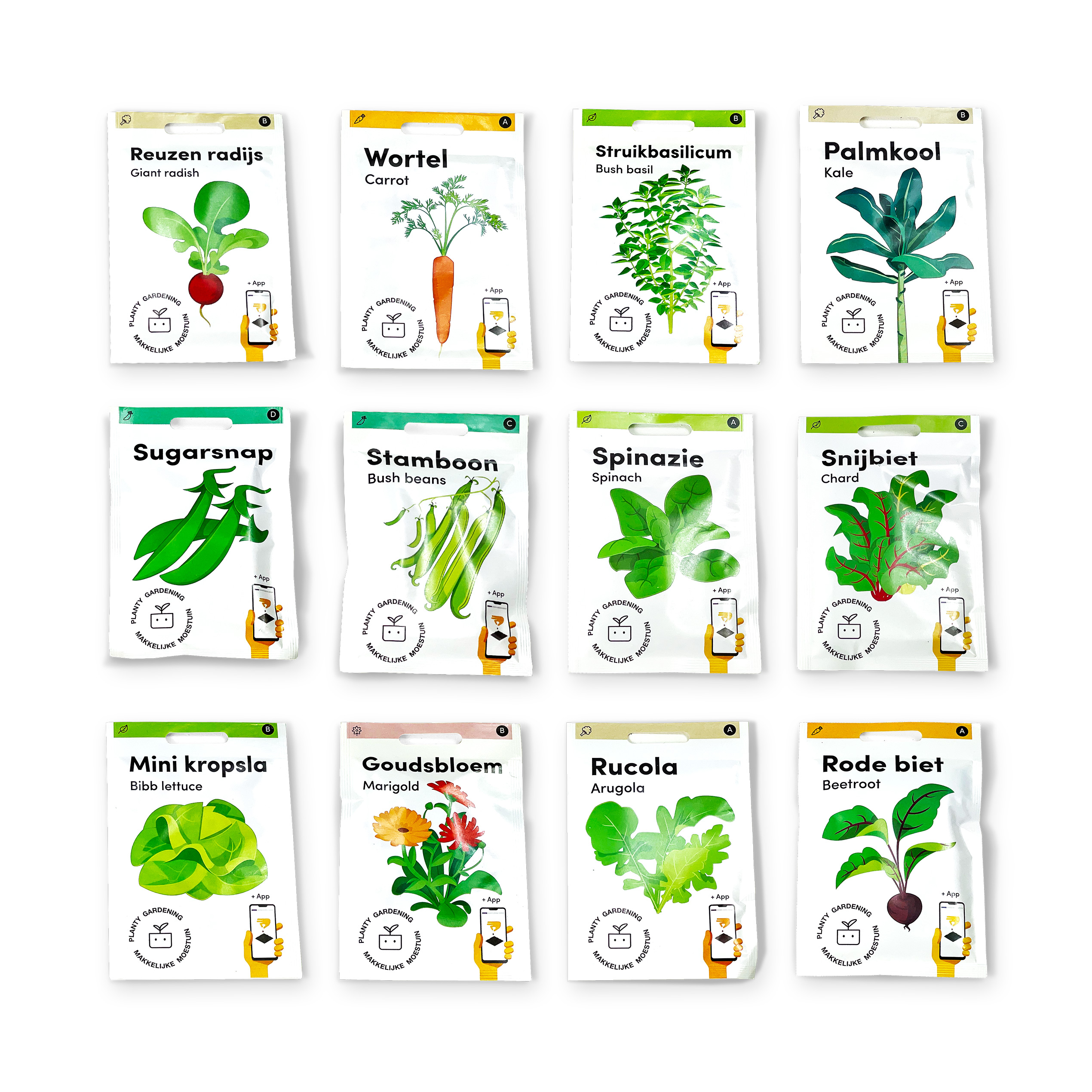
We sell dino kale seed bags separately in the shop, or you can also buy them as part of a seed pack:
What do you need to grow dino kale yourself?
You only need a few things to grow dino kale:
- a 30x30 cm patch with airy, nutrient-rich soil mix
- dino kale seeds
- a place with at least 4 hours of sunlight a day
In other words: an MM-Mini, or a square patch in 1 of our garden boxes, filled with MM-Mix.
Growing your own dino kale is super easy with the MM-Mix. If you grow in low-quality (potting) soil, disappointment is pretty much guaranteed. So don't skimp on soil mix: go for the best.
Growing your own dino kale is super easy with the MM-Mix. If you grow in low-quality (potting) soil, disappointment is pretty much guaranteed. So don't skimp on soil mix: go for the best.

How do you sow and grow dino kale?
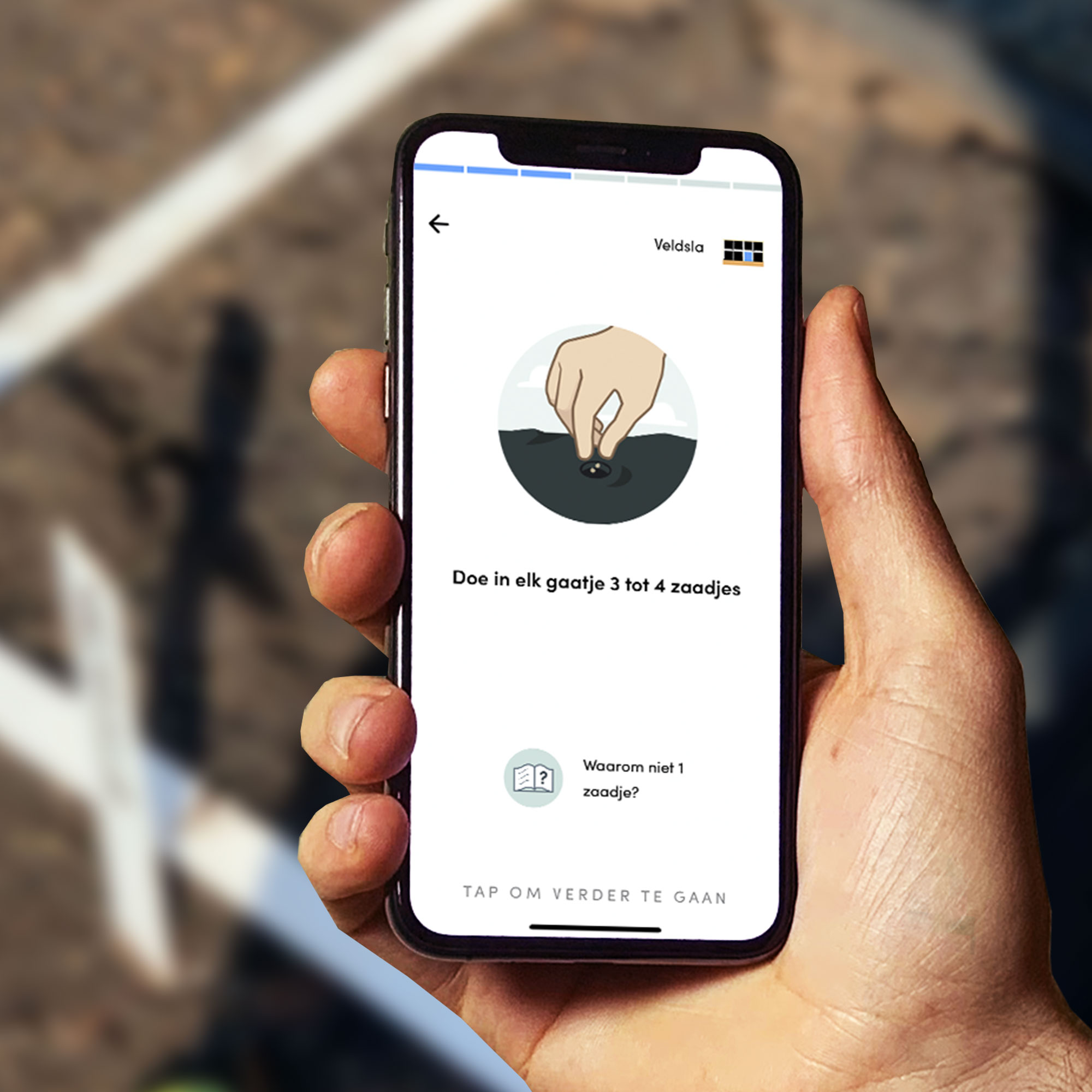
Dino kale is included in the free Planty Gardening app. Use it, and you'll get step-by-step guidance from seed to harvest.
Each vegetable goes through a number of stages - we call them levels. The app tells you exactly what to do at each level and checks in when your plants are ready for the next one.
So, you don't need to know how to grow dino kale in advance: the app takes you through every step.
But if you'd like to read more about those steps, here's what the process looks like:
Each vegetable goes through a number of stages - we call them levels. The app tells you exactly what to do at each level and checks in when your plants are ready for the next one.
So, you don't need to know how to grow dino kale in advance: the app takes you through every step.
But if you'd like to read more about those steps, here's what the process looks like:
Level 1: Sowing dino kale
Level 1: Sow Dino kale
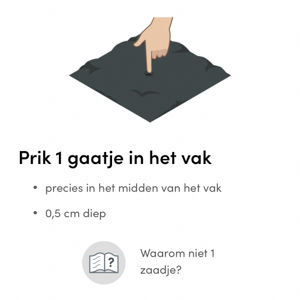
Choose a patch in the 2 back rows of your garden box. Make the soil mix loose and moist. Then sow the seeds like this:
- poke 1 hole in the middle of the patch (1 cm deep max)
- put 2 to 3 seeds in the hole
- carefully cover it up with soil mix
Depending on the weather and the time of year, you'll start to see something come up in the next 5 to 12 days.
Level 2 and 3: Dino kale seedlings and thinning
Levels 2 and 3: Dino kale seedlings and thinning
If you see the first seedlings, you know you're on track.
The next level is thinning out. More than 1 seedling may come up in the spot you sowed. Choose the best seedling and remove the rest. It might sound harsh, but it's necessary. The remaining plant will have the room it needs to grow.
The next level is thinning out. More than 1 seedling may come up in the spot you sowed. Choose the best seedling and remove the rest. It might sound harsh, but it's necessary. The remaining plant will have the room it needs to grow.

Level 4: Caring for your dino kale plant
Level 4: Caring for your Dino kale plant
After about 3 weeks your seedling becomes a small plant.
Protect it from snails: they love young dino kale. In butterfly season watch out for the enemy of all kale: the cabbage white. This cute white butterfly lays its eggs on (or under) the leaves. They hatch into hungry caterpillars.
Protect it from snails: they love young dino kale. In butterfly season watch out for the enemy of all kale: the cabbage white. This cute white butterfly lays its eggs on (or under) the leaves. They hatch into hungry caterpillars.

Read more about cabbage whites and caterpillars on this page.
Dino kale is super strong. Even if it looks completely eaten up, it usually makes a comeback.
Just water regularly and remove weeds and yellowed leaves right away.
Dino kale is super strong. Even if it looks completely eaten up, it usually makes a comeback.
Just water regularly and remove weeds and yellowed leaves right away.

Level 5: Harvesting dino kale
Level 5: Harvesting Dino kale
About 6 to 8 weeks after sowing, you can start harvesting a few leaves.
How? Cut or break off the bottom leaves. The plant will start to look more and more like a palm tree. As long as you leave the top and center of the plant, new leaves will grow each time.
How? Cut or break off the bottom leaves. The plant will start to look more and more like a palm tree. As long as you leave the top and center of the plant, new leaves will grow each time.

Your plant will grow all the season and get pretty big. So be careful it doesn't take up too much space.
Continue harvesting and regularly cut off some leaves. When the weather is dry, give it some water and remove dry leaves.
Continue harvesting and regularly cut off some leaves. When the weather is dry, give it some water and remove dry leaves.
What do you use dino kale for?
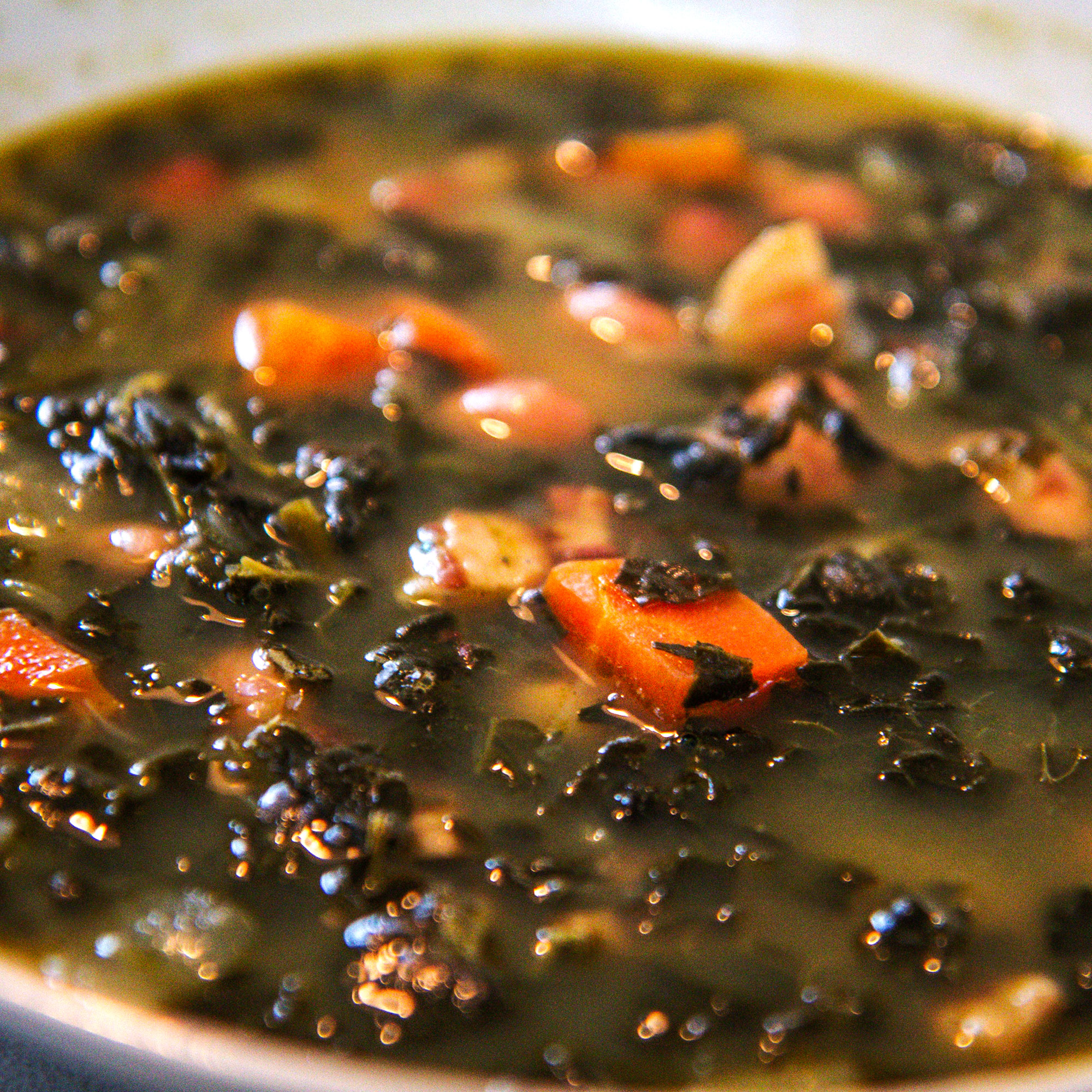
You can eat dino kale leaves just like other kale varieties: toss them in a soup, stew, or stir fry.
Finely chop up young leaves for salads or green smoothies. Dino kale has a powerful flavor, so give it a taste to see how you like it.
Finely chop up young leaves for salads or green smoothies. Dino kale has a powerful flavor, so give it a taste to see how you like it.
Dino kale is super healthy. It contains lots of calcium - much more than milk - for strong bones and healthy teeth. Of all kale types, dino kale contains the most vitamin C: that's 1.5x as much as an orange.
More dino kale vitamins and minerals are vitamins A and K, iron, copper, phosphorus, folic acid, and potassium.
Its healthy antioxidants and loads of beta-carotene are anti-inflammatory, which helps fight cardiovascular disease, diabetes, and cancer.
More dino kale vitamins and minerals are vitamins A and K, iron, copper, phosphorus, folic acid, and potassium.
Its healthy antioxidants and loads of beta-carotene are anti-inflammatory, which helps fight cardiovascular disease, diabetes, and cancer.
Level 6: Keep harvesting all year round
Level 6: Keep harvesting all year
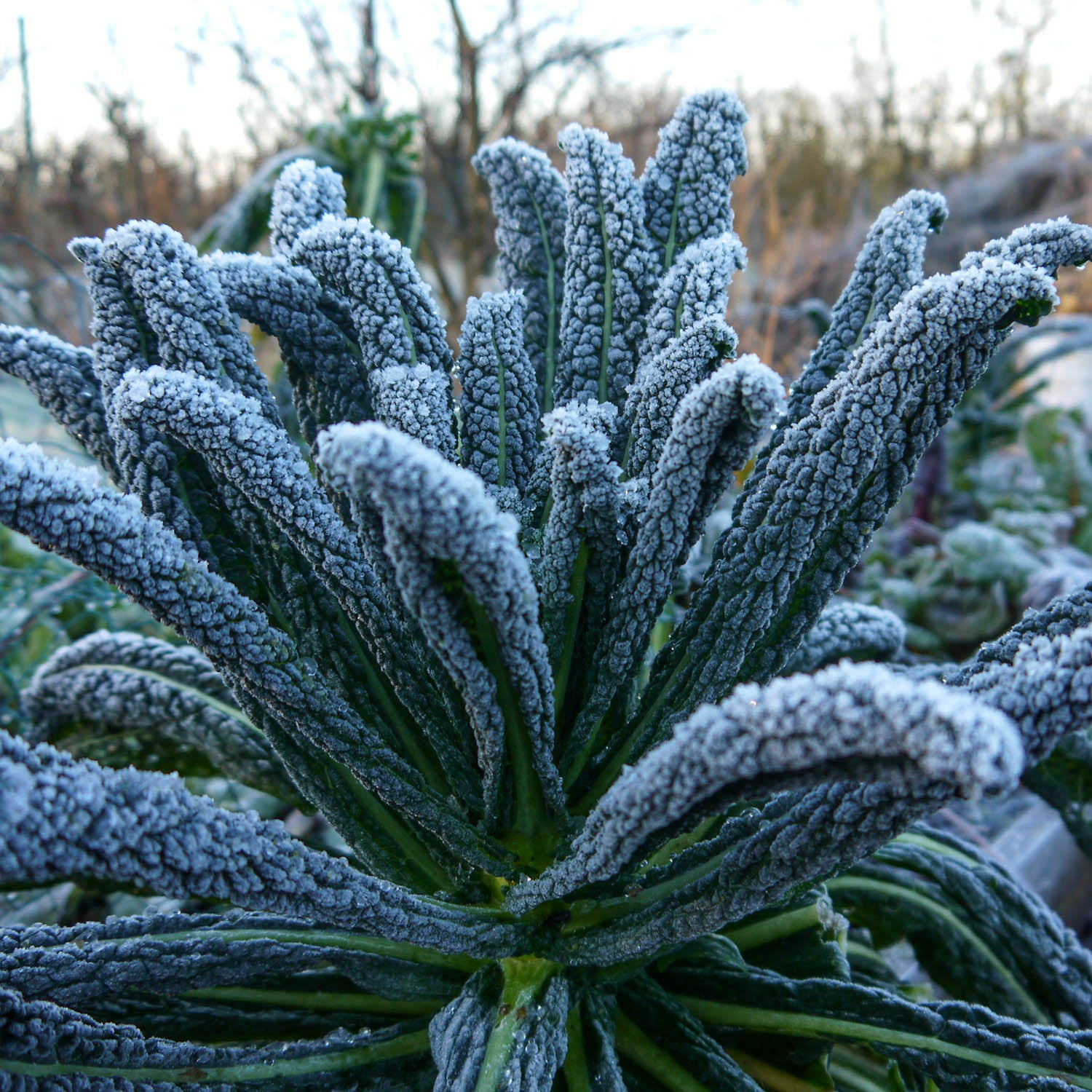
Dino kale is frost-resistant and can keep for a long time. The leaves taste milder when frozen.
They pretty much stop producing new leaves in winter. But you can keep eating the ones that are still there.
They pretty much stop producing new leaves in winter. But you can keep eating the ones that are still there.

A party for you and the bees
In early spring, the dino kale starts to grow again. You can still harvest plenty - until the plant starts to flower. Then it's time to harvest the rest of the leaves and clear out your kale patch.
Or, you can leave the flowering plant for the bees, bumblebees, and butterflies. They'll be grateful for that early pollen.
If you're patient - or lazy 😉 - you can leave it in your garden box until the end of summer and harvest the seeds.
Or, you can leave the flowering plant for the bees, bumblebees, and butterflies. They'll be grateful for that early pollen.
If you're patient - or lazy 😉 - you can leave it in your garden box until the end of summer and harvest the seeds.

So, what's stopping you from growing dino kale?
It's maybe the easiest vegetable to grow yourself, you can enjoy it for a long time, and it tastes great.
Plus: with our materials and app it's almost impossible to fail 😉
Order your dino kale seeds here or get growing with a complete starter kit:
Plus: with our materials and app it's almost impossible to fail 😉
Order your dino kale seeds here or get growing with a complete starter kit:
Enjoy!