
How do you sow in a Makkelijke Moestuin?
In a Makkelijke Moestuin, you sow vegetables in squares instead of rows. This puts them in the right place with the right amount of space between them.
And because your raised bed contains many different vegetables, you naturally practise crop rotation.
And because your raised bed contains many different vegetables, you naturally practise crop rotation.
Our largest raised bed, with 16 squares, measures 120 x 120 cm. It takes up surprisingly little space, yet produces an enormous harvest.
At least, it does when you fill the squares correctly and keep them planted throughout the season.
At least, it does when you fill the squares correctly and keep them planted throughout the season.
Sowing: what, when and where?
The first question is easy: you mainly sow the vegetables you enjoy eating.
When and where can make beginners less certain. How do you know what to sow in each square, when to sow it and what the best method is?
Fortunately, you need hardly any plant knowledge to start a Makkelijke Moestuin. In fact, you do not really need any at all.
That is what the app is for: it tells you exactly what to do at the right time.
When and where can make beginners less certain. How do you know what to sow in each square, when to sow it and what the best method is?
Fortunately, you need hardly any plant knowledge to start a Makkelijke Moestuin. In fact, you do not really need any at all.
That is what the app is for: it tells you exactly what to do at the right time.
But if you would like to see what sowing looks like, and understand why we do it this way, keep reading.
Sowing
Sowing itself is very easy: make a small hole in the MM-mix, put in a few seeds, close the hole and add a little water.
Watch Jelmer sow several squares for the first time in his life:
Watch Jelmer sow several squares for the first time in his life:
I will explain the sowing itself in more detail later.
Before you start, you first need to know which vegetables you want to sow, where to put them, what time of year is suitable and how many plants fit in one square.
And there is more: sowing in a Makkelijke Moestuin is also a little different from sowing in a traditional vegetable garden.
Before you start, you first need to know which vegetables you want to sow, where to put them, what time of year is suitable and how many plants fit in one square.
And there is more: sowing in a Makkelijke Moestuin is also a little different from sowing in a traditional vegetable garden.
The Makkelijke Moestuin sowing system
In a Makkelijke Moestuin, you place plants in the right position and at the correct distance from each other straight away.
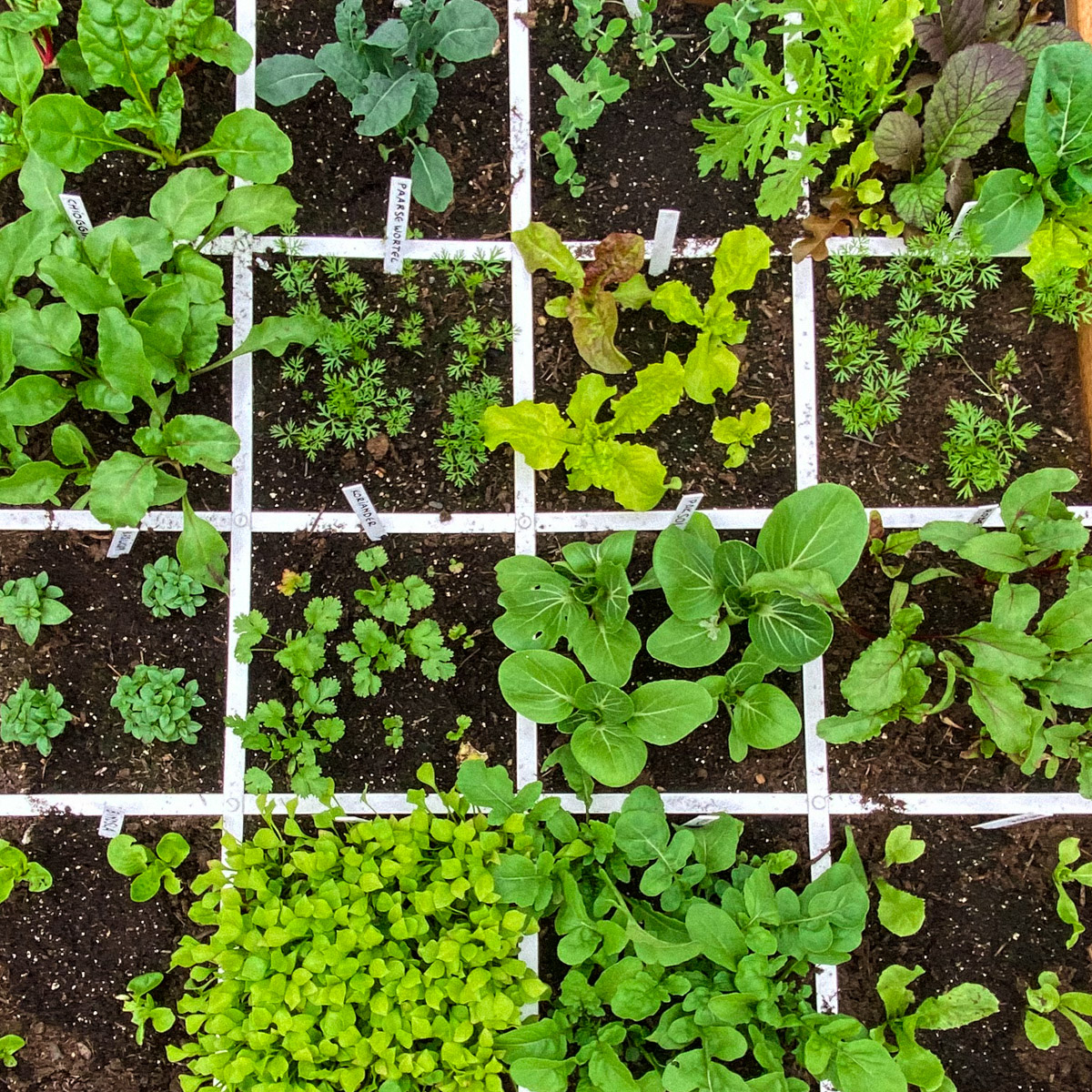
You also consider the time of year, the plant family and whether to sow directly in the raised bed, start seeds indoors or buy a seedling.
These are the points to consider:
These are the points to consider:
- How tall will the plant grow?
- Is this the right time of year?
- Which plant family does it belong to?
- How many fit in one square?
- Will you sow, start seeds indoors or plant a seedling?
1. Plant height and position in the raised bed
Plants need sunlight. If taller plants shade them, they will not grow well.
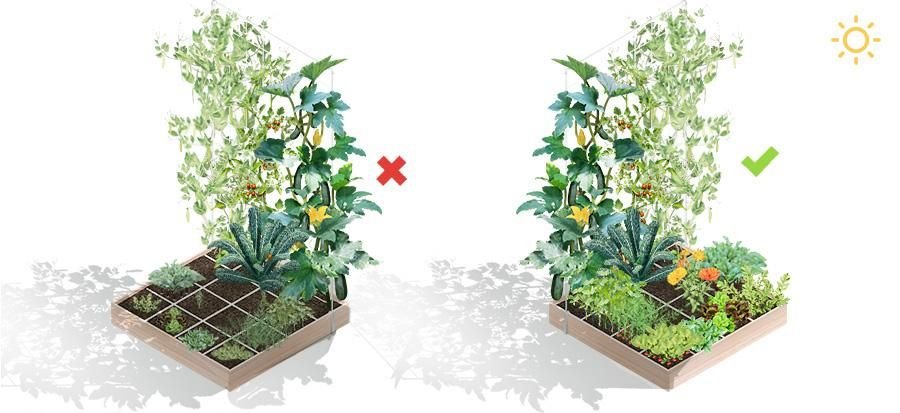
To prevent shade, always put the trellis on the north side of the raised bed, with the front facing south.
Then arrange the plants from shortest at the front to tallest at the back.
The example below uses a 120 x 120 cm raised bed, but the same principle applies to other sizes.
Then arrange the plants from shortest at the front to tallest at the back.
The example below uses a 120 x 120 cm raised bed, but the same principle applies to other sizes.
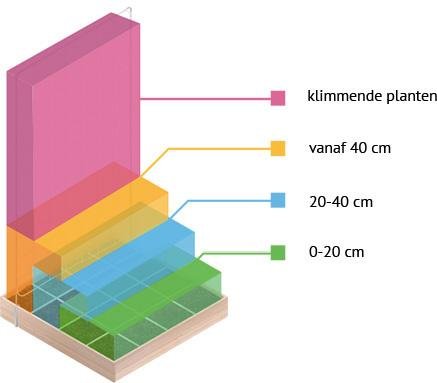
When you sow, the app shows which vegetables are best suited to each square.
The height is also printed on our seed packets.
The height is also printed on our seed packets.
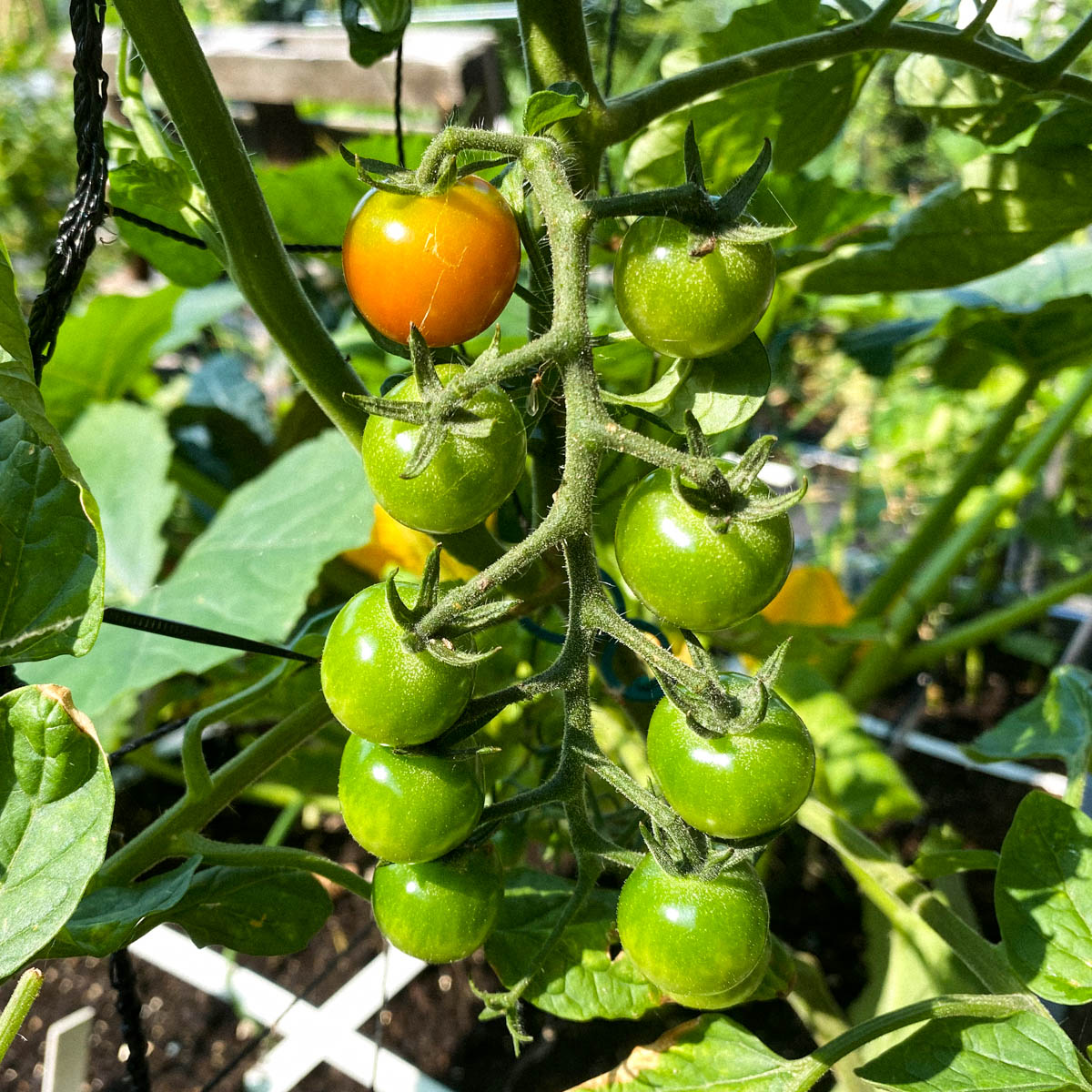
Every one of our seed packets shows the best time to sow. If you use the app, it will keep you on track too.
3. Plant families and crop rotation
Plants can be divided into plant families.
If you repeatedly grow plants from the same family in the same soil, they gradually perform less well and become more vulnerable to diseases and pests.
Gardeners with traditional vegetable gardens therefore create detailed plans to move crops to different spots over the years. This is called crop rotation.
A vegetable bed might contain lettuces one year, followed by brassicas the next. Courgettes follow, then root vegetables a year later, then beans, and so on.
If you repeatedly grow plants from the same family in the same soil, they gradually perform less well and become more vulnerable to diseases and pests.
Gardeners with traditional vegetable gardens therefore create detailed plans to move crops to different spots over the years. This is called crop rotation.
A vegetable bed might contain lettuces one year, followed by brassicas the next. Courgettes follow, then root vegetables a year later, then beans, and so on.
Crop rotation in the Makkelijke Moestuin
We do things differently in the Makkelijke Moestuin. We gave every plant family its own colour:
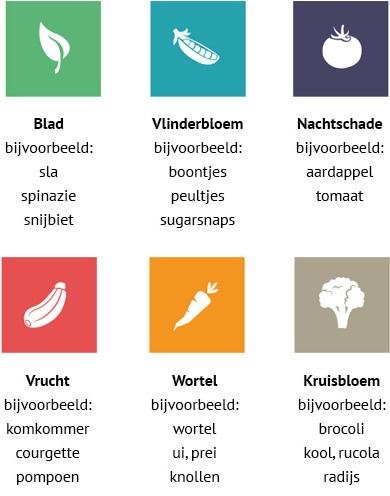
The top band on each of our seed packets uses the same colour, so you can see at a glance which family the vegetable belongs to.

Mix the colours as much as possible and avoid growing the same family twice in succession in one square. That automatically gives you a simple form of crop rotation.
The app keeps track of this too. If you harvest a square of beetroot from the orange family and want to sow it again, the app suggests a vegetable with a different colour. Lettuce, for example, belongs to the green family.
This prevents most problems and helps every plant grow well.
At the end of the year, or at the start of the new season, remove the grid and mix the MM-mix in your raised bed thoroughly.
That lets you begin the new year from scratch.
The app keeps track of this too. If you harvest a square of beetroot from the orange family and want to sow it again, the app suggests a vegetable with a different colour. Lettuce, for example, belongs to the green family.
This prevents most problems and helps every plant grow well.
At the end of the year, or at the start of the new season, remove the grid and mix the MM-mix in your raised bed thoroughly.
That lets you begin the new year from scratch.
4. How many plants fit in one square?
One 30 x 30 cm square can hold plants of different sizes.
Place them at their final spacing straight away so they have enough room to grow and you do not need to transplant them later.
Almost all vegetables fit into one of four sizes:
Place them at their final spacing straight away so they have enough room to grow and you do not need to transplant them later.
Almost all vegetables fit into one of four sizes:
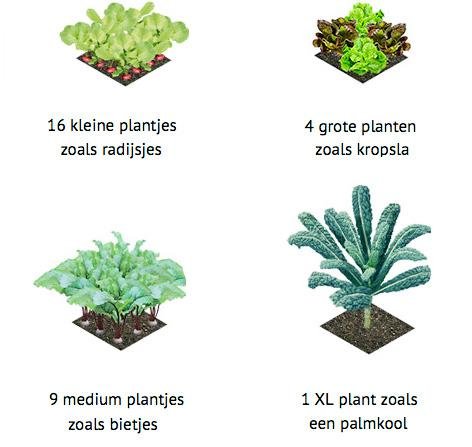
The square symbol on every packet of Makkelijke Moestuin seeds shows how many plants fit in one square, where to make the sowing holes and how deep they should be.
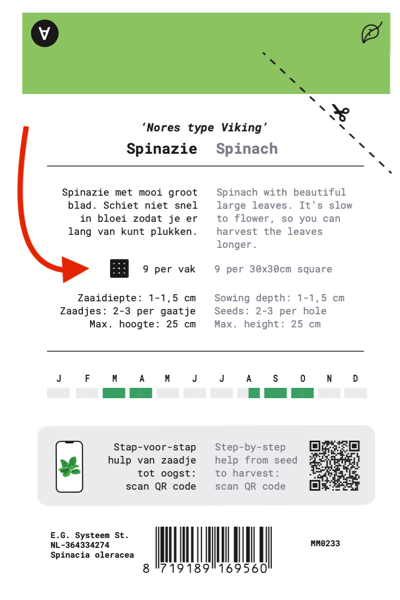
You can also find this in the sowing calendar in the Dutch Makkelijke Moestuin book and in the Makkelijke Moestuin app.
Does that sound like a lot of work?
Not when you use our app and our seeds 😉
When you select a square in the app, it checks every point in this list and suggests the vegetables best suited to that spot. You never have to work it all out yourself, and it takes no extra time.
The app also tells you how deep to sow and how many seeds to place in each hole.
Please note: the app works with our seeds, not seeds from other brands. If you use other seeds, check the packet for the final plant spacing and calculate how many plants fit in one square yourself.
When you select a square in the app, it checks every point in this list and suggests the vegetables best suited to that spot. You never have to work it all out yourself, and it takes no extra time.
The app also tells you how deep to sow and how many seeds to place in each hole.
Please note: the app works with our seeds, not seeds from other brands. If you use other seeds, check the packet for the final plant spacing and calculate how many plants fit in one square yourself.