
Are your old seeds still viable?
Can you still use your old seeds? A germination test will tell you whether they still sprout properly. I will show you how.
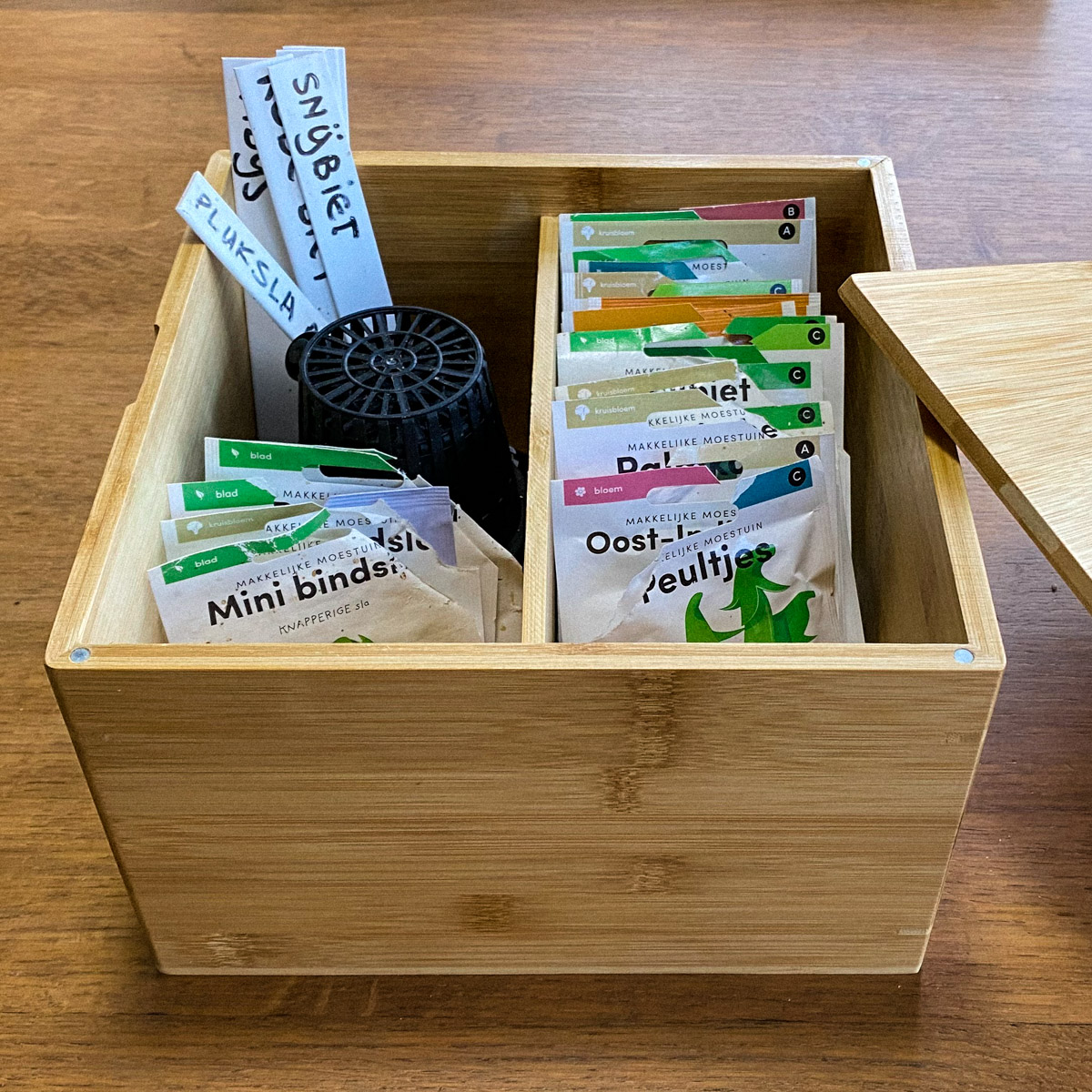
You only use a small number of seeds in the Makkelijke Moestuin. If you have been growing for a while, you probably still have seeds from last year or the years before. Or perhaps someone gave you some.
How can you tell whether those old seeds are still usable?
How can you tell whether those old seeds are still usable?
Germination power
Germination power is the percentage of seeds that will sprout when the conditions are right. The more germination power, the more likely it is that you'll see seedlings emerge when you sow them.
A lot of seeds can be left on the shelf for years. Peas or radishes, to name a couple. Others lose their ability to germinate sooner, like old lettuce and spinach. They have a tougher time.
A simple test makes it easy to see which seeds have a good chance at making it in your garden.
A lot of seeds can be left on the shelf for years. Peas or radishes, to name a couple. Others lose their ability to germinate sooner, like old lettuce and spinach. They have a tougher time.
A simple test makes it easy to see which seeds have a good chance at making it in your garden.
How to do a germination test
Take a plastic to-go container or Tupperware and place a damp paper towel on the bottom, folded in half.
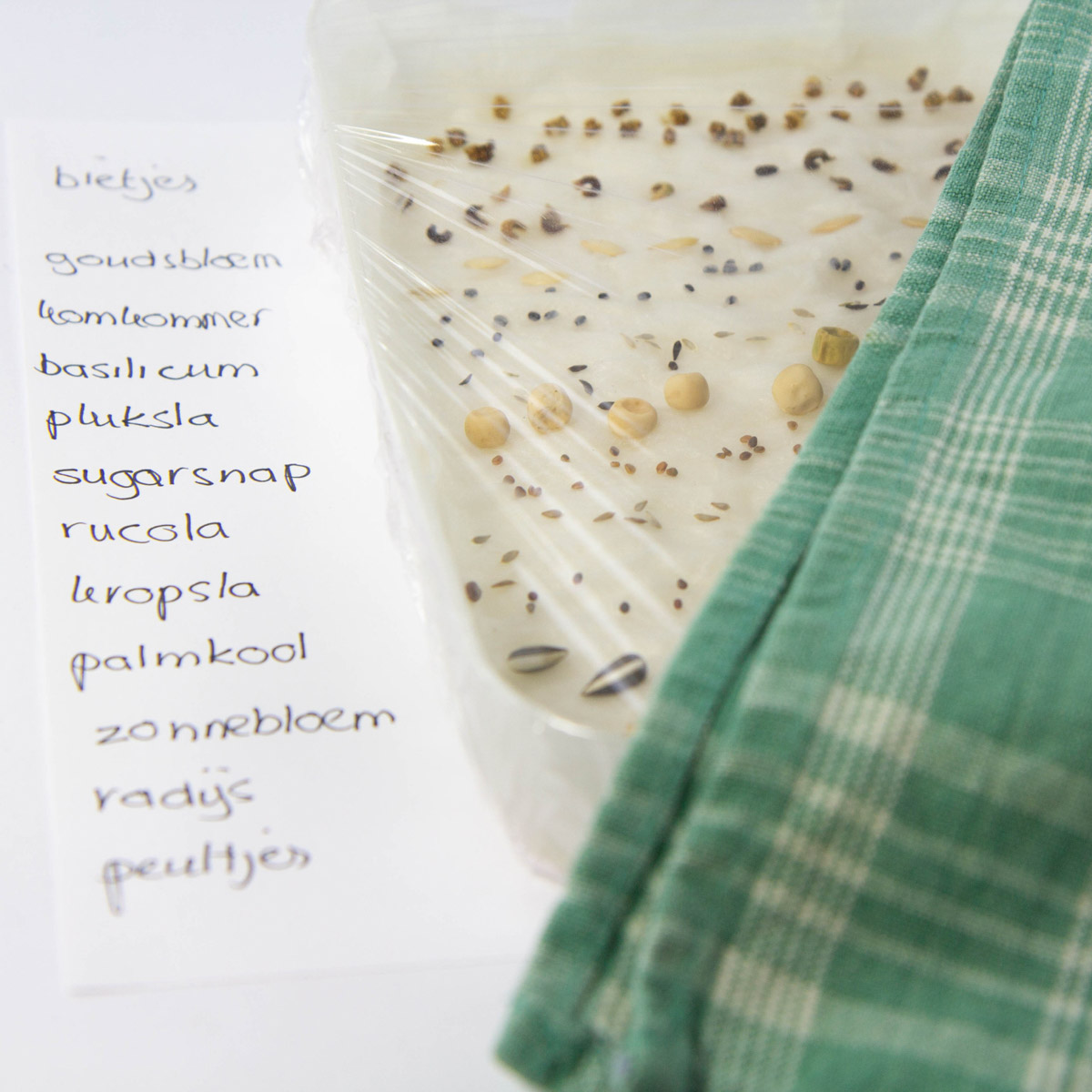
Put your seeds in rows and then cover the container with plastic wrap. The plastic keeps the paper towel from drying out.
Put a sheet of paper under the container. Write each vegetable's name on it. Otherwise, you'll forget which is which. Trust me, I know from experience.
Lastly, cover the container with a dark cloth. Some seeds only germinate in the dark.
Put a sheet of paper under the container. Write each vegetable's name on it. Otherwise, you'll forget which is which. Trust me, I know from experience.
Lastly, cover the container with a dark cloth. Some seeds only germinate in the dark.
Just a little patience
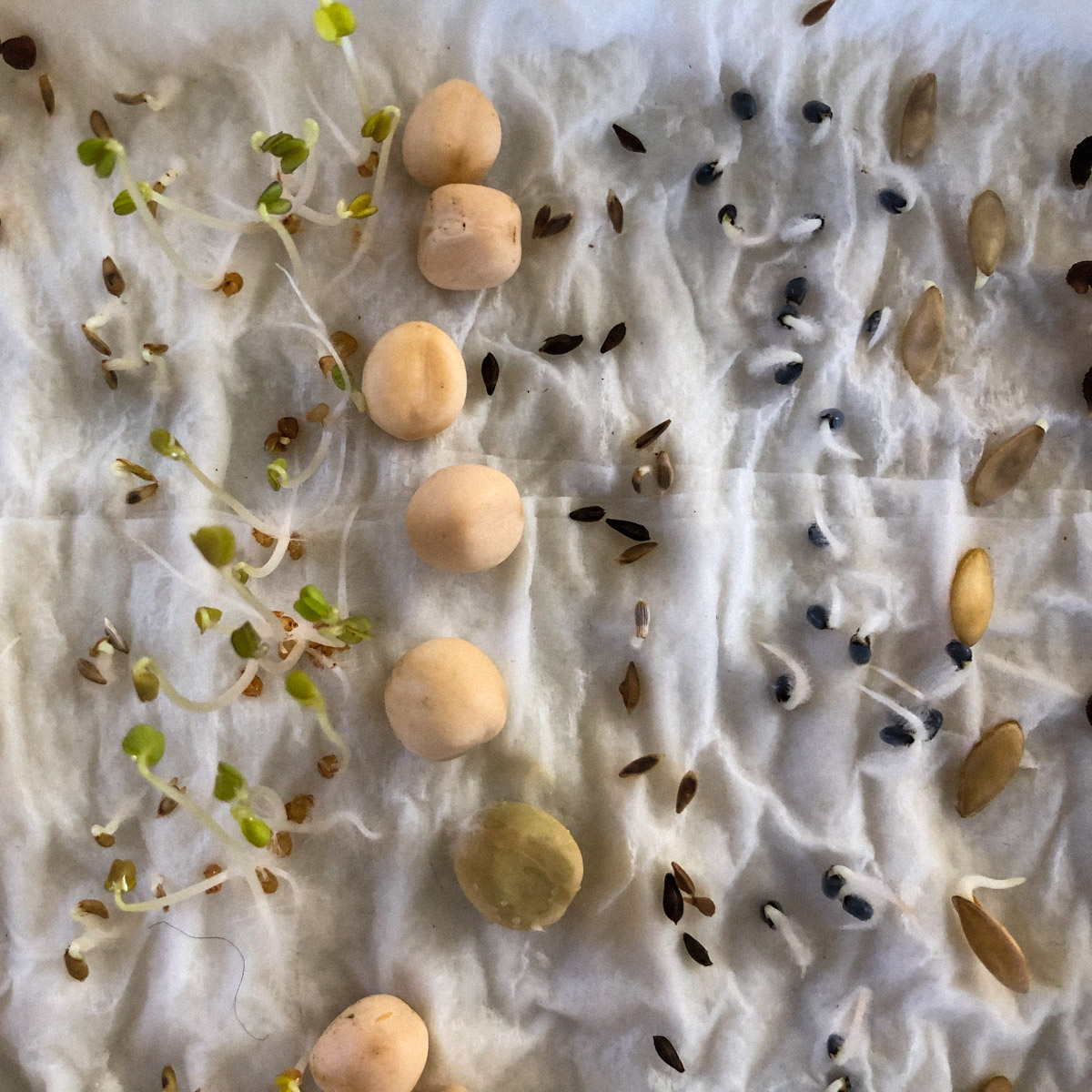
Over the next few days, you should see the seeds start to sprout.
But beware: not all seeds germinate at the same speed. Radishes will take just a few days, lettuce takes a little longer and spinach seeds take about 10 days.
Check the app for each vegetable's germination timeframe. You can also check the seed description in the webshop.
But beware: not all seeds germinate at the same speed. Radishes will take just a few days, lettuce takes a little longer and spinach seeds take about 10 days.
Check the app for each vegetable's germination timeframe. You can also check the seed description in the webshop.
So, are they keepers?
Do almost all your seeds sprout? Then their powers of germination are strong 😉 You can use them.
Do only a few germinate, or none at all? Then toss them in the trash. It's a bummer, but nothing's more frustrating than sowing, waiting for weeks, and then seeing nothing come up.
Is it 50/50? Then you can still use the seeds. But when you sow, just plant a few extra seeds in each hole. Something like 5 instead of the usual 2 or 3.
If you get extra seedlings, you just thin them out later.
Do only a few germinate, or none at all? Then toss them in the trash. It's a bummer, but nothing's more frustrating than sowing, waiting for weeks, and then seeing nothing come up.
Is it 50/50? Then you can still use the seeds. But when you sow, just plant a few extra seeds in each hole. Something like 5 instead of the usual 2 or 3.
If you get extra seedlings, you just thin them out later.
Storing your seeds
Most seeds stay good for years, even longer than the date on the bag. You just need to keep them cool and dry.
Mel Bartholomew writes in his Square Foot Gardening book that you should keep them in a sealed jar in the fridge.
When you need them, you just:
Mel Bartholomew writes in his Square Foot Gardening book that you should keep them in a sealed jar in the fridge.
When you need them, you just:
- open the fridge
- take out the jar
- take out the seed bag
- take out some seeds
- put the bag back in the jar
- put the jar back in the fridge
Sounds good. In theory.
In practice?
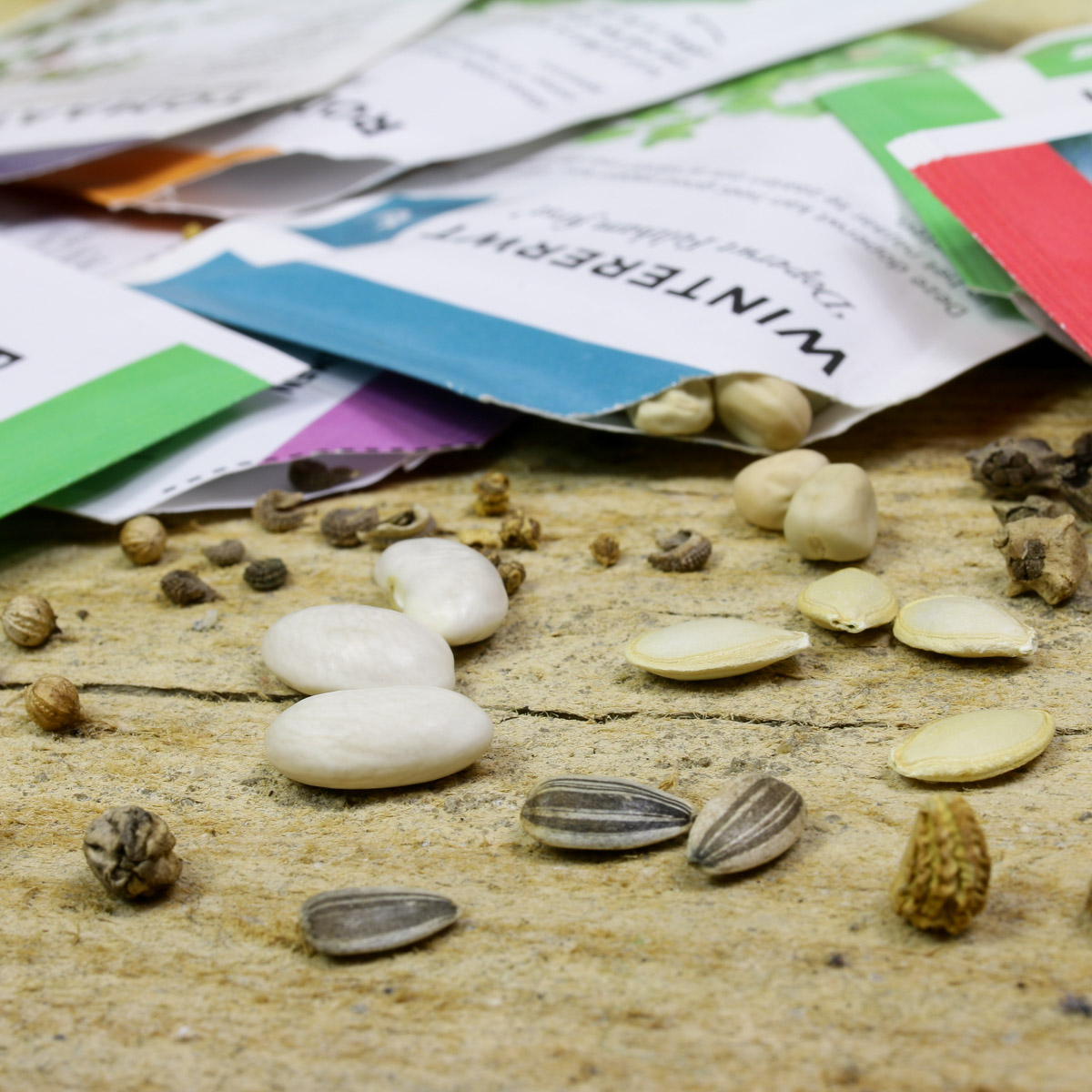
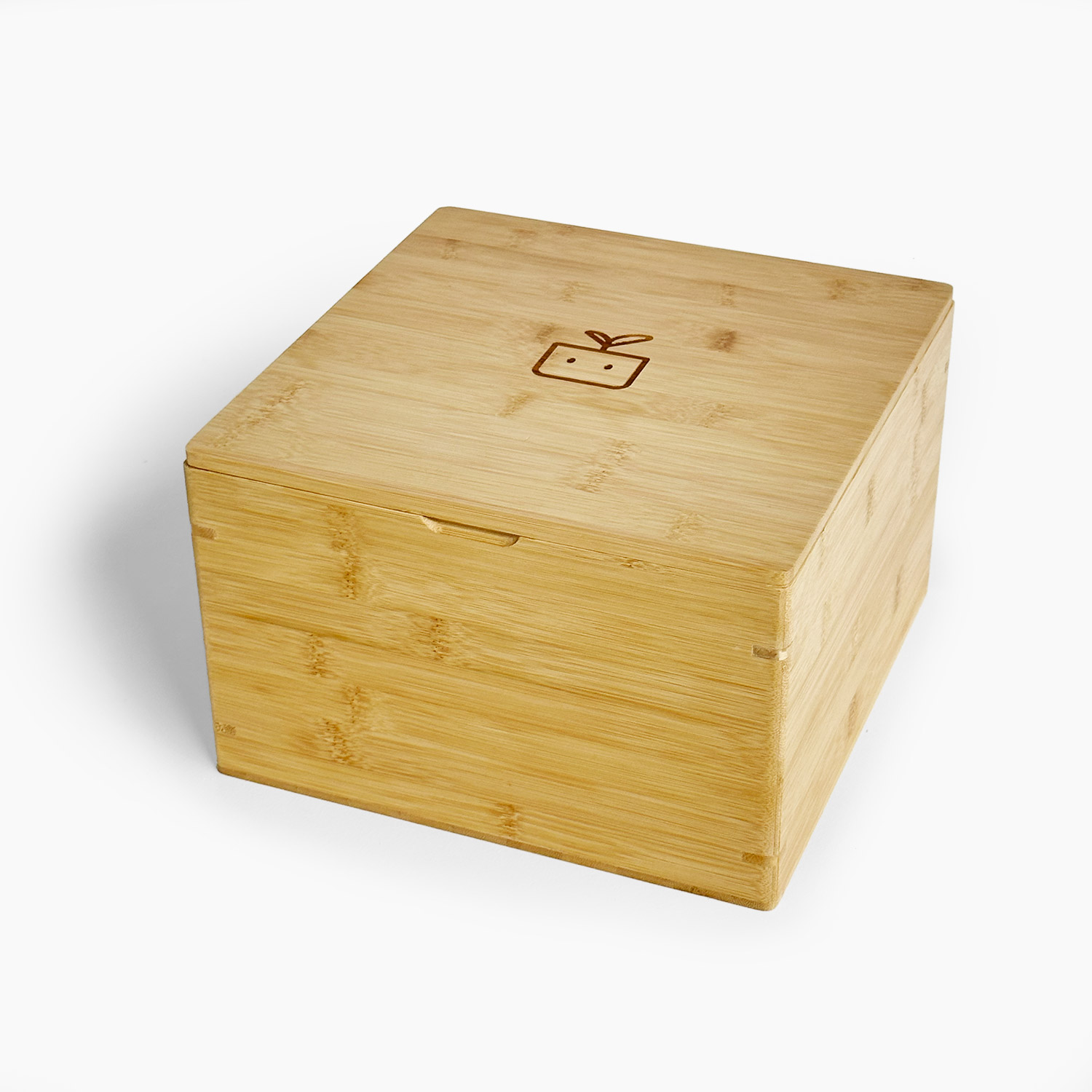
I'm not the greatest seed-storer of all time. Not as bad as the picture, but I don't do the fridge method.
My seedbox is usually left open and exposed in the pantry throughout the growing season. And sometimes, I find open bags in my coat pocket a week after I sowed them.
That's why I always check to see if my seeds are still good at the start of each sowing season.
My seedbox is usually left open and exposed in the pantry throughout the growing season. And sometimes, I find open bags in my coat pocket a week after I sowed them.
That's why I always check to see if my seeds are still good at the start of each sowing season.
An alternative to storing seeds
Instead of storing seeds carefully, you can also use them all up, for example by sharing packets with other people. But some packets contain so many seeds that even then you will never finish your supply.
That is one reason I put together my own seed selection. It includes vegetables, herbs and flowers that all grow well in the squares of my raised beds: compact, fast-growing, easy and, above all, delicious.
The packets are available separately and in several bundles.
That is one reason I put together my own seed selection. It includes vegetables, herbs and flowers that all grow well in the squares of my raised beds: compact, fast-growing, easy and, above all, delicious.
The packets are available separately and in several bundles.
- Basic seeds - 12 easy varieties that fit in any vegetable garden
- Climbers - 7 varieties for the trellis
We also regularly offer temporary bundles.
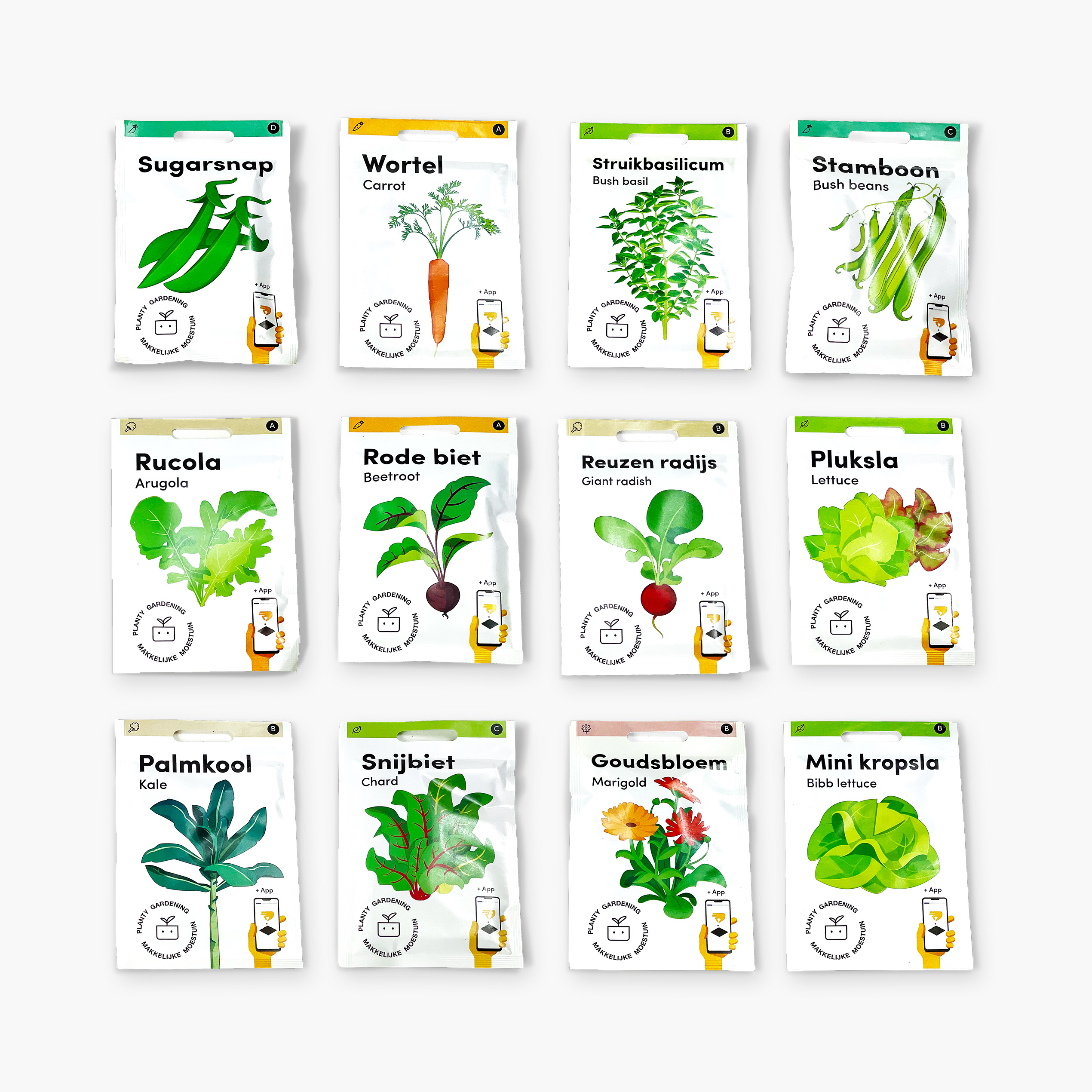
Each packet contains all the information you need for the Makkelijke Moestuin, such as how many plants to sow in each square. There are enough seeds in every packet to sow several squares.
One bundle will easily keep a few raised beds filled throughout the season. Unlike many shop-bought packets, however, they do not contain huge quantities you will never use.
All our seeds are also included in the Makkelijke Moestuin app, so you immediately get a free vegetable-garden coach too 🙂
Ideal!
One bundle will easily keep a few raised beds filled throughout the season. Unlike many shop-bought packets, however, they do not contain huge quantities you will never use.
All our seeds are also included in the Makkelijke Moestuin app, so you immediately get a free vegetable-garden coach too 🙂
Ideal!