
Swipe
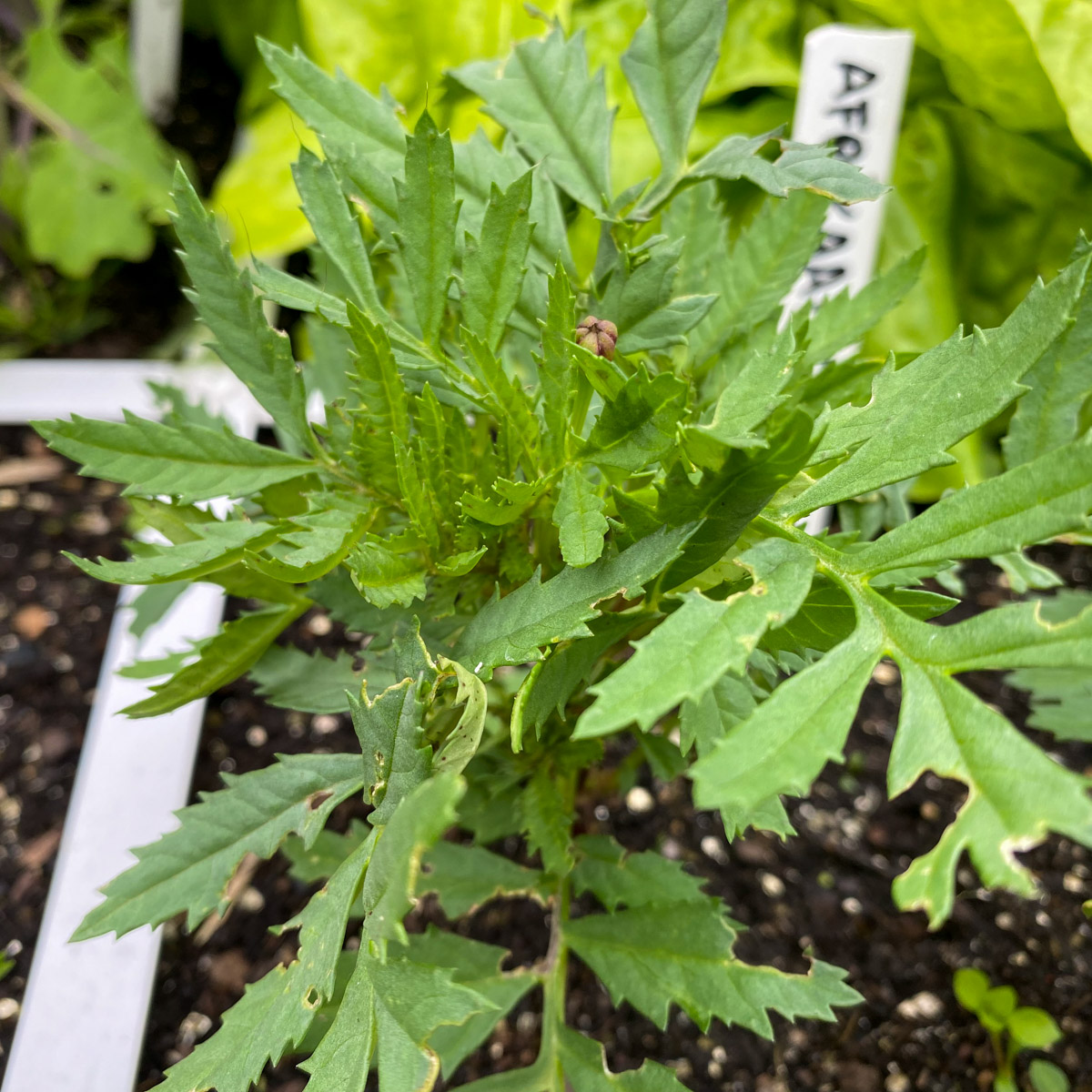
Start indoors
African Marigold
Product information

Sowing in:
J
F
M
A
M
J
J
A
S
O
N
D
In Stock
Free delivery from € 30 🇳🇱
Choose your own delivery date
Additional

MM coconut seed-starting mix is temporarily sold out. Want to know when it is available again? Click here.
Description
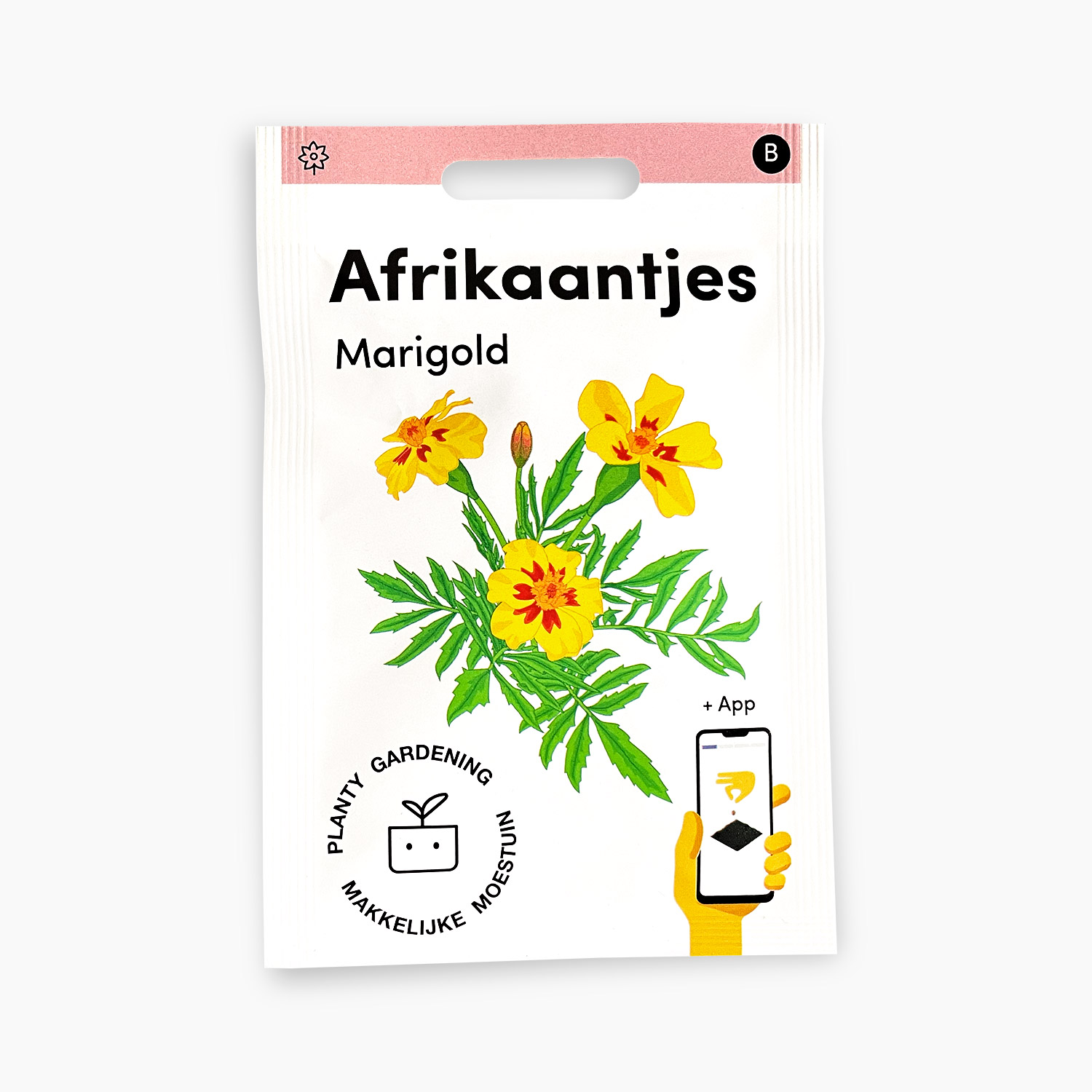
African Marigold is the best companion plant for your vegetable garden. It repels harmful insects, attracts bees and butterflies, and flowers for a long time.
Specifications
Pre-sowing: April to May
Height: 25-45 cm
Contents: approx. 60 seeds, for 15+ squares
Height: 25-45 cm
Contents: approx. 60 seeds, for 15+ squares
In the app
Sowing: 1 April - 30 June
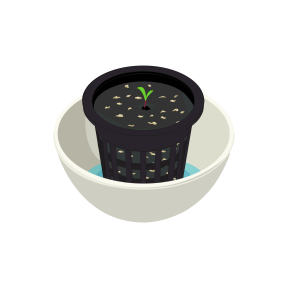
Level 1
started indoors
Level 2
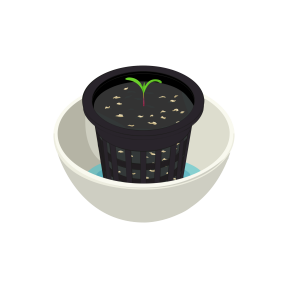
seedlings emerging
Level 3
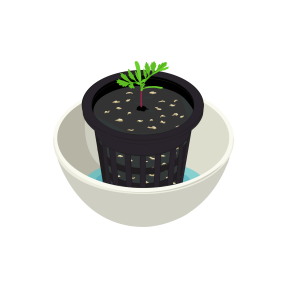
seedlings thinned
Level 4
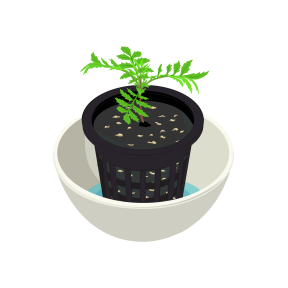
small plants
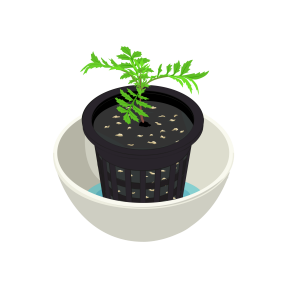
Level 5
hardening off: day 1
Level 6
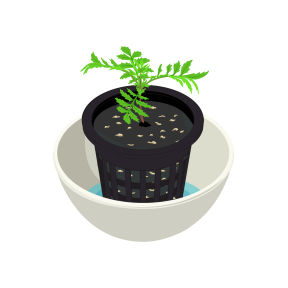
hardening off: day 2
Level 7
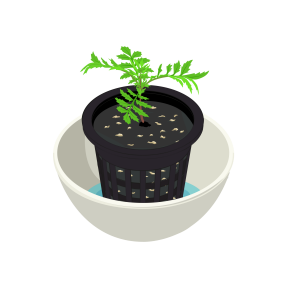
hardening off: day 3
Level 8
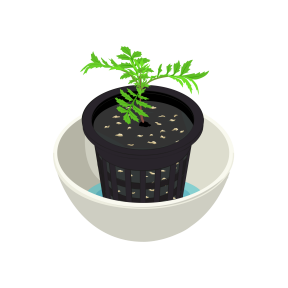
hardening off: day 4
Level 9
hardening off: day 5

Level 10
planted in final position
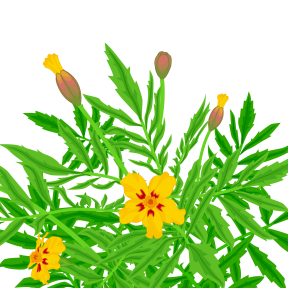
Level 11
small bushy plants
- Currently only shipping to the Netherlands and Belgium
- Choose your preferred delivery date
- Sent by PostNL or Transmission
- Track & Trace in your inbox
- The app helps you with almost everything you do in your vegetable garden: sowing, tending, and harvesting.
- If something goes wrong, the app tells you what steps to take.
- If that doesn’t work, you can ask us for advice.
- If that still doesn’t help, we’ll look for other solutions together. Until we get it right.
More about our African Marigolds
African Marigolds are one of the best companion plants for your vegetable garden. They repel harmful insects, such as aphids, and attract lots of bees and butterflies.
- Variety: Tagetes Naughty Mariette
- Family: flowers
- Number per square: 1
- Height: 25 to 45 cm
- Pre-sowing: April to May (sow outside from late May to June)
- Sowing depth: max. 0.5 cm
- Germination time: 7 to 21 days from 18°C
- Time to flowering: from 10 weeks
- Sunlight: preferably full sun, but a little shade is fine too
- Packet contents: approx. 60 seeds, for 15+ squares
Note: these seeds have an expiry date of 2027. From then on, germination may slowly decrease, but you can still sow them successfully.

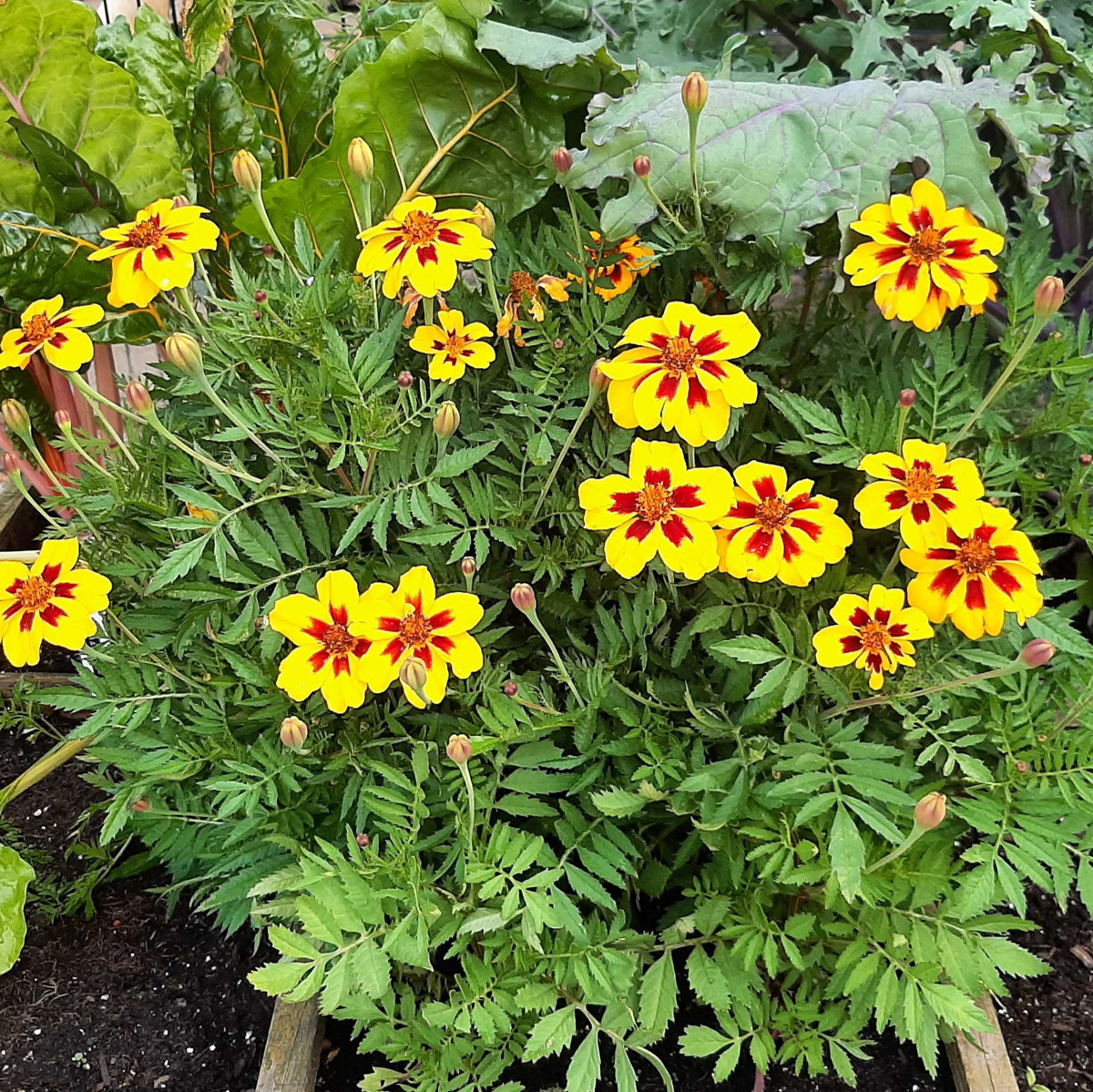
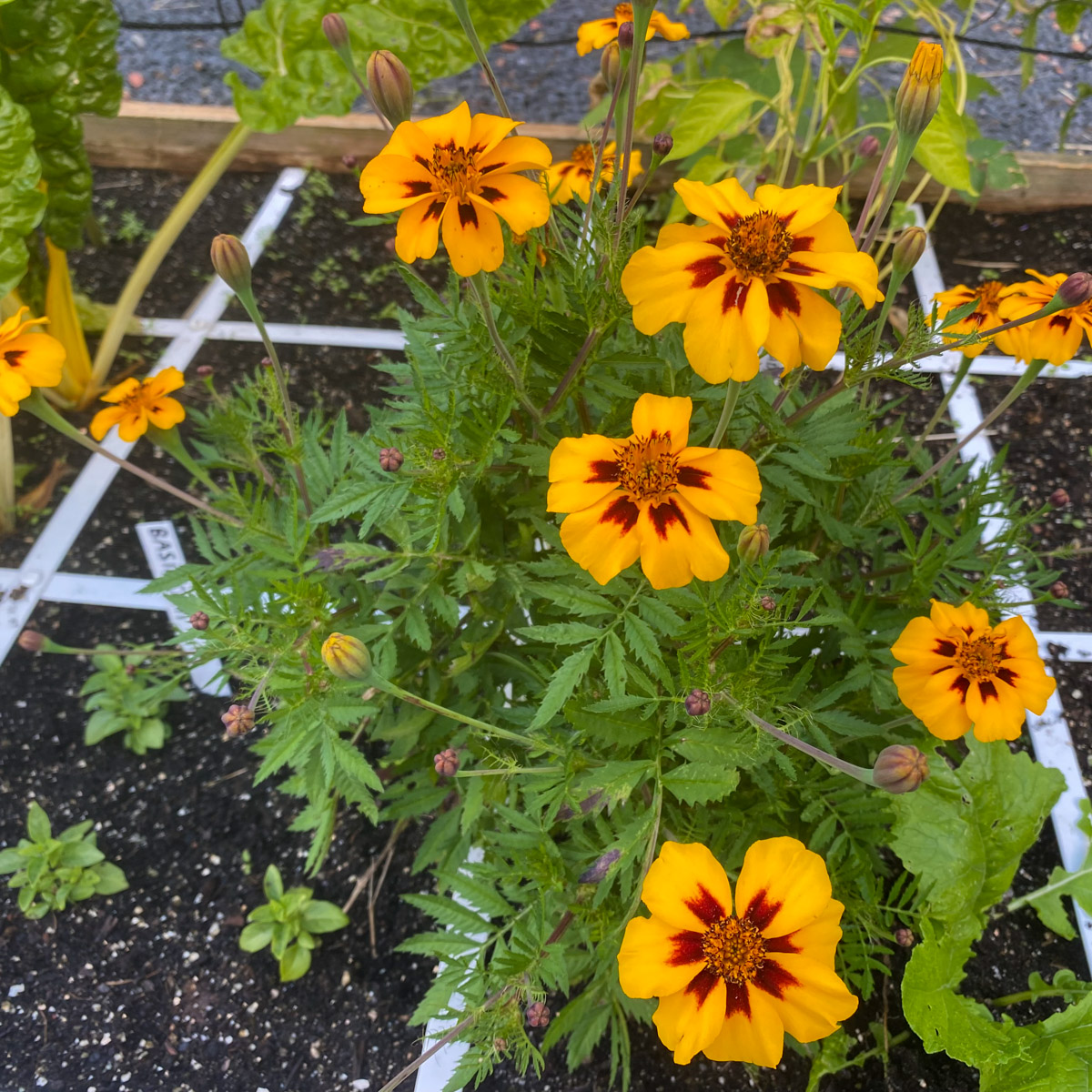
Our African Marigolds grow into sturdy, nicely compact plants with masses of yellow-orange flowers until well into autumn.
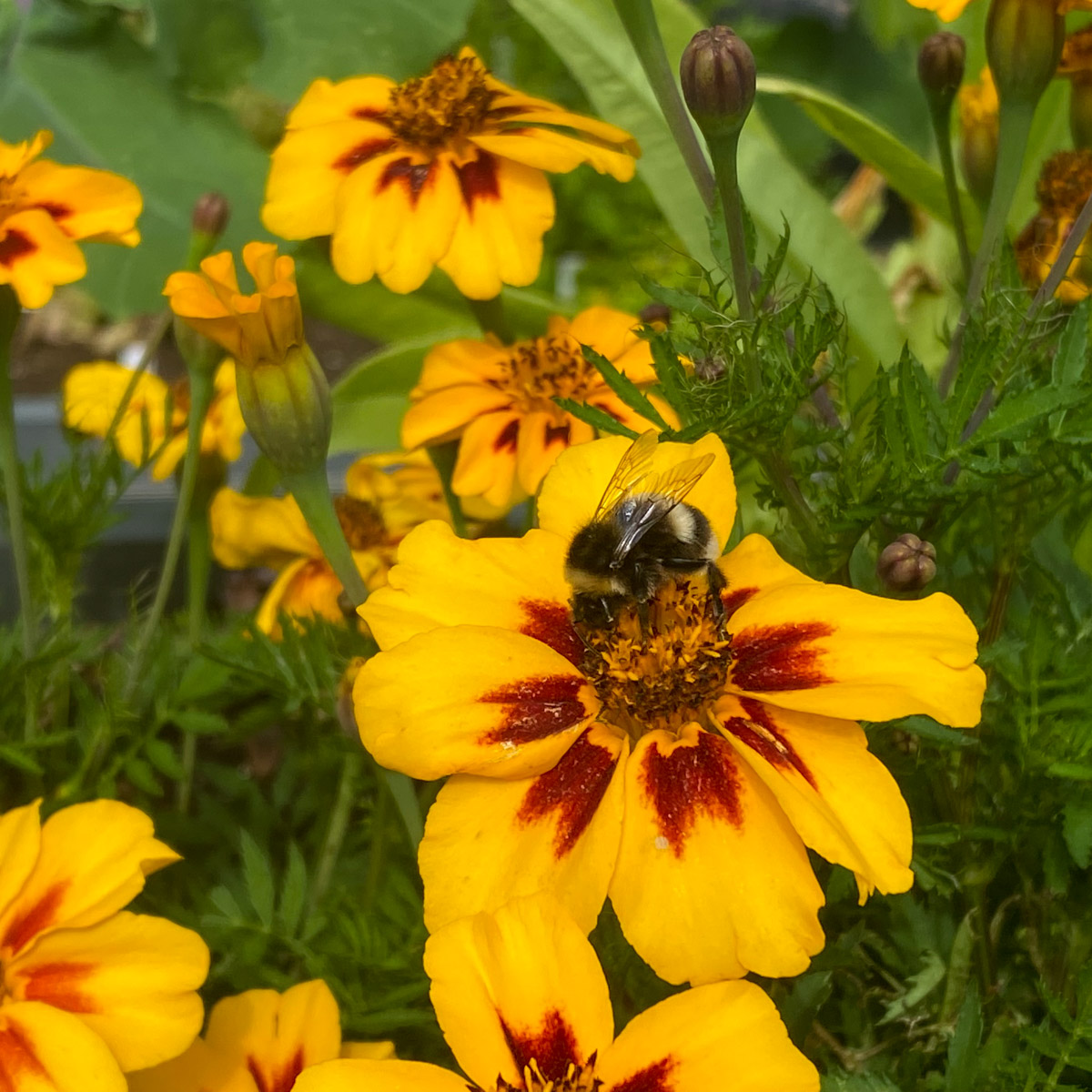
The flowers of this variety are single, so bees, butterflies and bumblebees can easily reach the nectar. That is much harder for them with the common double-flowered marigolds.
The flowers of this variety are single, so bees, butterflies and bumblebees can easily reach the nectar. That is much harder for them with the common double-flowered marigolds.
What do you need to grow your own African marigolds?
Sow African marigolds from April at the earliest. The young plants are extremely vulnerable to cold, and slugs love them.
Start them indoors in pots and only move them outside after mid-May. By then they are less vulnerable and can be planted in their own square.
Besides the seeds, you need the following to start them indoors:
Start them indoors in pots and only move them outside after mid-May. By then they are less vulnerable and can be planted in their own square.
Besides the seeds, you need the following to start them indoors:
- small MM-Airpots
- MM seed-starting mix or MM coconut seed-starting mix
- clear kitchen film and elastic bands (only with traditional MM seed-starting mix, not the coconut version)
- one label for each pot
Once the plant is large enough to go outside and it is past mid-May, you need:
- a 30 by 30 cm square
- Makkelijke Moestuin Mix or MM coconut mix
- a spot with at least 6 to 8 hours of sunlight a day

How to sow and grow marigold?
Our African marigold is included in the free Makkelijke Moestuin app. Use it, and you'll get step-by-step guidance from seed to harvest.
Each vegetable goes through a number of stages - we call them levels. The app tells you exactly what to do at each level and checks in when your plants are ready for the next.
So you don't need to know how to grow marigolds before you start: the app takes you through every step.
But if you'd like to read more about those steps, here's what the process looks like:
Each vegetable goes through a number of stages - we call them levels. The app tells you exactly what to do at each level and checks in when your plants are ready for the next.
So you don't need to know how to grow marigolds before you start: the app takes you through every step.
But if you'd like to read more about those steps, here's what the process looks like:
Level 1: Pre-sowing African marigolds
Level 1: Start African marigolds indoors
African marigold seedlings struggle to emerge outdoors, are very sensitive to cold, and are usually eaten straight away by slugs and other pests.
Start them indoors and only move them to their own square after mid-May.
Use 2 small Airpots with MM seed-starting mix or MM coconut seed-starting mix.
Put a few seeds in each pot, cover them with a piece of kitchen film (only with traditional MM seed-starting mix, not the coconut version), and place them on the windowsill.
Start them indoors and only move them to their own square after mid-May.
Use 2 small Airpots with MM seed-starting mix or MM coconut seed-starting mix.
Put a few seeds in each pot, cover them with a piece of kitchen film (only with traditional MM seed-starting mix, not the coconut version), and place them on the windowsill.
Level 2 and 3: African marigold seedlings
Levels 2 and 3: African marigold seedlings
As soon as you see the first seedlings, you know things are going well. They probably won't all come up at once, but just give it another week or 2. Sometimes it may take a little longer.
Then put the pots in a light but unheated place: they won't do nearly as well if it's too warm.
At level 3, you thin out your seedlings. Leave the best seedling in each pot and ruthlessly cut away the rest. It might sound harsh, but it's necessary. You're giving the remaining plants enough room to grow.
Then put the pots in a light but unheated place: they won't do nearly as well if it's too warm.
At level 3, you thin out your seedlings. Leave the best seedling in each pot and ruthlessly cut away the rest. It might sound harsh, but it's necessary. You're giving the remaining plants enough room to grow.

Levels 4 and 5: care for your plants on the windowsill
Levels 4 and 5: Care for your plants on the windowsill
Your seedlings have now grown into small plants.
Over these 5 weeks, make sure your plants:
- get plenty of light
- are not kept too warm
- get enough moisture
If you have a cold greenhouse, they can go there too, but bring them back inside if there is night frost.

Levels 6-10: getting used to outdoor air
In the second half of May, let the plants get used to outdoor air: a little longer each day.
In the final level they stay outside all day, and you only bring them back inside at night.
In the final level they stay outside all day, and you only bring them back inside at night.
Level 10: Transfer the most beautiful plant
Level 11: Plant it in its own square
About 4 to 5 weeks after sowing, your plant is large enough to go into its own square.
From then on, there is very little to do. The plant grows by itself: slowly at first, then it shoots upwards.
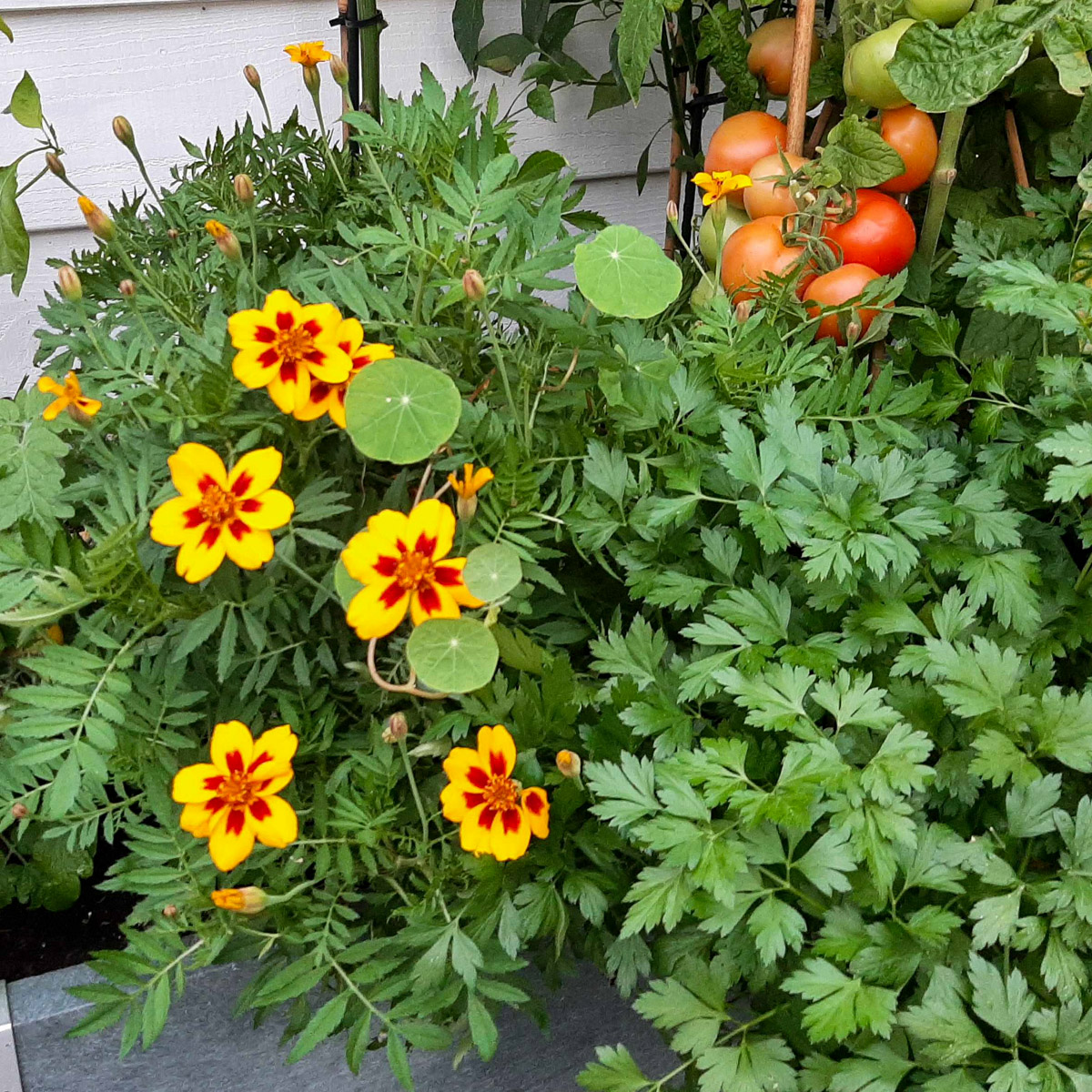
Plant it near carrots, parsley, and/or cabbage plants. It helps protect the first two from nematodes in the mix.
It helps the cabbage plants in a different way. The strong scent of the flowers makes it harder for butterflies to detect the cabbage plants.
That makes them less likely to lay their eggs on the cabbage, although it is no guarantee, so keep an eye on them 🙂
From then on, there is very little to do. The plant grows by itself: slowly at first, then it shoots upwards.
Plant it near carrots, parsley, and/or cabbage plants. It helps protect the first two from nematodes in the mix.
It helps the cabbage plants in a different way. The strong scent of the flowers makes it harder for butterflies to detect the cabbage plants.
That makes them less likely to lay their eggs on the cabbage, although it is no guarantee, so keep an eye on them 🙂

Level 11: Flowering marigolds
Level 12: The first buds and flowers
About 10 weeks after sowing, you'll see the first buds and flowers.
From now on the plants will continue to bloom. Cut back wilting or dead flowers and the stems will continue to bloom.
From now on the plants will continue to bloom. Cut back wilting or dead flowers and the stems will continue to bloom.

From this point on, the plant will keep flowering. Keep cutting away spent flowers, and the plant will make more and more new buds.
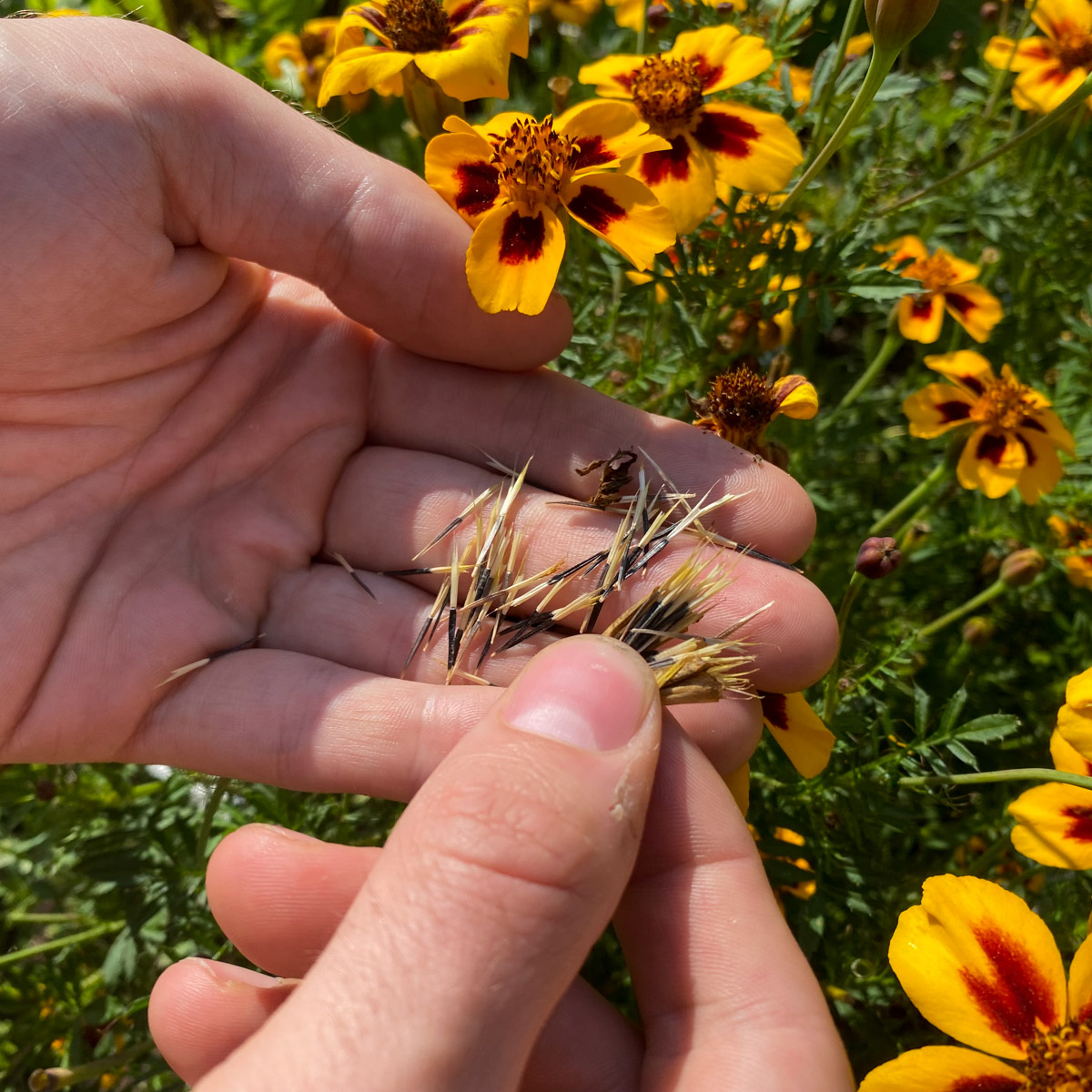
This is also an easy way to harvest seeds for next year: they look beautiful.
This is also an easy way to harvest seeds for next year: they look beautiful.

The end of the season
At the end of the growing season, you'll receive a last notification from the app. By then the plant probably looks pretty sad and doesn't have many flowers left.
If the plant gets really ugly then remove it completely. Tidy up your empty patch, and get ready to sow something new.
If the plant gets really ugly then remove it completely. Tidy up your empty patch, and get ready to sow something new.

So, what's stopping you from growing your own marigolds?
They look wonderfully cheerful, add colour to your raised beds, and attract masses of bees and bumblebees to your garden.
Plus, with our app and materials, it is almost impossible to go wrong 😉
Plus, with our app and materials, it is almost impossible to go wrong 😉
Enjoy your African marigolds!