
Spring onions: sowing, growing and harvesting
This Japanese spring onion produces long stems with a mild, fresh flavour. It tolerates cold well and can be sown in spring and autumn.
What are spring onions?
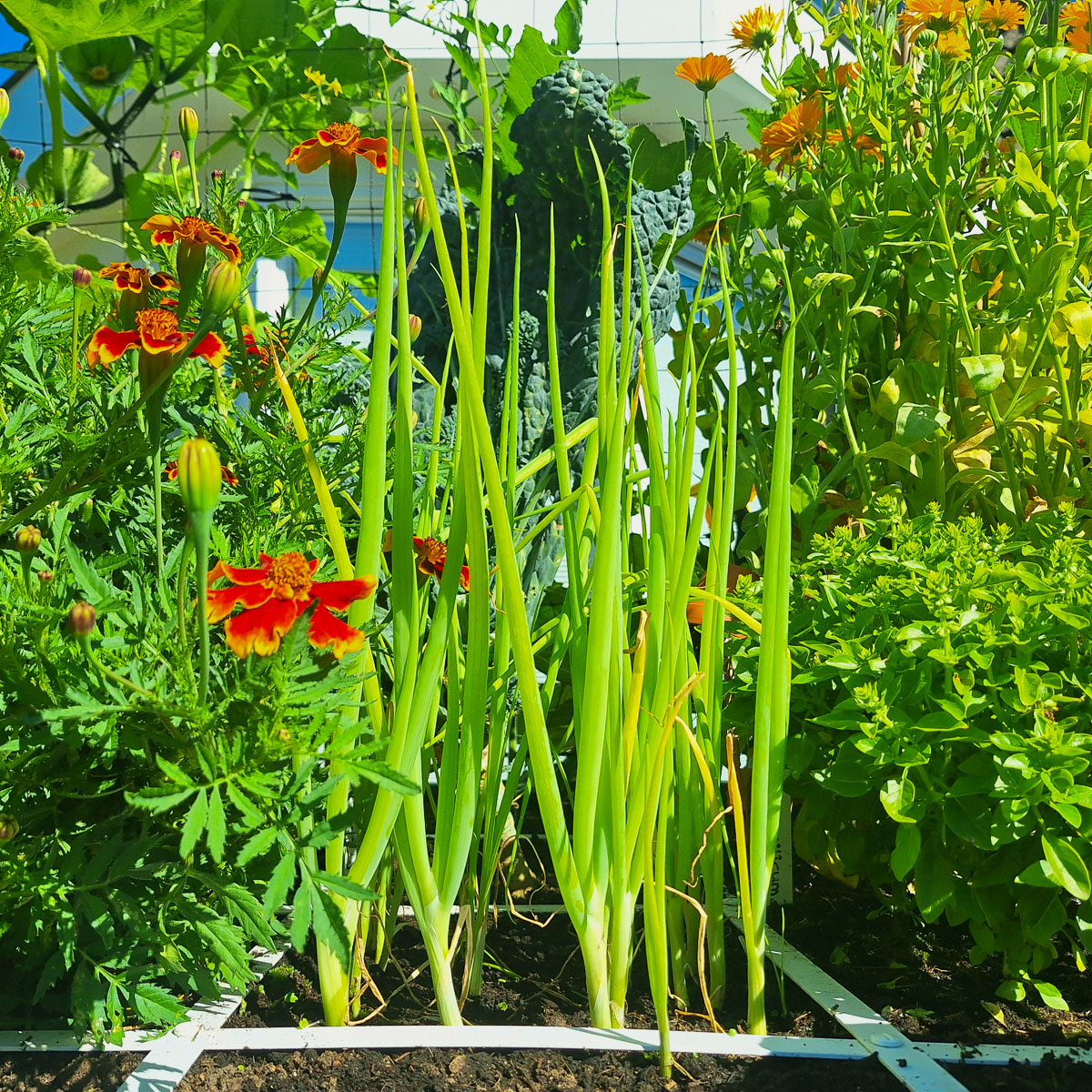
Spring onions, also called scallions or green onions, are related to ordinary onions but are grown for their stems. Their flavour is fresh and much milder than that of bulb onions.
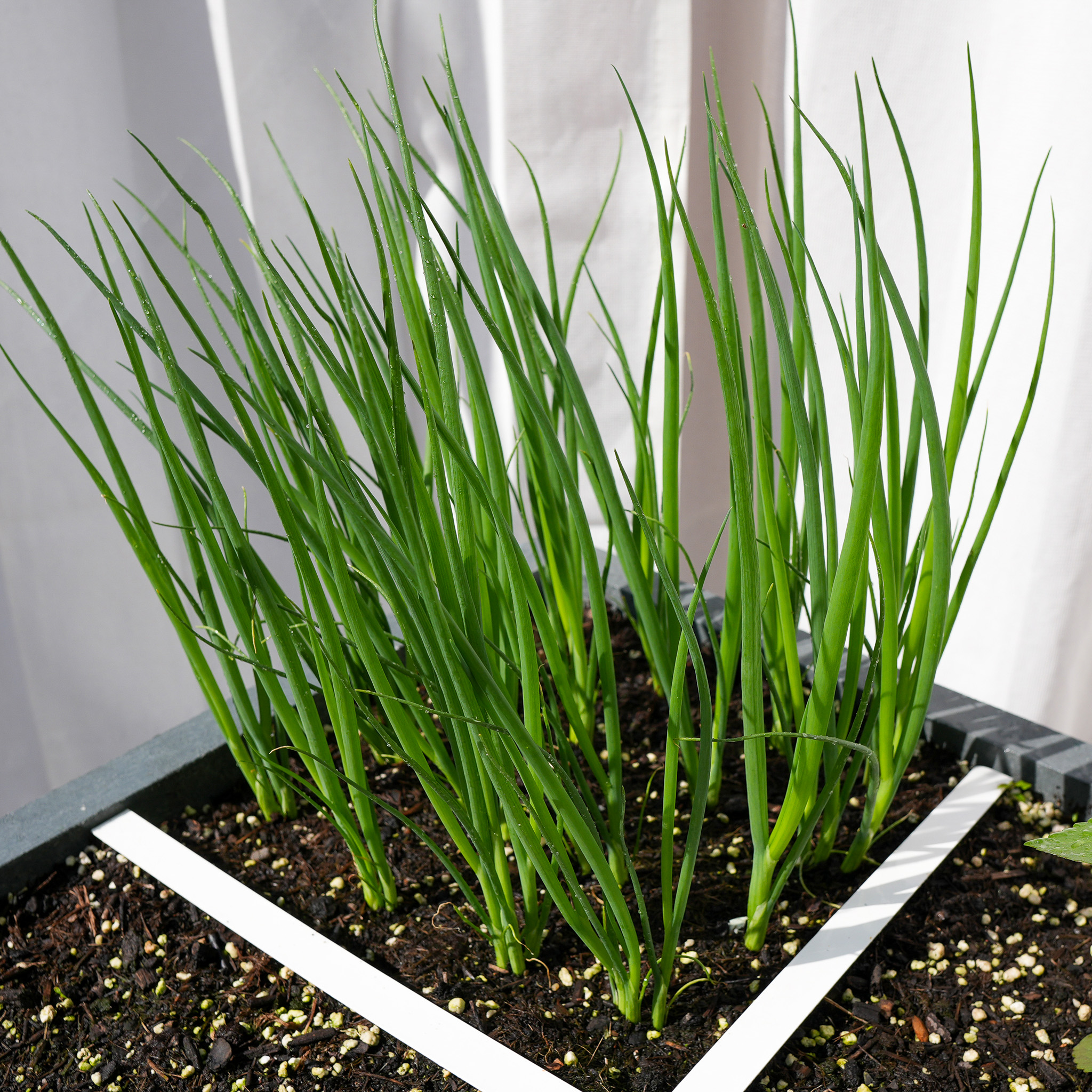
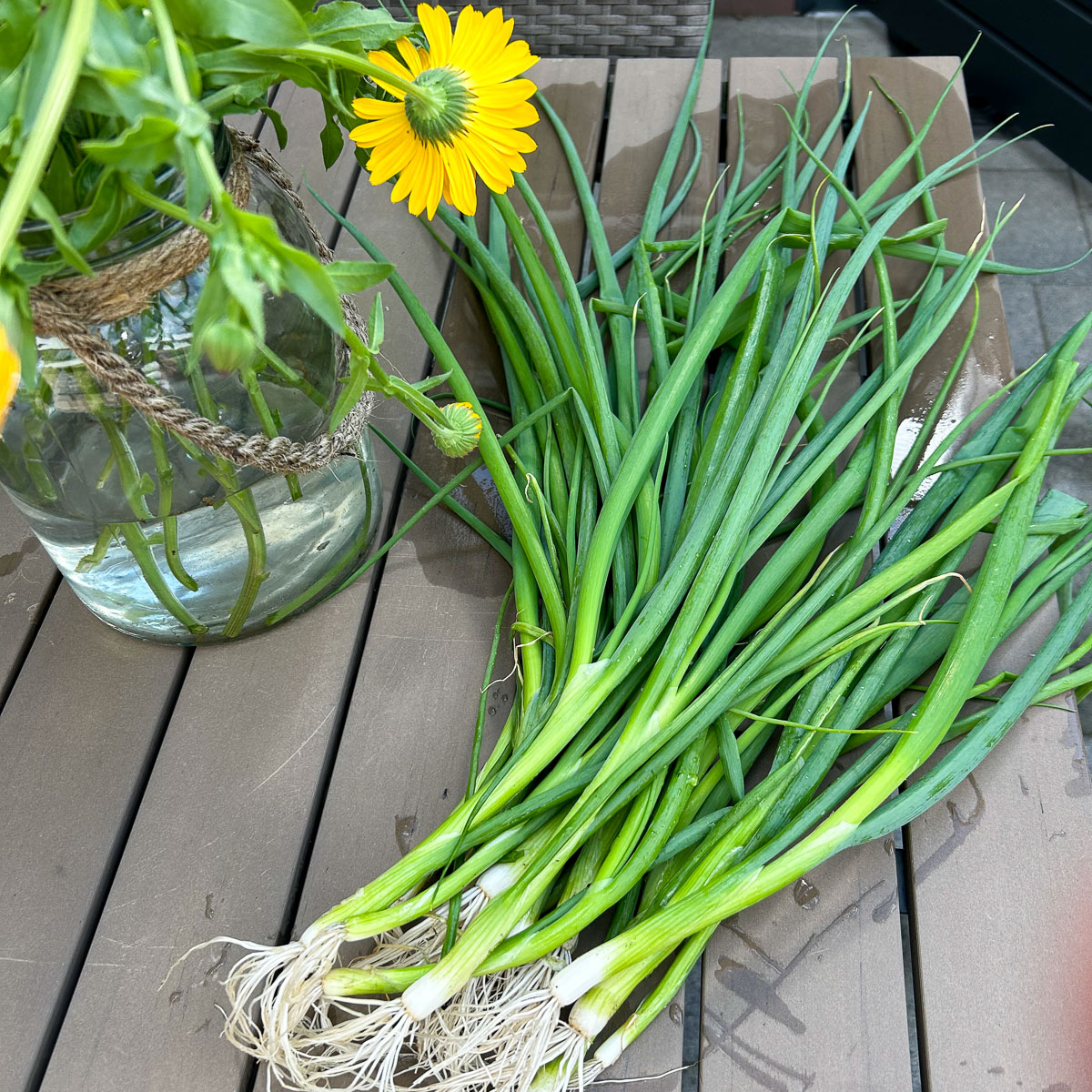
This variety produces long, slender green stems that are white at the base, rather like thin leeks. They are delicious in salads, soups, stir-fries and sauces.
Ishikura also tolerates cold well, so you can sow it in autumn as well as spring. We sow it directly outside in a Makkelijke Moestuin raised bed or MM-mini.
This variety produces long, slender green stems that are white at the base, rather like thin leeks. They are delicious in salads, soups, stir-fries and sauces.
Ishikura also tolerates cold well, so you can sow it in autumn as well as spring. We sow it directly outside in a Makkelijke Moestuin raised bed or MM-mini.
Are spring onions healthy?
Spring onions are a nutritious, low-calorie vegetable that provides fibre, vitamins, minerals and antioxidants.
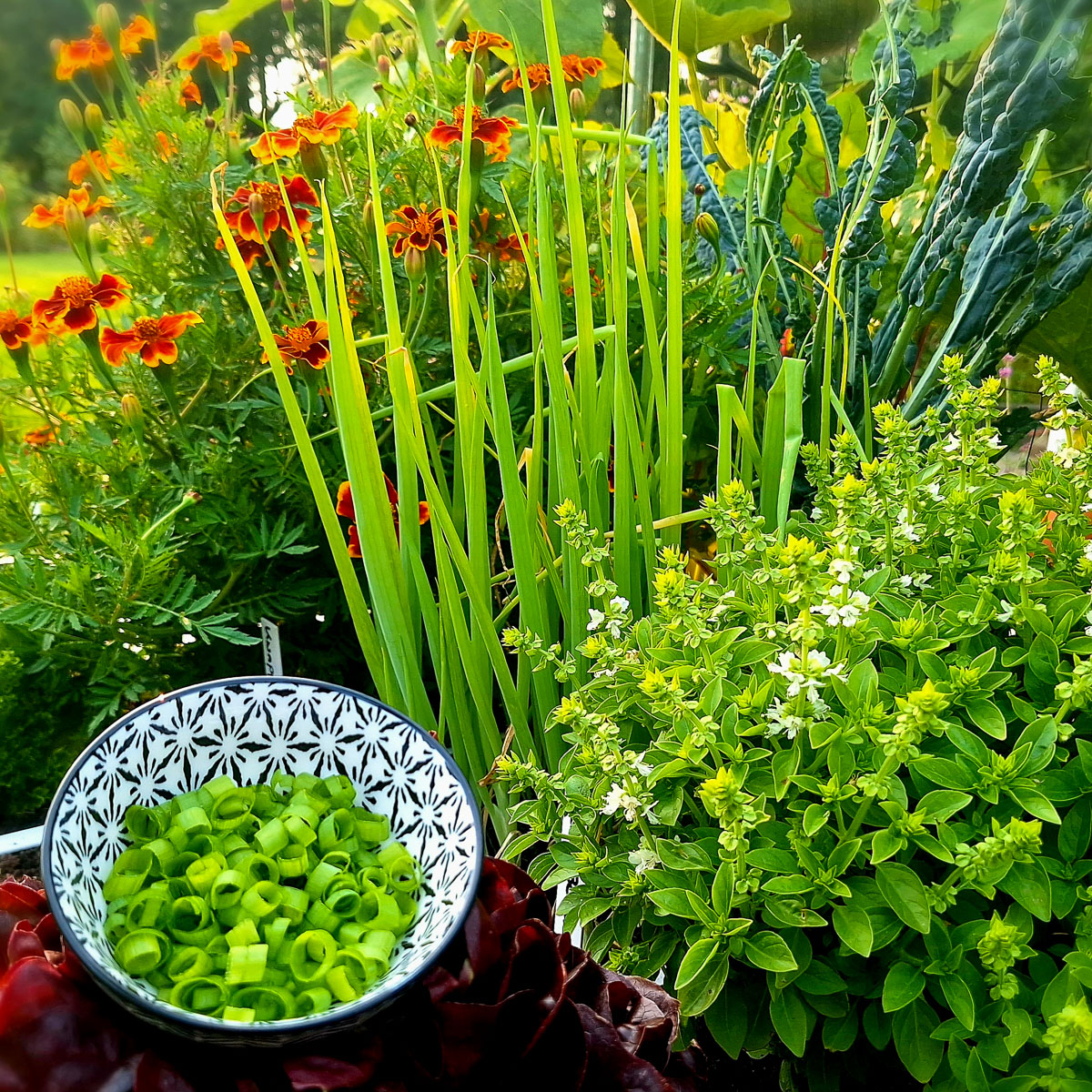
Both the white and green parts can be used, making them an easy way to add fresh flavour and variety to everyday meals.
Both the white and green parts can be used, making them an easy way to add fresh flavour and variety to everyday meals.
More about Makkelijke Moestuin Spring onion seeds
The Ishikura spring onion comes from Japan. It is longer and slimmer than most Western spring onions, giving a slightly larger harvest, and it does not form a bulb at the base. Because the stems become so long, they take a little longer to mature: around 10 to 14 weeks.
This variety tolerates cold very well, so you can sow it in autumn as well as spring. Autumn seedlings develop a good root system before winter and begin growing quickly in early spring, allowing you to harvest from May.
Makkelijke Moestuin gardeners who tested Ishikura and had grown other spring onions found it easier to germinate and grow than the others.
This variety tolerates cold very well, so you can sow it in autumn as well as spring. Autumn seedlings develop a good root system before winter and begin growing quickly in early spring, allowing you to harvest from May.
Makkelijke Moestuin gardeners who tested Ishikura and had grown other spring onions found it easier to germinate and grow than the others.
- Variety: Ishikura spring onion
- Family: onion, root
- Plants per square: 16
- Height: 40 to 50 cm
- Sow directly outside: March to May and September to October
- Sowing depth: 0.5 cm, or on top of the mix
- Germination: 7 to 14 days from 15°C
- Time to harvest: from 10 to 14 weeks
- Sunlight: preferably full sun, but partial shade is possible
Want to buy Spring onion seeds? Find the packets in the seed shop.
What do you need to grow Spring onions?
Besides the seeds, you will need:
- one 30 x 30 cm square
- Makkelijke Moestuinmix or MM coconut mix
- a place with at least six hours of sunlight each day, preferably more
How do you sow and grow Spring onions?
This Japanese Spring onion is included in the free Makkelijke Moestuin app. Use it and you will get step-by-step guidance from seed to harvest.
Every vegetable goes through several stages, which we call levels. The app tells you exactly what to do at each level and regularly asks you to check whether your plants are ready for the next one.
You do not need to know how to grow Spring onions successfully before you start. But if you would like to read ahead, here is what the whole process looks like.
Every vegetable goes through several stages, which we call levels. The app tells you exactly what to do at each level and regularly asks you to check whether your plants are ready for the next one.
You do not need to know how to grow Spring onions successfully before you start. But if you would like to read ahead, here is what the whole process looks like.
Level 1: Sow Spring onions
Loosen and moisten the mix in a square in the second or third row, then sow as follows:
- make 16 shallow holes, no deeper than 0.5 cm
- place two or three seeds in each hole
- gently close the holes
Depending on the weather and time of year, green shoots will appear after 7 to 14 days.
Level 2: Spring onion seedlings
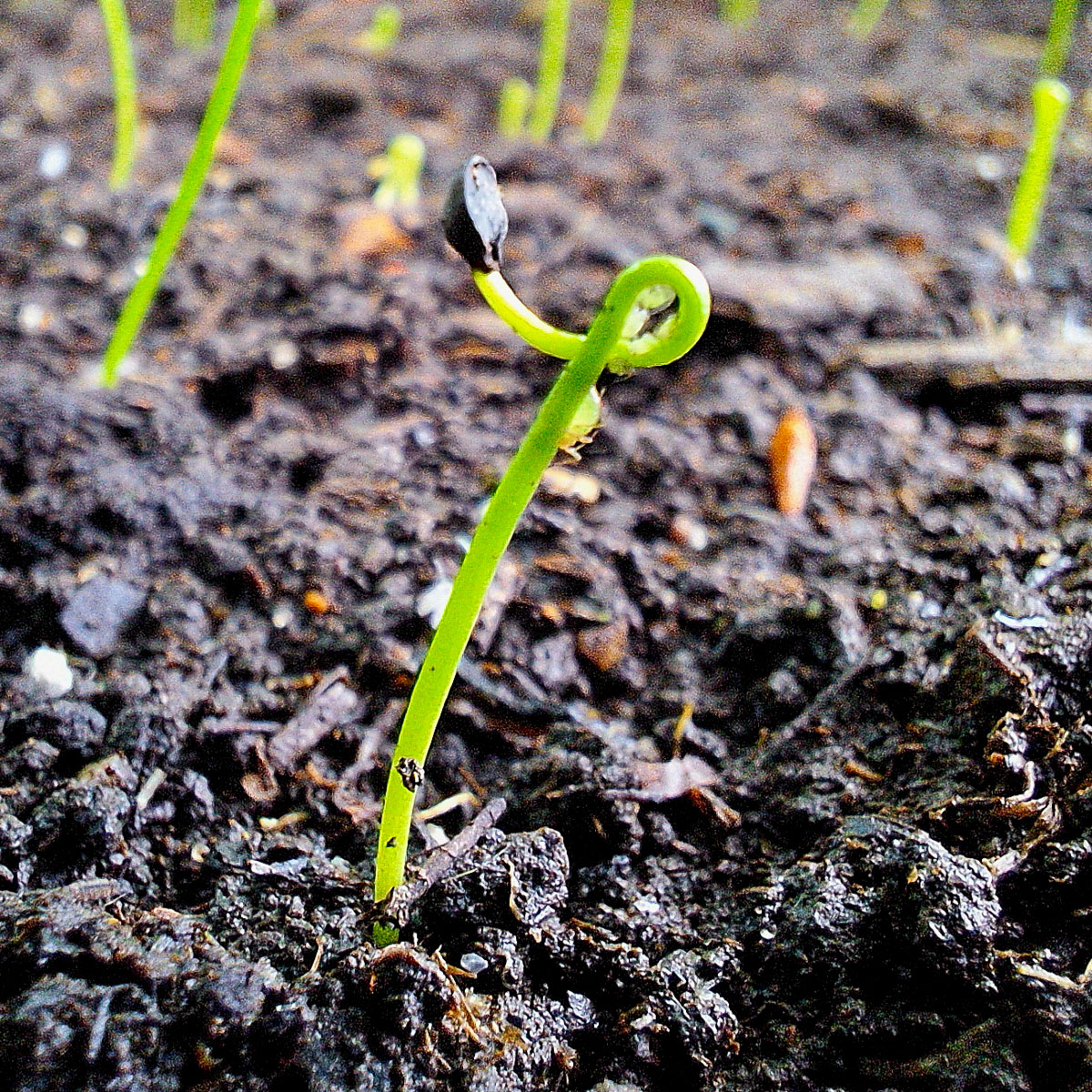
As soon as the first shoots emerge, you know things are going well. They will not all appear at once, but most should be up a week later. Sow a few more if necessary.
Spring onion seedlings are thin and grow quite slowly at first, so it takes around three weeks to reach the next level.
Spring onion seedlings are thin and grow quite slowly at first, so it takes around three weeks to reach the next level.
Level 3: Thin the Spring onions
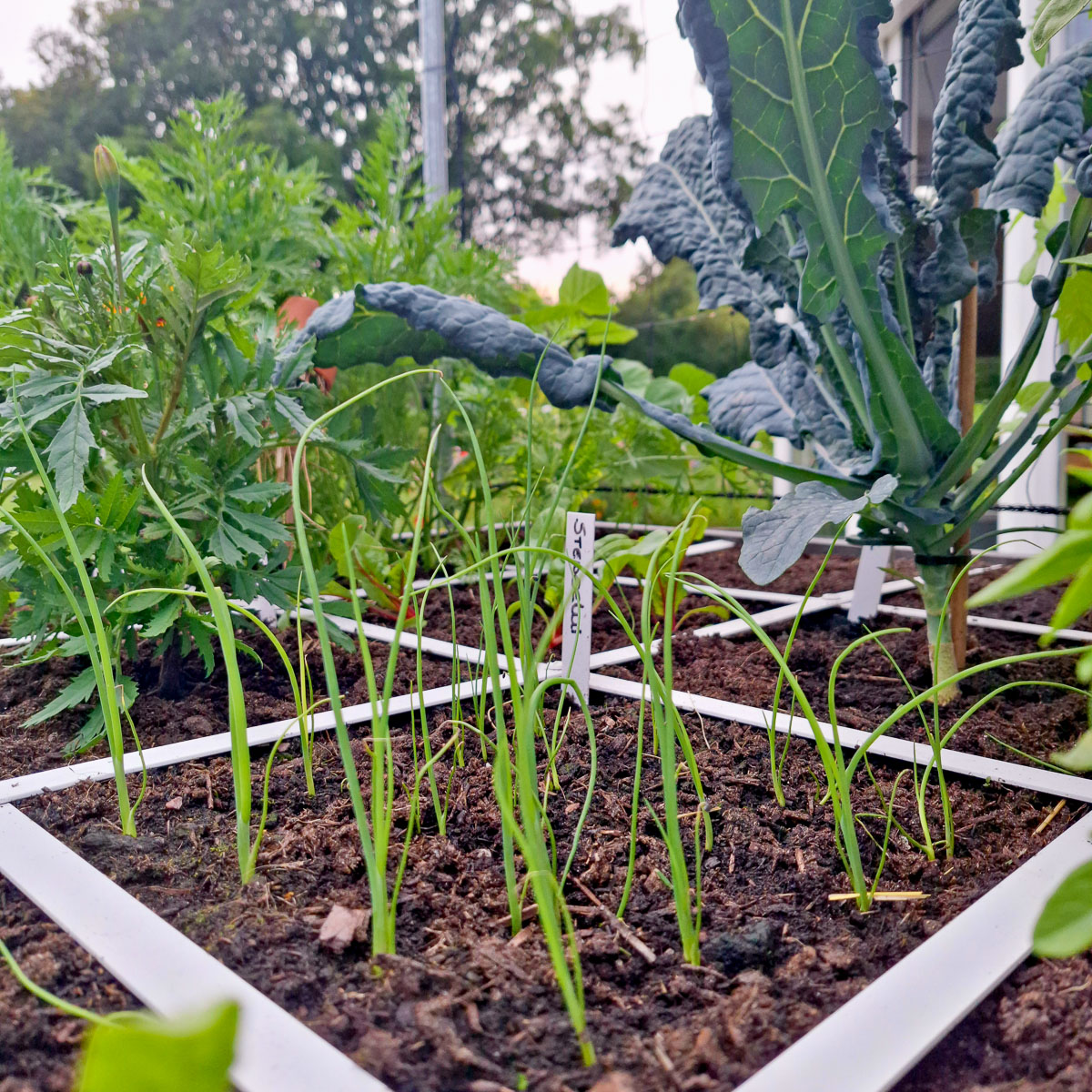
After about three weeks, the seedlings are around 10 cm tall. Remove the smallest plant from each hole and leave the largest to grow.
Think of thinning as your first harvest: these young onions already taste delicious, rather like mild chives.
Think of thinning as your first harvest: these young onions already taste delicious, rather like mild chives.
Level 4: Caring for Spring onion plants
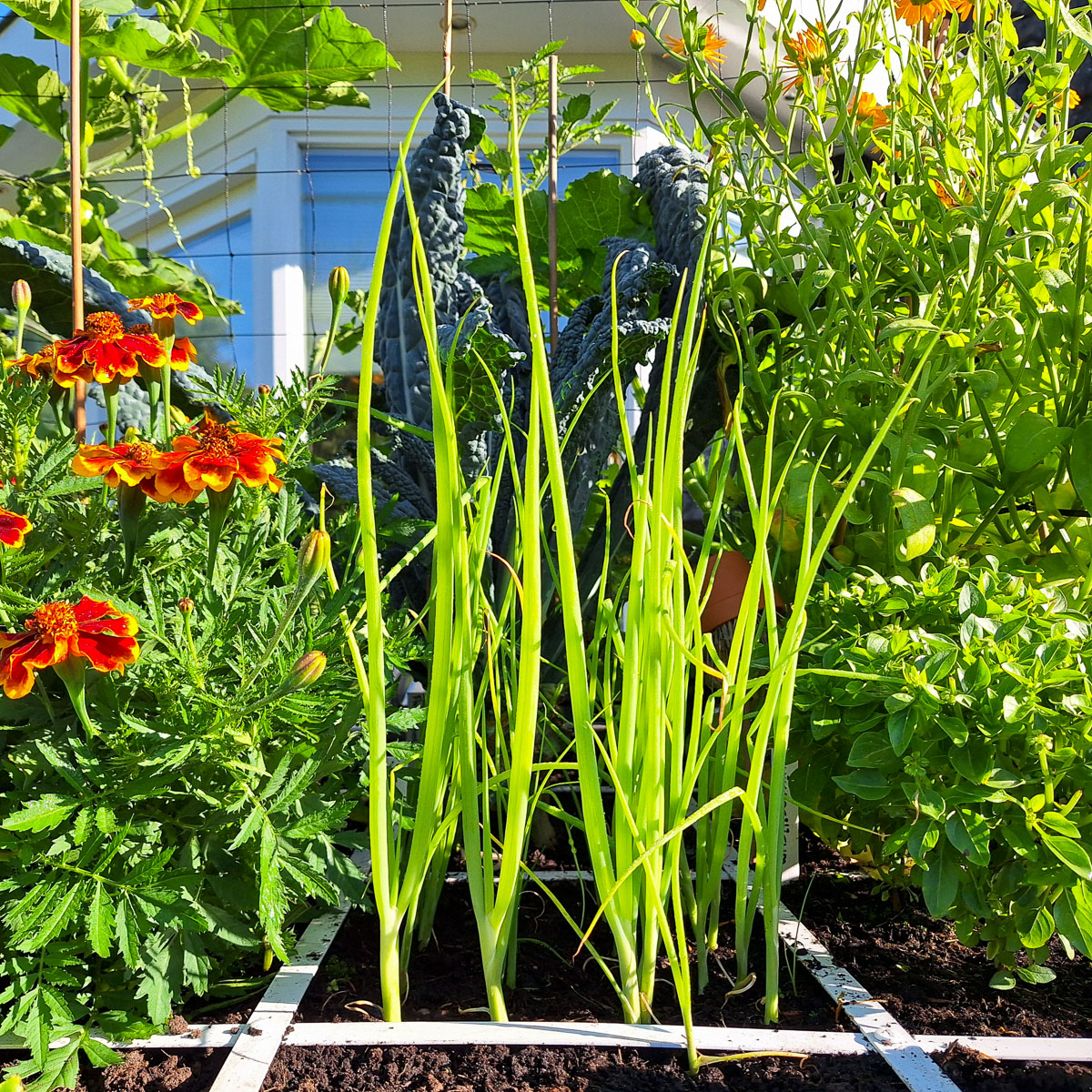
Another four weeks later, the plants begin to look like real Spring onions.
They grow largely by themselves, so you need to do very little during this period.
Sprinkle two tablespoons of plant food around the plants, work it into the top layer of mix and add water.
Make sure taller plants do not shade the onions: the more sun they receive, the better they grow. Water occasionally in dry weather, as Spring onions like moist mix.
They grow largely by themselves, so you need to do very little during this period.
Sprinkle two tablespoons of plant food around the plants, work it into the top layer of mix and add water.
Make sure taller plants do not shade the onions: the more sun they receive, the better they grow. Water occasionally in dry weather, as Spring onions like moist mix.
Level 5: Harvesting
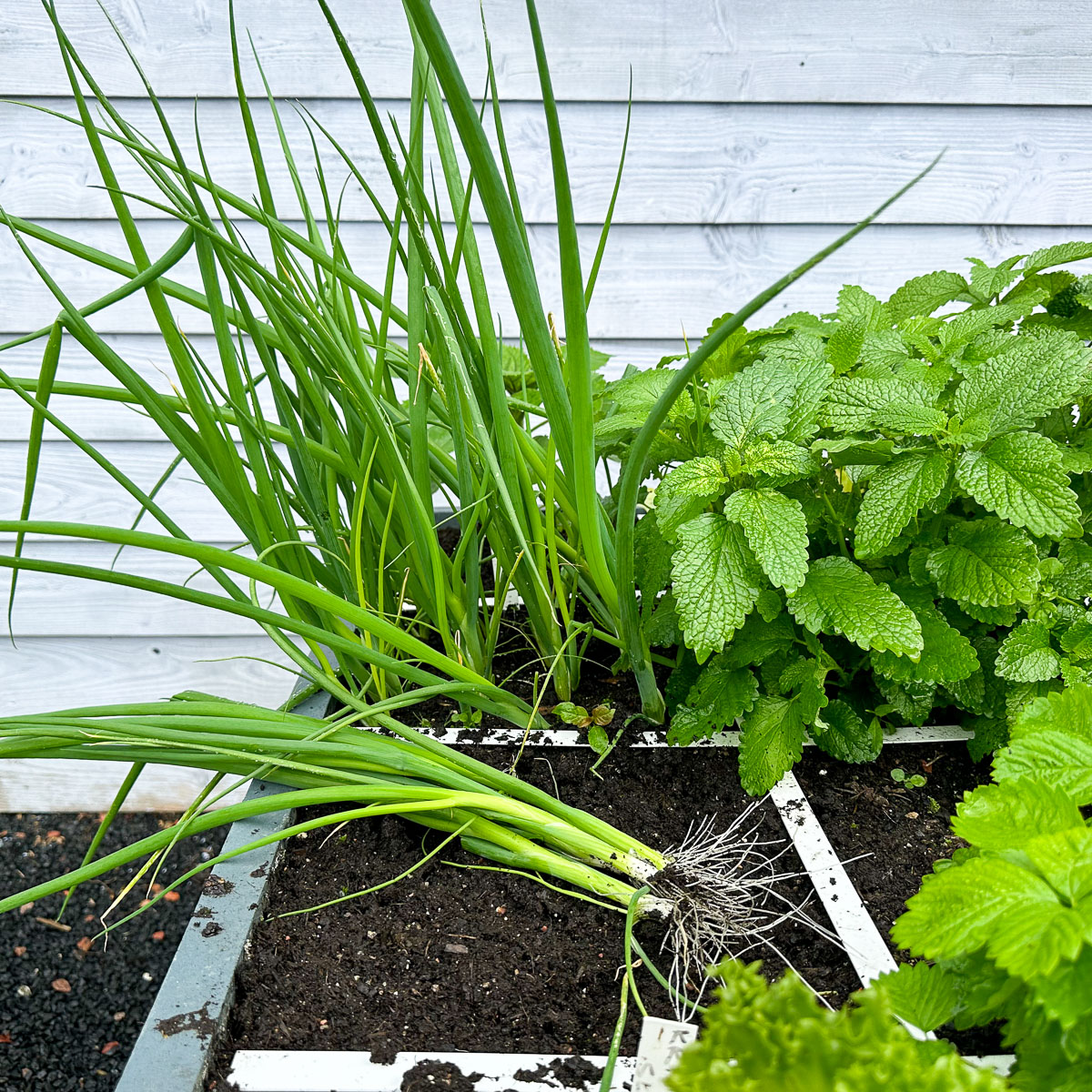
Around 12 weeks after sowing, you can begin harvesting.
Choose the thickest plants and gently pull them from the mix. Continue harvesting a few onions at a time over the following weeks.
Leave the rest to grow thicker.
Choose the thickest plants and gently pull them from the mix. Continue harvesting a few onions at a time over the following weeks.
Leave the rest to grow thicker.
How do you use Spring onions?
Spring onions have a fresh onion flavour but are far milder and less overpowering than ordinary onions.
The leaves are delicious in soup, omelettes, stir-fries and pasta, or raw in salads, sauces, sandwiches and wraps.
One Spring onion is enough for a sandwich; use several in larger dishes.
The leaves are delicious in soup, omelettes, stir-fries and pasta, or raw in salads, sauces, sandwiches and wraps.
One Spring onion is enough for a sandwich; use several in larger dishes.
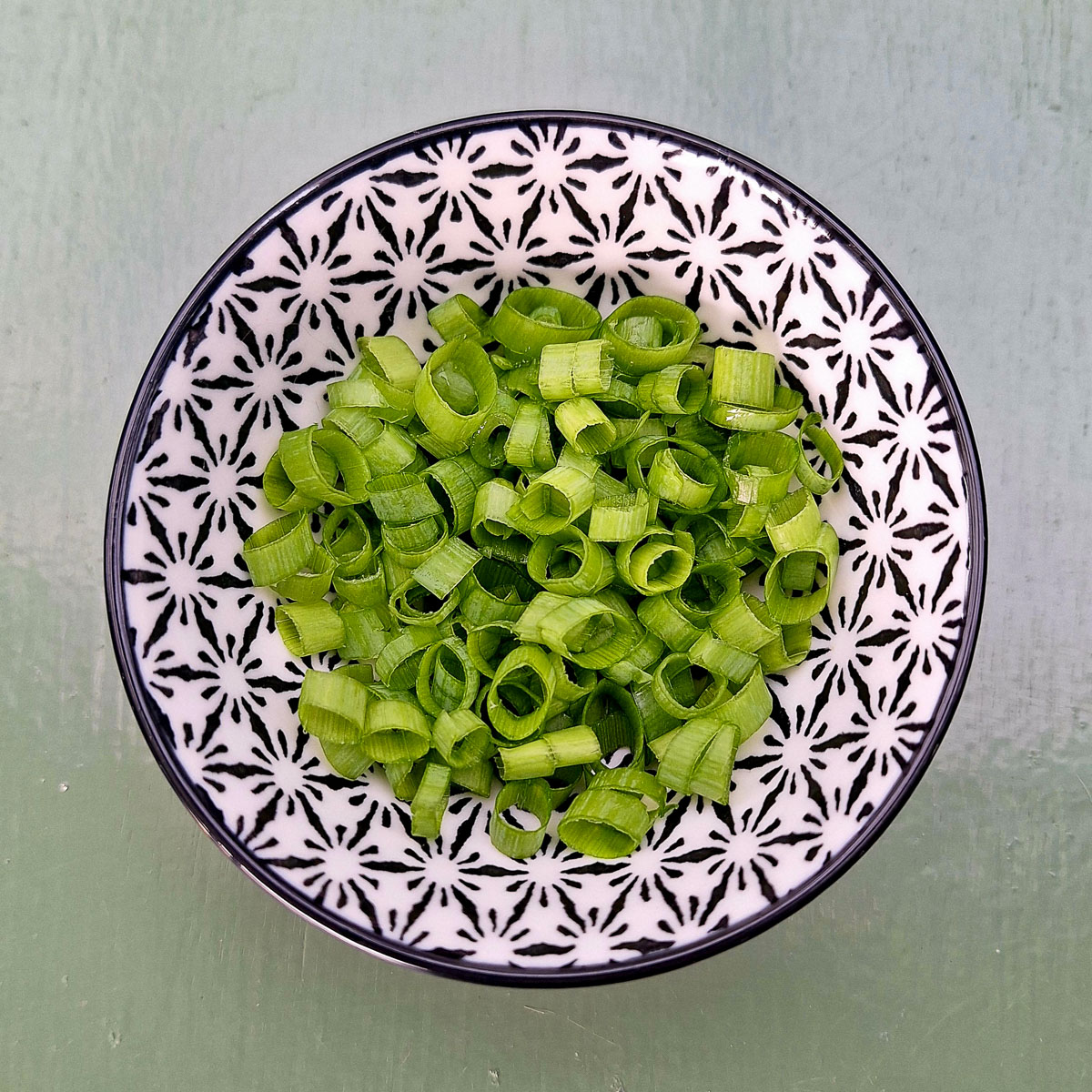
Final levels: harvest until the square is empty
The plants keep well and continue thickening, so there is no need to harvest them all at once. That is ideal: one day you may need only a couple for a salad, and another day four for a pasta sauce.
Spread the harvest out until the square is empty.
Then turn over the mix and prepare the square for another vegetable.
Spread the harvest out until the square is empty.
Then turn over the mix and prepare the square for another vegetable.
So, what is stopping you from growing Spring onions?
They are delicious and useful in many meals.
Sow several squares at different times, for example in March, mid-April and late May, because you will need some patience before harvesting.
With our app and materials, it is almost impossible to fail.
Sow several squares at different times, for example in March, mid-April and late May, because you will need some patience before harvesting.
With our app and materials, it is almost impossible to fail.
Good luck, and enjoy!