
Techniques
Sowing and starting indoors
Thinning seedlings: what, why and how
What exactly is thinning, why do you need to do it, and what is the best way to go about it? Is it equally important for every vegetable?
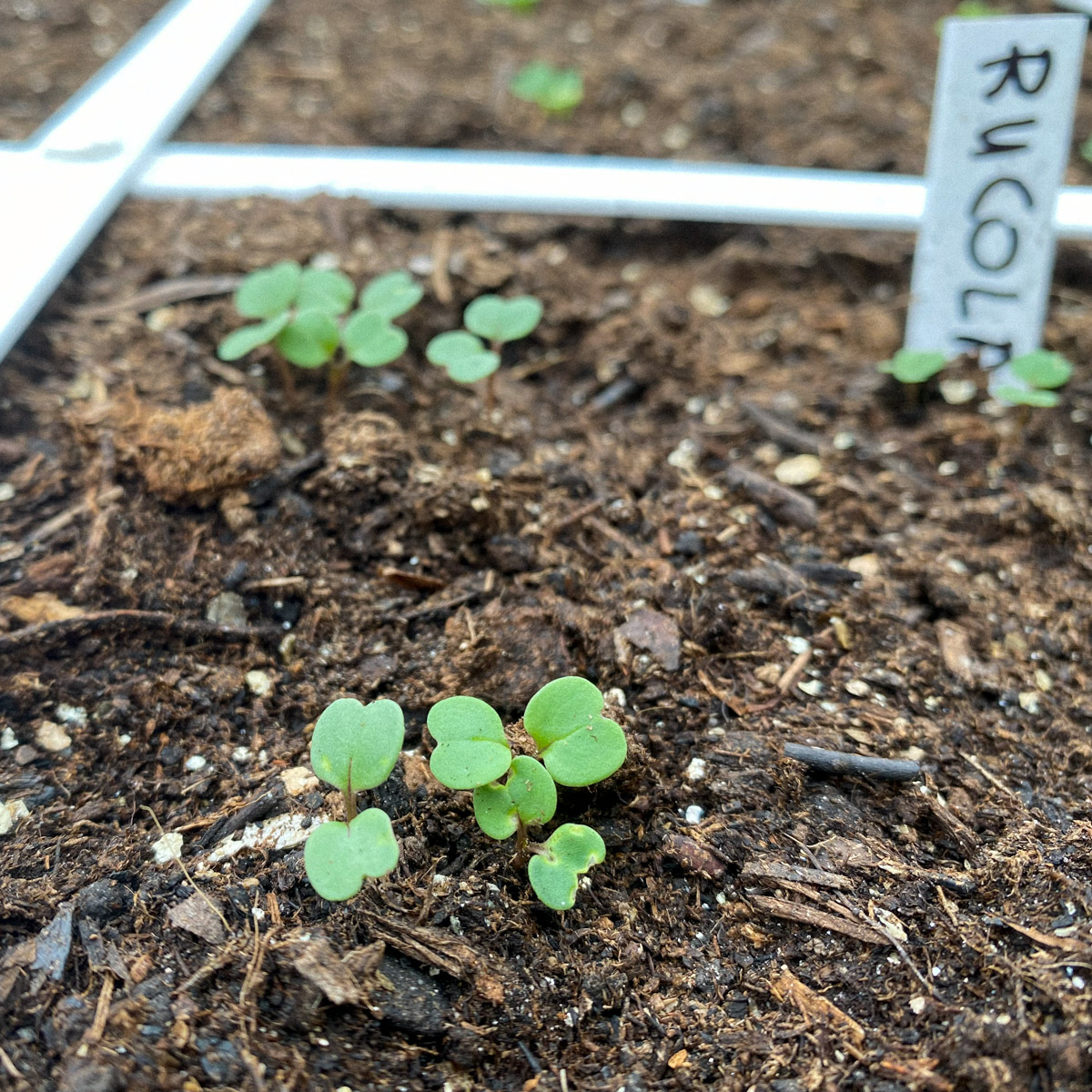
Beautiful, tiny plants. Your first seedlings.
And every day you watch them grow.
Until you hear a ping in your pocket. And the app says: "Now it's time to thin them out. Ready?"
And every day you watch them grow.
Until you hear a ping in your pocket. And the app says: "Now it's time to thin them out. Ready?"
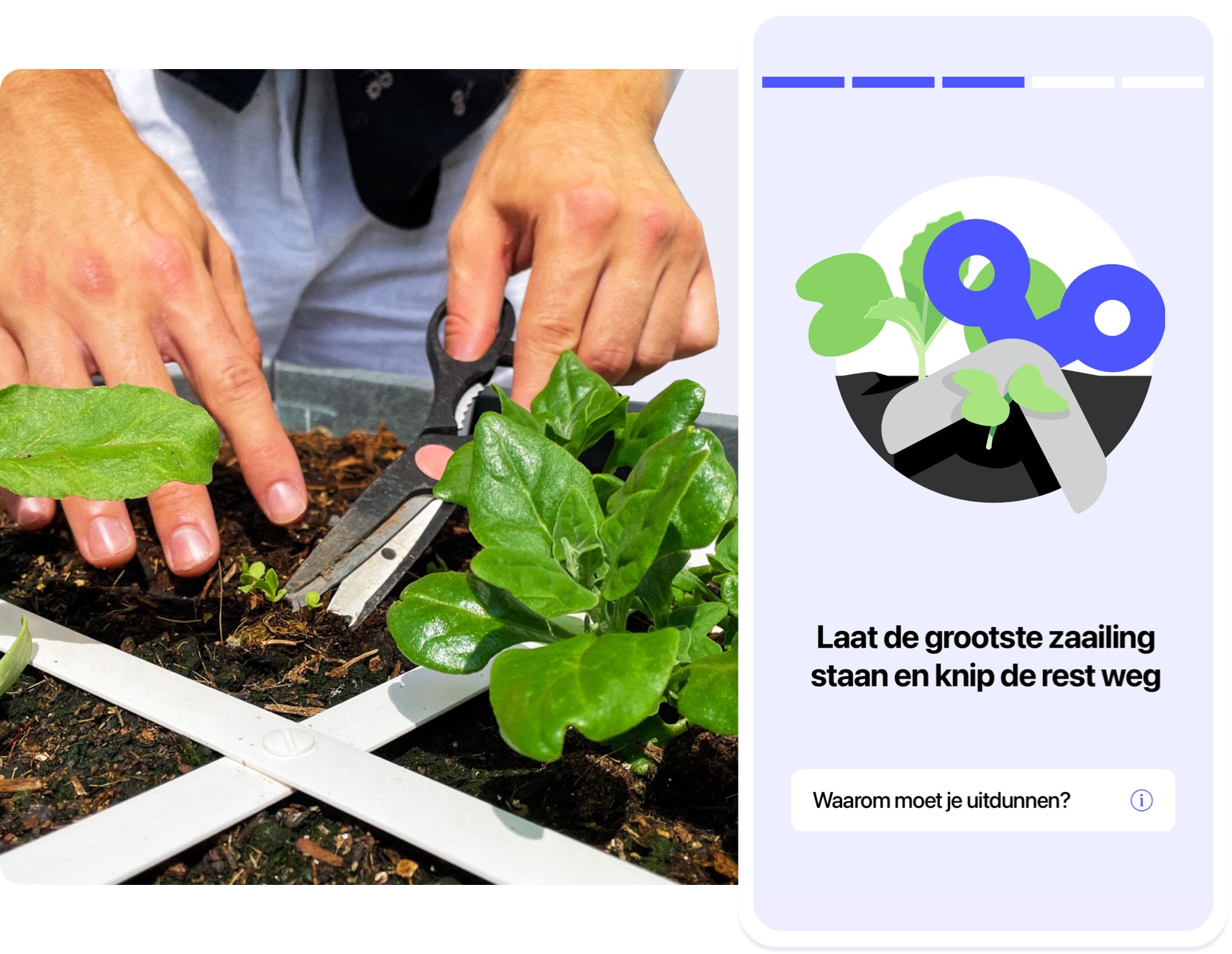
Gulp.
You keep reading: "Leave the biggest seedling in each bunch: Cut away the rest. Use scissors and show no mercy."
And then? You freak out:
You keep reading: "Leave the biggest seedling in each bunch: Cut away the rest. Use scissors and show no mercy."
And then? You freak out:
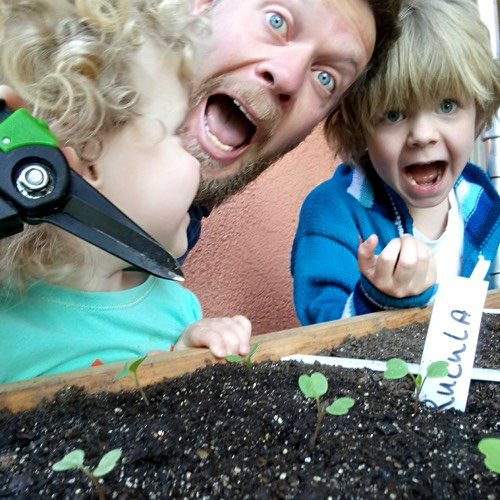
Sound familiar?
We all have mixed feelings about decapitating those sweet little plants.
But, we have to.
But, we have to.
What is thinning out exactly?
You never know in advance if every seed will grow into a plant. Some seeds just don't feel like it. So, you always sow a few extra in each hole.
But if they all come up, you have to thin them out. It just means removing extra plants.
Here, I'll give you an example:
But if they all come up, you have to thin them out. It just means removing extra plants.
Here, I'll give you an example:
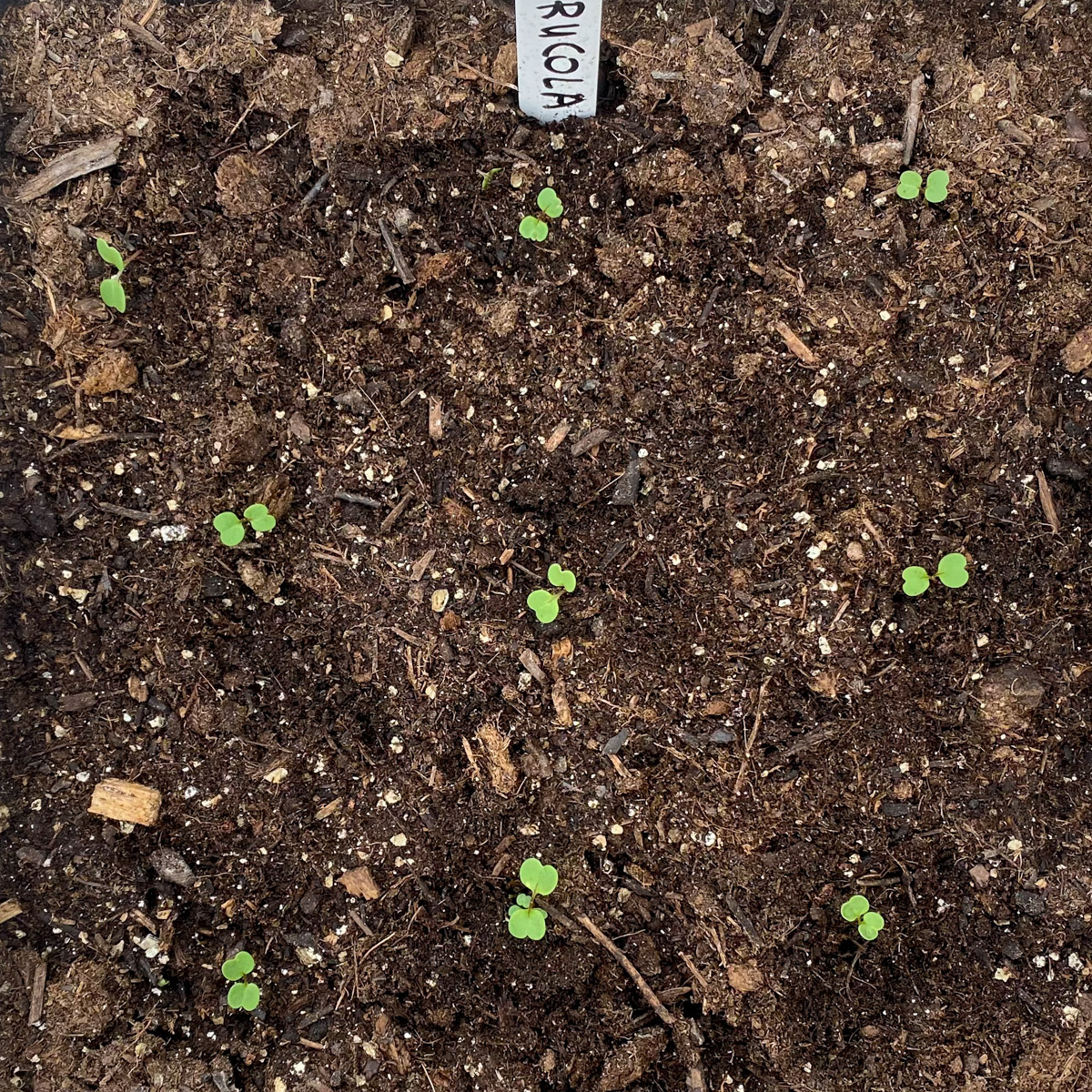
Rucola
Nine rocket plants fit in one square, giving each plant enough room to grow.
When sowing, make nine holes in the square and place two or three seeds in each hole, just to be safe.
When sowing, make nine holes in the square and place two or three seeds in each hole, just to be safe.
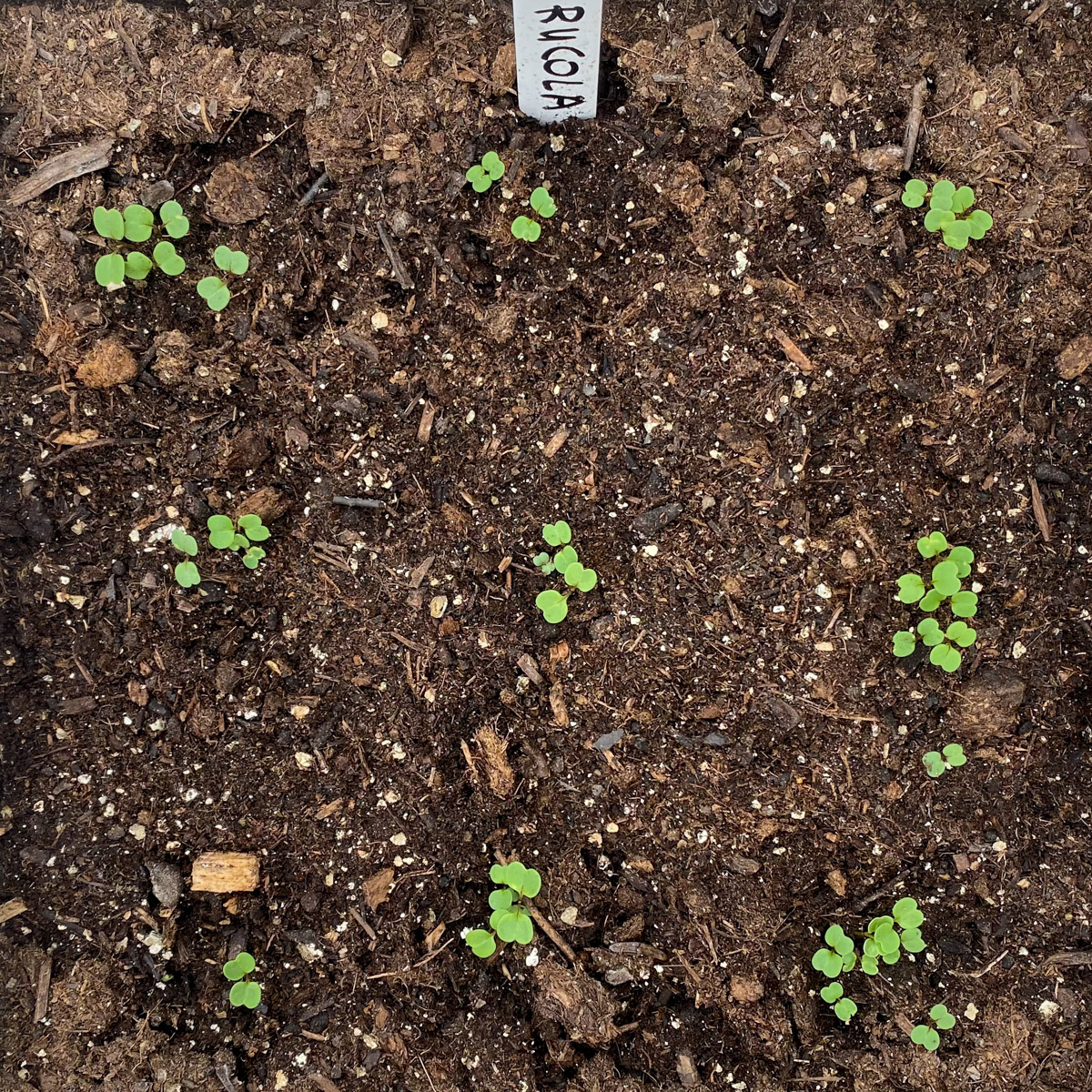
If they all sprout, you'll get several plants in each hole. It's too crowded. So, you leave the best and remove the rest. You end up with 9 plants:
Why do you have to thin them out?
A plant needs enough room to grow. If you leave all the seedlings, they'll start competing with each other for light and nutrients.
The result? None of them do well.
The result? None of them do well.
How do you thin them out?
It's best to use scissors: cut away the extra seedlings just above the soil mix.
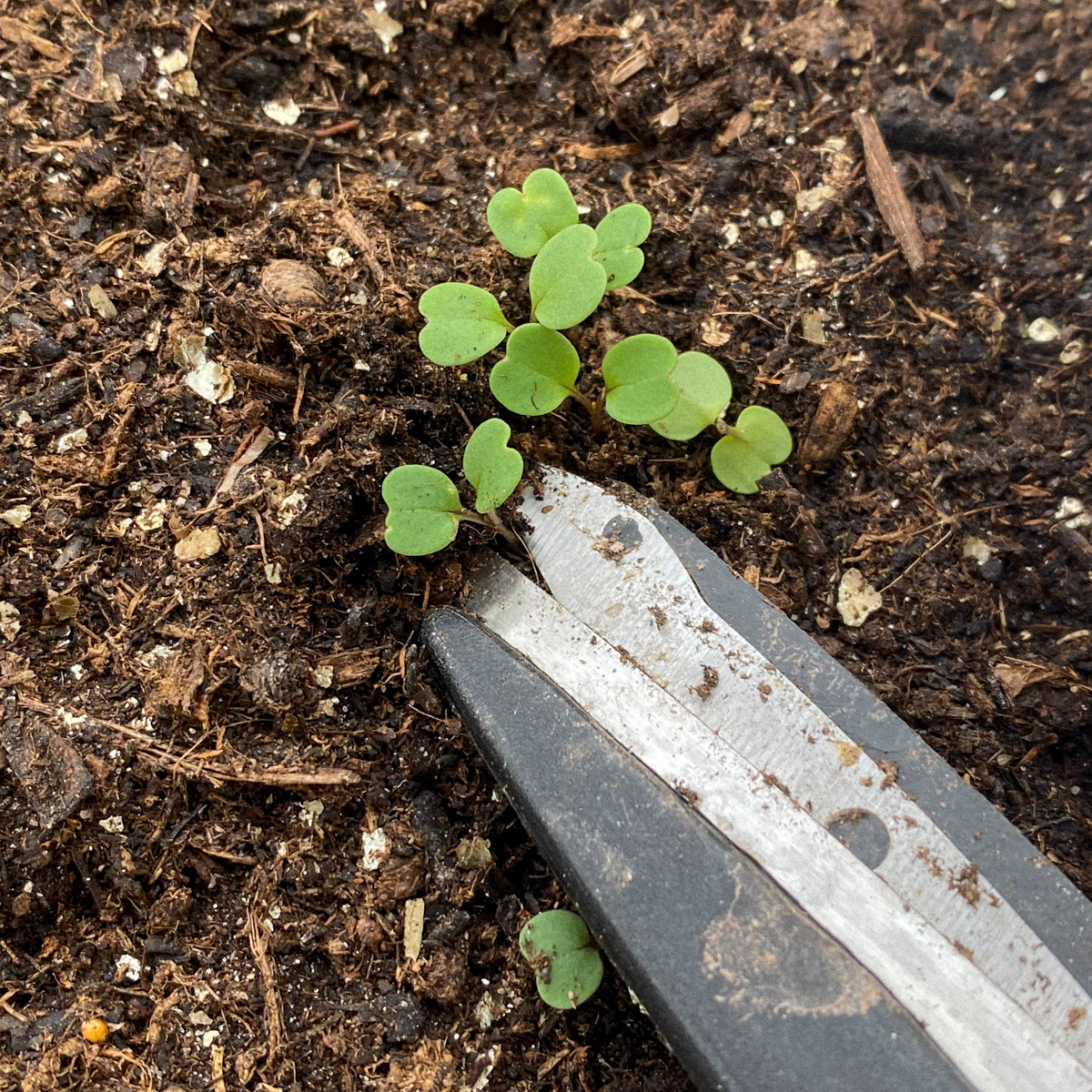
By cutting off the tops of extra seedlings - instead of pulling them up like weeds - you won't damage the remaining plants' tender roots.
"But Jelle, the app says that thinning out isn't necessary for some plants."
That's right.
Those are mostly vegetables with pickable leaves. Like purslane, spinach, and Asian salad mix. So, it doesn't matter if you leave a few plants per hole: you can harvest everything later on.
"But Jelle, the app says that thinning out isn't necessary for some plants."
That's right.
Those are mostly vegetables with pickable leaves. Like purslane, spinach, and Asian salad mix. So, it doesn't matter if you leave a few plants per hole: you can harvest everything later on.
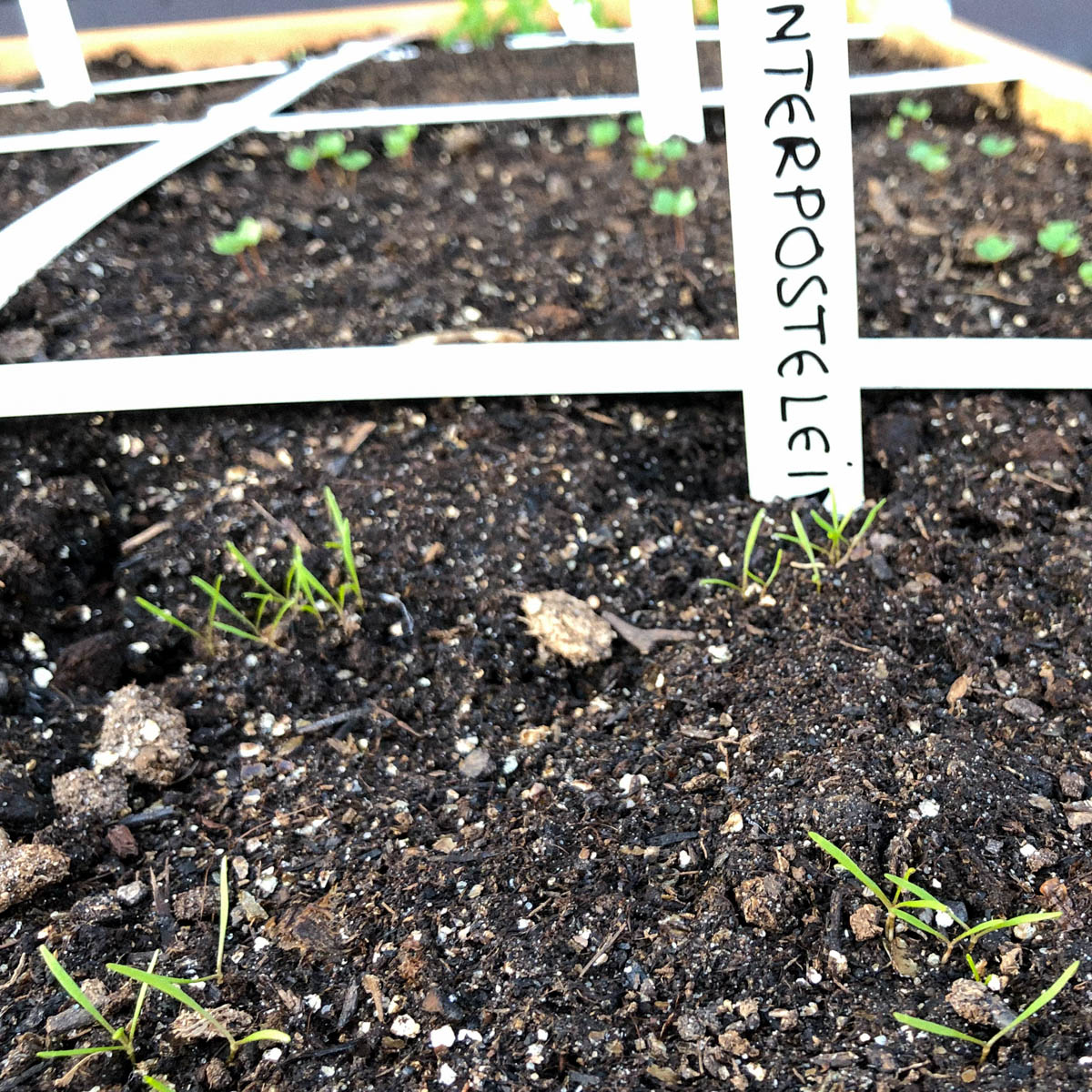
But if you leave 2 carrots, beets, or radishes in one hole, they won't grow. Or you'll get something funky:
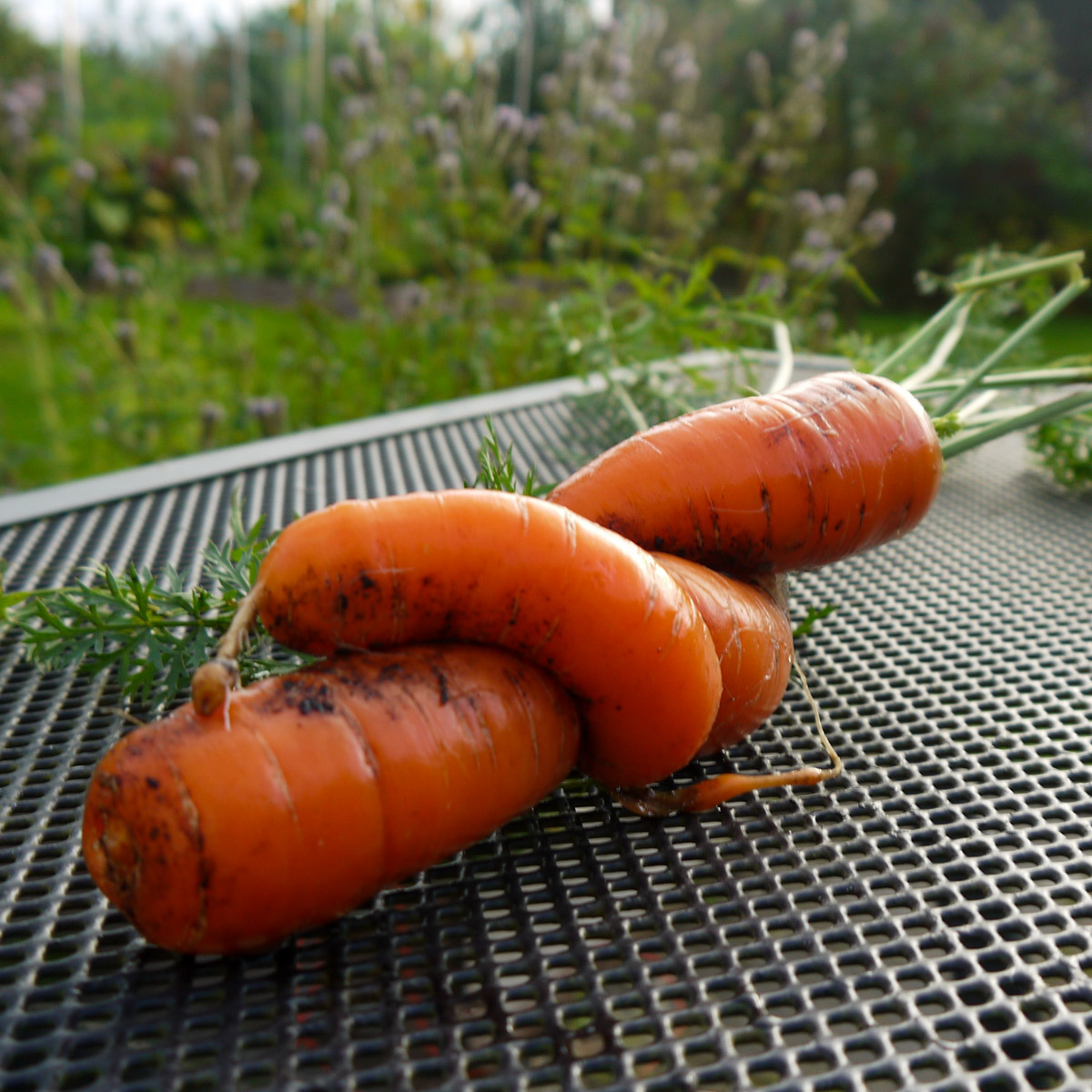
These types of vegetables have long, wide roots. It's extra important to thin them out.
Carrots can be especially tricky:
Carrots can be especially tricky:
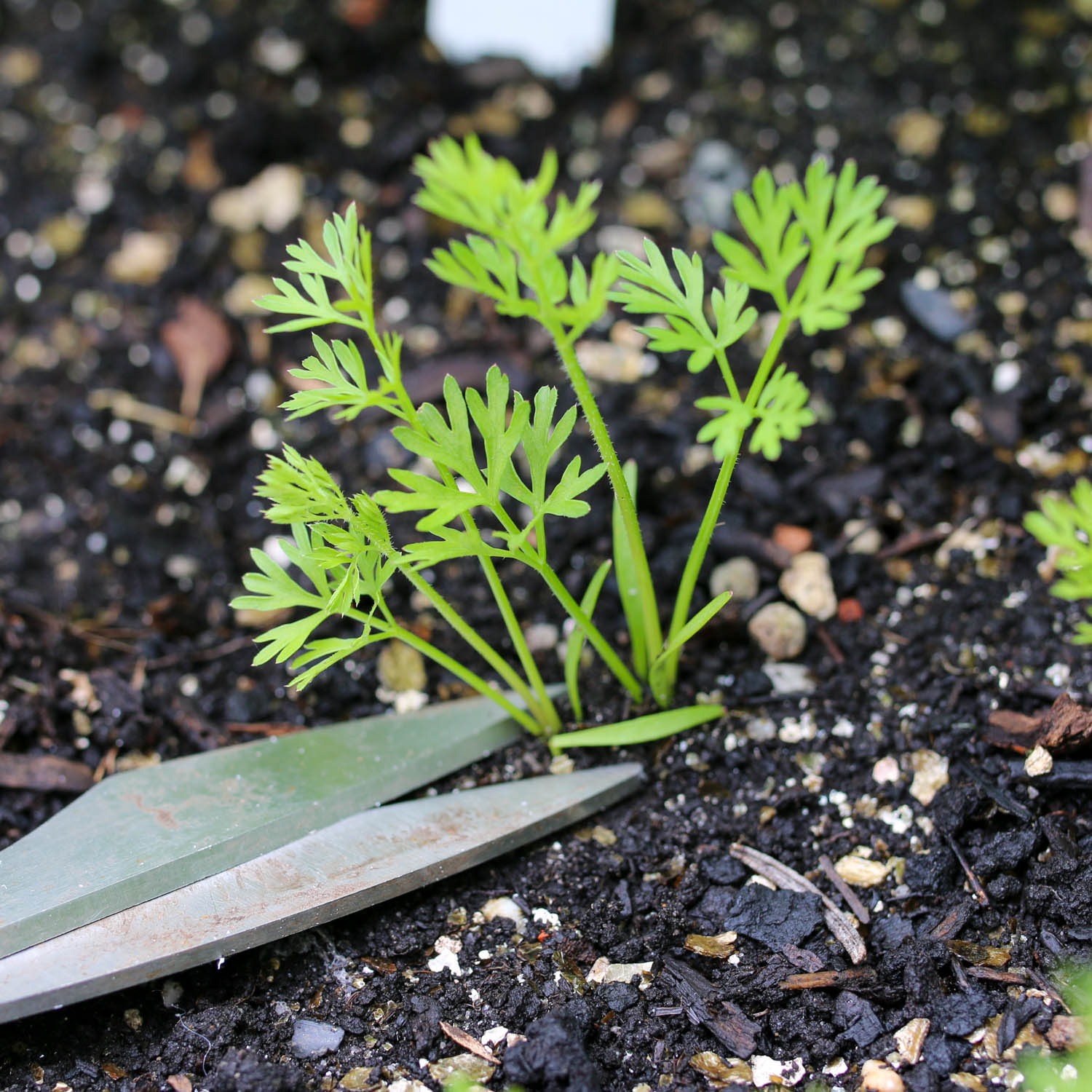
So, make sure you stay on your game when you thin out your plants.
How can you tell which plants are seedlings?
Seedlings can sometimes be difficult to recognise, mainly because their first leaves look different from the leaves that appear later.
But when you sow our seeds, the app shows you what the plants should look like at every stage, including the seedling stage.
But when you sow our seeds, the app shows you what the plants should look like at every stage, including the seedling stage.
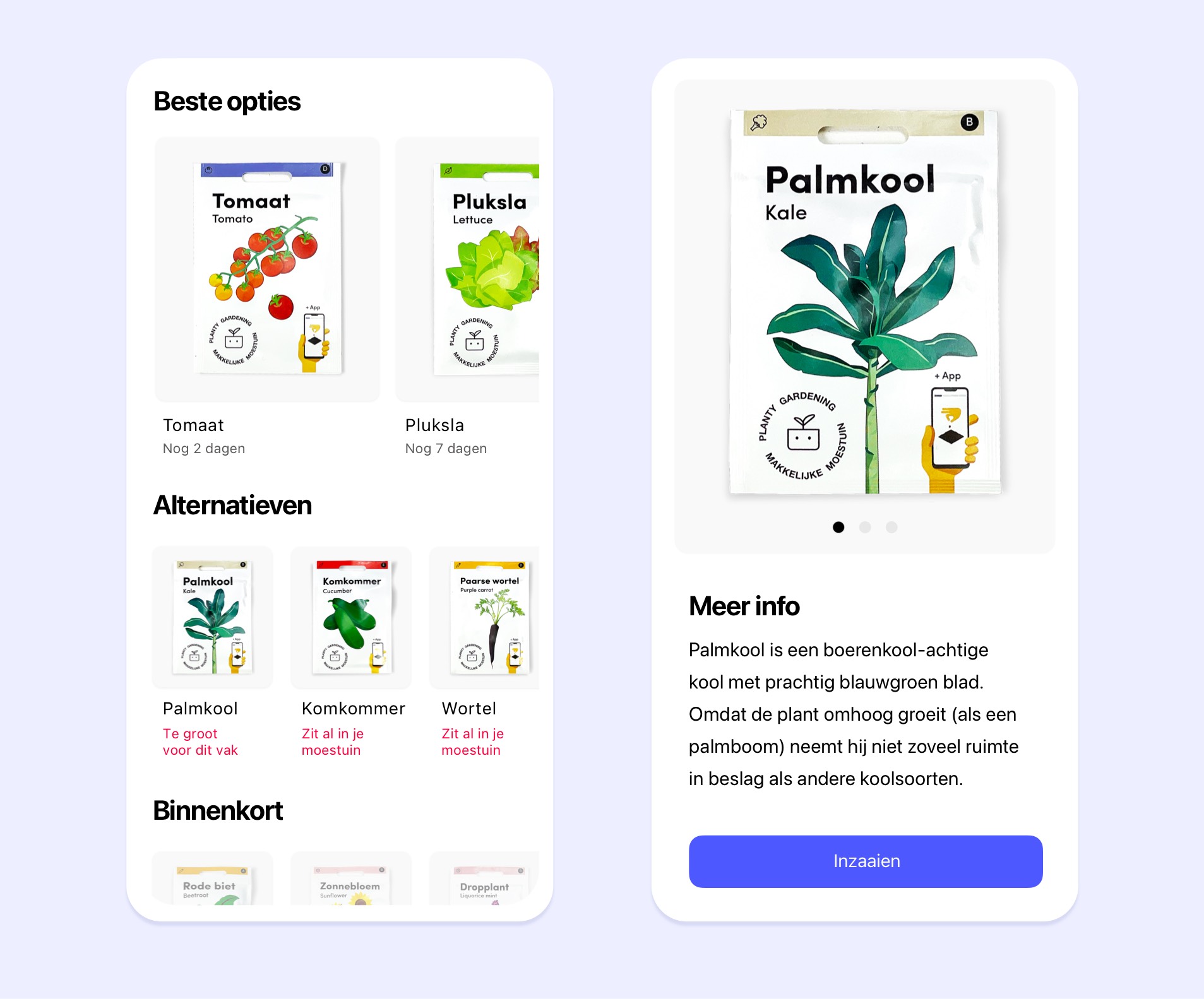
If you use other seeds, it's not the end of the world when it comes to thinning. If you sowed them the right distance apart, you should be able to tell which are vegetables.
If something plant-like appears in a different spot, then it's either a random weed - and you won't see many of those - or you're just a sloppy sower 😉
If something plant-like appears in a different spot, then it's either a random weed - and you won't see many of those - or you're just a sloppy sower 😉
Thinning in brief
- Thinning means removing surplus seedlings
- Follow the app's advice
- For vegetables that need thinning, leave one seedling in each sowing hole
- Use scissors to cut away the extras
- Do not overthink it, just do it 😅
One more tip from the community: you can eat the seedlings you cut away*, and they are delicious on a cheese sandwich.
*Except seedlings from tomatoes, cucumbers, pumpkins and courgettes.
Good luck!
*Except seedlings from tomatoes, cucumbers, pumpkins and courgettes.
Good luck!