
Techniques
Sowing and starting indoors
Starting courgettes, pumpkins and cucumbers indoors
The best time to start courgettes and pumpkins indoors is from late April to late May. Our fast-growing Snack cucumber can even be started in July.
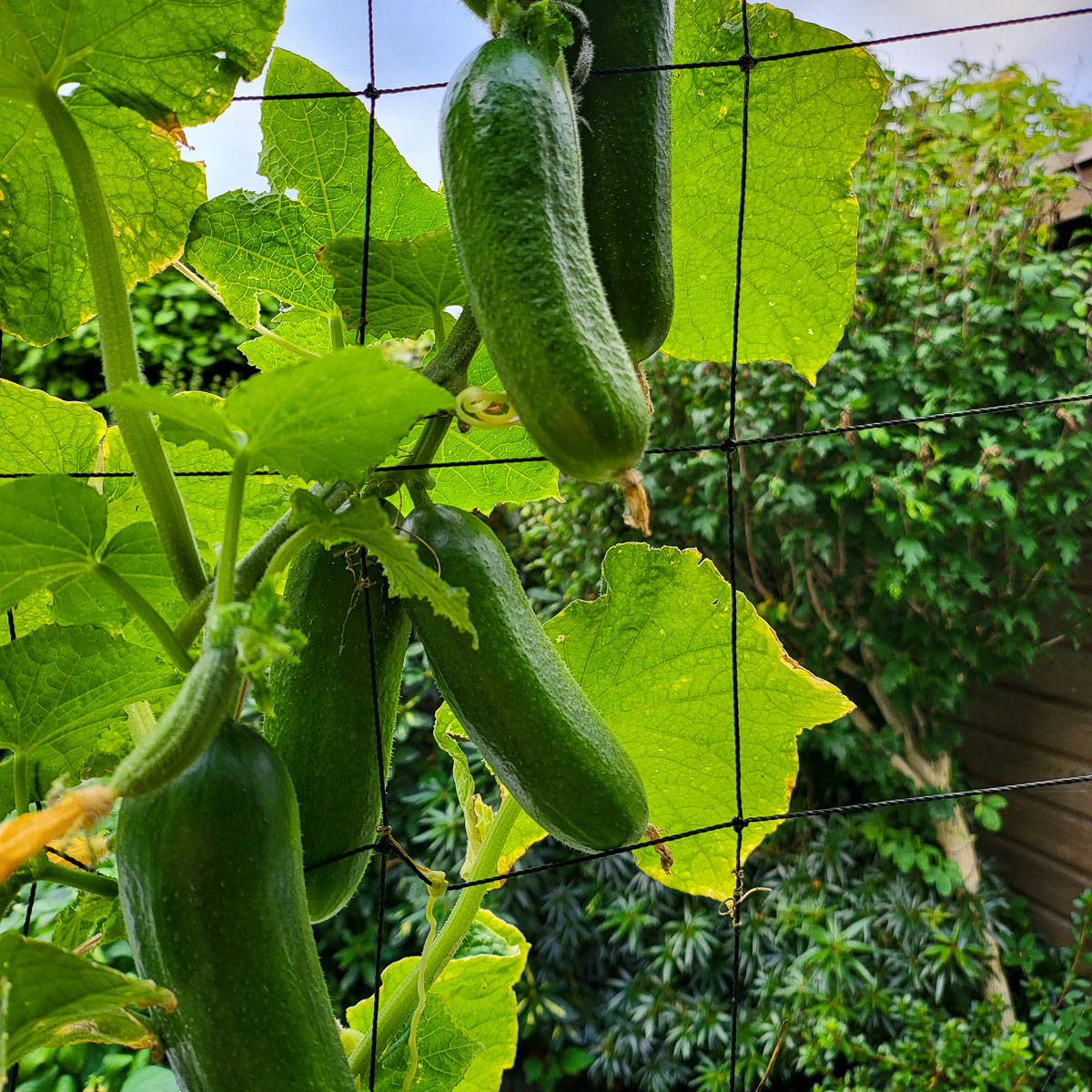
Many gardeners do it earlier, but you don't need to: the plants grow super fast.
Plus, caring for your plants on the windowsill isn't so easy. They often don't get enough light. So, the less time you spend growing them indoors, the better. (You can even start as late as mid-June).
Plus, caring for your plants on the windowsill isn't so easy. They often don't get enough light. So, the less time you spend growing them indoors, the better. (You can even start as late as mid-June).
How do you start courgettes, cucumbers and pumpkins indoors?
It is very simple. Follow the app if you use it; otherwise, here is an overview:
1. Start by pre-sprouting the seeds
Why? Because it lets you check that the seeds have germinated properly. Our cucumber and climbing courgette seeds are expensive, so it would be a shame to leave it to chance.
It is easy: dampen a piece of kitchen paper or toilet paper and place the seeds between the layers.
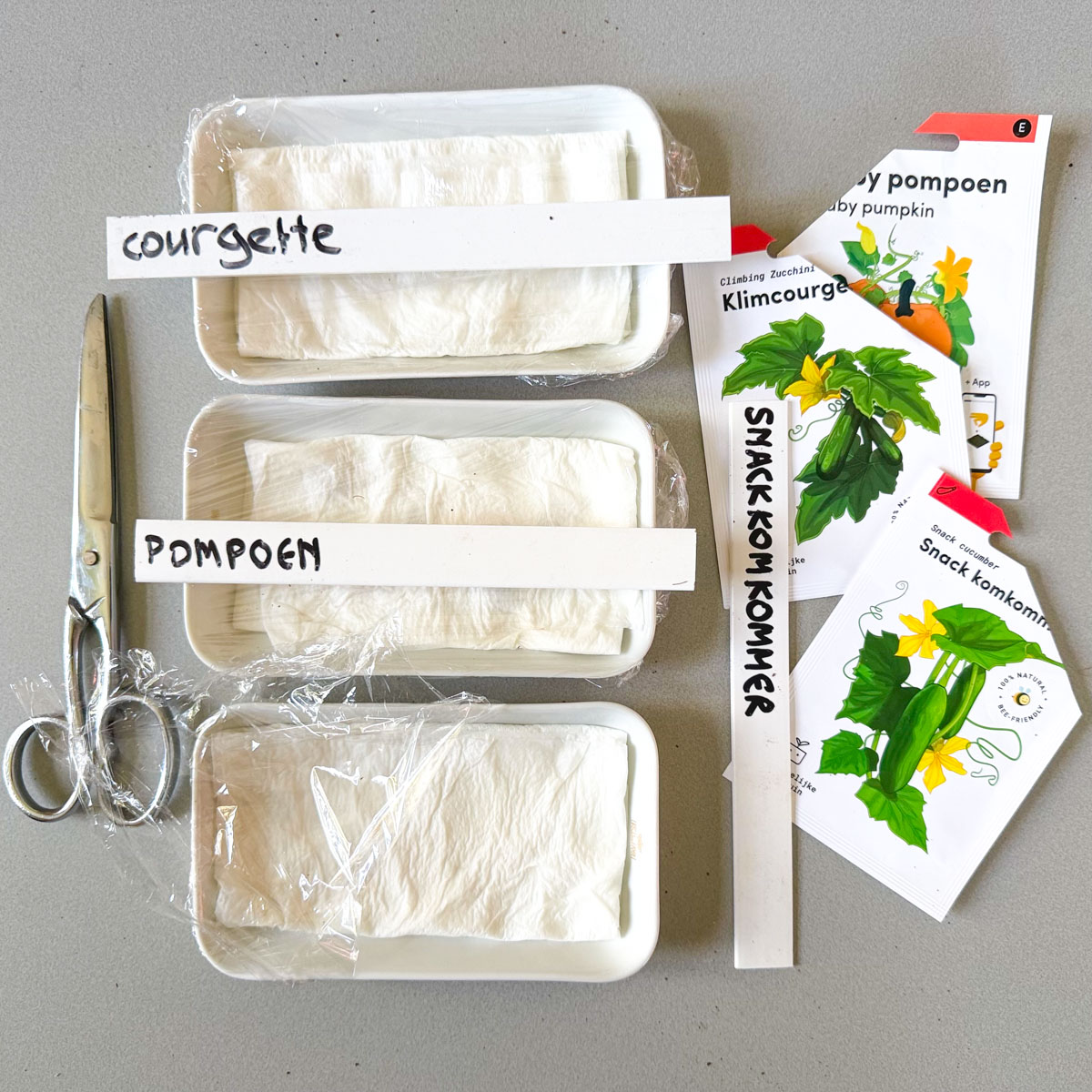
To keep the kitchen paper from drying out, I use shallow dishes covered with cling film.
Take care not to make the paper too wet, as the seeds may become mouldy.
Take care not to make the paper too wet, as the seeds may become mouldy.
Place the dishes somewhere warm. The seeds germinate at about 21°C; if it is colder, they will not do anything. Check occasionally for a root. You may see one after 2 to 3 days, although it sometimes takes longer.
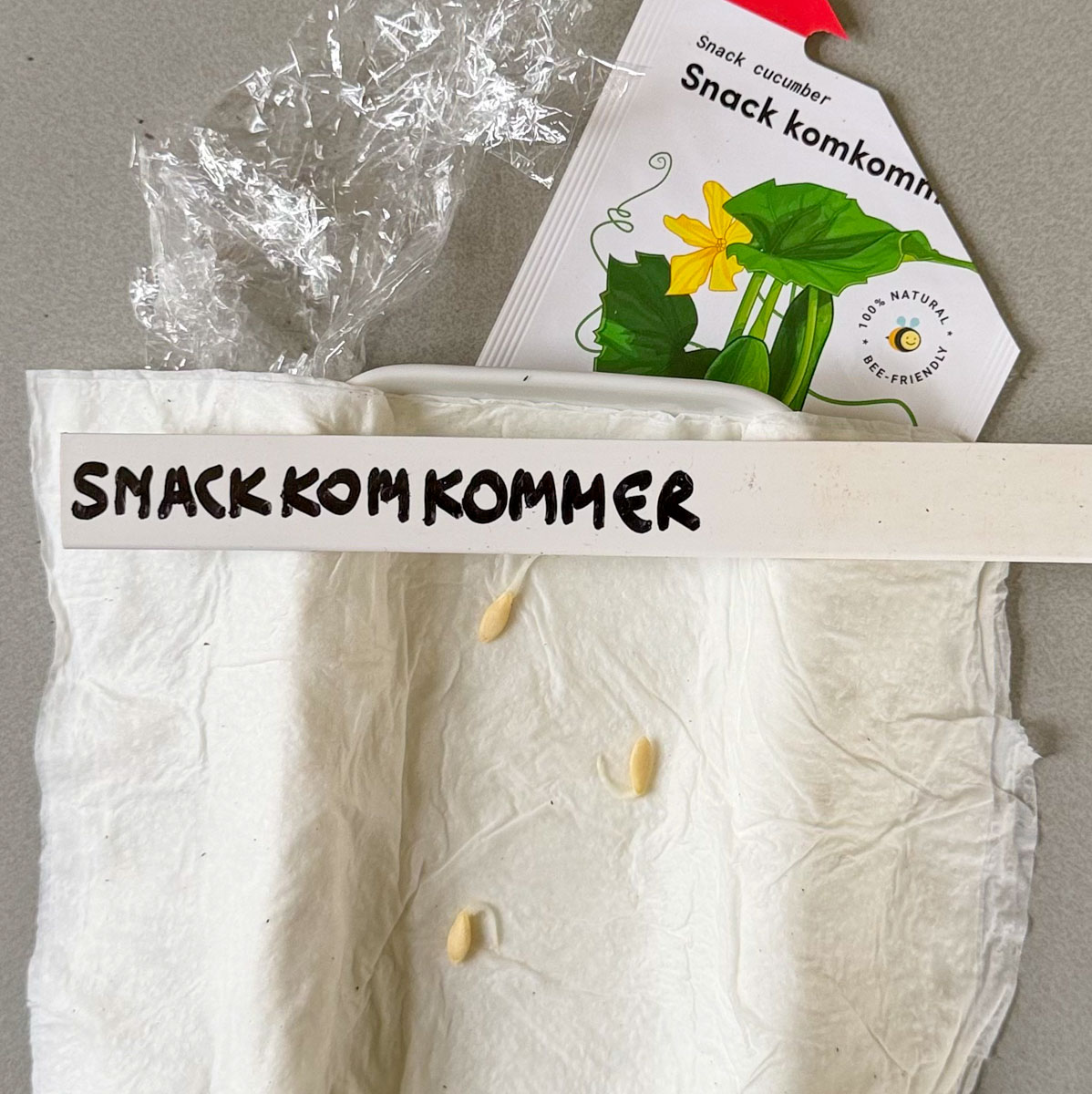
2. Put the germinated seeds into an Airpot
You will need:
- germinated seeds
- large MM-Airpots
- MM coconut seed-starting mix
- cling film to cover the pots, unless you are using coconut mix
Please note: MM coconut seed-starting mix does not contain nutrients when it comes out of the bag. When preparing a new bag, add one heaped tablespoon of MM plant food.
Seed-starting mix contains fewer nutrients than ordinary mix, which is exactly what seedlings need. Too many nutrients make them grow too quickly, leaving them weak rather than sturdy.
Fill the Airpots with seed-starting mix and moisten it. Make a fairly wide hole around 1 cm deep in the centre of each pot. Carefully place one germinated seed in each hole without damaging the root.
Seed-starting mix contains fewer nutrients than ordinary mix, which is exactly what seedlings need. Too many nutrients make them grow too quickly, leaving them weak rather than sturdy.
Fill the Airpots with seed-starting mix and moisten it. Make a fairly wide hole around 1 cm deep in the centre of each pot. Carefully place one germinated seed in each hole without damaging the root.
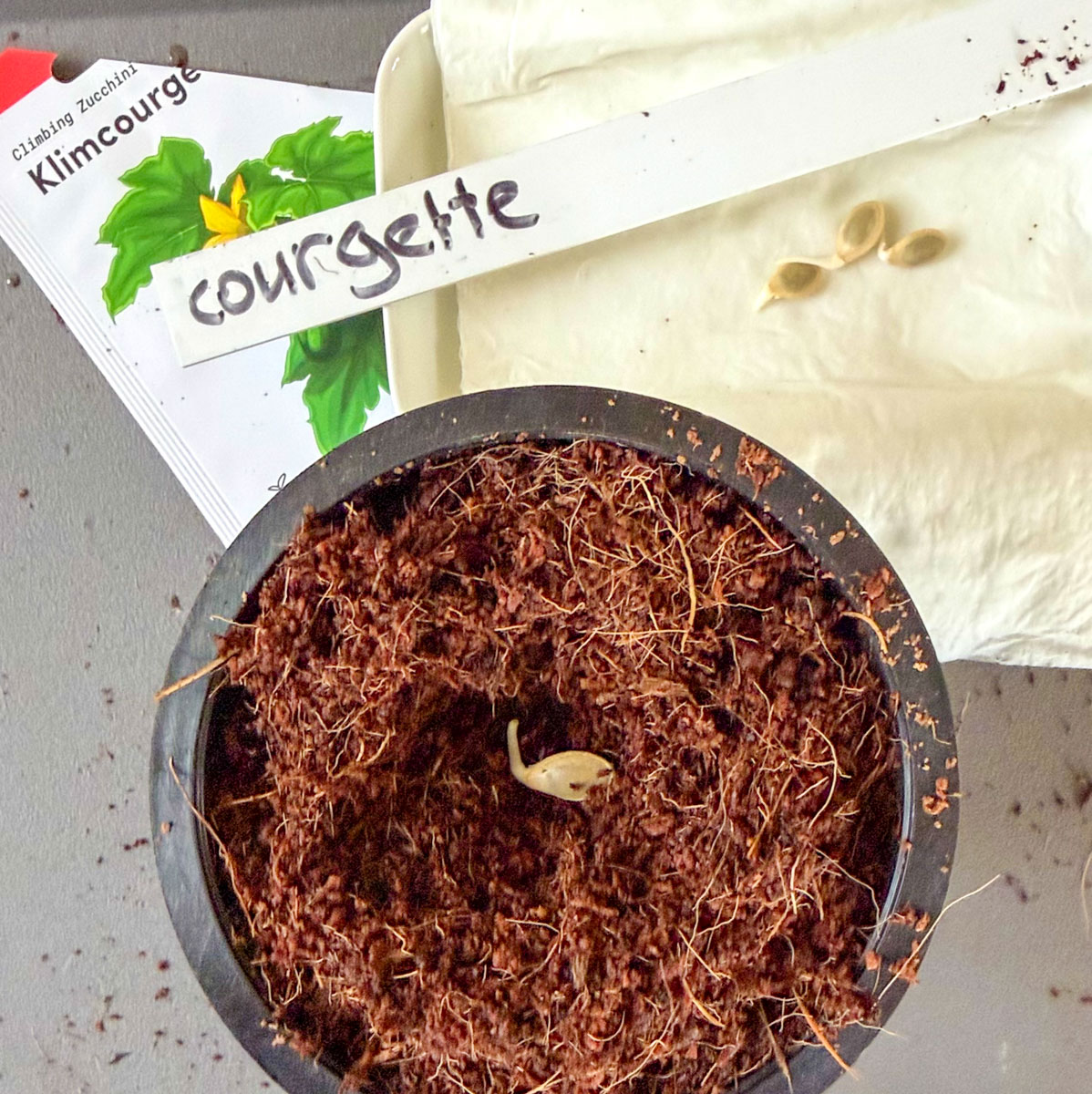
If you do not have Airpots, ordinary pots work too. Choose fairly large ones, at least 15 cm in diameter.
Place the pots in a bowl or saucer and put them somewhere warm, such as a windowsill.
That's it.
Place the pots in a bowl or saucer and put them somewhere warm, such as a windowsill.
That's it.
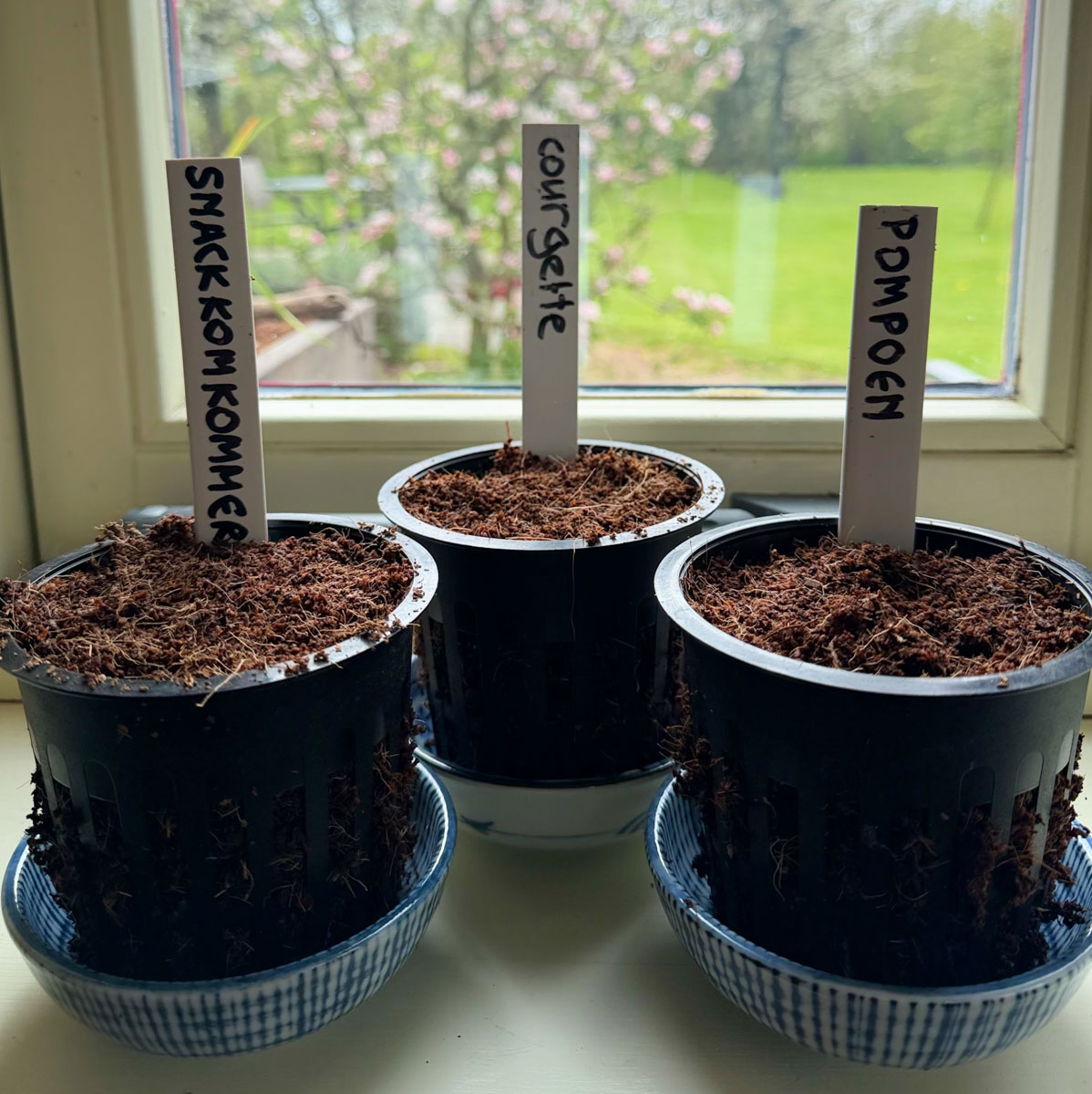
Seedlings on the windowsill
When you start seeds this way, the seedlings soon emerge from the mix. As soon as they do, remove the cling film (not needed with coconut mix) and place the pots in plenty of light. Do not let them become too warm: 20°C is the maximum.
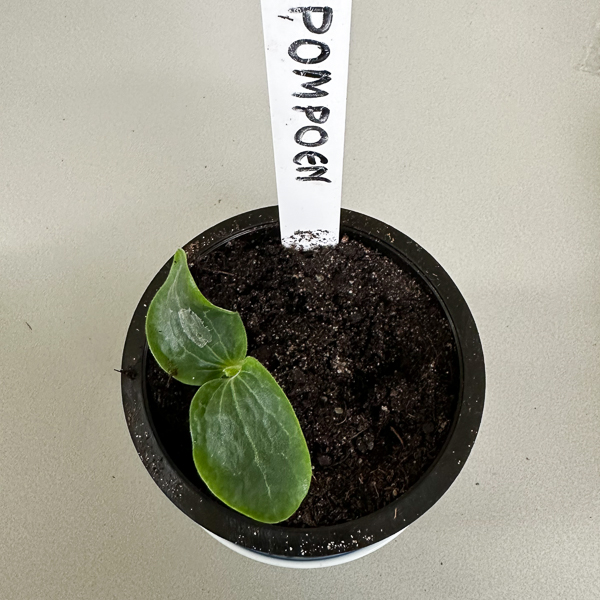
Check regularly that the mix is still damp, as small seedlings dry out quickly. Water pots with traditional seed-starting mix from above; for coconut seed-starting mix, add water to the dish beneath the pot.
Turn the pots a quarter turn every day to prevent the seedlings from leaning to one side.
Turn the pots a quarter turn every day to prevent the seedlings from leaning to one side.
One week later, they already look like this:
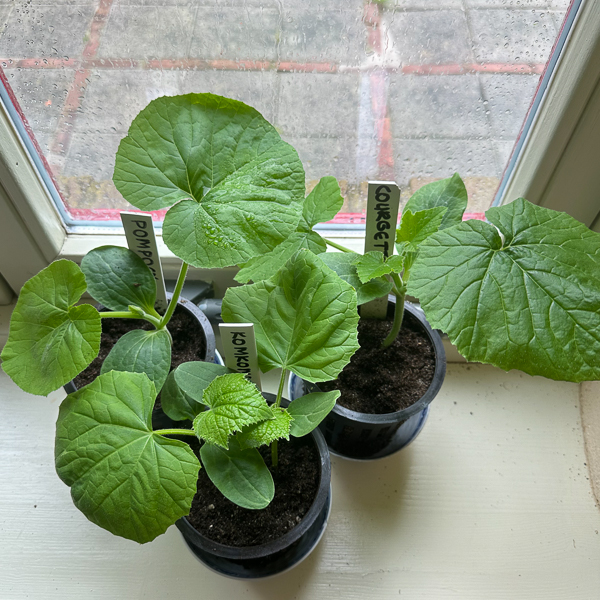
No, that is not a problem. It encourages the plant to produce new roots inside the pot and develop a strong root system.
Because the pot is quite small, cucumber, courgette and pumpkin plants do need to move to their final position within a month.
If you started much earlier and it is still too soon to plant outside, move the plant into a larger pot filled with MM-mix after about 3 weeks.
To avoid that extra step, I prefer starting as late as possible: late April at the earliest.
Cucumber plants grow quickly, and courgette and pumpkin plants even faster. They may look too large for their MM-Airpots.
But if you started in late April or early May, they only need to remain in the pots for 3 to 4 weeks, which is fine. After that, you plant them in your raised bed.
If you started earlier, the plants will become too large and need more nutrients. Move them into a larger pot filled with MM-mix after 4 weeks.
All the more reason not to start too early.
But if you started in late April or early May, they only need to remain in the pots for 3 to 4 weeks, which is fine. After that, you plant them in your raised bed.
If you started earlier, the plants will become too large and need more nutrients. Move them into a larger pot filled with MM-mix after 4 weeks.
All the more reason not to start too early.
Rapid growth
Pumpkins, cucumbers and courgettes grow extremely quickly. If you start them in late April or early May, the plants can go outside fairly soon.
Before planting them outside permanently, gradually get them used to outdoor conditions by leaving them out for one hour longer each day.
Before planting them outside permanently, gradually get them used to outdoor conditions by leaving them out for one hour longer each day.
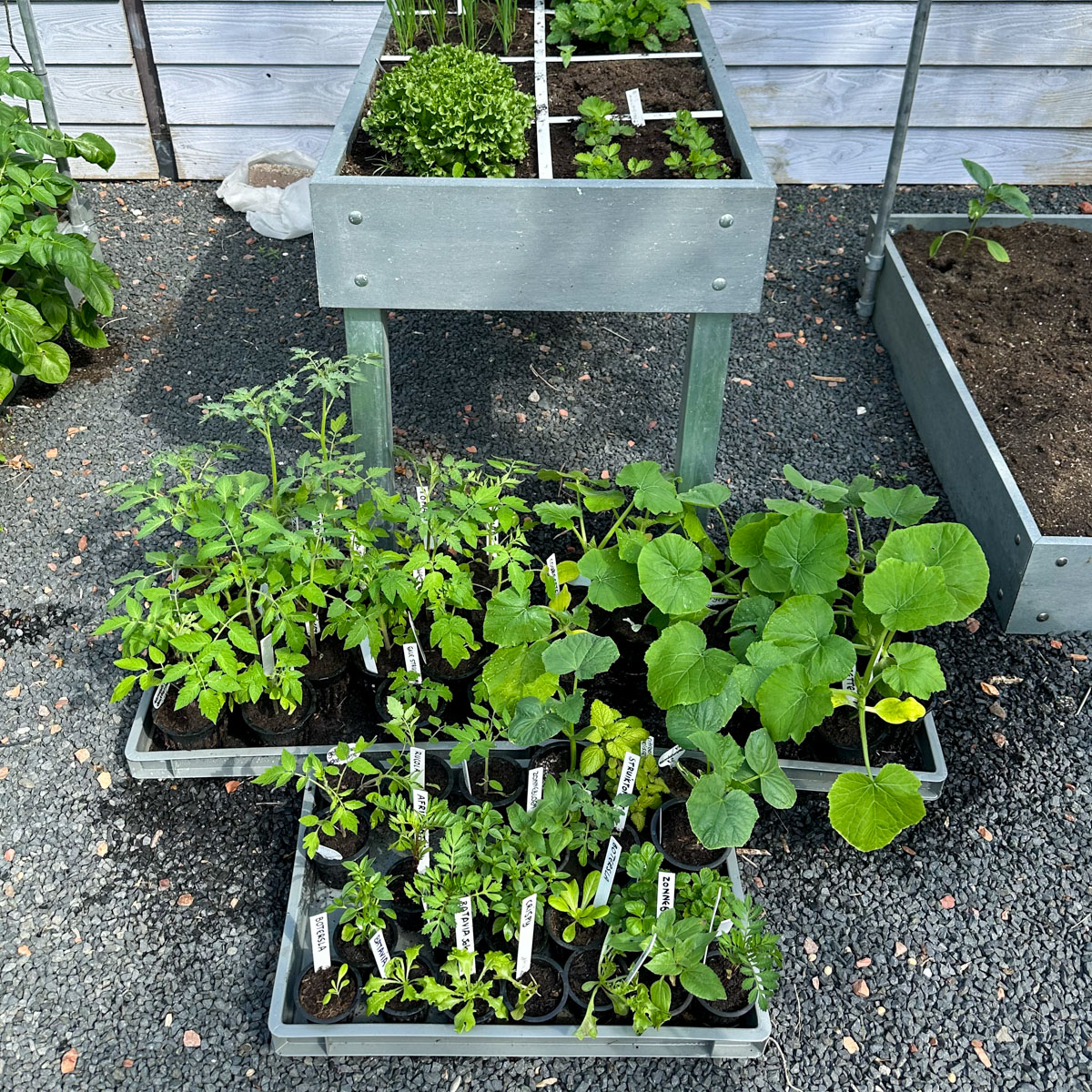
Once they are used to outdoor conditions, plant them outside around the end of May. By then, they will probably be sturdy young plants.
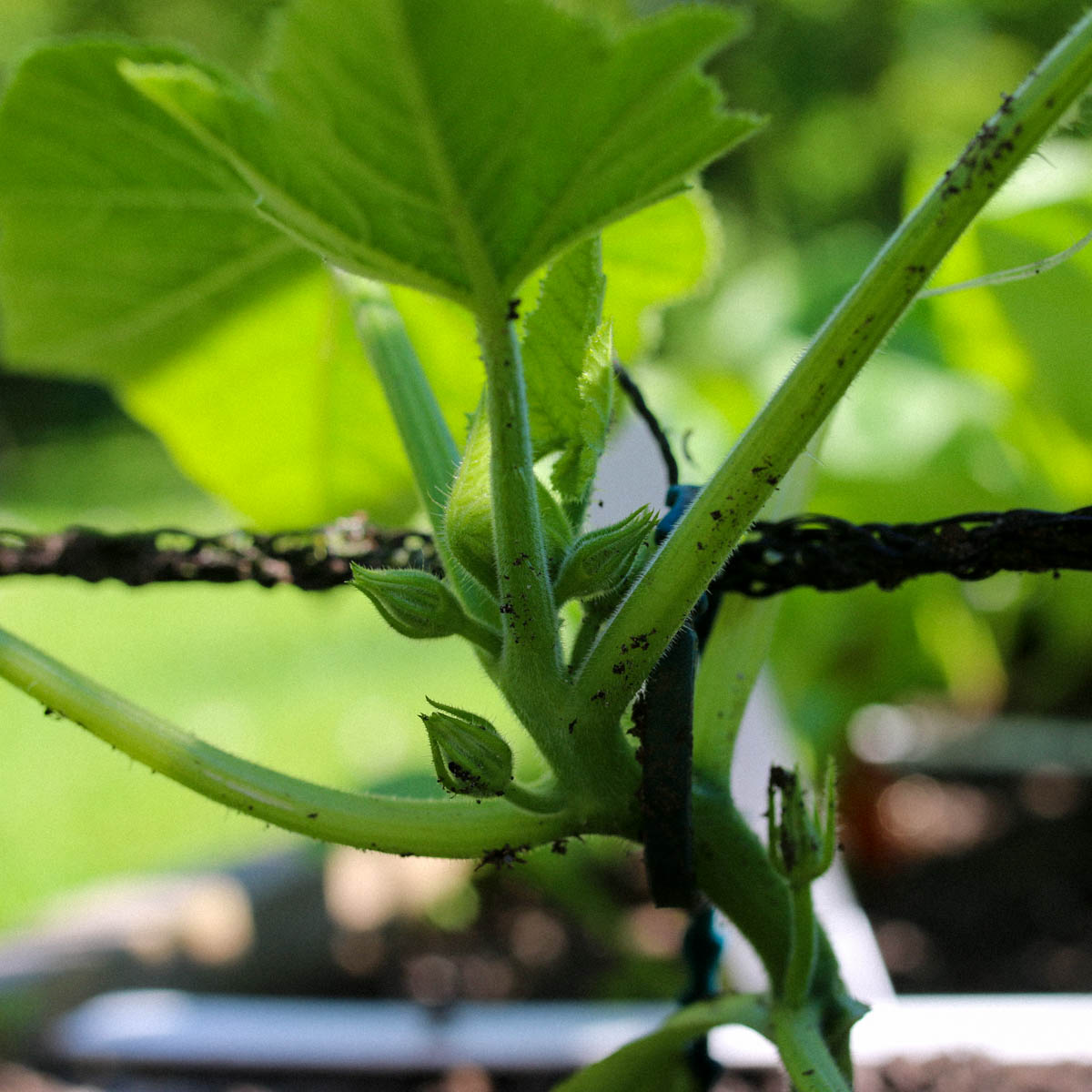
Plant them in a square beside a strong trellis:
Plant them in a square beside a strong trellis:
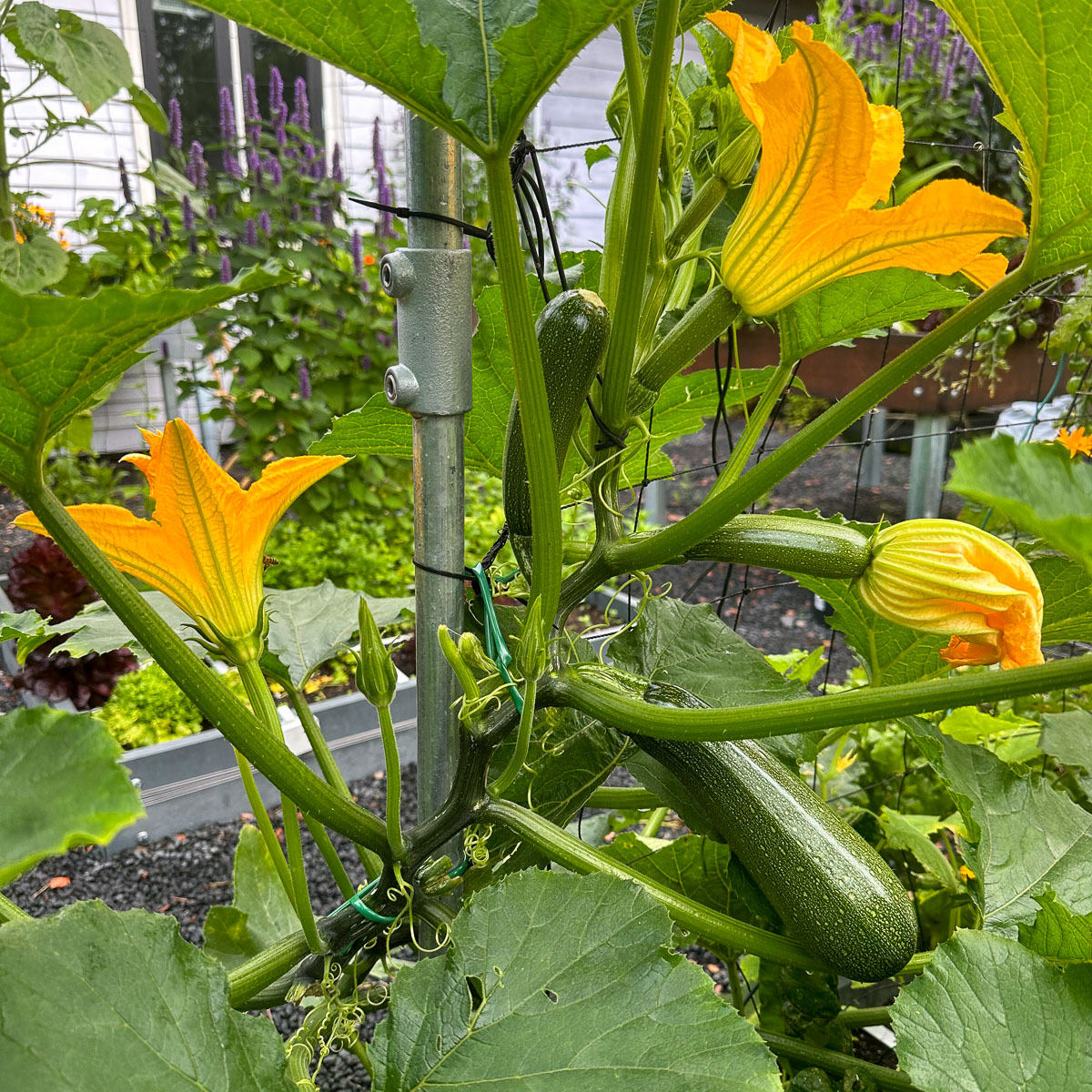
Climbing courgette
A sturdy trellis is especially important for the climbing courgette. The mature plant produces plenty of courgettes, and together they become quite heavy:
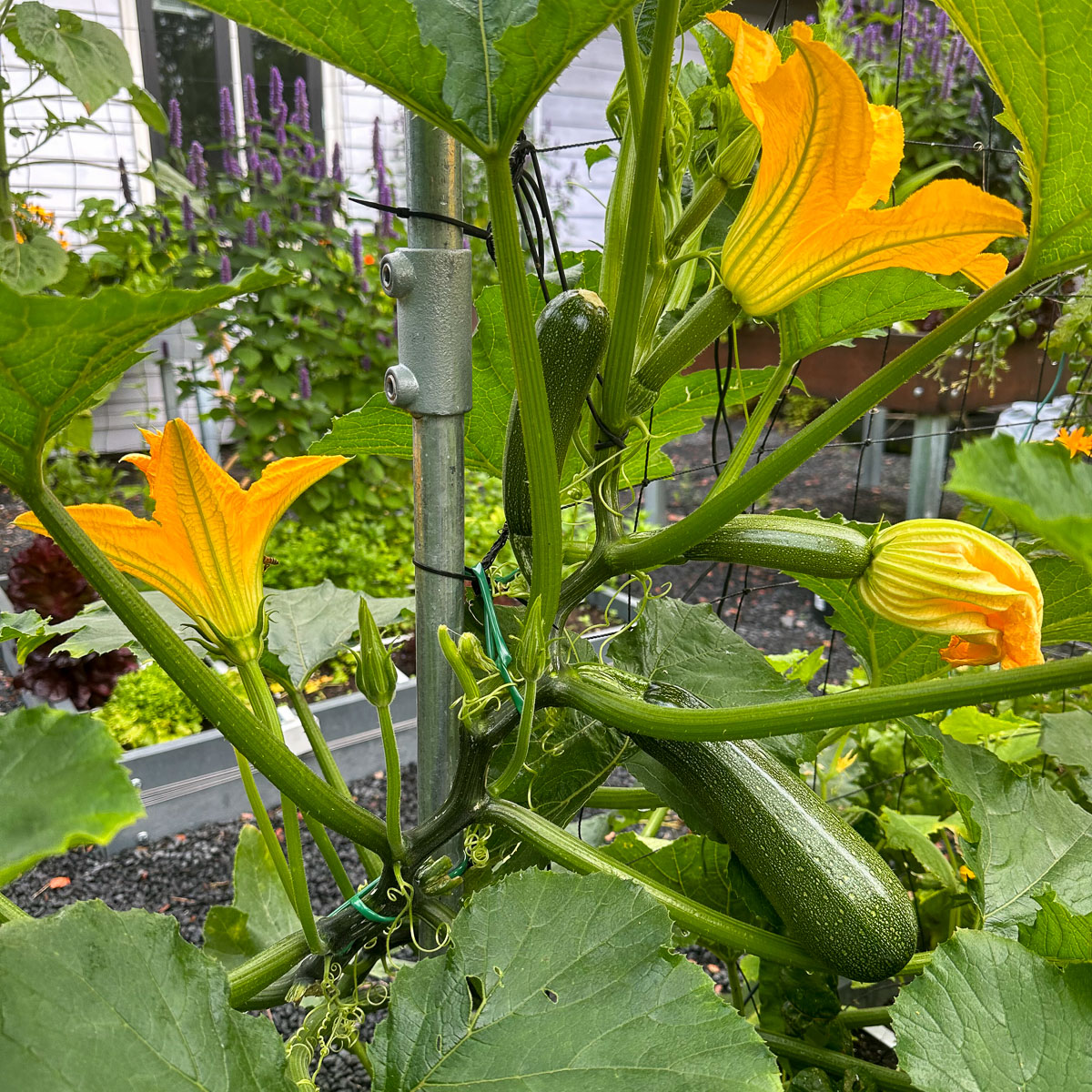
For detailed instructions on caring for this plant in your raised bed, see Climbing courgette in the shop. The product page includes a full description and photographs:
Snack cucumber
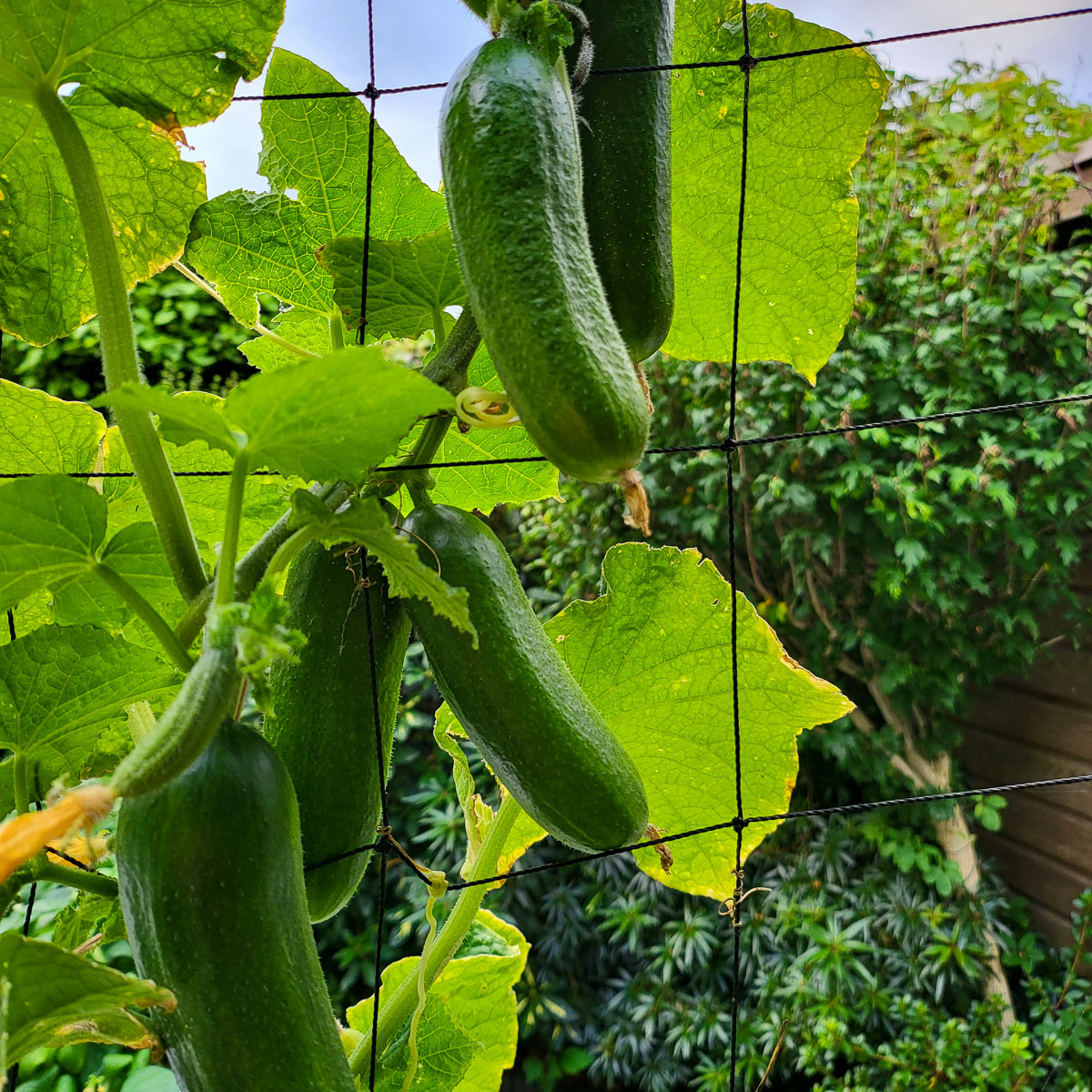
Our Snack cucumber grows so quickly that you can even sow it in July.
We sowed this plant at the end of July and harvested the first small cucumbers by mid-September. It soon produced plenty more. This photograph was taken in mid-October:
We sowed this plant at the end of July and harvested the first small cucumbers by mid-September. It soon produced plenty more. This photograph was taken in mid-October:
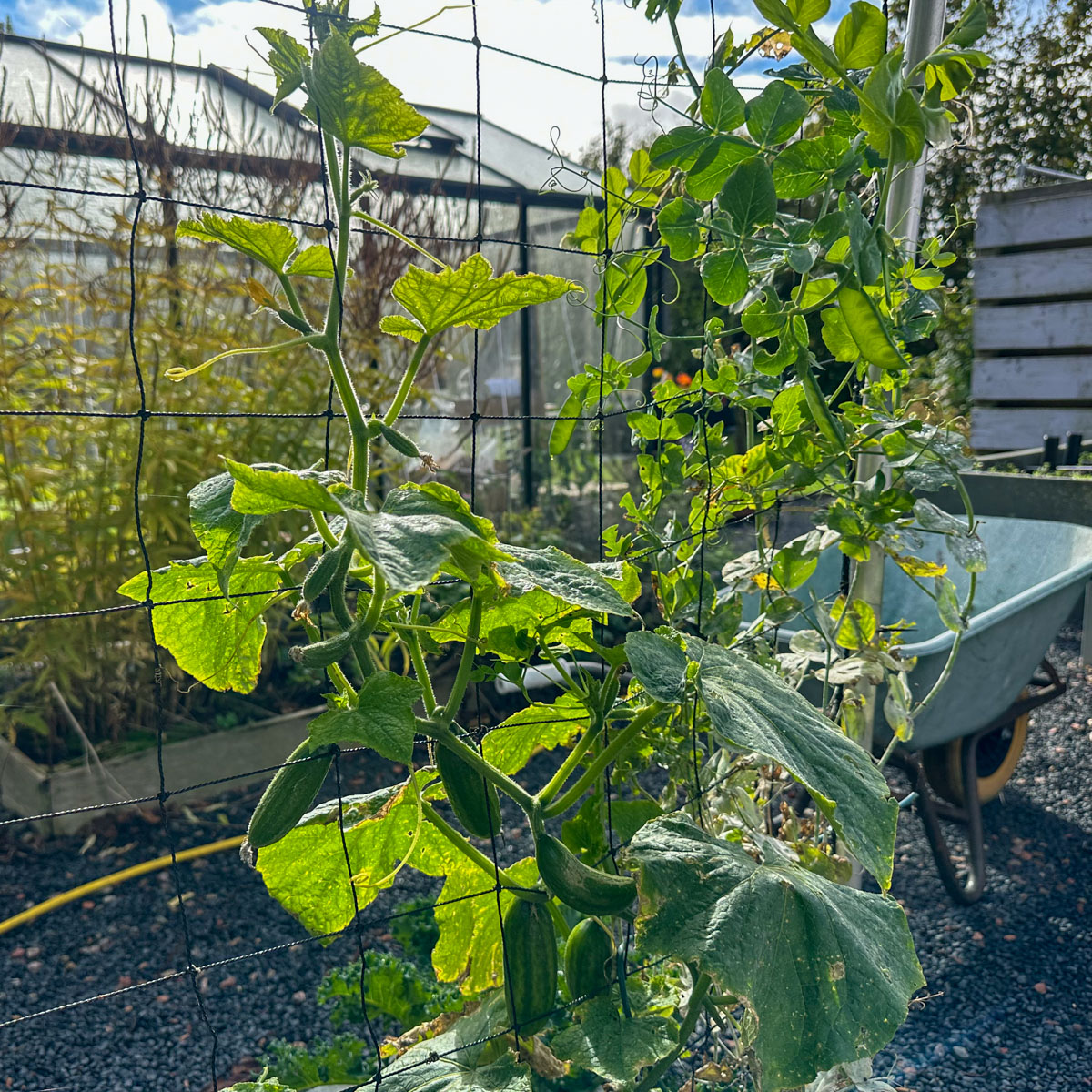
Read how to achieve this on the Snack cucumber page in the shop. It describes every growing stage and includes photographs.
Baby pumpkin
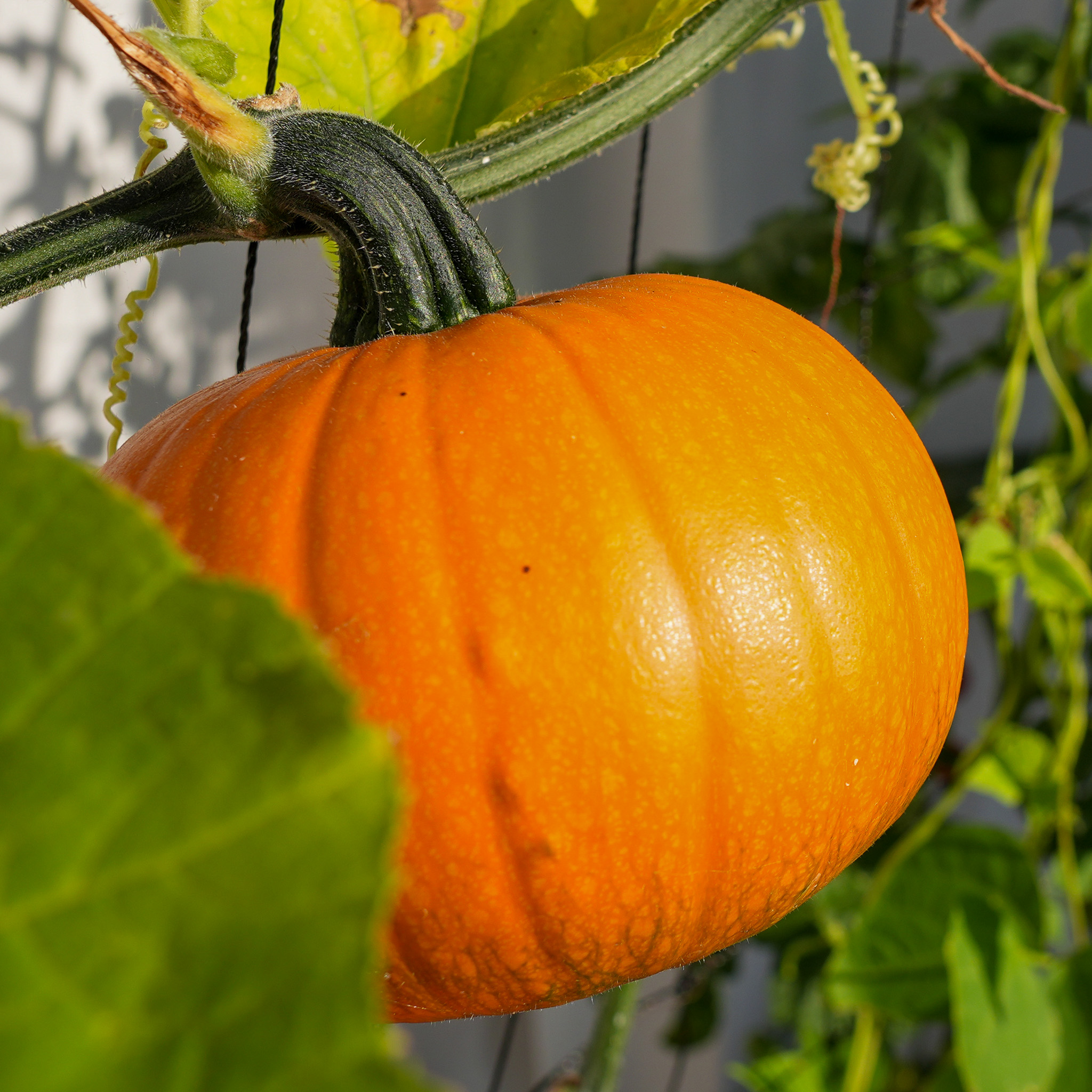
Still have a little room beside your cucumbers and tall tomatoes? Try a Baby pumpkin. Its fruits are fairly small, so you can train the plant up a trellis too.
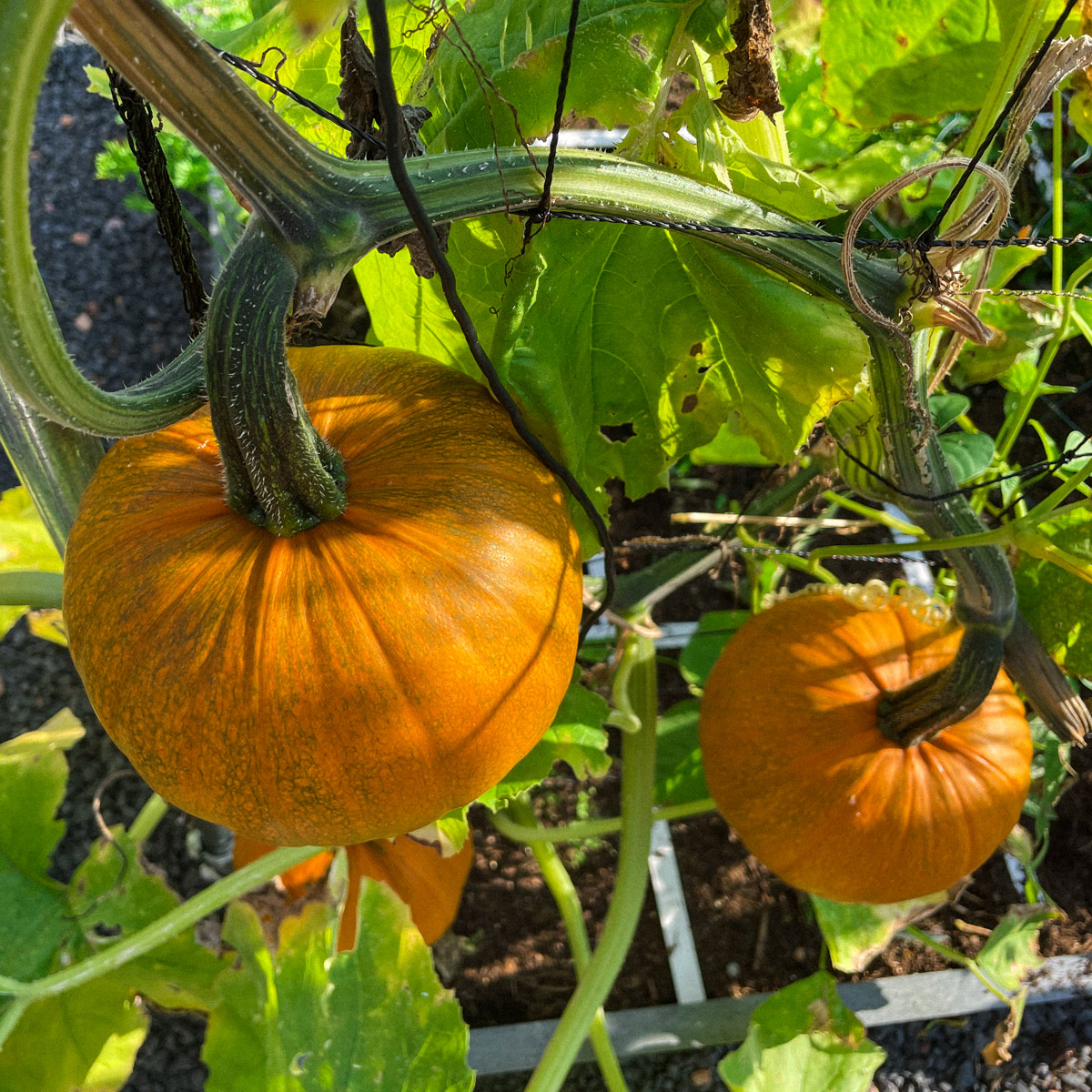
Our pumpkins grow a little differently from climbing courgettes and Snack cucumbers. A Baby pumpkin produces very long stems that need to be woven horizontally through the trellis.
Read exactly how to do this on the Baby pumpkin page in the shop:
Read exactly how to do this on the Baby pumpkin page in the shop:
Where can you find everything you need?
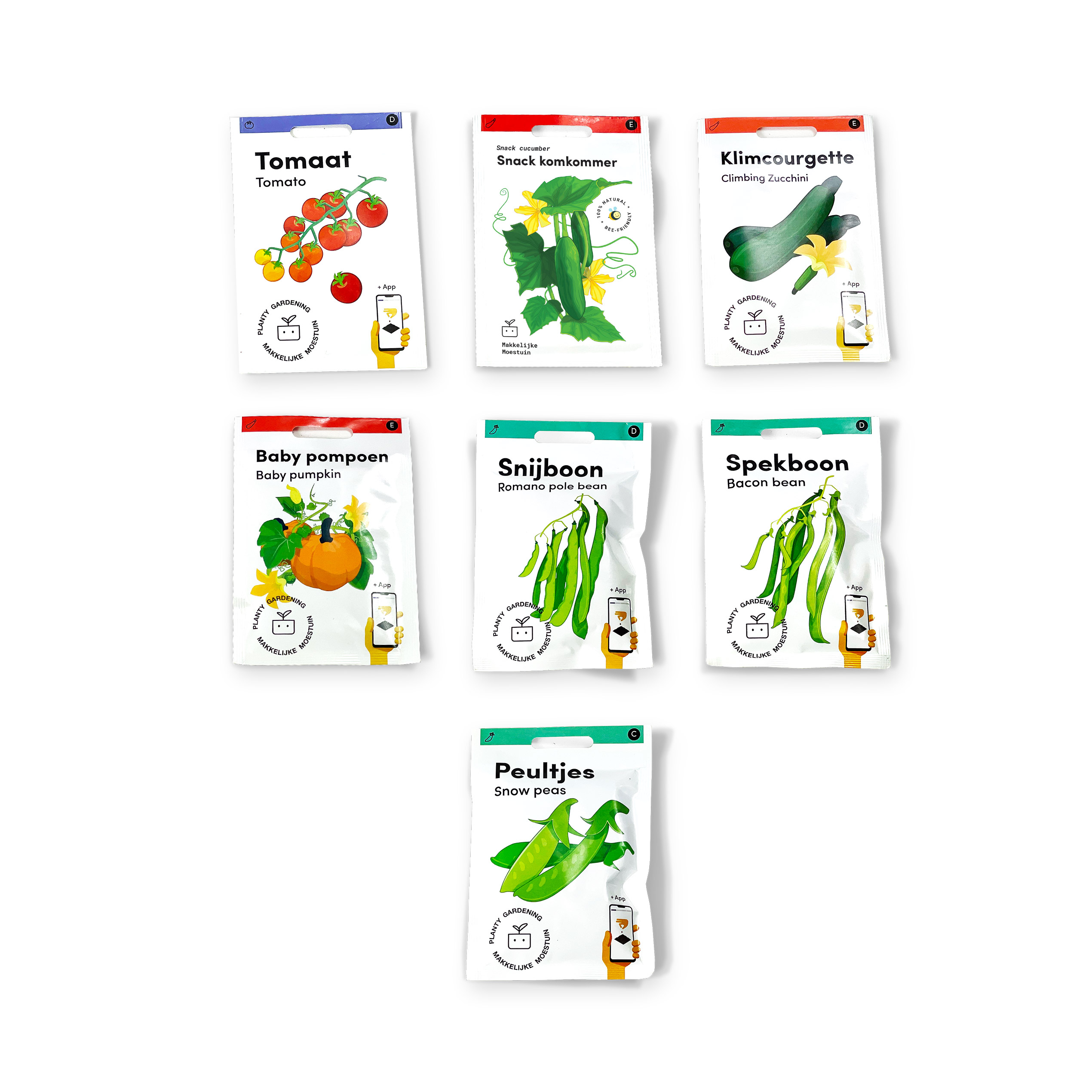
You will find the seeds, large Airpots and seed-starting mix in the shop. The good-value Climbing veg seed bundle is there too:
Have fun in your Makkelijke Moestuin!