
What does F1 mean on seed packets?
Vegetable seeds bred for specific traits are called F1 hybrids. These varieties are selected to strengthen useful characteristics and reduce less useful ones.
On a packet of seeds, you sometimes see F1 next to the variety name. That means they are hybrid seeds: seeds from a plant variety that has been carefully bred by growers.
Another word for this process is plant breeding. Growers do it for different reasons: for example, to produce better-looking fruits or to make plants more resistant to certain diseases.
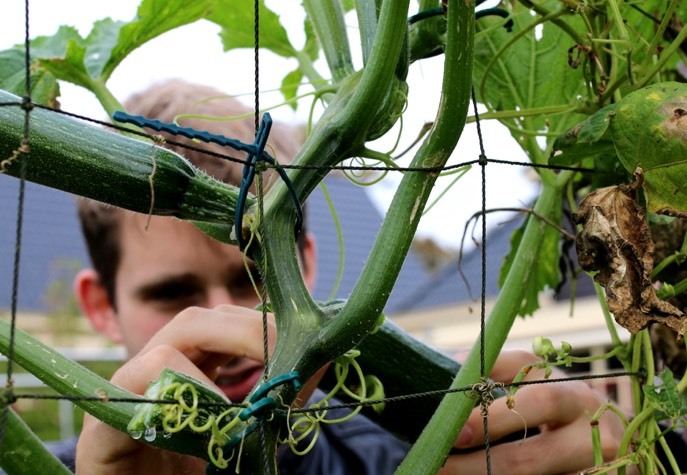
Our climbing courgette is a good example. Courgettes take up a lot of space: easily 1 m2. The Black Forest F1 climbing courgette has been bred for a longer stem, so you can tie it up along a trellis.
Bred varieties are not scary or unnatural. Growers who work fully organically develop them too.
Another word for this process is plant breeding. Growers do it for different reasons: for example, to produce better-looking fruits or to make plants more resistant to certain diseases.
Our climbing courgette is a good example. Courgettes take up a lot of space: easily 1 m2. The Black Forest F1 climbing courgette has been bred for a longer stem, so you can tie it up along a trellis.
Bred varieties are not scary or unnatural. Growers who work fully organically develop them too.
Why do growers breed seeds?
Seed growers do this to strengthen certain characteristics of a variety and soften others.
Think of better performance in warmer, colder, drier, or wetter weather. Or a more uniform appearance, a bigger harvest per plant, or better flavour.
By crossing and selecting varieties again and again, growers strengthen the traits they consider positive and reduce the negative traits as much as possible.
Think of better performance in warmer, colder, drier, or wetter weather. Or a more uniform appearance, a bigger harvest per plant, or better flavour.
By crossing and selecting varieties again and again, growers strengthen the traits they consider positive and reduce the negative traits as much as possible.
Which F1 hybrids do you sell, and why?
Because we grow in raised beds and squares, we look for varieties that are particularly suited to this method: compact plants that grow quickly and produce a good harvest. Sometimes that naturally leads us to a hybrid variety.
Black Forest F1 climbing courgette
I mentioned this climbing courgette earlier. A normal courgette plant does not fit in a raised bed: it would take up all the available space.
Black Forest F1, however, works brilliantly. Tie its long stem to a trellis and it takes up just one square instead of 16.
Iznik F1 snack cucumber
Black Forest F1 climbing courgette
I mentioned this climbing courgette earlier. A normal courgette plant does not fit in a raised bed: it would take up all the available space.
Black Forest F1, however, works brilliantly. Tie its long stem to a trellis and it takes up just one square instead of 16.
Iznik F1 snack cucumber
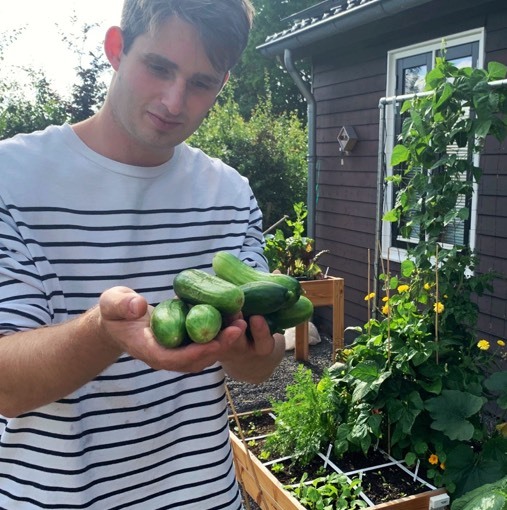
This snack cucumber has been bred for several traits:
- the cucumbers do not become bitter
- they have a smooth, uniform appearance
- the plant produces a large harvest
- it does well both indoors and outdoors
Bok choi F1
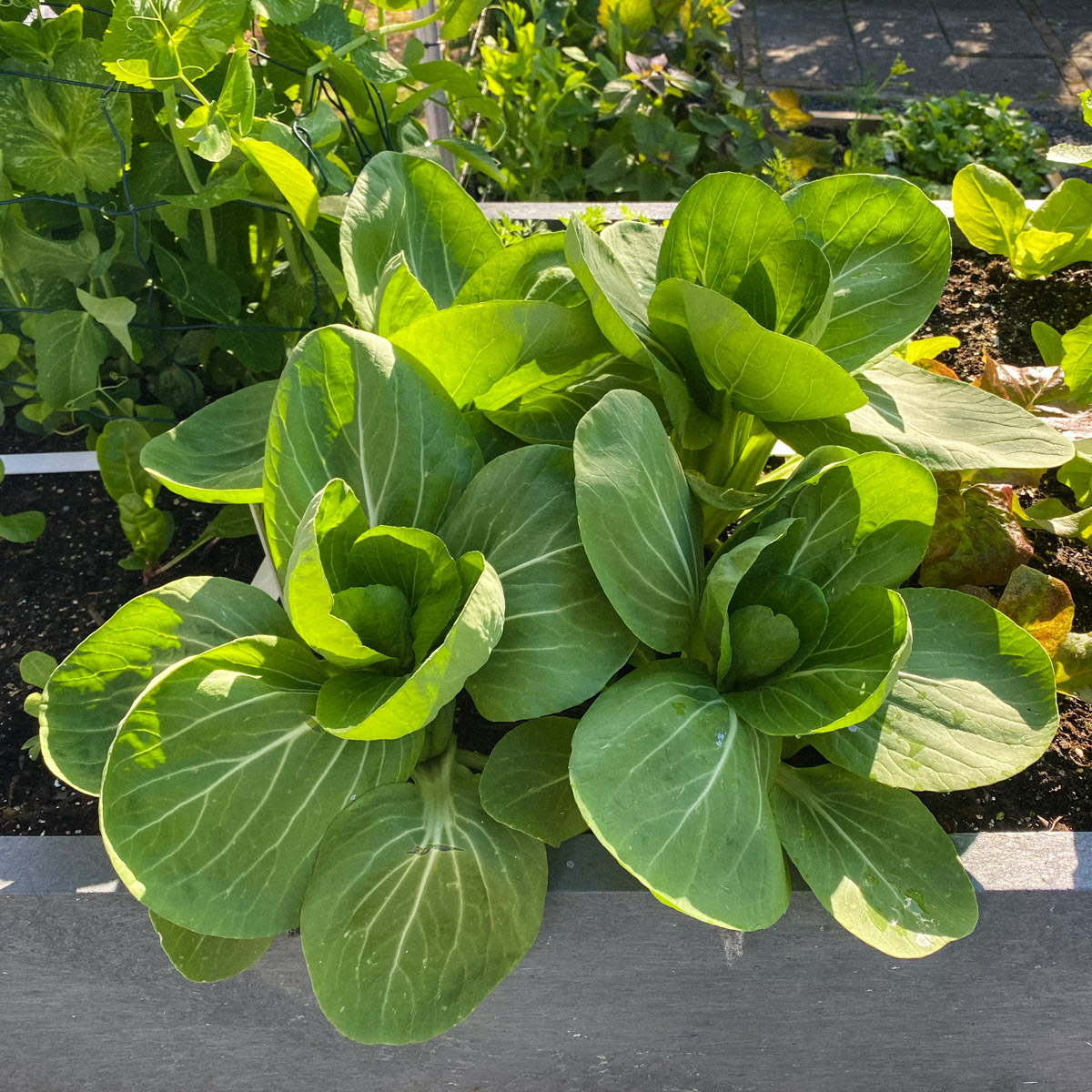
Most bok choi varieties can only be sown in summer, because they bolt quickly in spring. That is why we chose this variety: it grows quickly, stays compact, and can be sown both in spring and in late summer.
Most bok choi varieties can only be sown in summer, because they bolt quickly in spring. That is why we chose this variety: it grows quickly, stays compact, and can be sown both in spring and in late summer.
Deep Purple F1
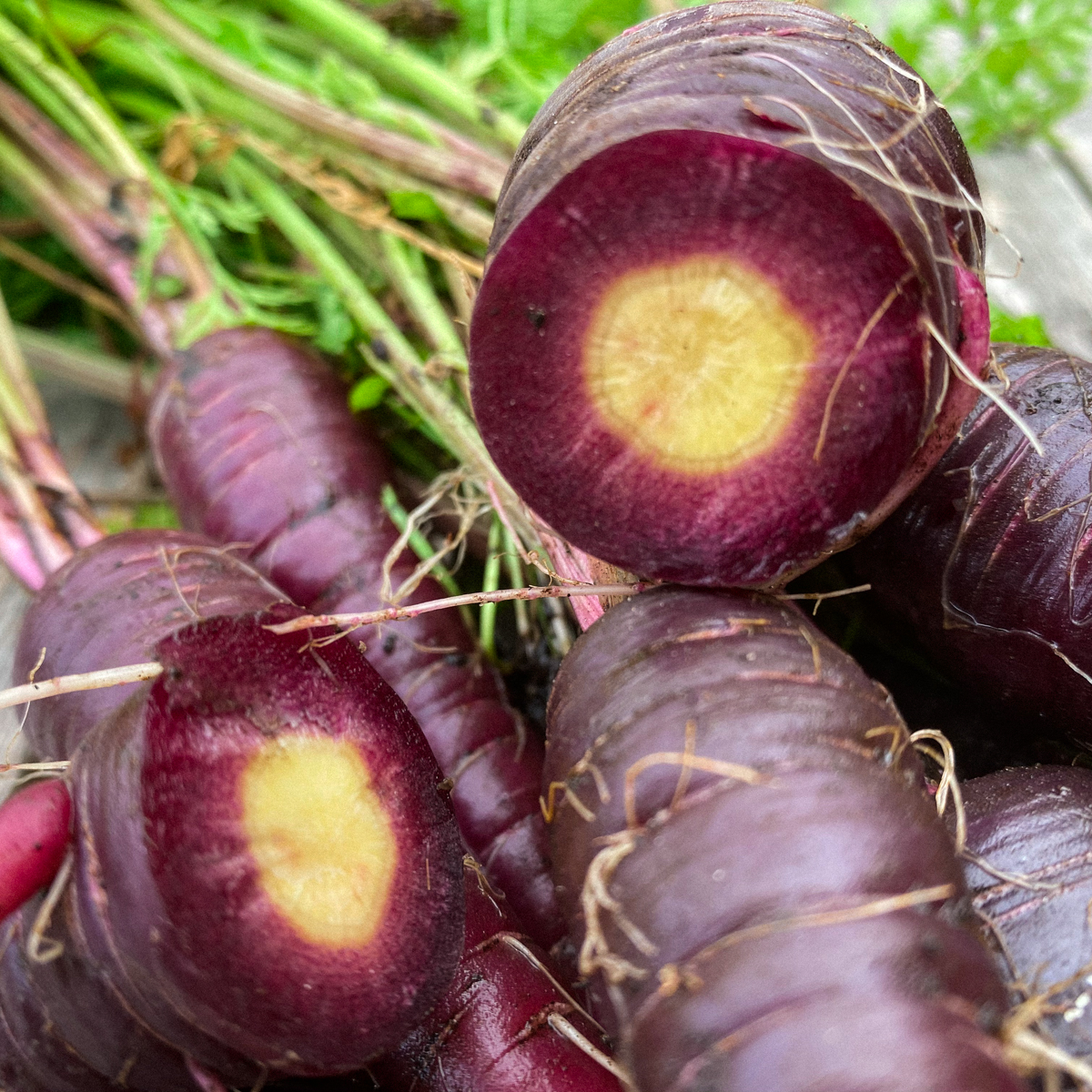
This purple carrot was specially developed for the pigment that gives the roots their deep purple colour. It is an antioxidant with useful properties: good for the heart and blood vessels, and it can also help reduce cholesterol. So it is beautiful and extra healthy.
This purple carrot was specially developed for the pigment that gives the roots their deep purple colour. It is an antioxidant with useful properties: good for the heart and blood vessels, and it can also help reduce cholesterol. So it is beautiful and extra healthy.
Broccoli Montebello F1
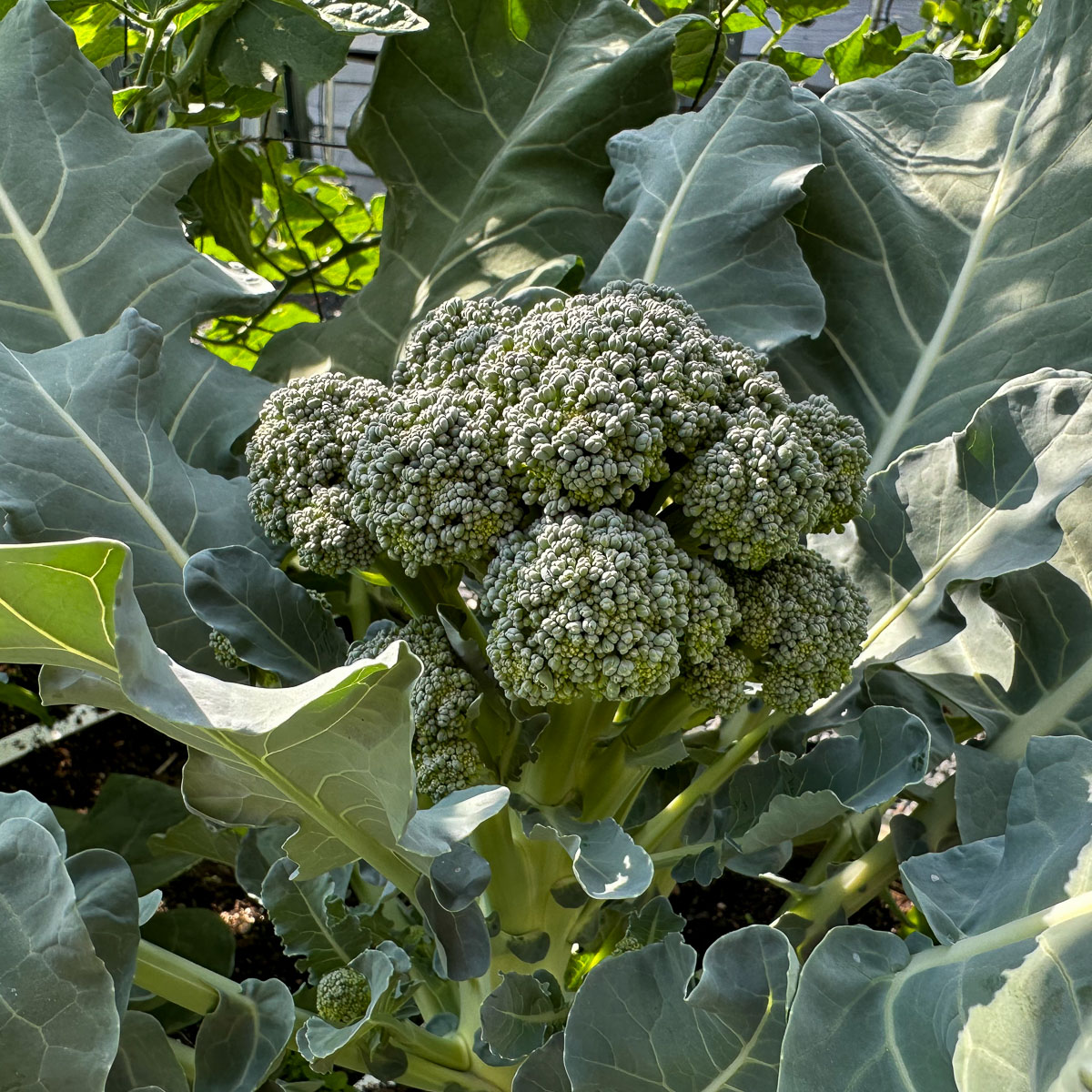
Baby broccoli is a cross between stem broccoli and Chinese broccoli (kailan). This broccoli fits in one square and gives a harvest sooner than ordinary broccoli: first the main head, then the side shoots.
The flavour is also a little milder and sweeter than the broccoli you usually buy in the shop.
Baby broccoli is a cross between stem broccoli and Chinese broccoli (kailan). This broccoli fits in one square and gives a harvest sooner than ordinary broccoli: first the main head, then the side shoots.
The flavour is also a little milder and sweeter than the broccoli you usually buy in the shop.
Are there any downsides to F1 hybrids?
Yes, of course. Like with anything.
F1 seeds are always more expensive
That is because the breeding process takes a long time and is done by specialised companies.
You can see the higher price in our courgette and snack cucumber seeds. They are sold per seed. But because these bred varieties perform better and produce more, they are worth it.
Saving your own seeds works less well
If you harvest seeds from an F1 variety yourself and sow them again, the plants that grow from them may look different and have different traits. Or they may grow more like the original parent varieties.
Some varieties are even bred so they produce hardly any seeds at all. You can see that clearly with Iznik: it hardly forms seeds.
So F1 hybrids cannot reproduce themselves with exactly the same traits.
F1 seeds are always more expensive
That is because the breeding process takes a long time and is done by specialised companies.
You can see the higher price in our courgette and snack cucumber seeds. They are sold per seed. But because these bred varieties perform better and produce more, they are worth it.
Saving your own seeds works less well
If you harvest seeds from an F1 variety yourself and sow them again, the plants that grow from them may look different and have different traits. Or they may grow more like the original parent varieties.
Some varieties are even bred so they produce hardly any seeds at all. You can see that clearly with Iznik: it hardly forms seeds.
So F1 hybrids cannot reproduce themselves with exactly the same traits.
Where do the scary stories about F1 hybrids come from?
Partly, they exist because hybrids cannot be reproduced exactly from saved seed.
But the main reason is that plant breeding has also been used to create varieties for intensive farming with artificial fertilisers, weed killers, and insecticides.
Some varieties, for example, were made so they were not affected by Roundup, while the plants around them died. In those cases, the genetic material was often changed too, creating GMOs: genetically modified organisms.
In some countries, such as India, Monsanto pushed these seeds so strongly that many other varieties disappeared. Farmers became highly dependent on the company and had little alternative. That is bad news.
The positive side of F1 hybrids
Bred varieties also help many poorer countries: for example, varieties that cope better with drought, saltier water, high altitudes, or very short summers.
And do not forget: they are also used to make less harmful growing possible, on a smaller scale and with less environmental impact.
But the main reason is that plant breeding has also been used to create varieties for intensive farming with artificial fertilisers, weed killers, and insecticides.
Some varieties, for example, were made so they were not affected by Roundup, while the plants around them died. In those cases, the genetic material was often changed too, creating GMOs: genetically modified organisms.
In some countries, such as India, Monsanto pushed these seeds so strongly that many other varieties disappeared. Farmers became highly dependent on the company and had little alternative. That is bad news.
The positive side of F1 hybrids
Bred varieties also help many poorer countries: for example, varieties that cope better with drought, saltier water, high altitudes, or very short summers.
And do not forget: they are also used to make less harmful growing possible, on a smaller scale and with less environmental impact.
In short
If you sow vegetable seeds marked F1, you are growing a variety that has been bred for certain traits. That is not the same as genetic modification.
At Makkelijke Moestuin, we choose F1 hybrids when they are especially suitable for our way of growing.
These varieties are more expensive than non-F1 seeds, but they make up for it with better growth, bigger harvests, and good flavour.
Many of our seeds are not hybrids. For those too, we always choose varieties that are tasty, reliable, and suitable for our system.
At Makkelijke Moestuin, we choose F1 hybrids when they are especially suitable for our way of growing.
These varieties are more expensive than non-F1 seeds, but they make up for it with better growth, bigger harvests, and good flavour.
Many of our seeds are not hybrids. For those too, we always choose varieties that are tasty, reliable, and suitable for our system.
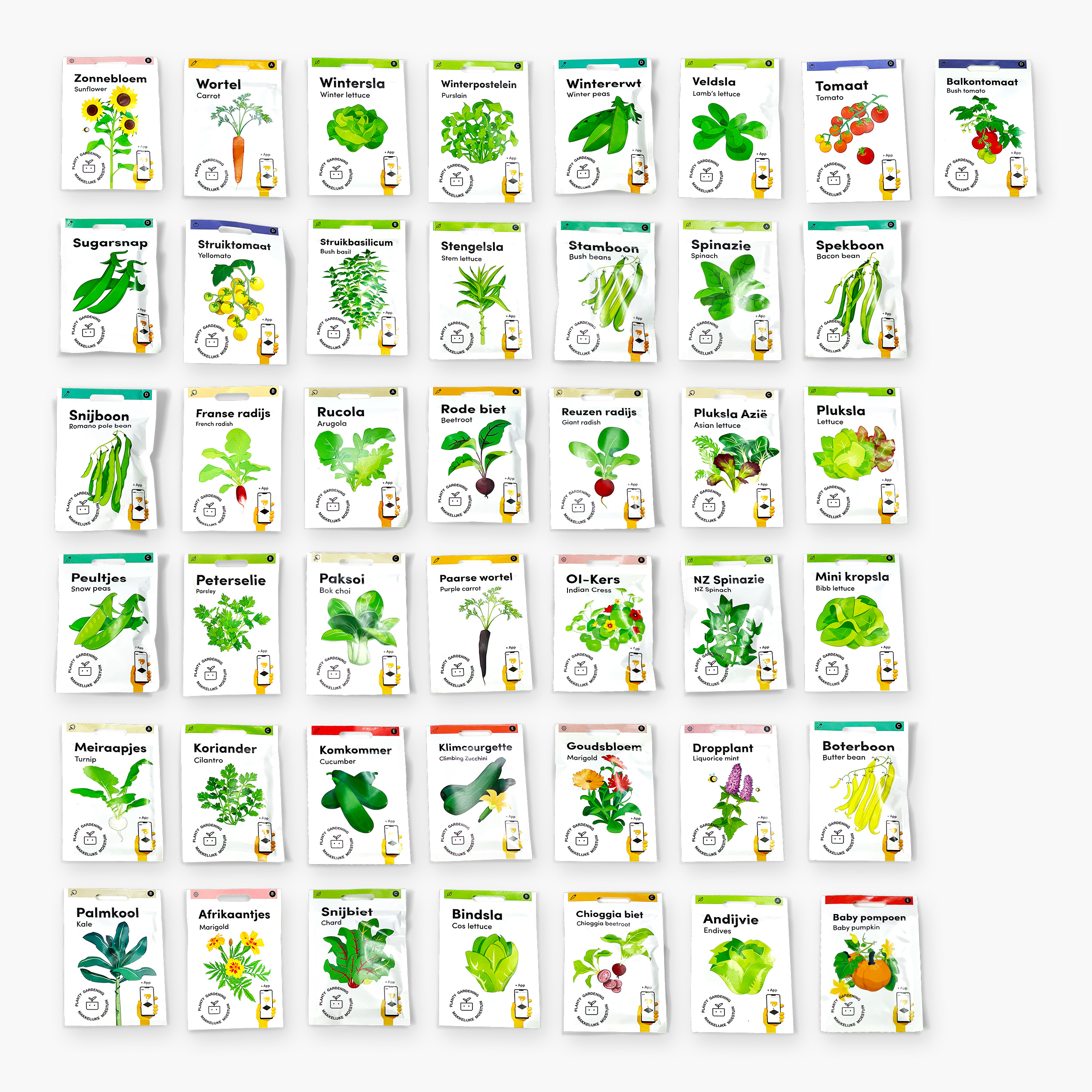
You can find all our seeds in the shop.
Good luck sowing!