
Why are some seeds in clay pellets?
Our clay pellets contain specially prepared vegetable seeds coated in clay.
The seeds are first rinsed and partially pre-germinated, then given a protective layer of clay.
This improves the chance of germination, but also makes the seeds more expensive and gives them a shorter shelf life (9–18 months).
At Makkelijke Moestuin, our Salanova lettuce seeds are among the varieties supplied in clay pellets.
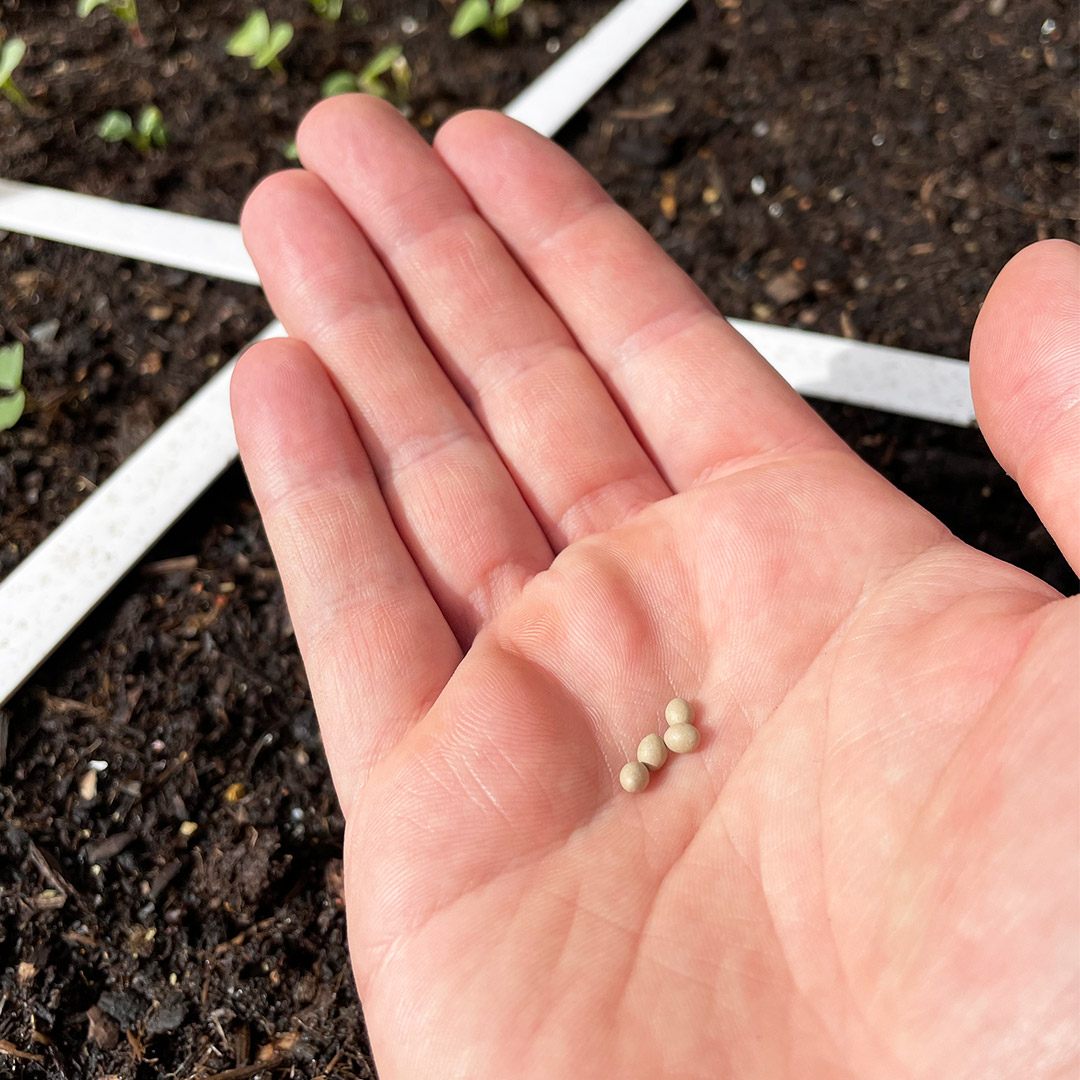
What are clay pellets and why do we use them?
Each clay pellet contains a seed that has first been thoroughly rinsed and then partially pre-germinated. This process, known as priming, helps the seeds emerge faster and more reliably, but also makes them more delicate.
That is why they are given a protective coating made from clay, water and a natural binding agent. Think of it as a tiny pot made by a potter. Nothing chemical or artificial is added.
Because priming and coating seeds is expensive, it is mainly used for special and valuable seeds such as Salanova varieties.
These clay pellets are quite different from the much harder pellets you may see in garden centres. Those usually contain ordinary dry vegetable seeds coated in clay simply to make them easier to sow.
That is why they are given a protective coating made from clay, water and a natural binding agent. Think of it as a tiny pot made by a potter. Nothing chemical or artificial is added.
Because priming and coating seeds is expensive, it is mainly used for special and valuable seeds such as Salanova varieties.
These clay pellets are quite different from the much harder pellets you may see in garden centres. Those usually contain ordinary dry vegetable seeds coated in clay simply to make them easier to sow.
What are the benefits of clay pellets?
- Higher chance of germination: primed seeds emerge faster and more reliably
- Easier to sow: larger pellets and less fiddling
- Harder to lose: especially useful for tiny lettuce seeds
What are the drawbacks of clay pellets?
- Shorter shelf life: up to 18 months
- More expensive than untreated seeds: three to five times the price of bare seeds
- Starting them indoors is recommended, especially because of the price
Which of our vegetables come in clay pellets?
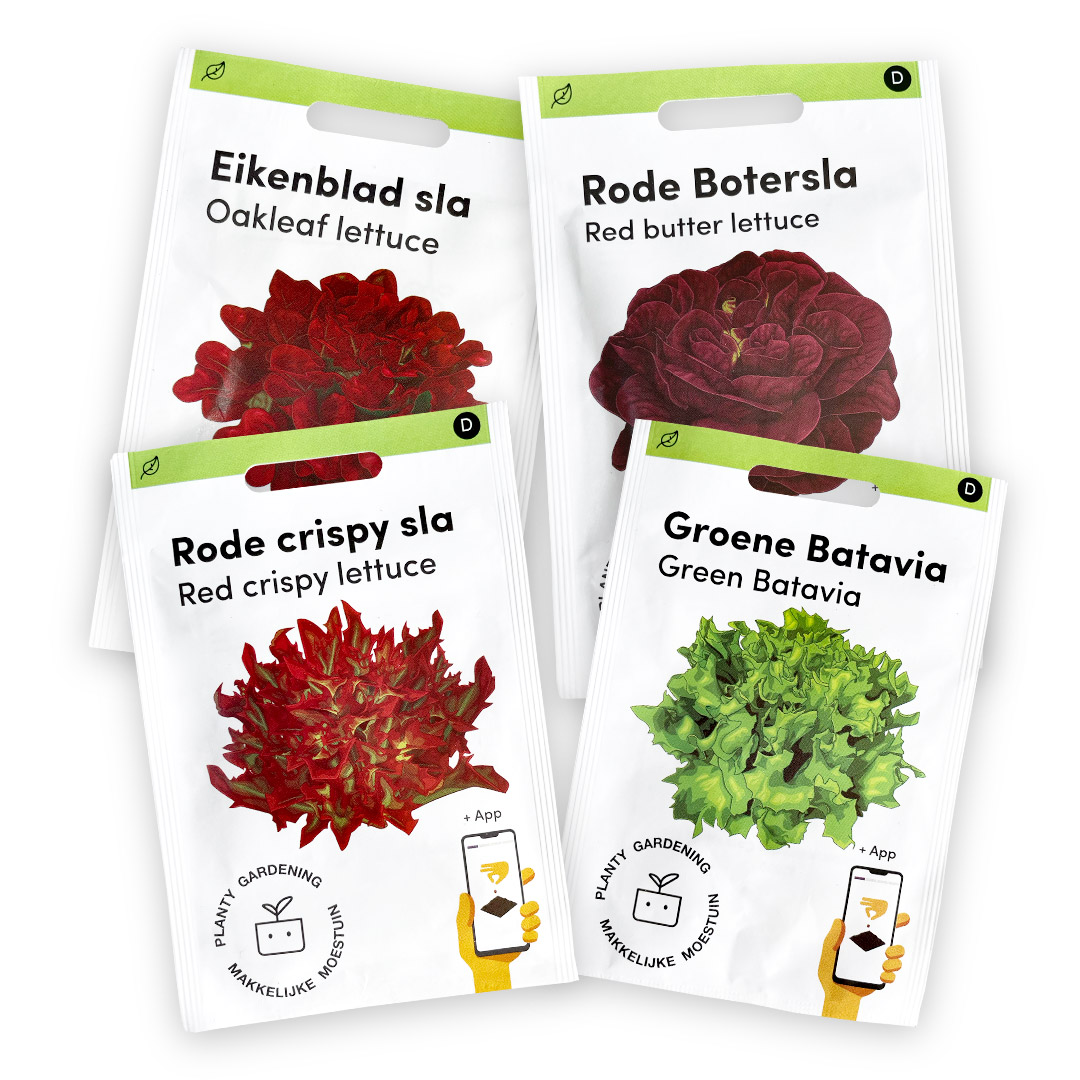
At present, these are our four Salanova lettuce varieties:
These lettuces form compact, full heads with two to four times more leaves than ordinary lettuce. The leaves also stay fresh for longer after picking than those of other varieties. Read more in Why is Salanova lettuce so special?
Our Cristal lettuce seeds also come in clay pellets, and we'll probably add more varieties in future.
How do you sow seeds in clay pellets?
We recommend always sowing these seeds indoors first, then moving the young plant into its own square about four weeks later. Because these seeds are fairly expensive, you'll want to be sure they germinate properly.
This also helps you make the most of your squares, as you can grow something else there during those four weeks.
The best way to sow them indoors is in small MM Airpots with MM pre-sowing mix. They take up very little space and get exactly enough nutrients for their early growth.
This also helps you make the most of your squares, as you can grow something else there during those four weeks.
The best way to sow them indoors is in small MM Airpots with MM pre-sowing mix. They take up very little space and get exactly enough nutrients for their early growth.
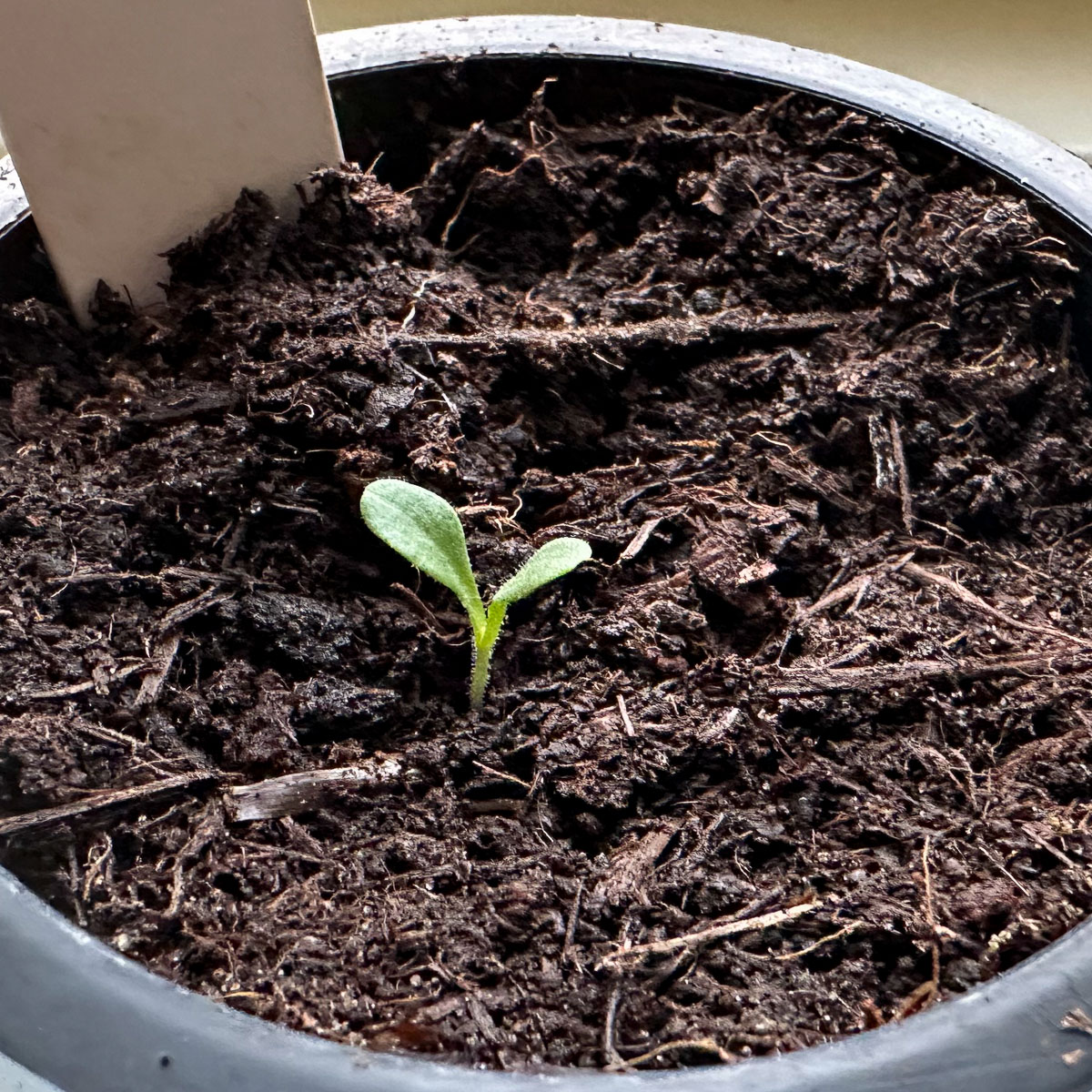
Once the seedling has emerged, place the pot in full light, preferably at no more than about 16°C. A few days later, the seedling will be large enough to go outside.
In March and April, keep the pot somewhere protected from frost and bad weather. From May onwards, even that is no longer necessary, as long as slugs cannot reach it.
You can sink the pots into an empty square or place them in an MM-mini. You can easily fit nine pots in one square:
In March and April, keep the pot somewhere protected from frost and bad weather. From May onwards, even that is no longer necessary, as long as slugs cannot reach it.
You can sink the pots into an empty square or place them in an MM-mini. You can easily fit nine pots in one square:
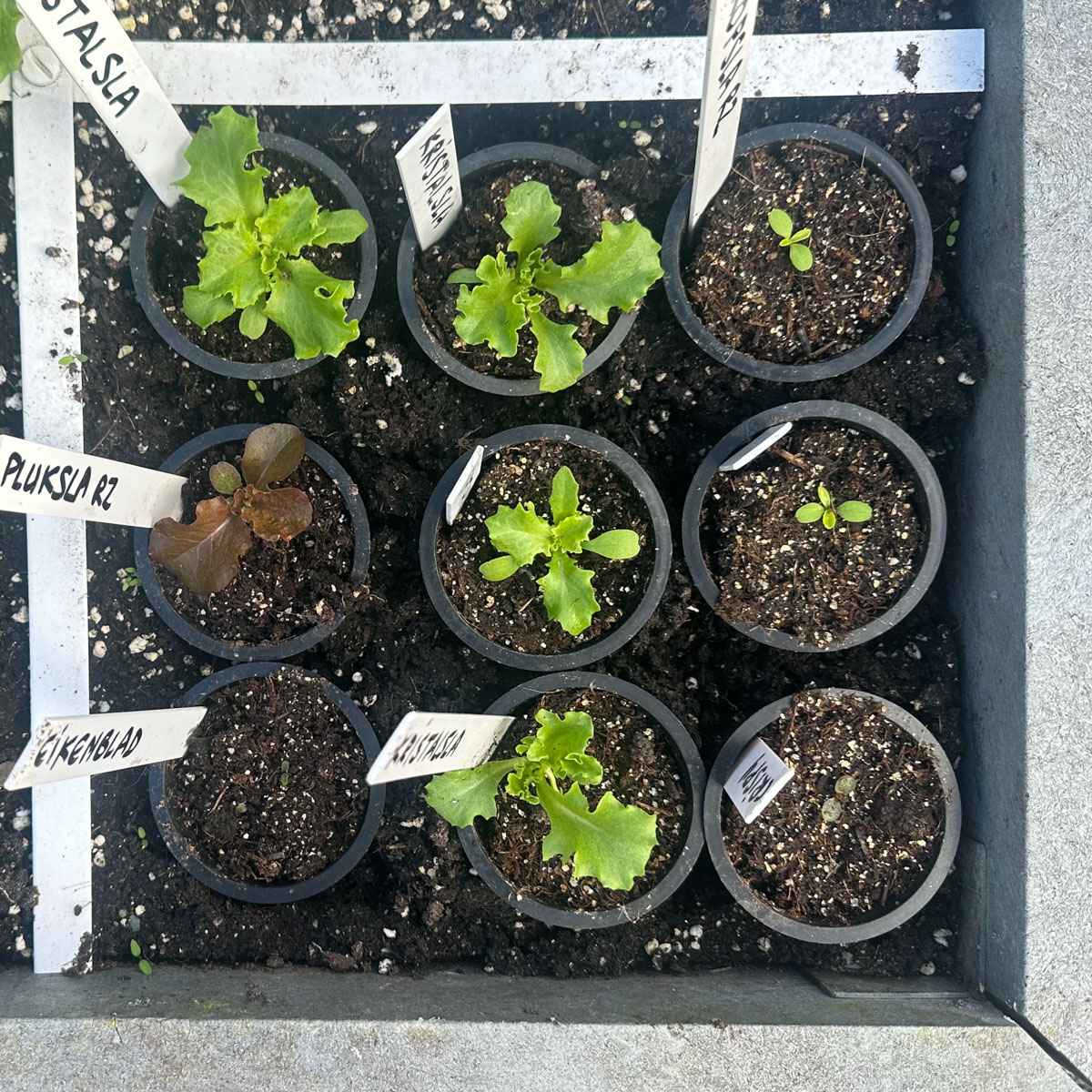
This allows the seedlings to grow steadily with very little attention. They only need a little extra water at first, just like any other seedling.
When another square becomes available, choose one of the pots, remove the young plant and place it in its final square.
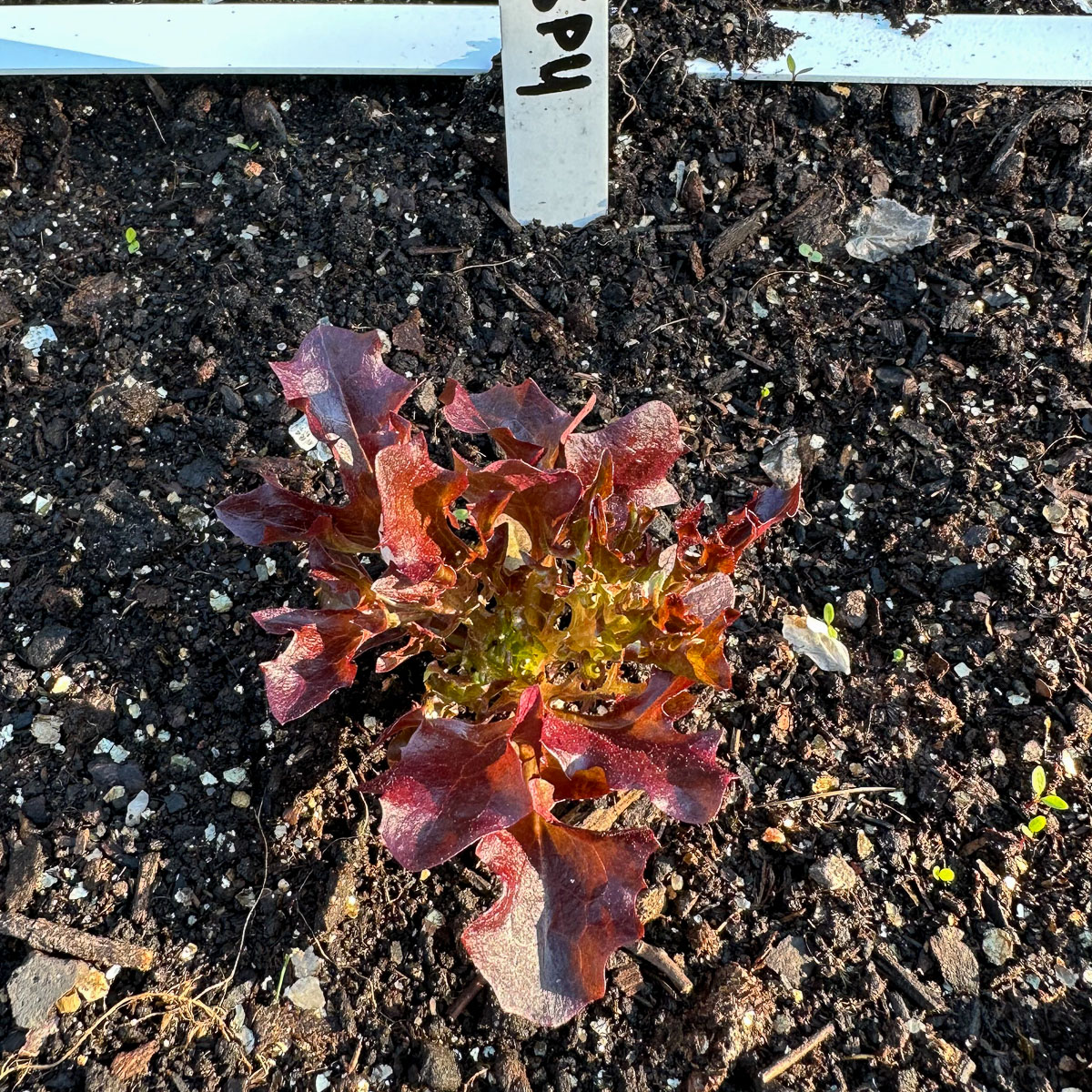
The vegetables we sell in clay pellets are very special. They aren't only tastier than varieties commonly sold in garden centres, but also give you a larger harvest over a longer period. The seeds have also been partially pre-germinated.
The clay pellets protect the seeds, improve germination and help prevent waste.
The clay pellets protect the seeds, improve germination and help prevent waste.
You can sow them directly outside, but we don't recommend it. Starting them indoors gives you a much better chance of success and helps you enjoy the tastiest lettuce varieties throughout the year.
It also protects vulnerable seedlings from slugs.
It also protects vulnerable seedlings from slugs.
The expiry date shows how long the seeds' germination rate is guaranteed. For clay pellets, this date is always in January.
If you keep the seeds cool and dry, for example in a sealed container in the fridge, you can still sow them during the rest of that year. The germination rate may have declined, so some seeds may no longer emerge.
If you keep the seeds cool and dry, for example in a sealed container in the fridge, you can still sow them during the rest of that year. The germination rate may have declined, so some seeds may no longer emerge.
They come from Rijk Zwaan, a Dutch family-owned company specialising in breeding unusual vegetable varieties. Its breeders patiently cross plants until they produce varieties with special qualities and great flavour.
Examples include Salanova lettuces and Cristal lettuce, which stays crisp even when heated.
This breeding is done through cross-pollination and is entirely natural. Once a variety has the desired characteristics, the seeds are harvested, thoroughly rinsed, partially pre-germinated and coated in a small ball of clay.
The full process makes the seeds more expensive, but also produces unique varieties that perform very well.
Examples include Salanova lettuces and Cristal lettuce, which stays crisp even when heated.
This breeding is done through cross-pollination and is entirely natural. Once a variety has the desired characteristics, the seeds are harvested, thoroughly rinsed, partially pre-germinated and coated in a small ball of clay.
The full process makes the seeds more expensive, but also produces unique varieties that perform very well.