Growing vegetables in your Planty Garden
On the last page, I showed you that a Planty Garden starts with the garden box. You find a place for it in the sun, add the weed mat, and fill the box with our super soil mix to start.
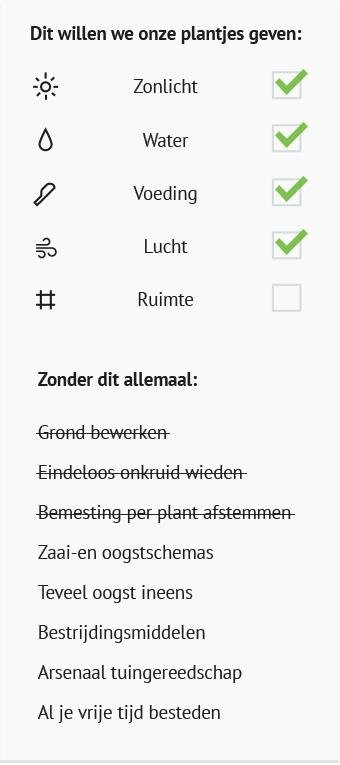
Once that's done, your checklist looks like this:
Your plants get all this:
Once that's done, your checklist looks like this:
Your plants get all this:
- sunlight ✅
- water ✅
- nutrients ✅
- air ✅
- room to grow
Not this:
- lots of digging ❌
- endless weeding ❌
- figuring out what kind of fertilizer each plant needs ❌
- a sow/harvest schedule
- producing too many crops at once
- pesticides or insecticides
- tons of gardening gear
- spending all your free time
To get the most out of your investment in the MM-Mix and garden box, the trick is to fill your garden boxes with a variety of vegetables in a smart way.
De investering in de bak met de Makkelijke Moestuinmix willen we natuurlijk zo snel mogelijk terug verdienen. Daarom zetten we 'm propvol met verschillende groentes.
Grid and trellis
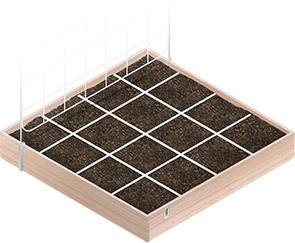
To make the most of every bit of space in your garden box, you'll first divide it into 30x30 cm sections. The easiest way is to lay a simple grid loosely on top of the soil mix.
If you want to grow climbing vegetables, place a trellis at the back (the north side) of the garden box.
If you want to grow climbing vegetables, place a trellis at the back (the north side) of the garden box.
Now your Planty Garden is ready to grow a lot of different types of plants.
And we've got just the seeds for it.
Over the years, we've picked out a bunch of seed varieties that are perfect for this system. They're delicious and grow fast.
Over the years, we've picked out a bunch of seed varieties that are perfect for this system. They're delicious and grow fast.
Think of each section as a separate vegetable patch
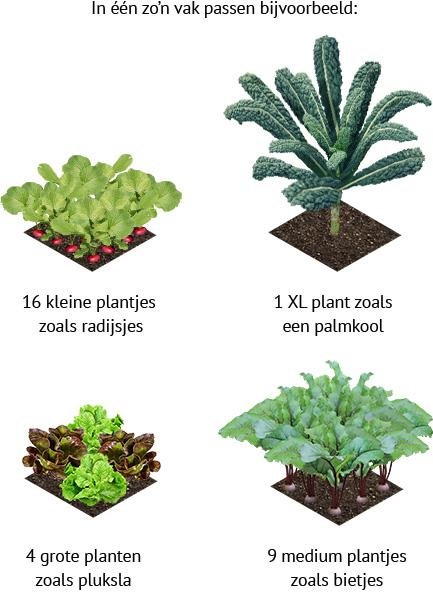
Each 30x30 cm patch is home to one type of plant. The plant's size will determine how many you'll grow in each square patch:
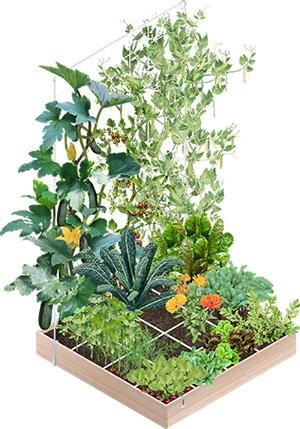
Climbing plants like our climbing zucchini or tomatoes belong in the back of the garden box: they grow up along the trellis. Same goes for snow peas, Romano pole beans, cucumbers, and pumpkins:

This way, you make use of every centimeter while giving each plant exactly the amount of space it needs.
- room to grow ✅
When you're ready to plant your vegetables, you can check the position of the empty patch decide what will grow best at that moment. We've made a super-smart app with a sowing calendar just for this. But more on that later 😉
- a sow/harvest schedule ❌
My favorite thing about this system is that when you put different plant varieties next to each other, they fend off diseases and pests in their own natural way. So you don't need polluting, gross, or expensive pesticides. The plants deal with pests themselves.
- pesticides/insecticides ❌
To recap: when you fill your garden box section by section, none of the space goes to waste.
By sowing different kinds of plants, you'll enjoy a variety of delicious vegetables throughout the season.
By sowing different kinds of plants, you'll enjoy a variety of delicious vegetables throughout the season.

Wat ik zelf heel cool vind is dat je - door al die verschillende groentes door elkaar te zetten - op een hele natuurlijke manier ziektes en plagen voorkomt. Zonder gebruik van nare (en dure!) bestrijdingsmiddelen.
Ook die kunnen dus weg:
Ook die kunnen dus weg:

Zo vul je de bak vak voor vak en benut je elke centimeter.
Zaai je dan ook nog een flink aantal soorten én oogst je heel slim, dan geniet je het hele seizoen door van veel verschillende groentes.
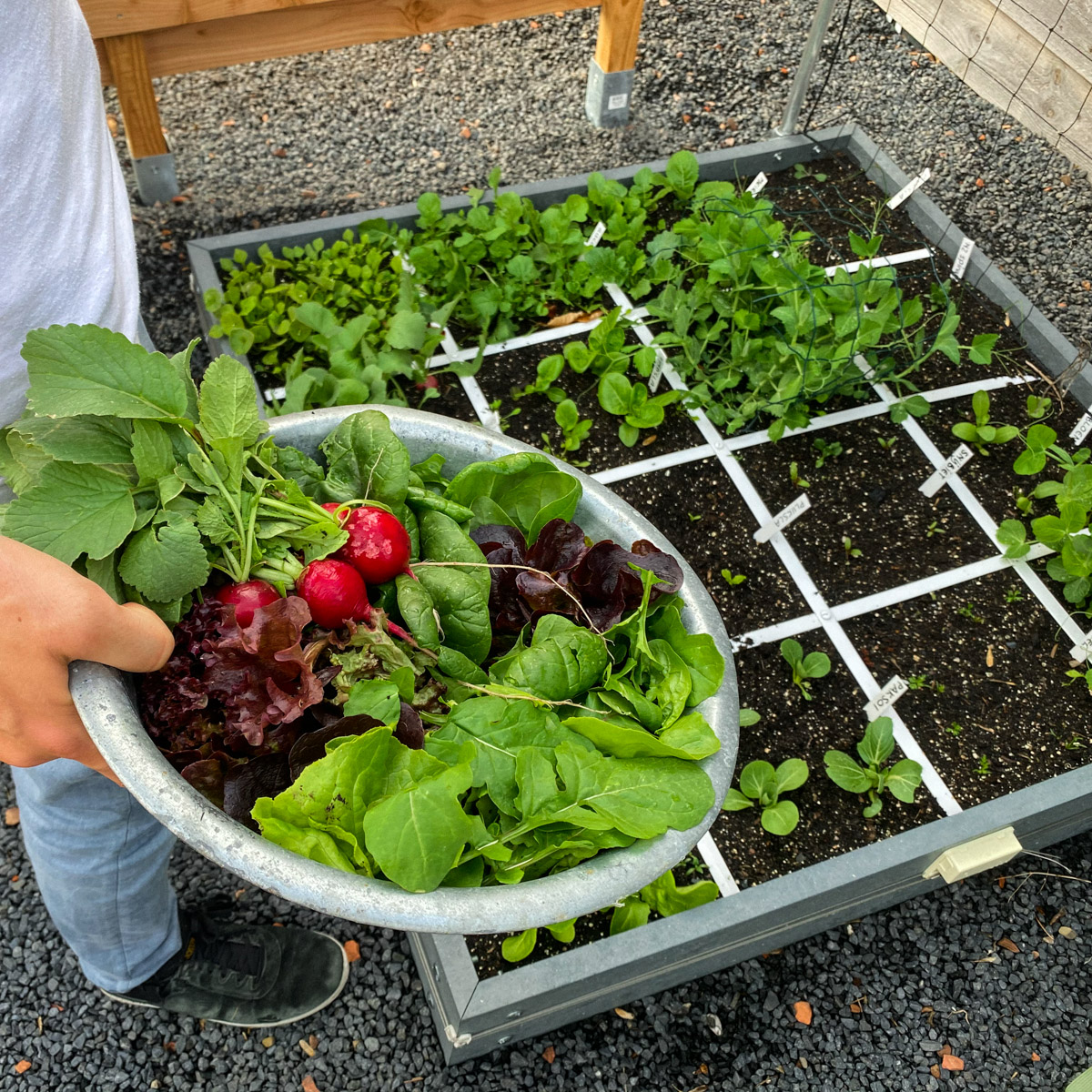
With a Planty Garden at home, you can do some quick picking while cooking a meal.
Instead of harvesting a whole plant at once, you can pick what you want and leave the rest. The plants keep on growing.
Harvesting this way lets just 1 little lettuce plant produce a lot over a longer period of time.
Instead of harvesting a whole plant at once, you can pick what you want and leave the rest. The plants keep on growing.
Harvesting this way lets just 1 little lettuce plant produce a lot over a longer period of time.
- producing too many crops at once ❌
Since you give your plants exactly what they need, maintaining a Planty Garden is super simple. You water, sow a patch, plant a seed. And once in a while you get rid of a stray weed or help your zucchini climb up the trellis.
But really, you'll find that that's the fun stuff. And it only takes a few minutes - 5 minutes max - a day.
But really, you'll find that that's the fun stuff. And it only takes a few minutes - 5 minutes max - a day.
- spending all your free time ❌

Omdat dit systeem je plantjes alles geeft wat ze nodig hebben, is het onderhoud van je moestuin super simpel:
Je geeft wat water, je zaait een vak in, plant een plantje... en soms pluk je een ingewaaid onkruidje weg en help je een plantje bij het omhoog klimmen bij het klimrek.
Eigenlijk zijn dat alleen maar de leuke dingen van het moestuinieren. Het kost je - hooguit - vijf minuten per dag.

And what about that shed-full of gardening gear and tools you need to get it done?
Well, brace yourself:
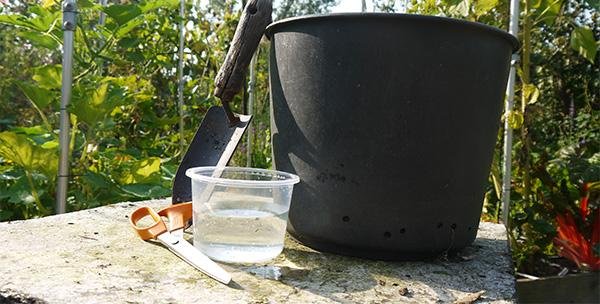
A bucket, spade, scissors, and a little plastic container for watering. That's all you really need.
- tons of gardening gear ❌

Tadaaa. That's it
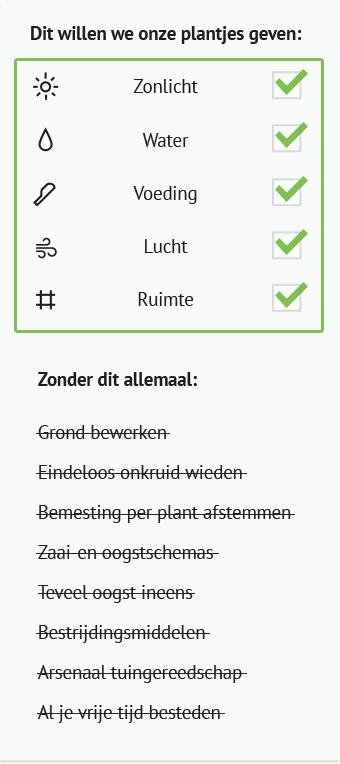
We made it through the whole checklist.
Your plants get all of this:
Your plants get all of this:
- sunlight ✅
- water ✅
- nutrients ✅
- air ✅
- room to grow ✅
Not this:
- lots of digging ❌
- endless weeding ❌
- figuring out what kind of fertilizer each plant needs ❌
- a sow/harvest schedule ❌
- producing too many crops at once ❌
- pesticides or insecticides ❌
- tons of gardening gear ❌
- spending all your free time ❌
This list shows why Planty works so well. You give your plants everything they need: sunlight, water, nutrients, air, and room to grow. Without any heavy lifting, buying lots of complicated gear, or spending all your free time doing it.
This was just the beginning
These are the basics of what makes a Planty Garden. If you do this well from the start, the rest is a piece of cake. (Carrot cake, mmm.)
Really, it just gets easier. Once your garden box or garden table is set up, our efficient system makes sowing simple: you know exactly where and when to sow what.
So, on to the next page. I'll show you how you can get as much as possible out of 1 garden box.
Really, it just gets easier. Once your garden box or garden table is set up, our efficient system makes sowing simple: you know exactly where and when to sow what.
So, on to the next page. I'll show you how you can get as much as possible out of 1 garden box.