
Everything about vegetables in a Makkelijke Moestuin
Which vegetables are ideal for a raised bed, and which are better avoided? This is all about vegetables that grow quickly and easily, and those that do not.
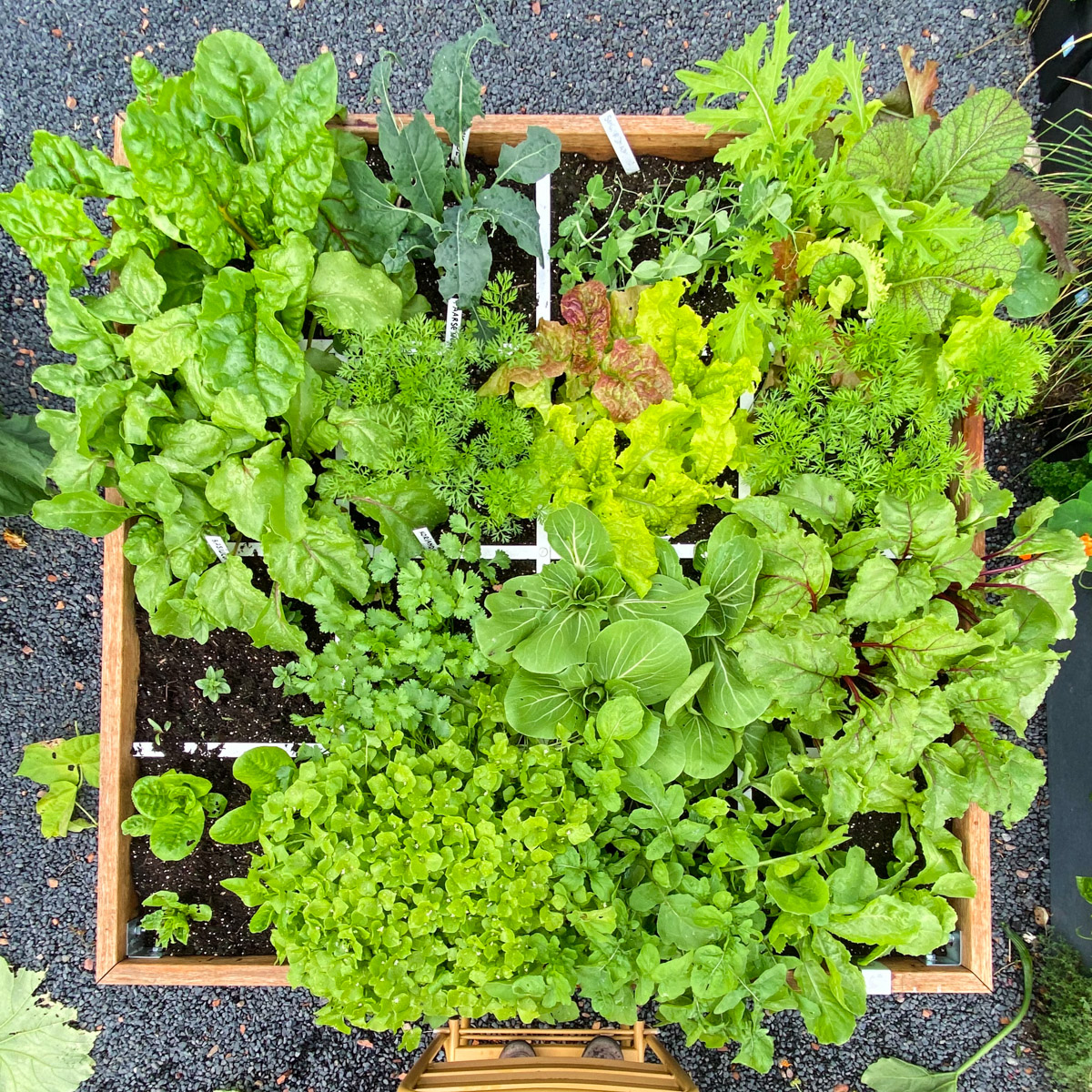
Grow plant varieties that produce a lot
In a raised bed, you want to grow as much as possible in a small area.
So choose vegetables that:
So choose vegetables that:
- grow quickly without taking up too much space
- give you a large harvest
- you really enjoy eating
- and keep producing for as long as possible
Avoid vegetables that do not meet those requirements.
Simple, right? But how do you do that?
How do you choose which varieties to grow in your raised bed, how do you know what gives a large harvest and what does not, and what should you consider when sowing in a Makkelijke Moestuin raised bed?
Simple, right? But how do you do that?
How do you choose which varieties to grow in your raised bed, how do you know what gives a large harvest and what does not, and what should you consider when sowing in a Makkelijke Moestuin raised bed?
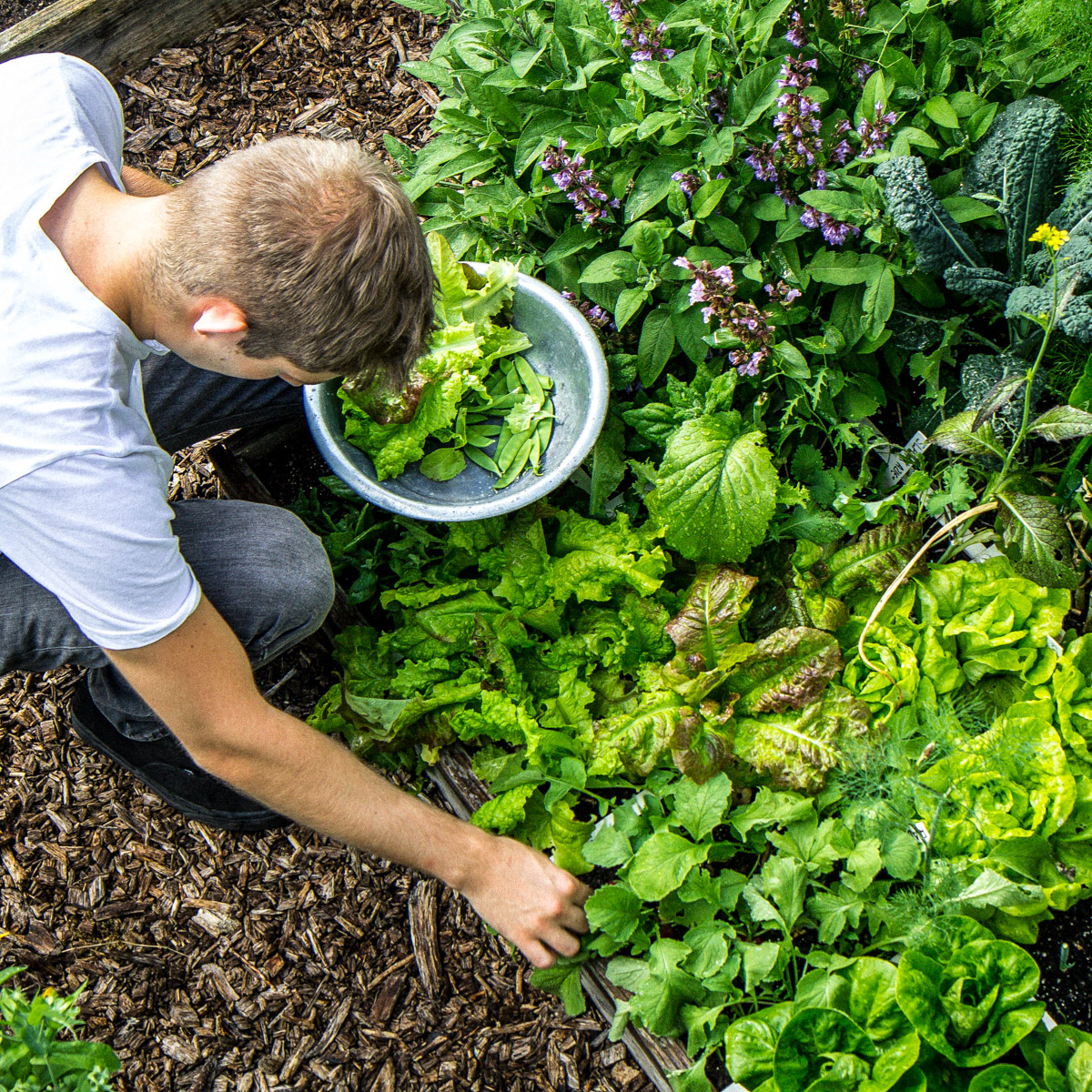
What I sowed when I started
When I started with the Makkelijke Moestuin, I knew nothing about vegetables. I knew what I liked eating, but had no idea how the plants grew or how to care for them.
So I followed the book about Square Foot Gardening and mainly sowed what it recommended.
I bought the seeds from the local garden centre. Simple varieties, nothing special, and no more than about ten: carrots, beetroot, lettuce, that kind of thing, plus some beans, courgettes, and tomatoes.
So I followed the book about Square Foot Gardening and mainly sowed what it recommended.
I bought the seeds from the local garden centre. Simple varieties, nothing special, and no more than about ten: carrots, beetroot, lettuce, that kind of thing, plus some beans, courgettes, and tomatoes.
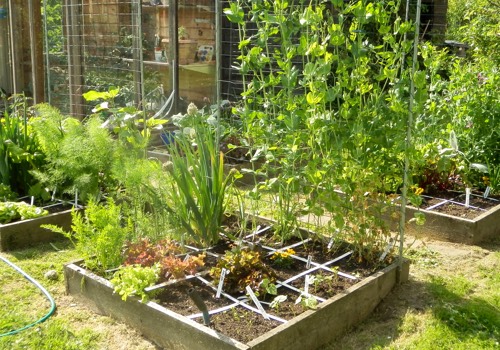
That went pretty well at the time. To everyone's surprise, my plants produced a lot.
I harvested even more than my mom, who was busy cultivating all kinds of specialty seeds.
I harvested even more than my mom, who was busy cultivating all kinds of specialty seeds.
So - after doing this for a decade or so - I know exactly what to sow
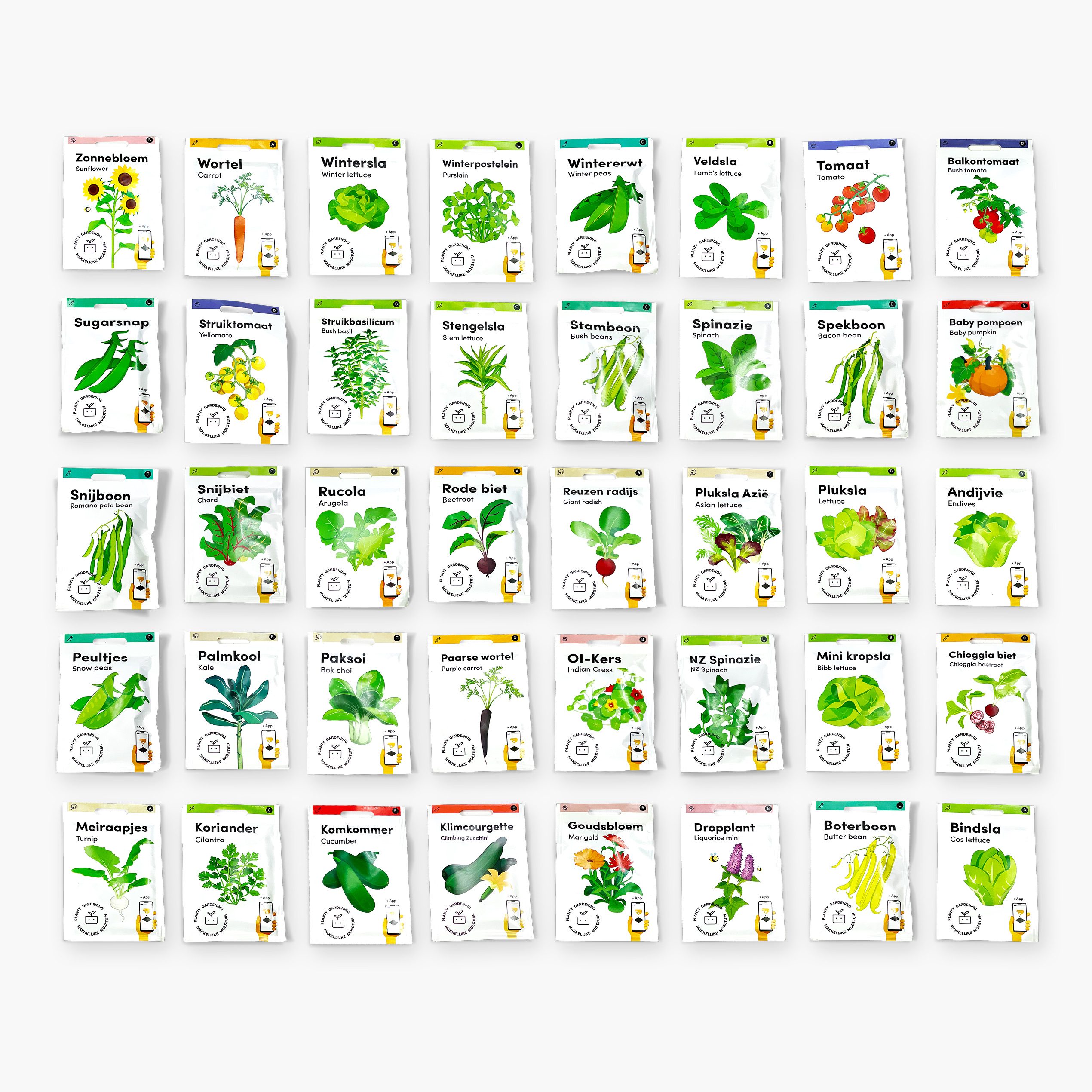
If you ask me what the best vegetables are, I won't beat around the bush: the ones in our seed shop.
“Hello Jelle, I understand: you want to sell your seeds 😉”
That is true. But it is not why I say this. After years of learning what does and does not work, our shop only includes seeds that are genuinely suitable.
They are probably not the only varieties that grow well in a raised bed, but these are the ones we know work.
View the seeds selected for the Makkelijke Moestuin.
That is true. But it is not why I say this. After years of learning what does and does not work, our shop only includes seeds that are genuinely suitable.
They are probably not the only varieties that grow well in a raised bed, but these are the ones we know work.
View the seeds selected for the Makkelijke Moestuin.
What won't you sow, but would still work?
You can sow most vegetables and herbs without any trouble, including cilantro, dill, and basil. But with some varieties, it is much smarter to add a young plant to your raised bed.
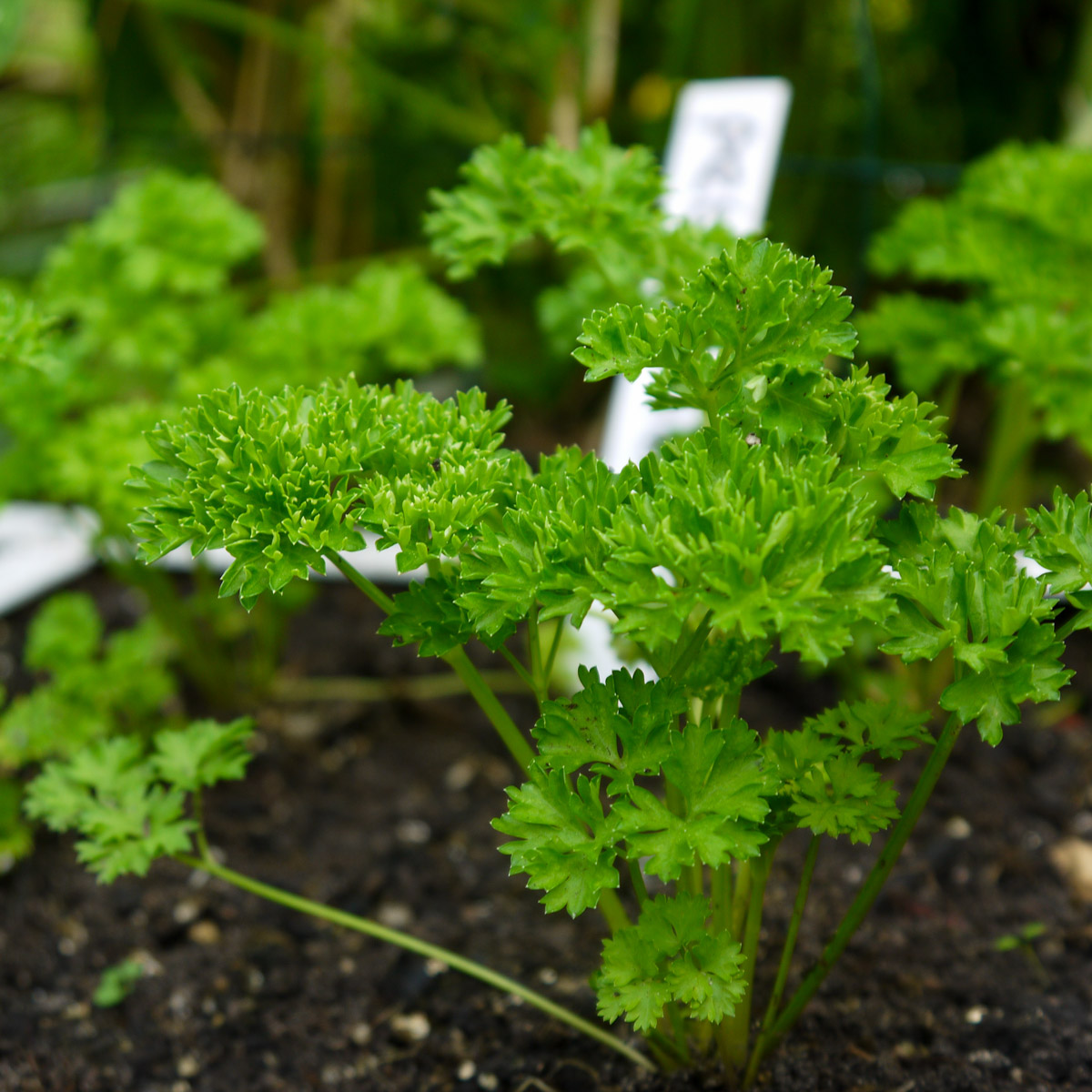
If you sow curly parsley, it can take around five months before you harvest your first sprig. That is why I buy four small plants in March, put them in one square, start harvesting after about four weeks, and have more than enough for the rest of the year.
If you sow curly parsley, it can take around five months before you harvest your first sprig. That is why I buy four small plants in March, put them in one square, start harvesting after about four weeks, and have more than enough for the rest of the year.
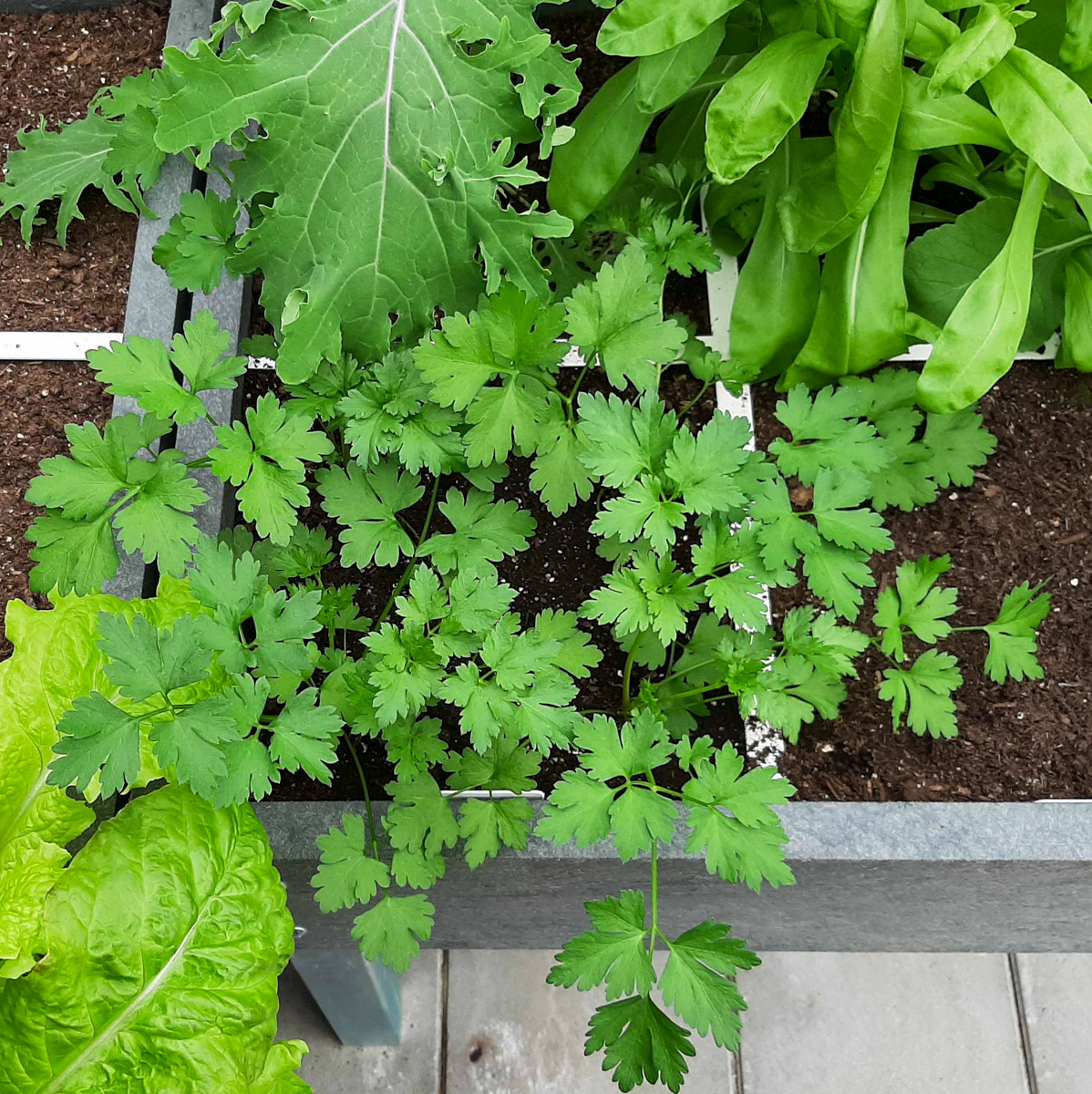
What about flat-leaf parsley?
I make an exception for that, because it is rarely available as a young plant, even though it is much tastier than the ordinary curly variety.
So I do sow flat-leaf parsley, which is why we sell the seeds.
So I do sow flat-leaf parsley, which is why we sell the seeds.
The same applies to chives
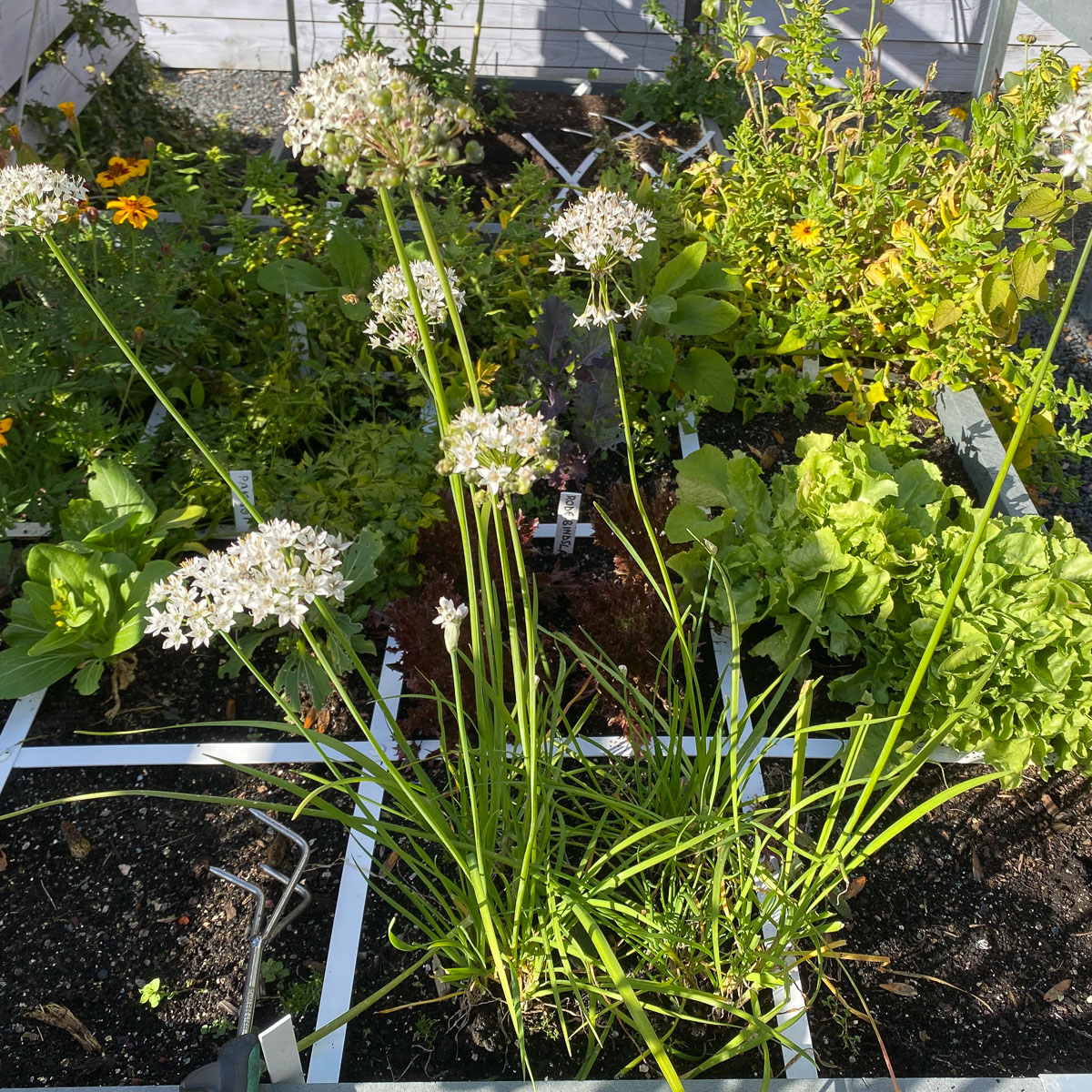
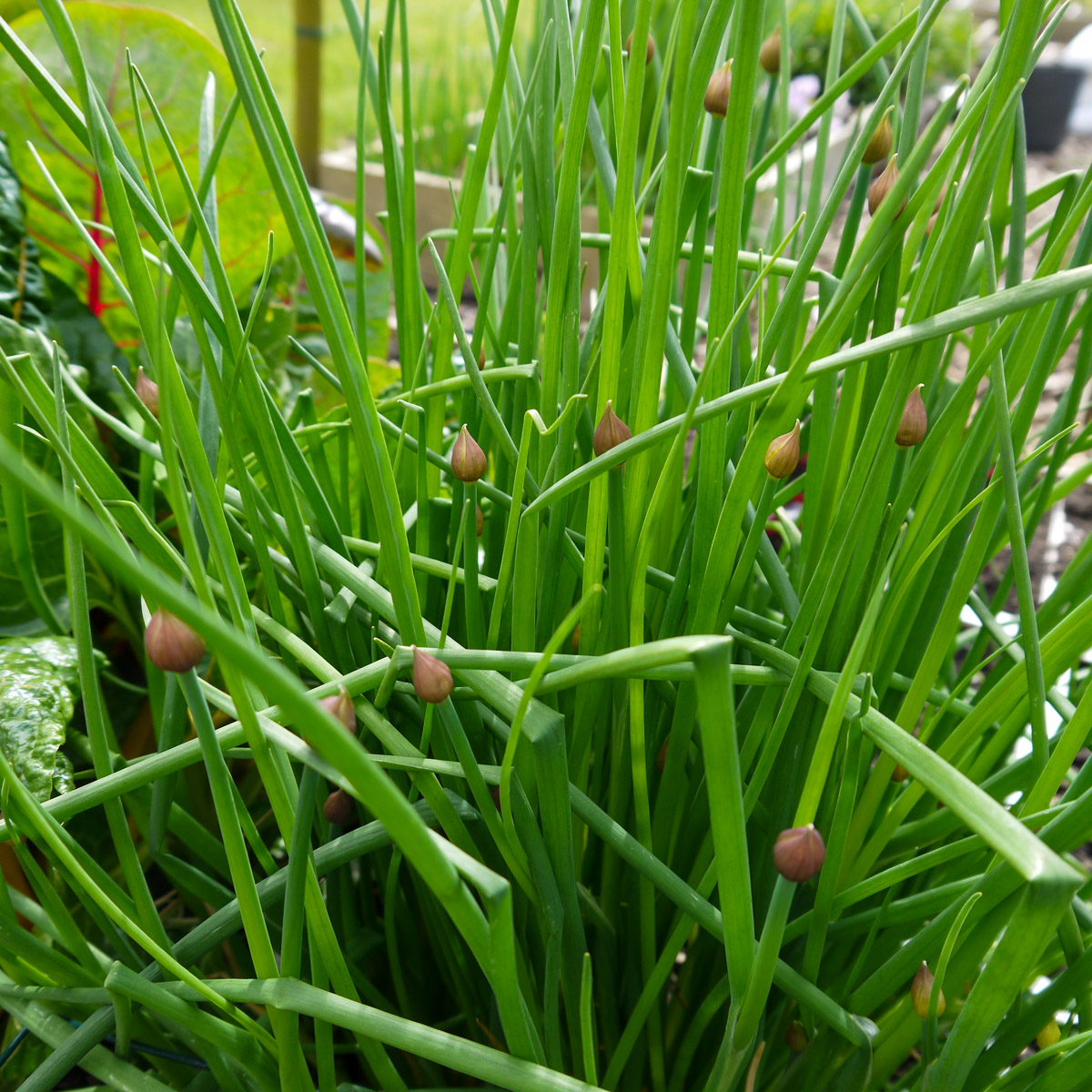
Chives are also fairly difficult to sow, and the young plants take a long time to become substantial. By the time you can finally harvest, at least six months have passed.
So we only sow varieties that are almost impossible to buy as young plants, such as Chinese chives or garlic chives.
So we only sow varieties that are almost impossible to buy as young plants, such as Chinese chives or garlic chives.
And you only need 1 chive plant for the rest of your life:
Potatoes, onions, and garlic
You do not sow these crops: you plant them, rather like flower bulbs.
For potatoes, use small seed potatoes, and for onions, use small onion sets.
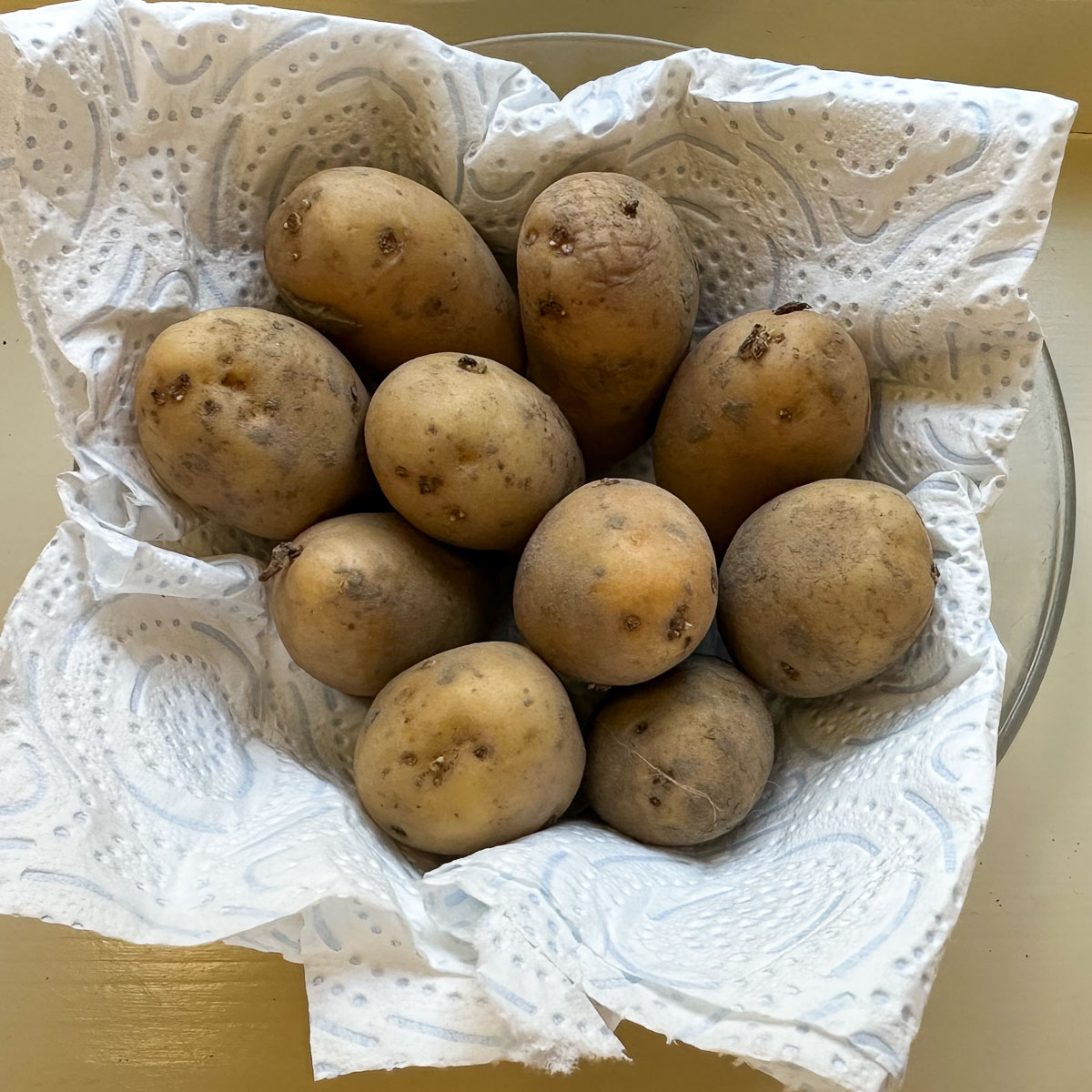
Chit early seed potatoes on the windowsill from February to mid-March. Then plant them deep in your raised bed. If the weather cooperates, you can harvest them as early as June.
For potatoes, use small seed potatoes, and for onions, use small onion sets.
Chit early seed potatoes on the windowsill from February to mid-March. Then plant them deep in your raised bed. If the weather cooperates, you can harvest them as early as June.
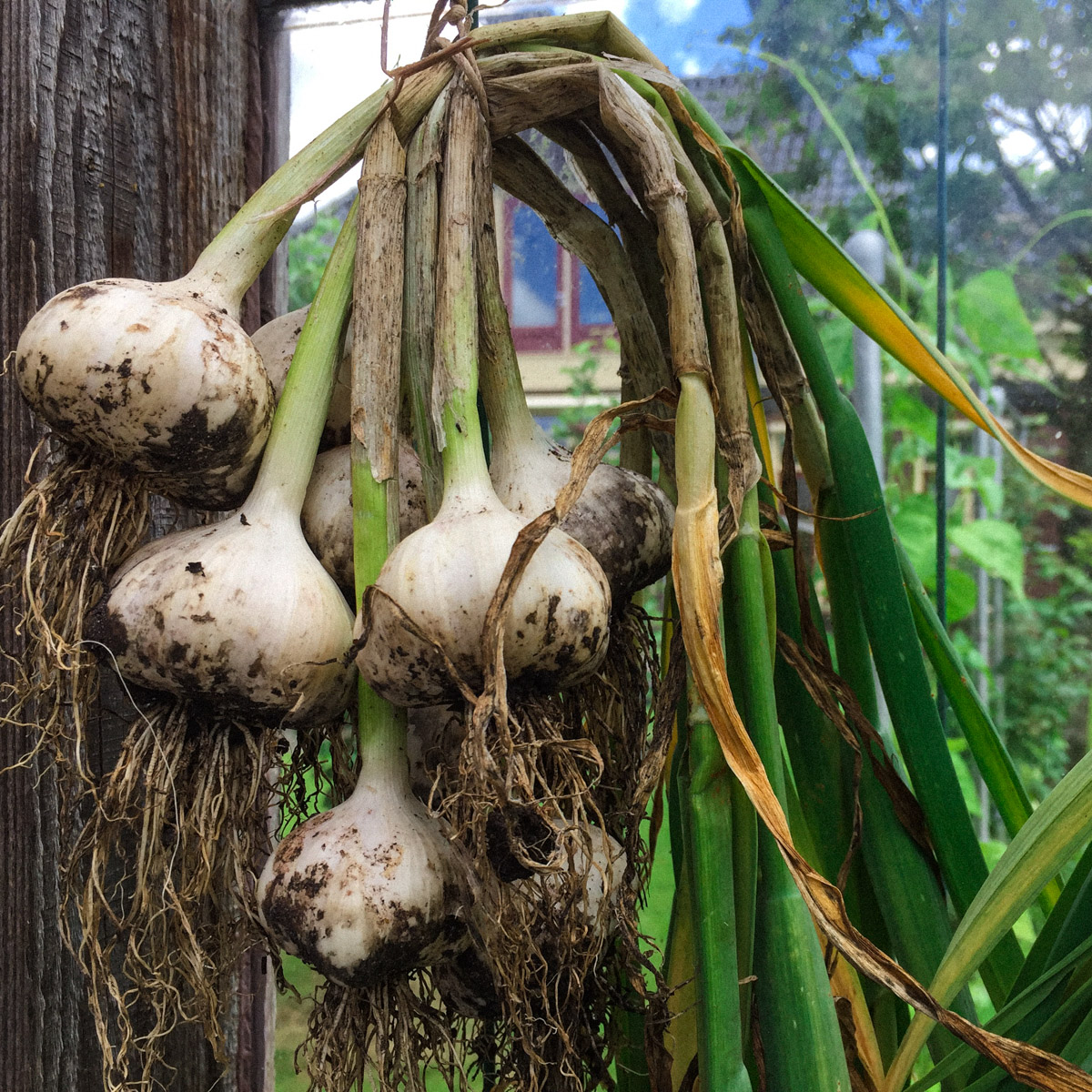
For beautiful garlic bulbs, plant cloves in your raised bed in autumn. You can harvest them six months later. If you started them from seed, it would take at least another year.
Which vegetables are you better off skipping?
By now, I know that too: sometimes from my own experience or my mother's, and sometimes from what I see in other gardens.
Unsuitable vegetables:
Unsuitable vegetables:
- fail more often than they succeed, such as cauliflower
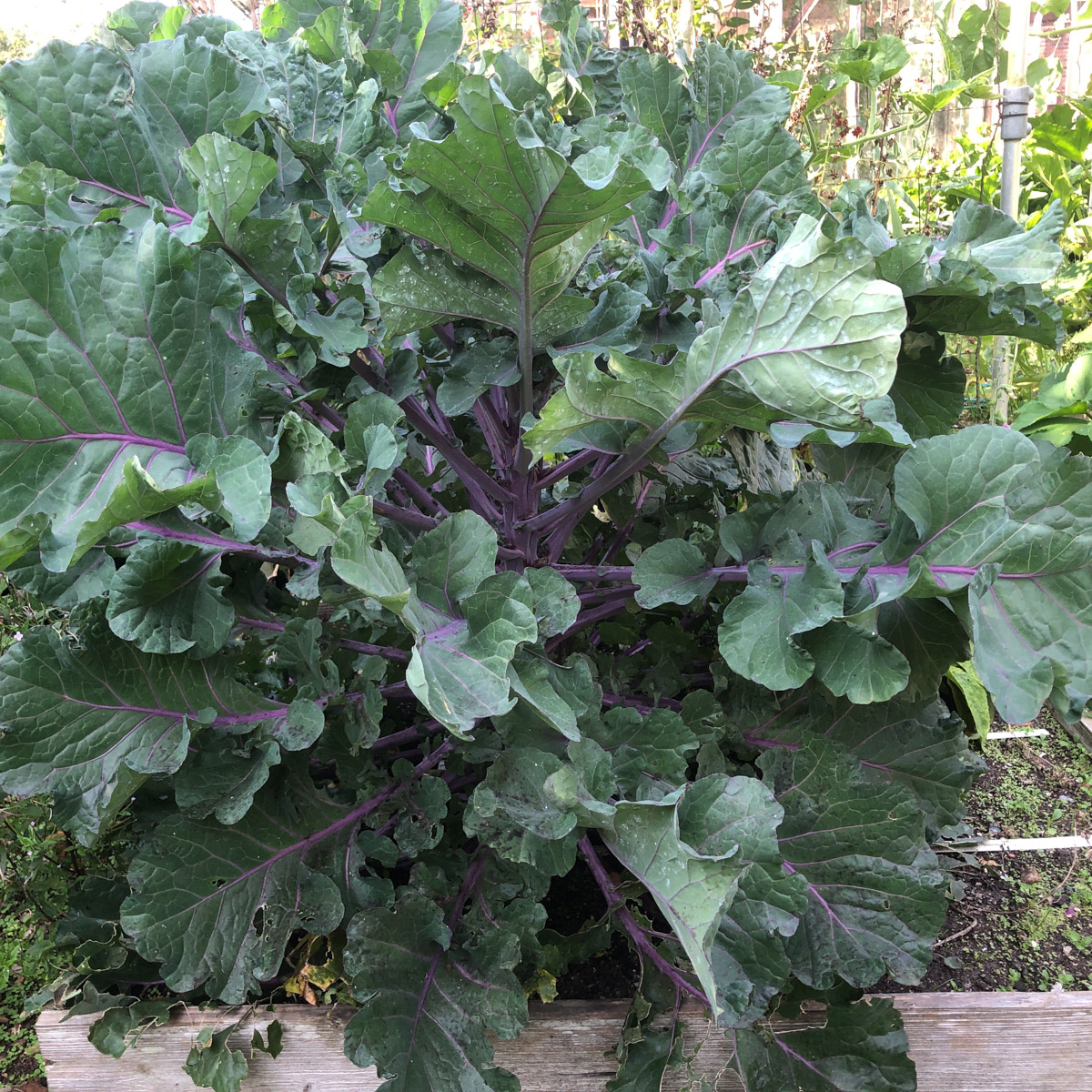
- take up most of your raised bed, such as the broccoli below
- attract a great many pests, such as Chinese cabbage
- are unsuitable for our climate, such as watermelon
- or occupy a square for a very long time, such as parsnips
Some unsuitable vegetables do have alternatives that work well.
One example is the Baby broccoli included in our 2023 test packet and later added to our seed selection:
One example is the Baby broccoli included in our 2023 test packet and later added to our seed selection:
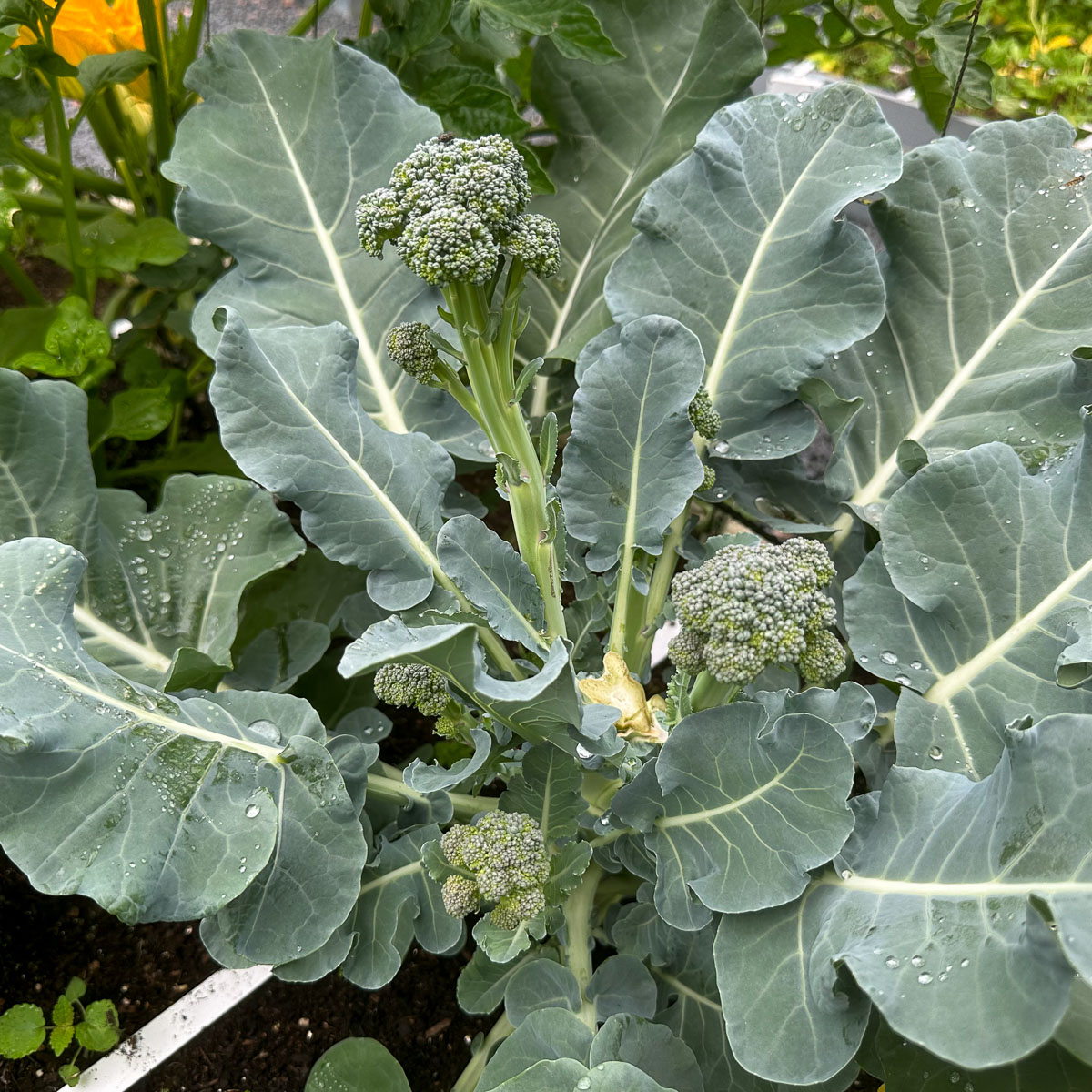
This variety stays much more compact, produces a harvest sooner, and continues growing delicious side shoots for months after you harvest the first head. So this broccoli really is suitable.
So, those are the no-gos.
Plus all the other vegetables that you don't like, that hardly produce anything, or that take a crazy amount of effort before you can eat them. Because you probably won't end up doing it if it's a hassle, right?
Plus all the other vegetables that you don't like, that hardly produce anything, or that take a crazy amount of effort before you can eat them. Because you probably won't end up doing it if it's a hassle, right?
Going for the gold
Well, that's about it. Now you know everything I know: which vegetables work and which don't.
Start with the good stuff that's guaranteed to grow - especially if you're a beginner.
We're going for grow-your-own gold here. Our goal? To make sure you're ridiculously happy with your vegetable garden and proud of it too.
So, choose the plants that you know will do well. And that comes with step-by-step guidance from the app.
You can find them all in the shop.
Start with the good stuff that's guaranteed to grow - especially if you're a beginner.
We're going for grow-your-own gold here. Our goal? To make sure you're ridiculously happy with your vegetable garden and proud of it too.
So, choose the plants that you know will do well. And that comes with step-by-step guidance from the app.
You can find them all in the shop.
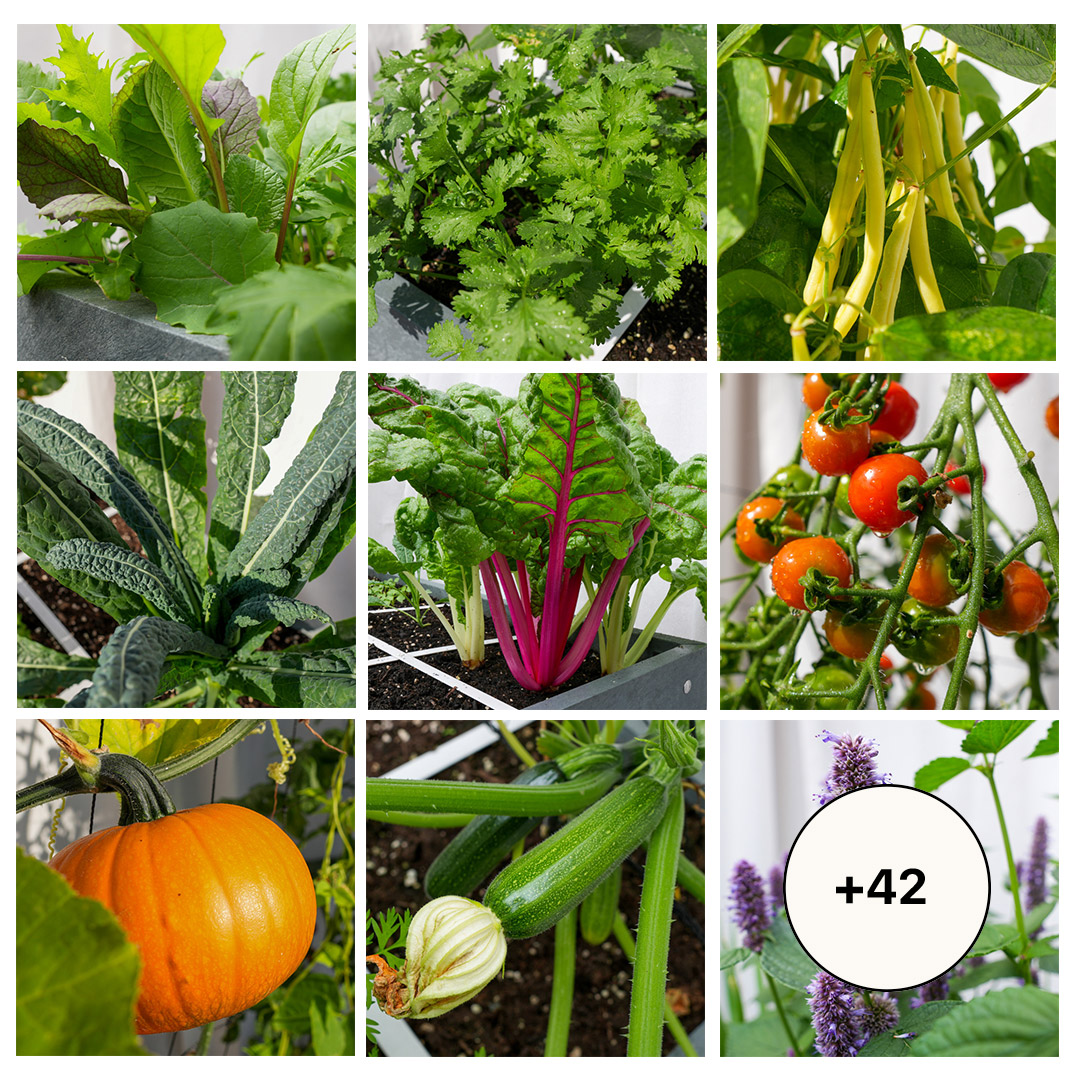
Have fun selecting your seeds!