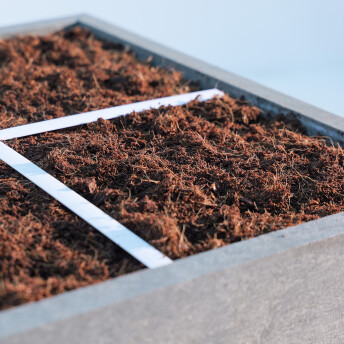
Buy or build your own raised bed?
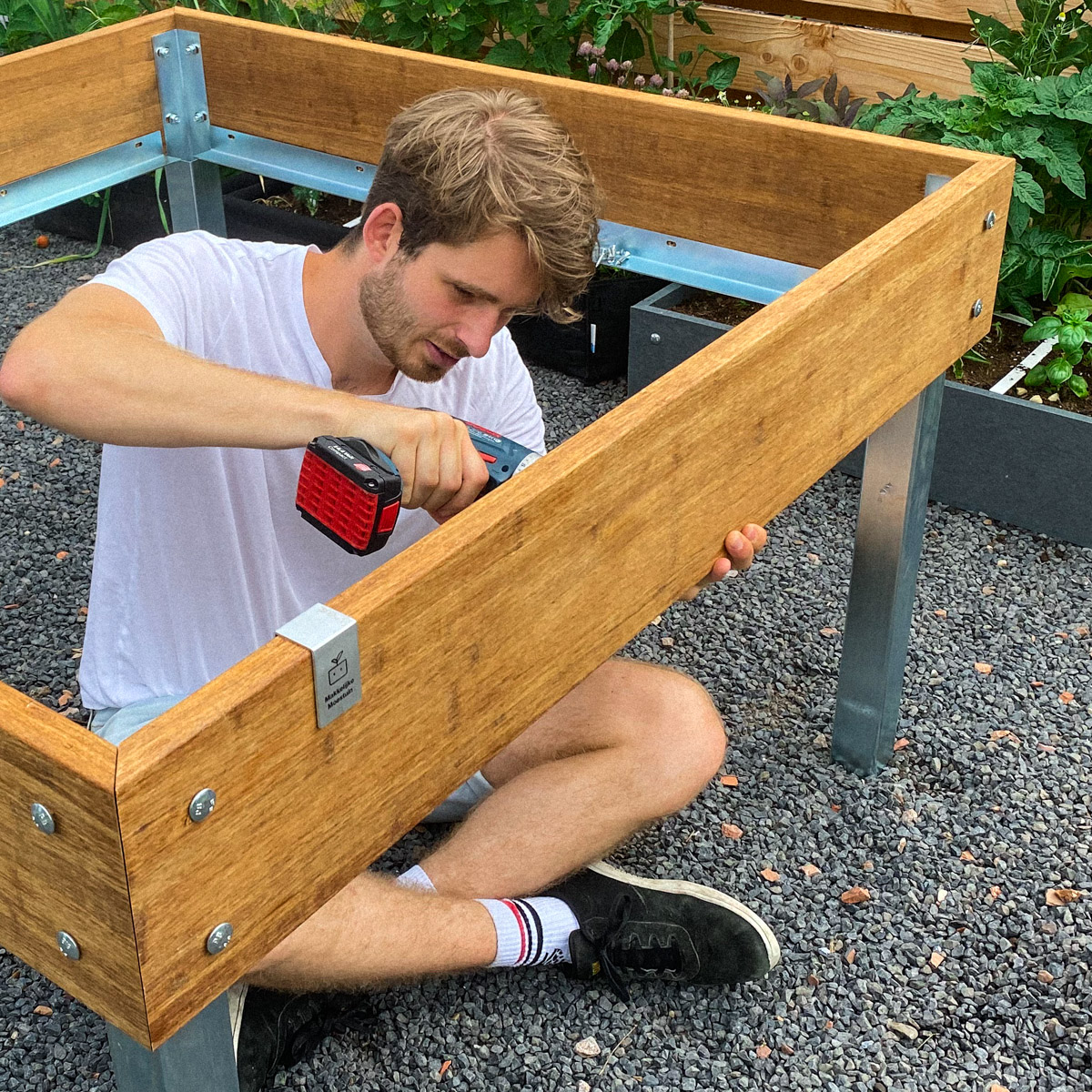
(Op de foto hierboven zie je nog een tafelbak met planken van bamboe. Heel erg mooi, maar die werden helaas veel te duur om aan te houden.)
What makes a good raised bed?
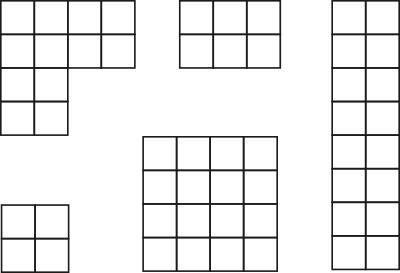
- size - you should be able to divide it into squares of 30x30 cm
- depth - about 20 cm deep
- material - non-toxic and safe
- durability - it should last for at least several years
- grid - for marking off your squares
- trellis - for tall or climbing plants (optional)
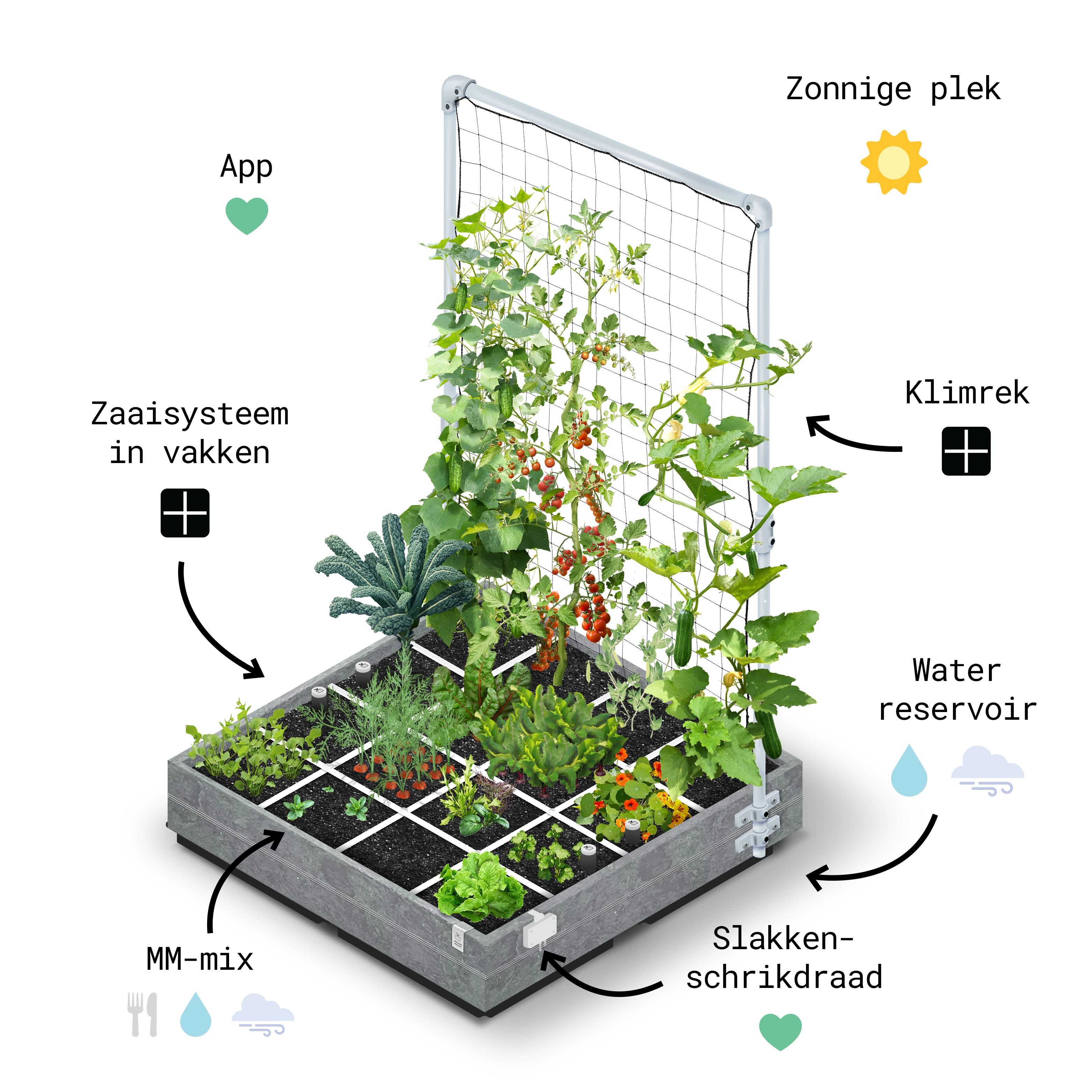
Let's go through it together:
The right dimensions
A standard Makkelijke Moestuin raised bed has inner dimensions of 120 x 120 cm, 60 x 120 cm, or 60 x 60 cm. Those are the easiest sizes to work with, and they are also the sizes we use in the app.
If you build your own raised bed in a different size, make sure you can still easily reach every square. That is the only way to care for all your plants without having to step into the raised bed.
A raised bed should be about 20 cm deep
This mix gives your plants exactly what they need, so a 20 cm layer of mix is enough. If you make a deeper raised bed, you are really just wasting material.
Which material do you use for a raised bed?
That rules out impregnated wood right away. The chemicals used to treat the wood end up in the soil through the water and are absorbed by your plants. And then you eat them.
Wood
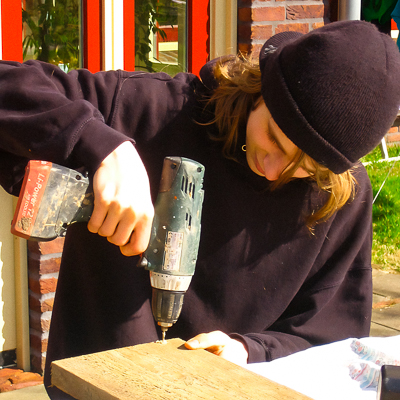
Een moestuinbak staat immers altijd buiten en krijgt daar niet alleen weer en wind te verduren. Want de planken zijn aan de binnenkant altijd nat - door de vochtige aarde - en aan de buitenkant vaak droog.
Houten planken in een moestuinbak trekken daardoor eerder krom dan bijvoorbeeld een houten schutting en verrotten ook sneller. Vooral als die ook nog rechtstreeks op gras of je tuinaarde staat.
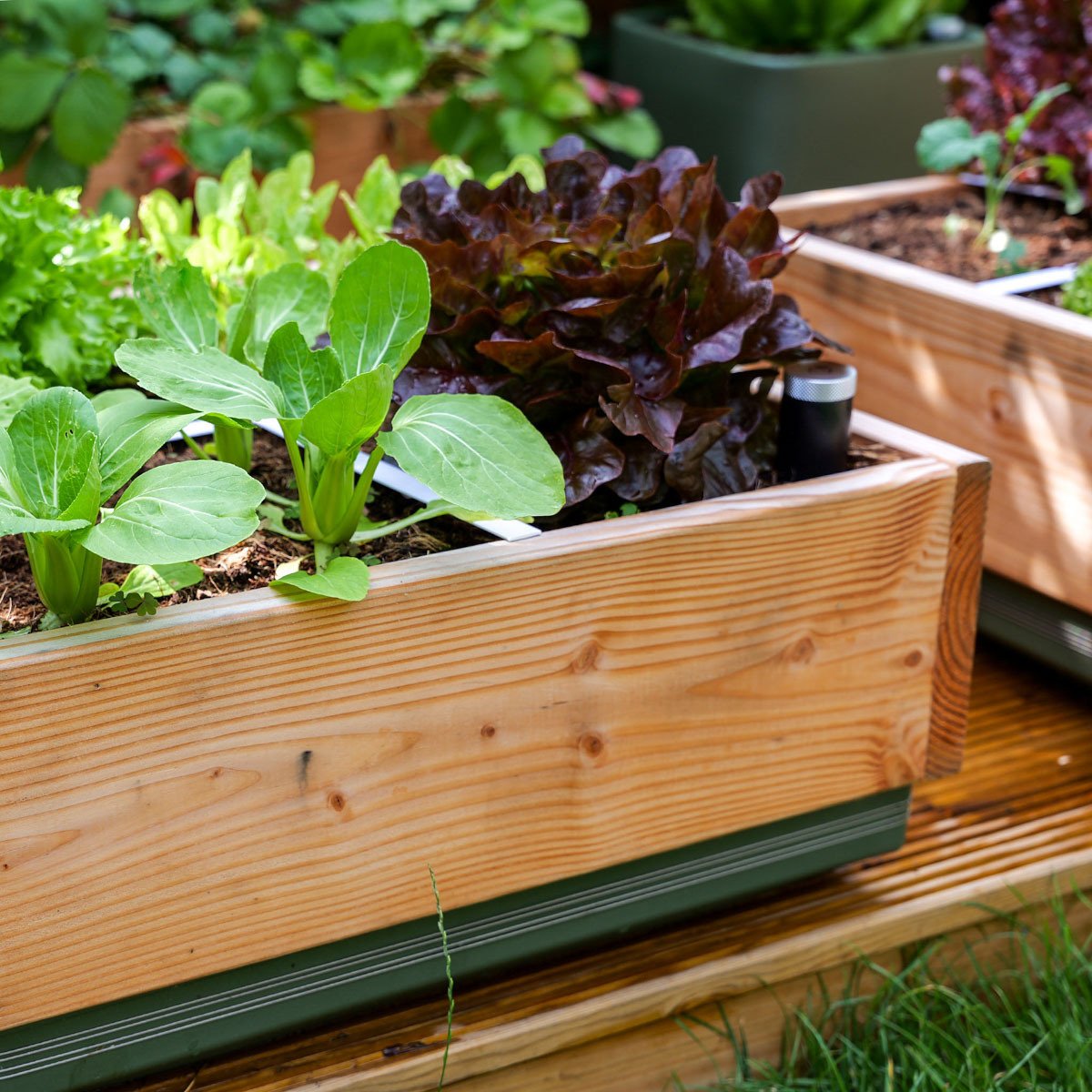
Daarom maken wij onze nieuwste bakken van dikke planken Douglashout en zetten die bovenop onze waterreservoirs. In Douglas hout zit namelijk heel veel hars en trekt daardoor minder snel krom dan bijvoorbeeld vuren of grenen.
Bamboo and recycled plastic
That may seem overkill, but this makes a Makkelijke Moestuin an actual investment in the future. And not a temporary project that you do just for fun and then discard pretty quickly.
The MM-Bamboos are made of thick planks of sustainably sourced bamboo, which stay beautiful for at least 20 years and then slowly break down.
The planks are rock hard and super heavy. And did you know that bamboo forests absorb much more co2 than regular forests?
The MM-Heroes last forever. They're made from equally thick planks of recycled plastic. Plastic that's difficult to recycle, and usually ends up in incinerators.
Other materials
A clear grid for dividing the squares
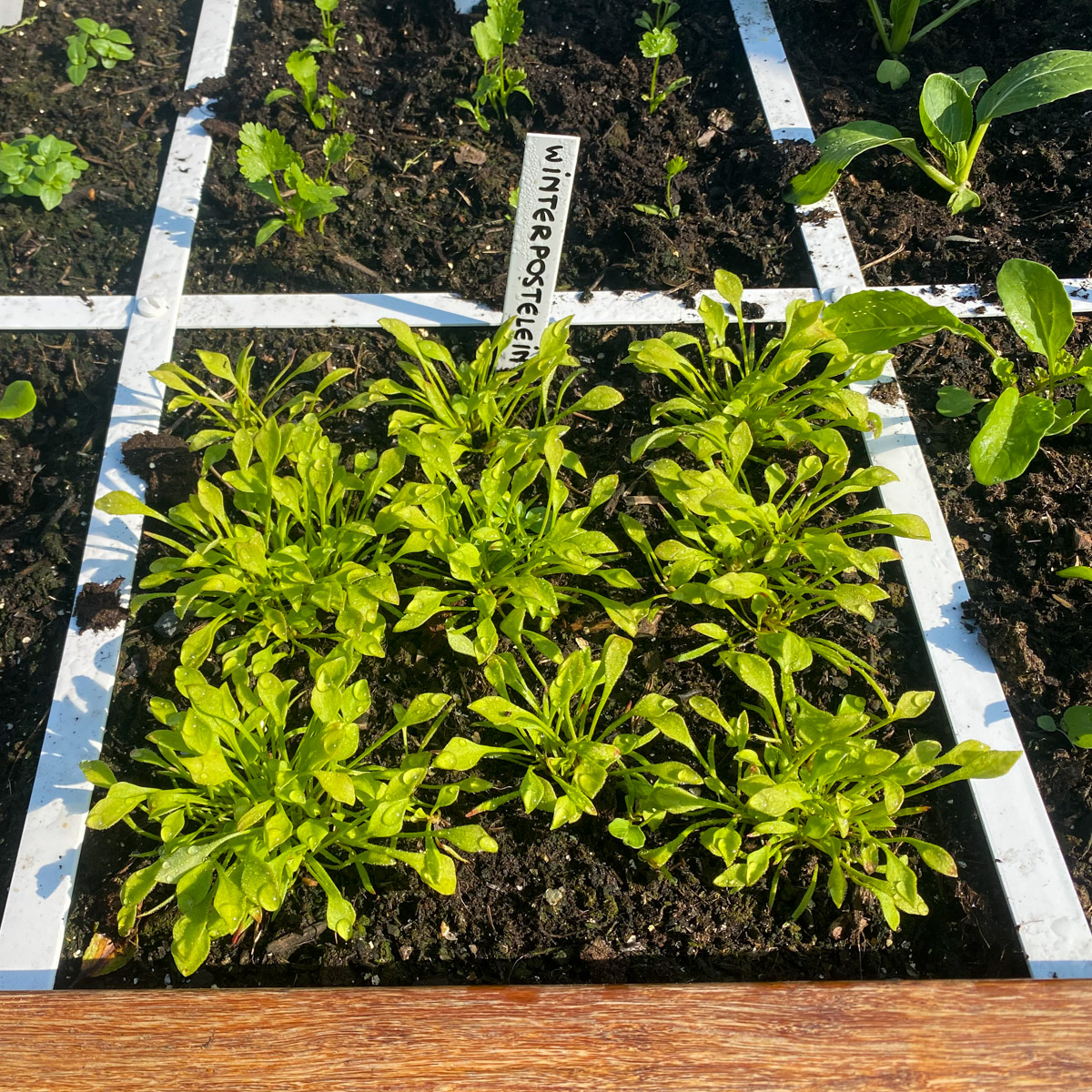
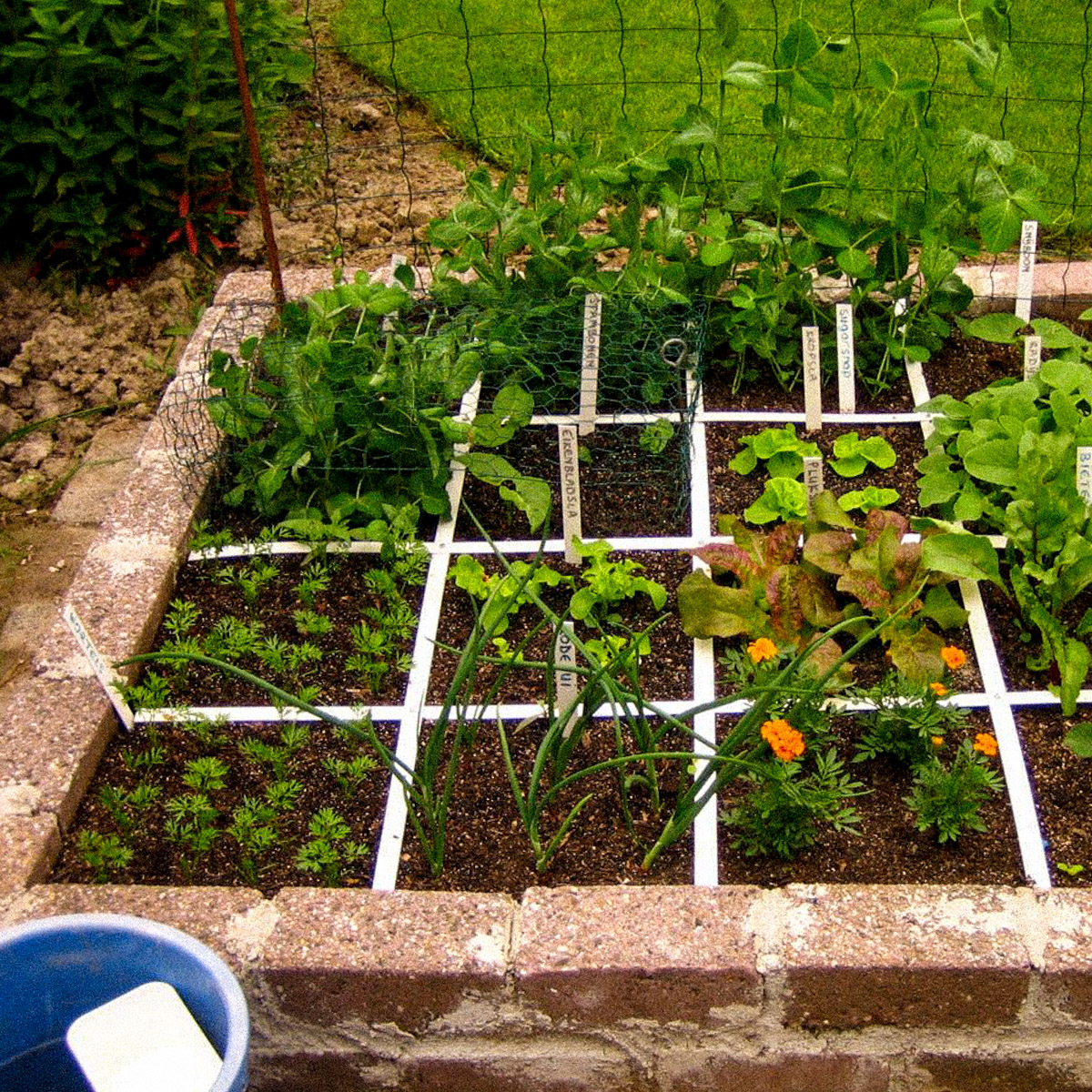
They look clean, last a long time, and sit loose on top of the mix. Because the grid is flexible, you can easily lift one section without having to take the whole thing off. Cleaning it is just as easy.
Wooden slats, bamboo canes, or strips from old blinds are less handy, but they work too. String breaks quickly and is hard to see, so it is useful at most as a temporary solution.
A trellis for climbing vegetables
Our tall-growers and climbing plants produce a lot and get really big. So they need something to hold onto.
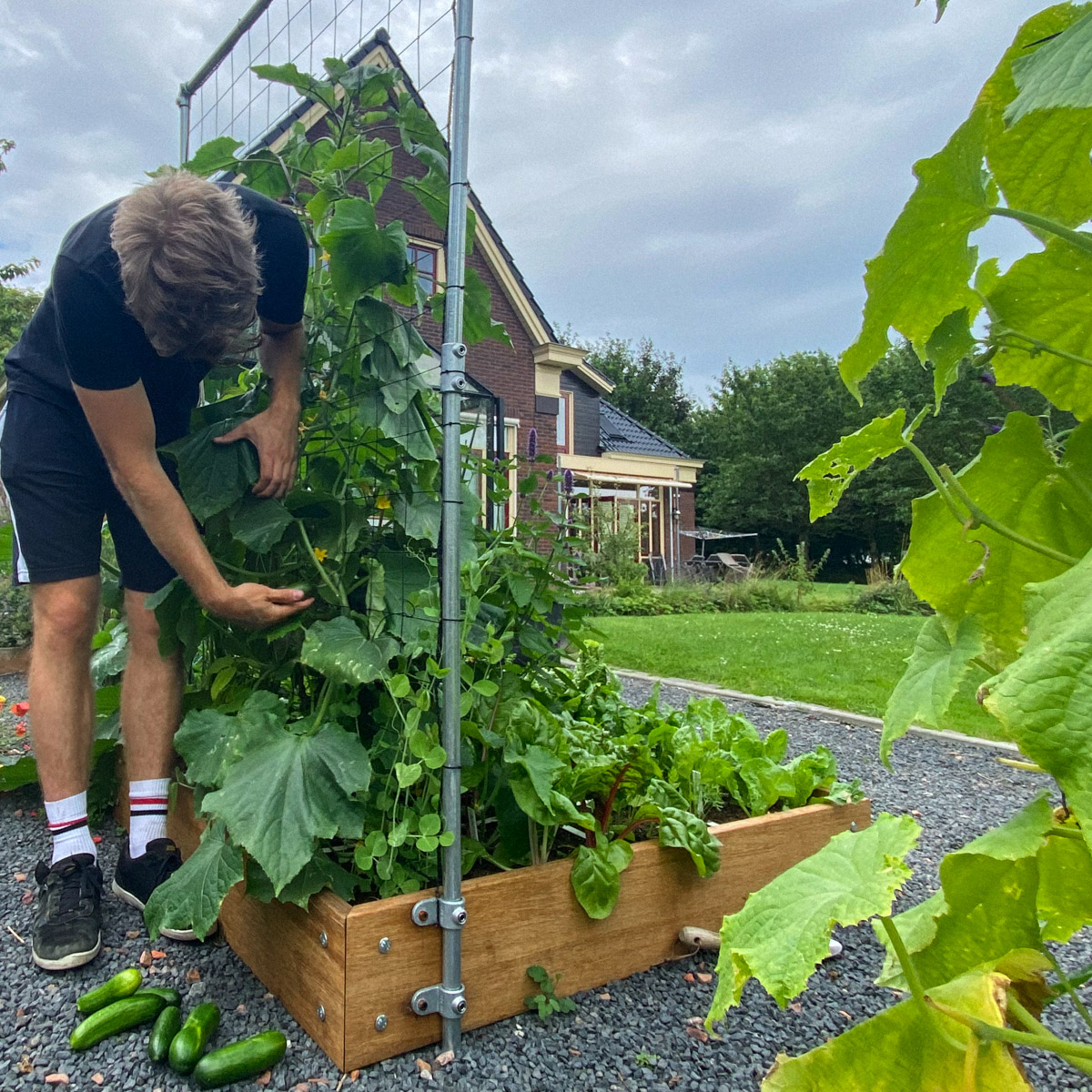
De klimrekken voor onze moestuinbakken van Douglashout maakten we van roestvrijstaal.
Die maak je niet aan de planken vast maar klik je direct in het waterreservoir. Daar staat het dan super stevig en kan niet omwaaien.
En in plaats van een net gebruiken we henneptouw. Daarmee bepaal je dus zelf of je minder klimdraden maakt.
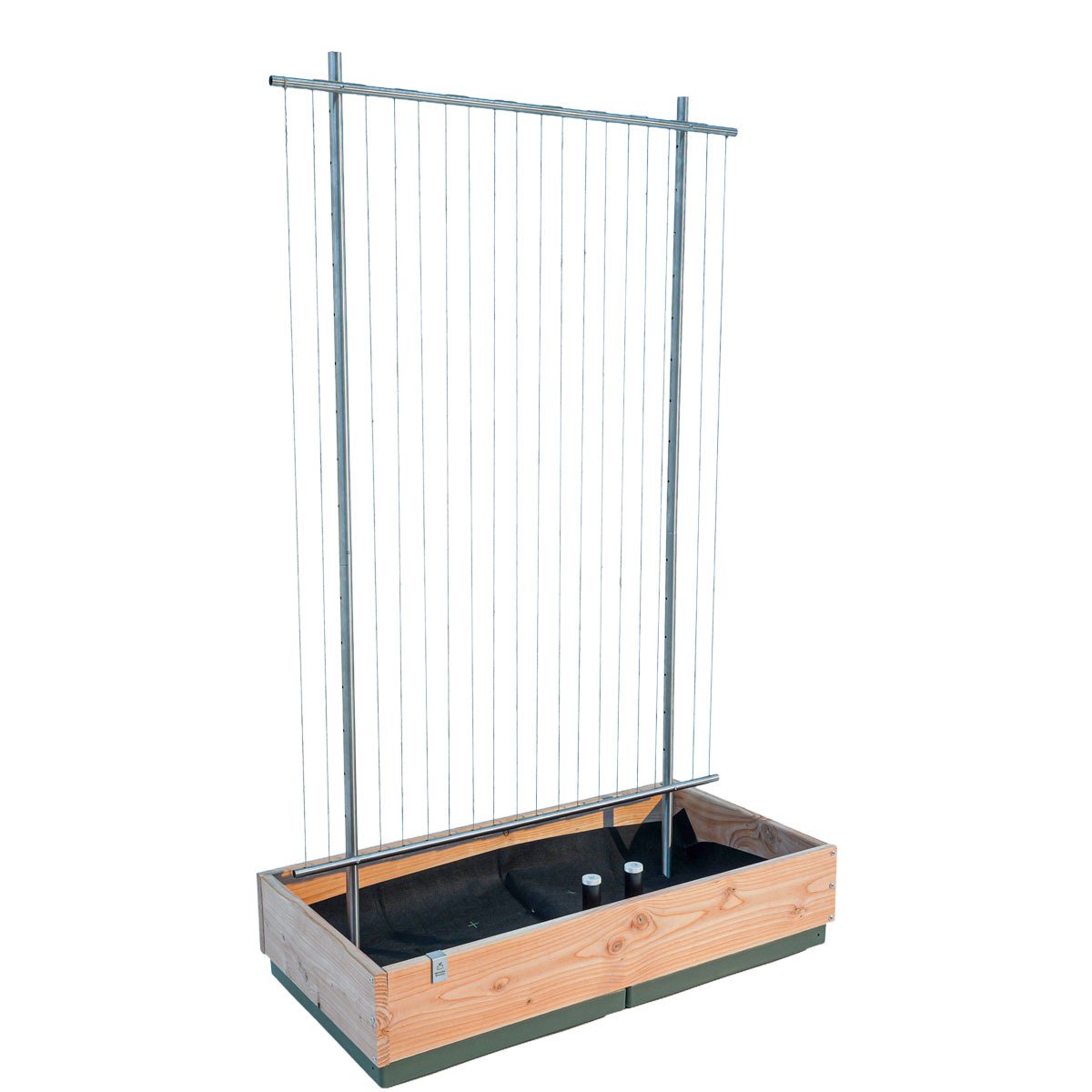
Just make sure the trellis is really sturdy. If it blows over when it's full of plants, it's a major bummer. I know all about that 😉
That's why we made our trellis so strong. You can do some chin-ups on it if you want.
Bottom and optional legs
Thinking about that kind of raised bed? Pay extra attention to the bottom, legs, and drainage.
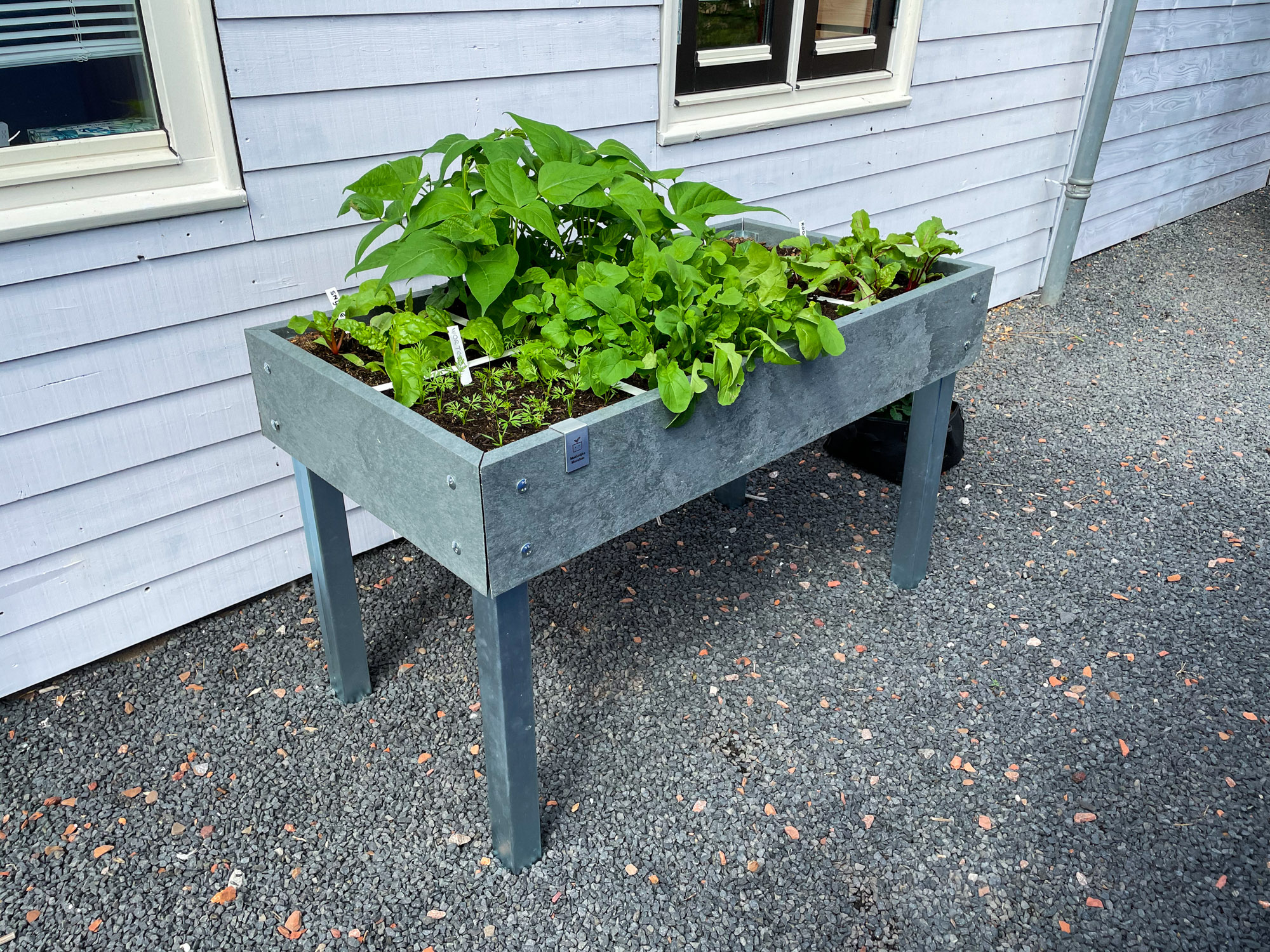
Excess water must be able to drain away.
For a raised bed with a bottom, that means it needs enough holes. Put weed-control fabric over them so the mix does not wash out through the holes.
And keep in mind: because of the moist mix, the bottom stays wet too. So a wooden bottom will last much less long than the raised bed itself. That is why we use stainless steel: so the whole raised bed stays in good shape for a long time.
A strong, durable raised bed lasts a long time
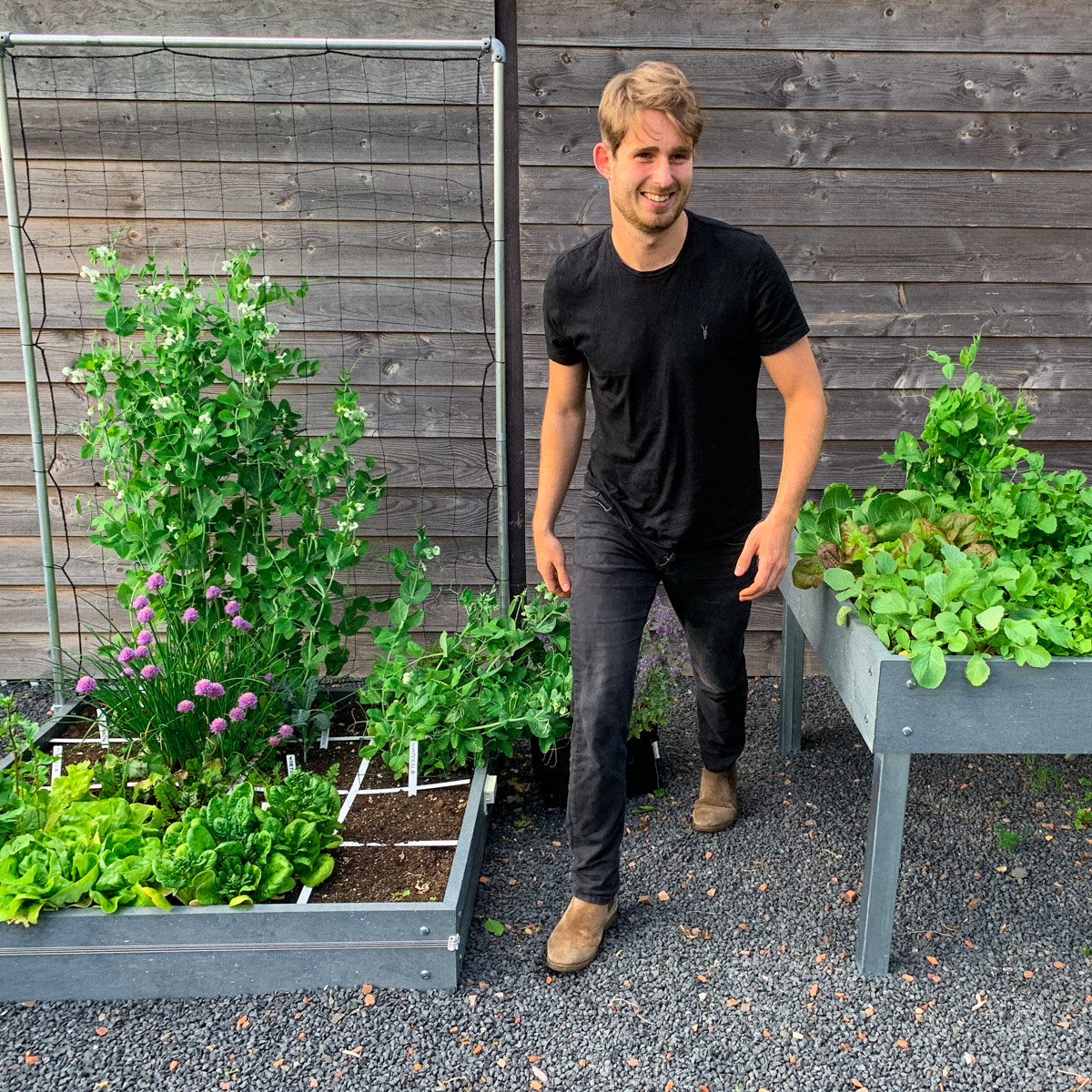
It is much more satisfying to work in a good, durable raised bed year after year. If you buy one from our shop, you can be sure you are on the right track from every angle.
'It costs a few cents, but then you have something', as they say here in Groningen. In the long run, you are better off.
Want to start carefully and not spend too much?
But I completely understand if you do not want to make a big investment before you even know whether vegetable gardening is for you.
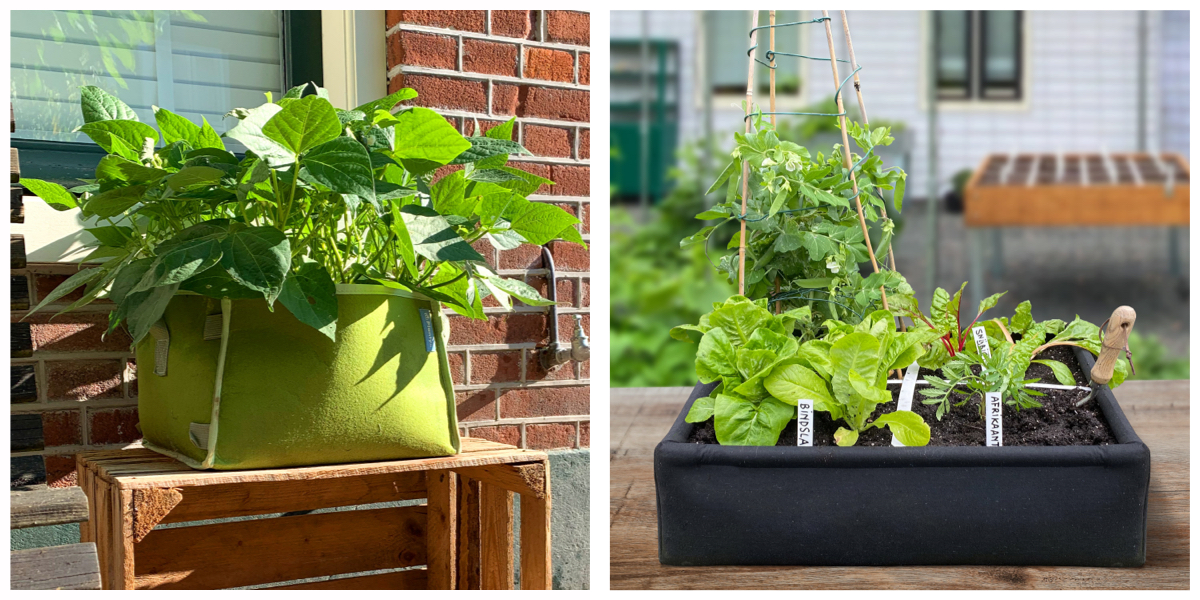
In that case, go for an MM-Airbak or a few MM-Minis. They are made from a felt-like material - also recycled plastic - and last for several years.
Because the material lets air through, your plants grow better in them than in ordinary pots. And because they take up little space and are easy to move, you can put them almost anywhere.
Prefer to build one yourself after all?
If you are a real DIYer and want to get started yourself, you now know what your MM raised bed needs. There is also a DIY guide in the knowledge base with a few extra tips.
So, that covers the raised bed. On to the Makkelijke Moestuinmix: