Build your own Makkelijke Moestuin raised bed
In a Makkelijke Moestuin, you grow in raised beds. Here I explain how to build one yourself so it works with the system and the app.
Note: this page and the next few pages are only meant to help you get started. We don't give further advice on DIY building or on finding materials 🙂
The right size
If you want to use the Makkelijke Moestuin system, you work with squares. That's very different from a traditional vegetable garden.
So it's important that the size is right and that you can divide your raised bed into squares of 30 x 30 cm.
So it's important that the size is right and that you can divide your raised bed into squares of 30 x 30 cm.
- Your raised bed will have squares of 30 by 30 cm, so every plant gets exactly enough room. That means the inside measurements must be a multiple of 30 cm: 120 by 60, 90 x 120, and so on.
- Your raised bed should be about 20 cm deep. That gives you enough mix for your plants to grow well.
- You need to be able to care for all your plants without standing in the raised bed. So don't make it wider than 120 cm.

Materials
Wood
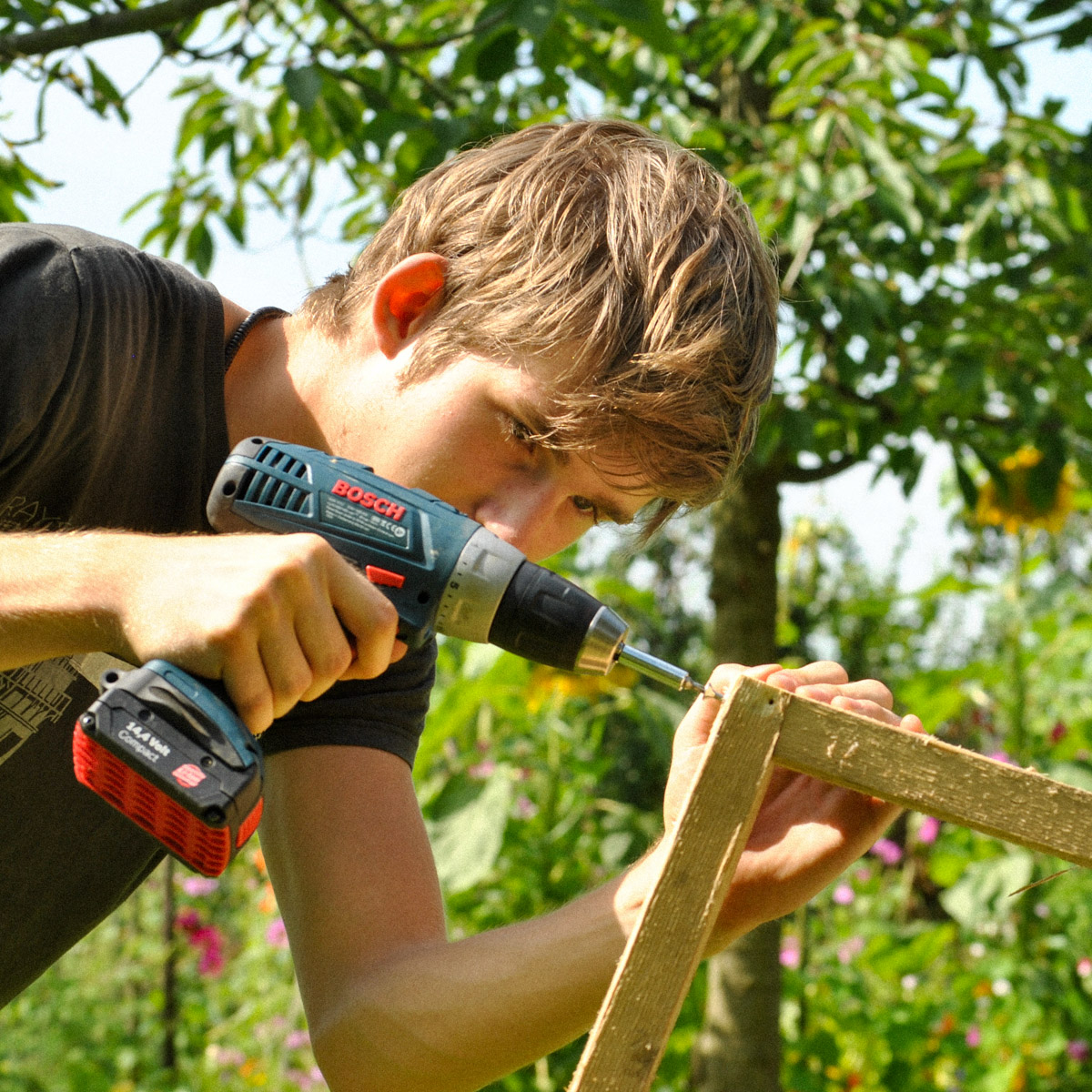
Most DIY builders think of wood first. I made my first raised beds from the scaffold boards left over after our house was built. But they didn't last very long.
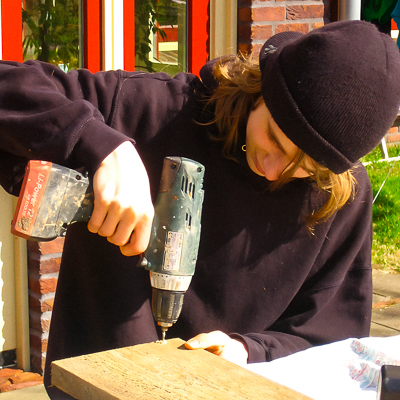
Later we switched to other types of wood, such as Douglas fir, which contains a lot of resin, and heat-treated poplar. But those raised beds didn't last very long either.
Which makes sense, because a raised bed has to cope with more than wind and weather. The inside is often wet while the outside is dry. That makes the boards warp much sooner than, say, a wooden fence, and they rot faster too.
A raised bed that falls apart is super frustrating when you're just getting going. And if that raised bed is on legs, it can even be dangerous.
So we no longer use wood ourselves. But if you do want to use it, choose thick boards and the strongest type of wood you can find. And preferably make any legs and base from material that cannot rot.
Which makes sense, because a raised bed has to cope with more than wind and weather. The inside is often wet while the outside is dry. That makes the boards warp much sooner than, say, a wooden fence, and they rot faster too.
A raised bed that falls apart is super frustrating when you're just getting going. And if that raised bed is on legs, it can even be dangerous.
So we no longer use wood ourselves. But if you do want to use it, choose thick boards and the strongest type of wood you can find. And preferably make any legs and base from material that cannot rot.
Een bak die uit elkaar valt is super frustrerend als je net lekker bezig bent. En als zo'n bak op poten staat, is dat zelfs gevaarlijk.
Kies je dus voor hout, gebruik dan in ieder geval dikke planken van de beste kwaliteit die je kunt vinden. En maak eventuele poten en bodem bij voorkeur van materiaal dat niet kan rotten.
Other materials
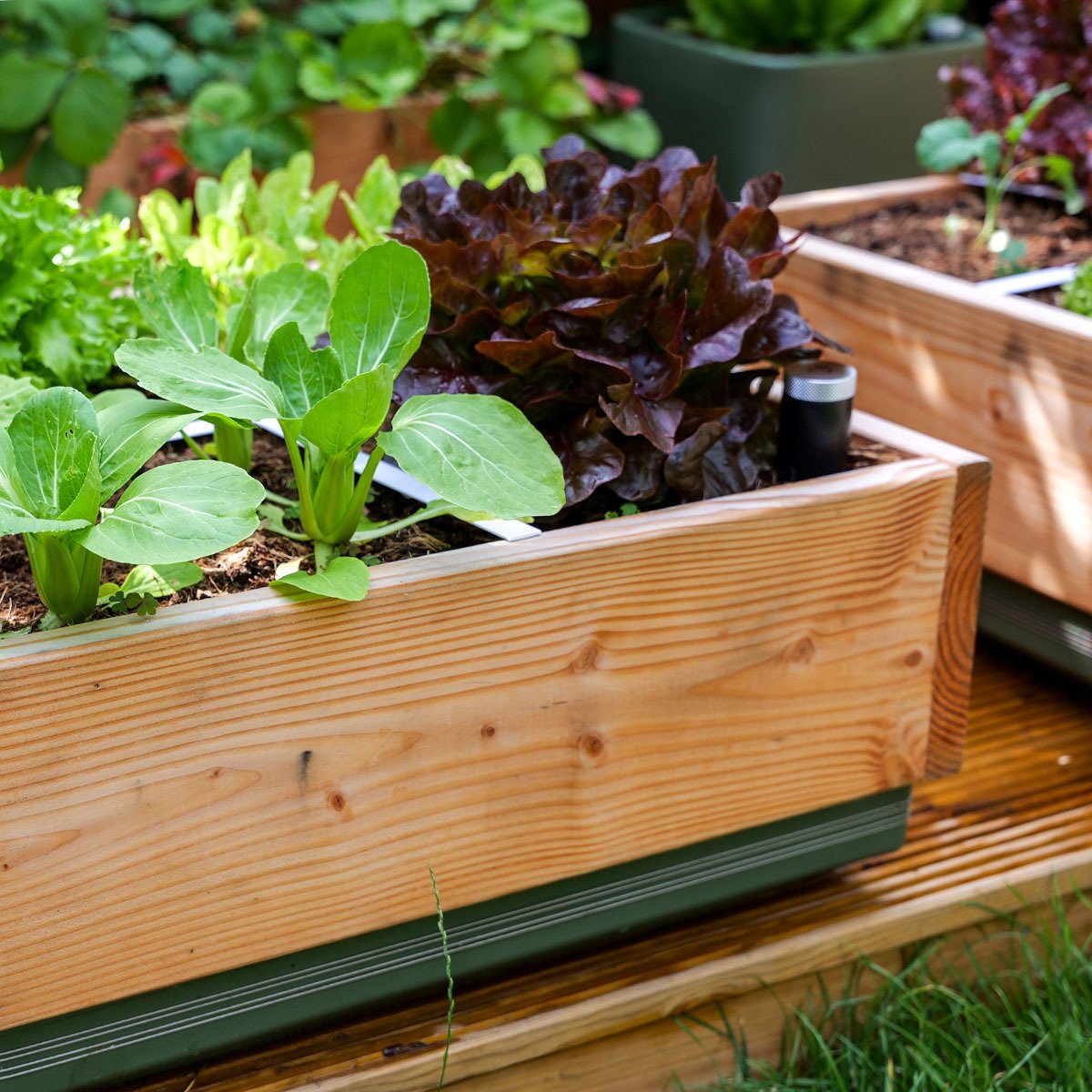
For our current raised beds, we mainly use thick planks of heat-treated bamboo and recycled plastic, with thick stainless steel for the bases and legs.
But for raised beds on the ground, you can also use stone. In 2008, my mother built a raised bed from leftover bricks. That raised bed is still there, although more and more bricks are coming loose now.
But for raised beds on the ground, you can also use stone. In 2008, my mother built a raised bed from leftover bricks. That raised bed is still there, although more and more bricks are coming loose now.
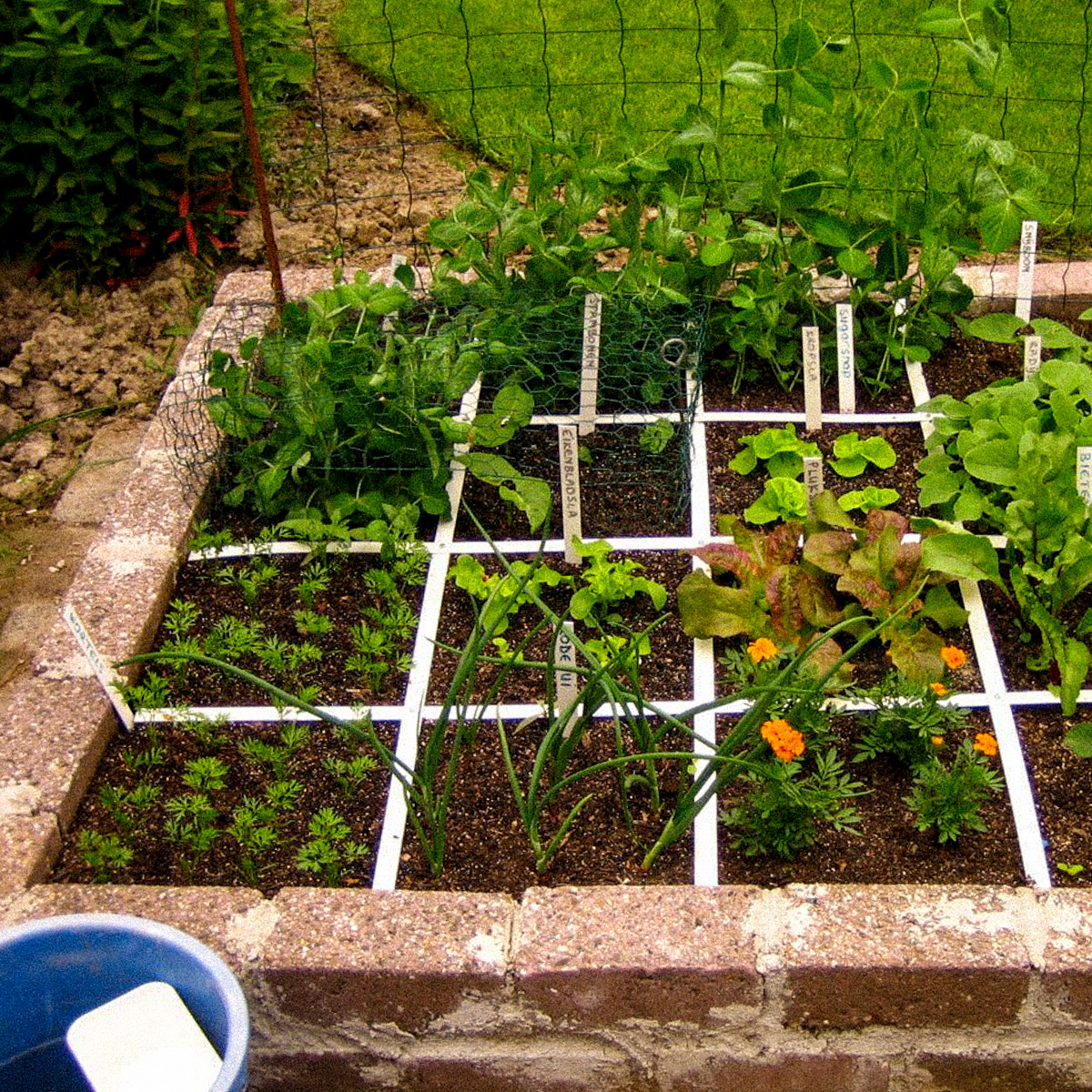
Curbstones, beams, garden edging, paving edge restraints, and woven willow are fine too. Though woven willow doesn't last as long.
Construction
Because you want your raised bed to last, put it together nice and solidly. After all, you don't want a raised bed full of tasty vegetables to collapse, right?
That's especially important for raised beds on legs. But a raised bed on the ground has to cope with a lot too. So make extra-sturdy corner joints and use long screws for assembly, preferably stainless steel.
Do you know how you're going to build it? Then we'll move on to the Makkelijke Moestuinmix:
Do you know how you're going to build it? Then we'll move on to the Makkelijke Moestuinmix: