
Brown peat, peat moss and other fibres
A large part of the classic Makkelijke Moestuin Mix is made up of fibres, including brown peat, wood fibre and a little cocopeat. These fibres keep the mix light and crumbly, and they hold moisture well too.
Our mix is unique, but it is based on the Square Foot Gardening recipe. If you want to make that mix yourself, you use peat moss or peat litter.
Our mix is unique, but it is based on the Square Foot Gardening recipe. If you want to make that mix yourself, you use peat moss or peat litter.
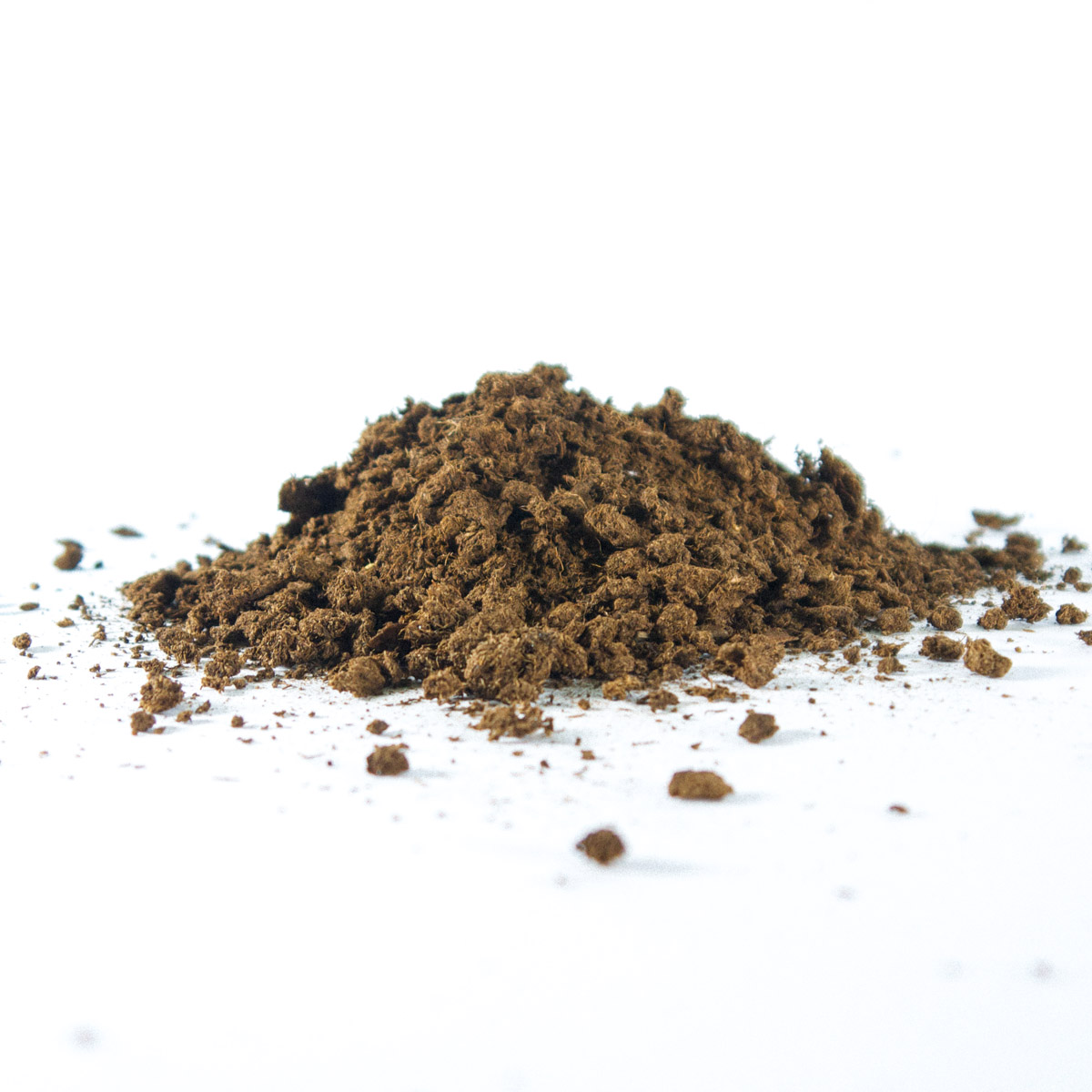
What is peat and where does it come from?
Brown peat, peat moss and peat litter come from raised bogs. These are layers of tightly packed, partly decomposed dead plant matter, mainly sphagnum moss. The peat is light to medium brown.
The peat in our Makkelijke Moestuin Mix comes partly from Finland, where it is harvested carefully and responsibly.
That matters, because Finland has extremely strict sustainability standards — not just for peat extraction. The country is among the 10 most environmentally friendly countries in the world.
Our soil producer, Kekkilä-BVB, also takes sustainability very seriously.
Not only in its own business and products: the team also helps us find ways to work more sustainably.
The peat in our Makkelijke Moestuin Mix comes partly from Finland, where it is harvested carefully and responsibly.
That matters, because Finland has extremely strict sustainability standards — not just for peat extraction. The country is among the 10 most environmentally friendly countries in the world.
Our soil producer, Kekkilä-BVB, also takes sustainability very seriously.
Not only in its own business and products: the team also helps us find ways to work more sustainably.
Isn't using peat moss bad for the environment?
Peat moss is a natural material that grows back very slowly. Once a peat field has been harvested, it is gone, so we need to use it sparingly.
That is exactly what you do in a Makkelijke Moestuin. The mix lasts an extremely long time. Once your boxes are filled, you never need to replace it. After each harvest, you only top up the plant food.
That is exactly what you do in a Makkelijke Moestuin. The mix lasts an extremely long time. Once your boxes are filled, you never need to replace it. After each harvest, you only top up the plant food.
Only when the level of mix in your box drops a little do you add some fresh mix. You can now use Makkelijke Moestuin Soil for that too. It contains no peat at all.
Very different from potting soil
That is very different from using potting soil. Most potting soil consists mainly of peat moss — often not sustainably harvested — and is thrown away after use.
It also often contains black peat from deeper layers of the bog.
And watch out: even bags labelled as compost often contain as much as 50% peat.
It also often contains black peat from deeper layers of the bog.
And watch out: even bags labelled as compost often contain as much as 50% peat.
But couldn't you stop using peat altogether?
Honestly, we would like to. Sustainability is very important to us, so we are happy to do anything that helps.
At the same time, we want your plants to grow as well as possible.
But now we have Makkelijke Moestuin Soil, which contains no peat at all.
So we currently sell both mixes:
At the same time, we want your plants to grow as well as possible.
But now we have Makkelijke Moestuin Soil, which contains no peat at all.
So we currently sell both mixes:
- Makkelijke Moestuin Soil: made mainly from cocopeat, with plant food and worm castings added. It was specially developed for our garden boxes with water reservoirs.
- The classic Makkelijke Moestuin Mix: made from compost, fibres such as brown peat, cocopeat and wood fibre, plus extra nutrients. It works in all boxes and pots, but is slightly less suitable for use with water reservoirs.
Can't you replace all the peat moss with cocopeat?
In the current Makkelijke Moestuin Mix, we cannot replace all the peat. That is because the brown peat, together with the other ingredients and the compost, determines the mix's acidity. If we replaced the peat with cocopeat, the mix would become far too alkaline.
Because the Makkelijke Moestuin Mix needs to suit all vegetables, we would have to solve that problem first.
Is cocopeat better for the environment than peat?
Yes and no. Cocopeat is often better, but not always.
It may be a by-product of coconuts, but it cannot be used in the garden straight away because it contains too much salt.
To make it suitable, it first needs to be rinsed and treated with a calcium solution. This is called buffering. The process is expensive and uses a lot of water and energy, often in countries where water is scarce.
That is why buffering is sometimes skipped or done carelessly, allowing polluted water to end up in the soil. This is extremely harmful to the environment and to workers, who often handle it without proper protection.
It can be done responsibly, and thankfully more and more companies are doing so, but that makes the material at least twice as expensive. We are happy to pay that price for the cocopeat in our Makkelijke Moestuin Soil.
But if you buy cheap cocopeat blocks, they probably have not been buffered. That means they are not good for your plants, and there is a good chance they were not produced responsibly either.
Then there is the long journey from the tropics to Europe. To be fair, peat often travels a long way too.
Because the Makkelijke Moestuin Mix needs to suit all vegetables, we would have to solve that problem first.
Is cocopeat better for the environment than peat?
Yes and no. Cocopeat is often better, but not always.
It may be a by-product of coconuts, but it cannot be used in the garden straight away because it contains too much salt.
To make it suitable, it first needs to be rinsed and treated with a calcium solution. This is called buffering. The process is expensive and uses a lot of water and energy, often in countries where water is scarce.
That is why buffering is sometimes skipped or done carelessly, allowing polluted water to end up in the soil. This is extremely harmful to the environment and to workers, who often handle it without proper protection.
It can be done responsibly, and thankfully more and more companies are doing so, but that makes the material at least twice as expensive. We are happy to pay that price for the cocopeat in our Makkelijke Moestuin Soil.
But if you buy cheap cocopeat blocks, they probably have not been buffered. That means they are not good for your plants, and there is a good chance they were not produced responsibly either.
Then there is the long journey from the tropics to Europe. To be fair, peat often travels a long way too.
Plants take in CO₂ and release oxygen
Another point worth remembering is that our mix helps your plants grow especially well. Those plants take CO₂ from the air and release oxygen. More plants mean more oxygen and less CO₂.
(If you would like to know more, try watching the documentary ‘Kiss the Ground’ on Netflix.)
(If you would like to know more, try watching the documentary ‘Kiss the Ground’ on Netflix.)
Is peat only used in horticulture?
No, if only that were true. Worldwide, only about 10–15% of harvested peat moss is used in horticulture.
The rest is burned, just as people used to burn it in stoves. This happens mainly in power stations in Russia and other Eastern European countries.
In terms of CO₂ emissions, that is many times more harmful than using peat in potting soil 🙁
The rest is burned, just as people used to burn it in stoves. This happens mainly in power stations in Russia and other Eastern European countries.
In terms of CO₂ emissions, that is many times more harmful than using peat in potting soil 🙁