
Tomato
Seasonal
Courgette
July: tomatoes, cucumbers, courgettes and pumpkins
Summer vegetables grow quickly in a Makkelijke Moestuin during July. Here are some tips for courgettes, tomatoes and cucumbers to help you harvest even more.
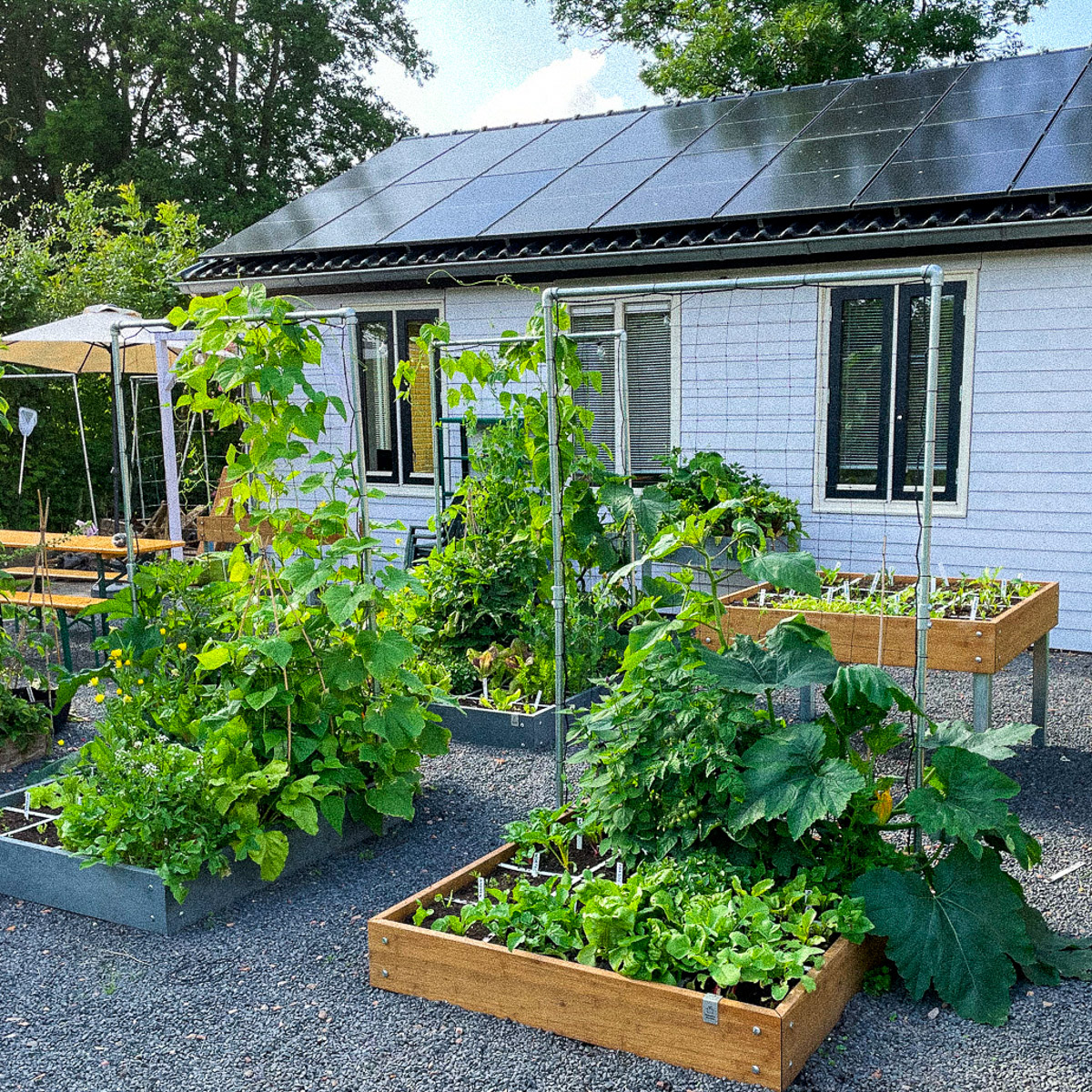
In July, summer vegetables such as courgettes, tomatoes and cucumbers begin to grow vigorously. They love sun and warmth, so midsummer suits them perfectly.
This is a good time to help the plants stay strong and healthy, so they can give you an even larger harvest.
This is a good time to help the plants stay strong and healthy, so they can give you an even larger harvest.
Give them some extra plant food
Courgettes, cucumbers, tomatoes and pumpkins have one thing in common: they use a great deal of nutrients. They are large plants and remain in the same place for a long time.
Give them some extra MM plant food while they are growing. If you use the app, it will remind you when it is time.
Here is how to apply it:
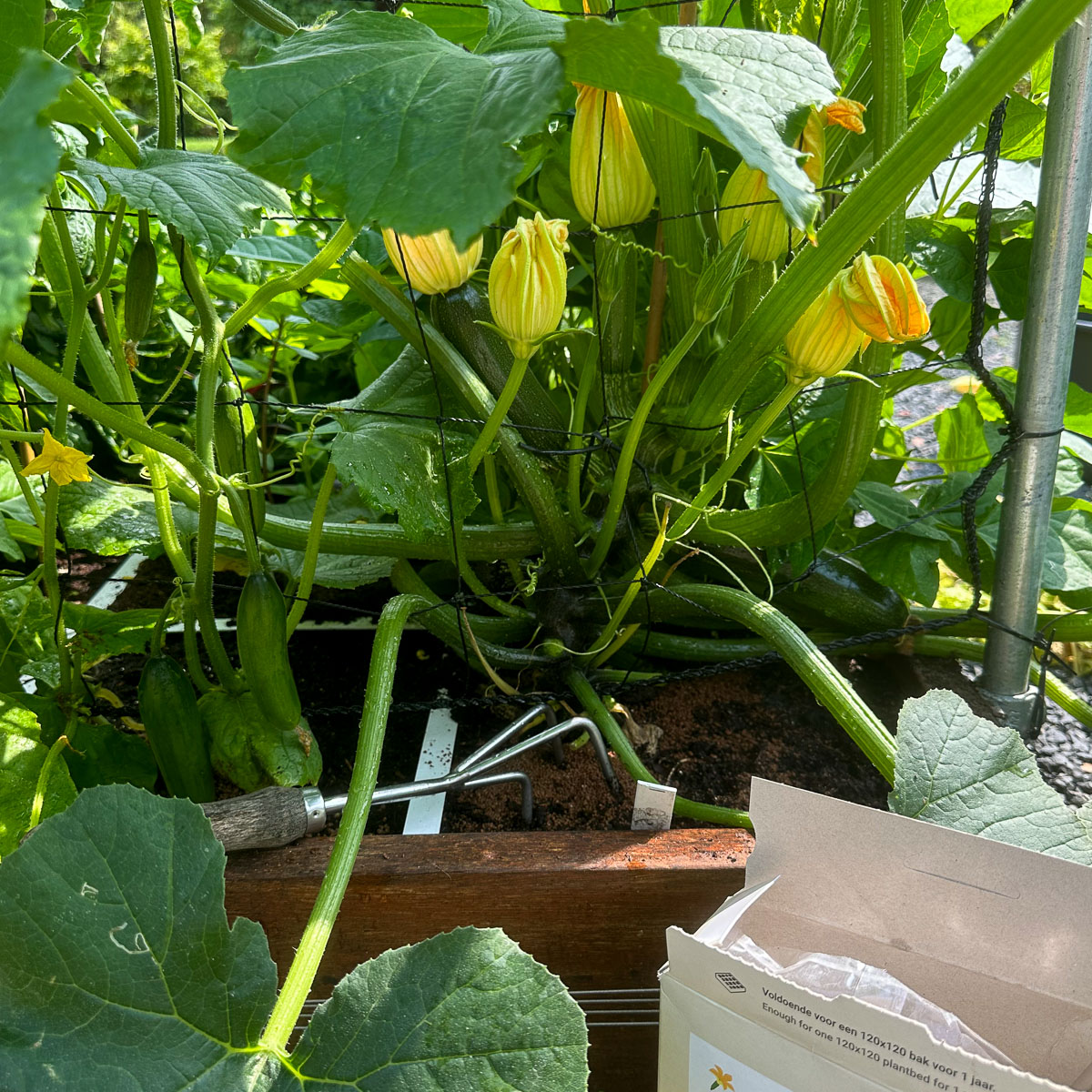
Carefully loosen the MM-mix around the base of the plant with a small hand rake or fork. Scatter 2 tablespoons of plant food over it, then add some water. That is it.
Now for the tips for each summer vegetable:
Tomatoes
Tall tomatoes
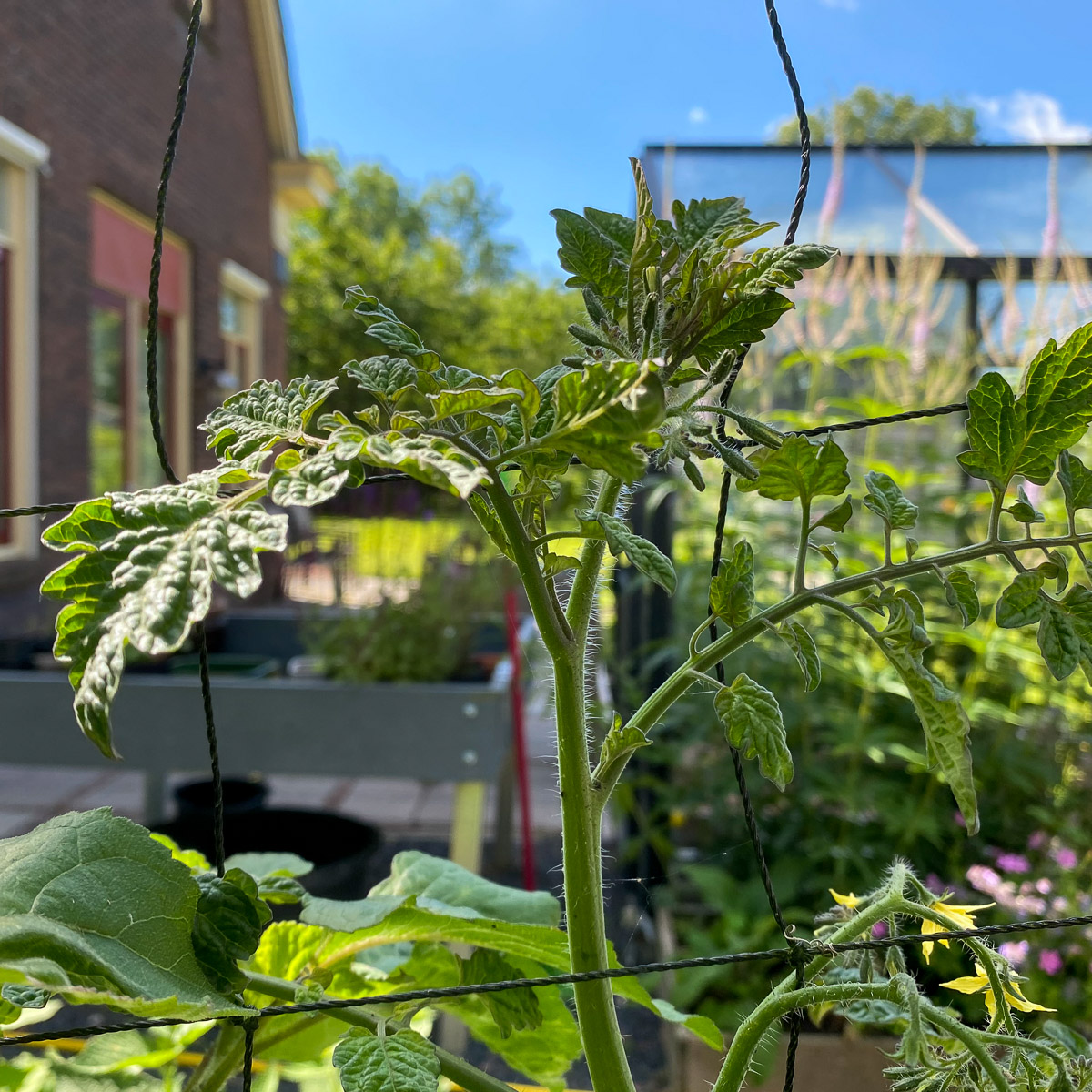
The main stems of tall tomatoes, such as the red Sweety and the yellow snack tomato, can grow up to 2 metres tall. Plant them beside a trellis.
Tie the stems to it or weave them through the net.
Tie the stems to it or weave them through the net.
Short or bush tomatoes
As the name suggests, short tomatoes remain much smaller and do not need to grow beside a trellis. I like planting them in an MM-mini, but they also grow well in a square among the other vegetables.
Our yellow bush tomato grows to about 30 to 40 cm tall. It only needs support once the mature plant is heavy with tomatoes, to keep it from toppling over.
I use 4 bamboo canes, each 90 cm tall, tied together at the top like a wigwam.
Our yellow bush tomato grows to about 30 to 40 cm tall. It only needs support once the mature plant is heavy with tomatoes, to keep it from toppling over.
I use 4 bamboo canes, each 90 cm tall, tied together at the top like a wigwam.
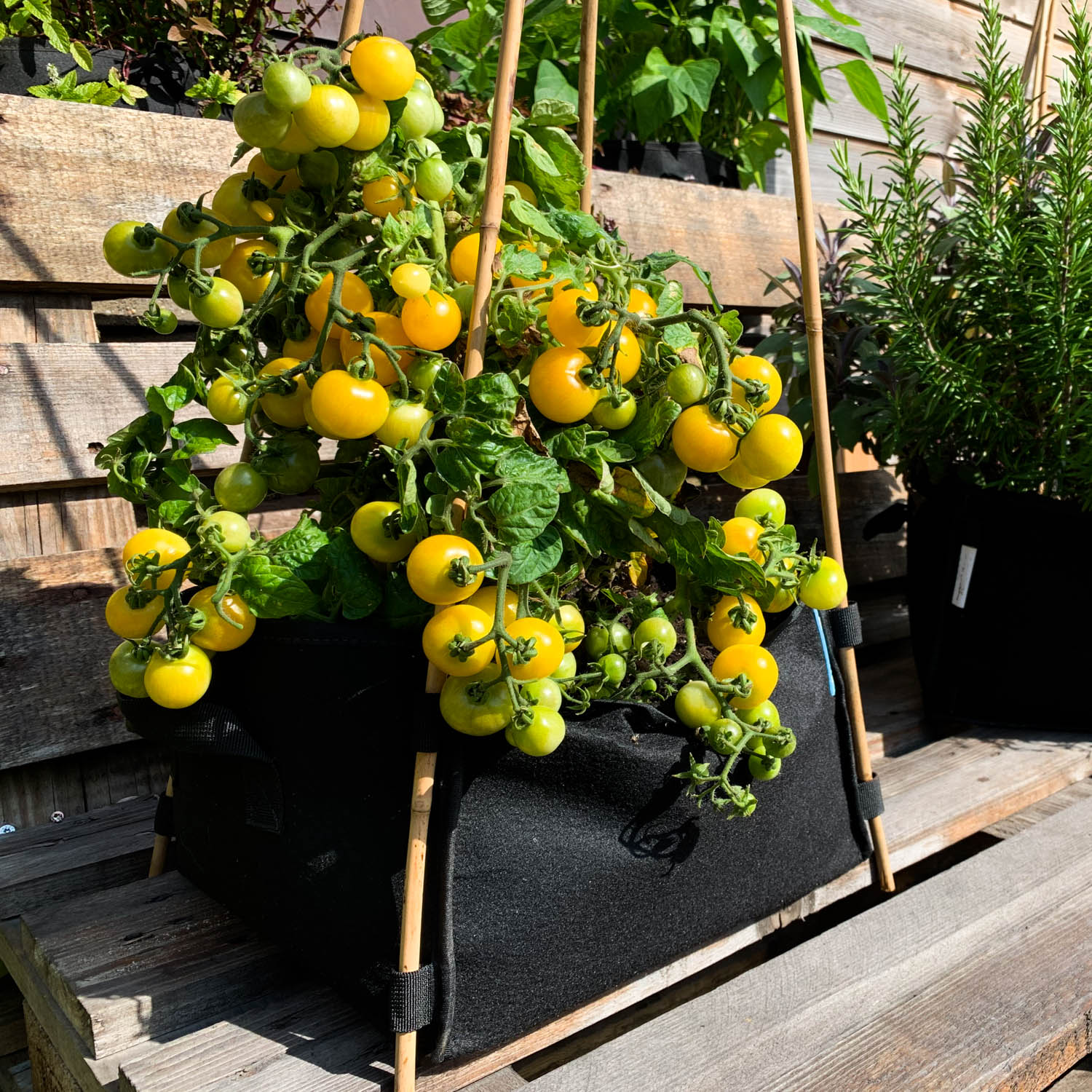
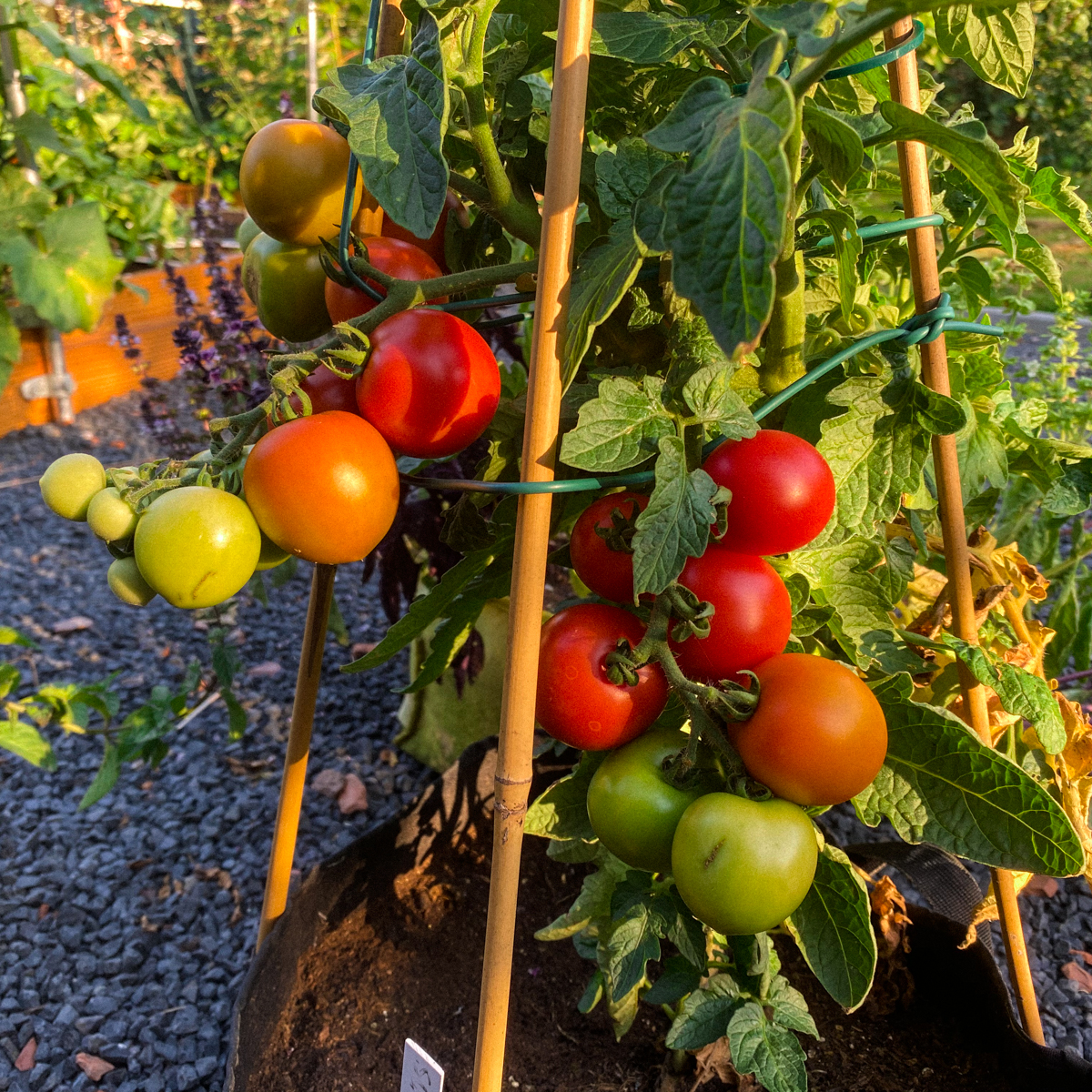
Our bush tomato can grow up to 80 cm tall, especially when you use our water reservoirs. I support it sooner because its tomatoes become quite large and heavy.
I make a wigwam from slightly thicker, taller bamboo canes and wrap string around them to support the trusses of tomatoes. This keeps the plant standing neatly:
I make a wigwam from slightly thicker, taller bamboo canes and wrap string around them to support the trusses of tomatoes. This keeps the plant standing neatly:
Side shoots or suckers
All tomatoes produce side shoots. They grow in the leaf axils and are also called suckers because they use a great deal of the plant's energy.
Remove them from tall tomatoes as early as possible. This directs the plant's energy into the main stem, helping it grow tall without spreading too far sideways.
Remove them from tall tomatoes as early as possible. This directs the plant's energy into the main stem, helping it grow tall without spreading too far sideways.
Use scissors if the shoots have already grown larger, but small suckers like this are easy to snap off:
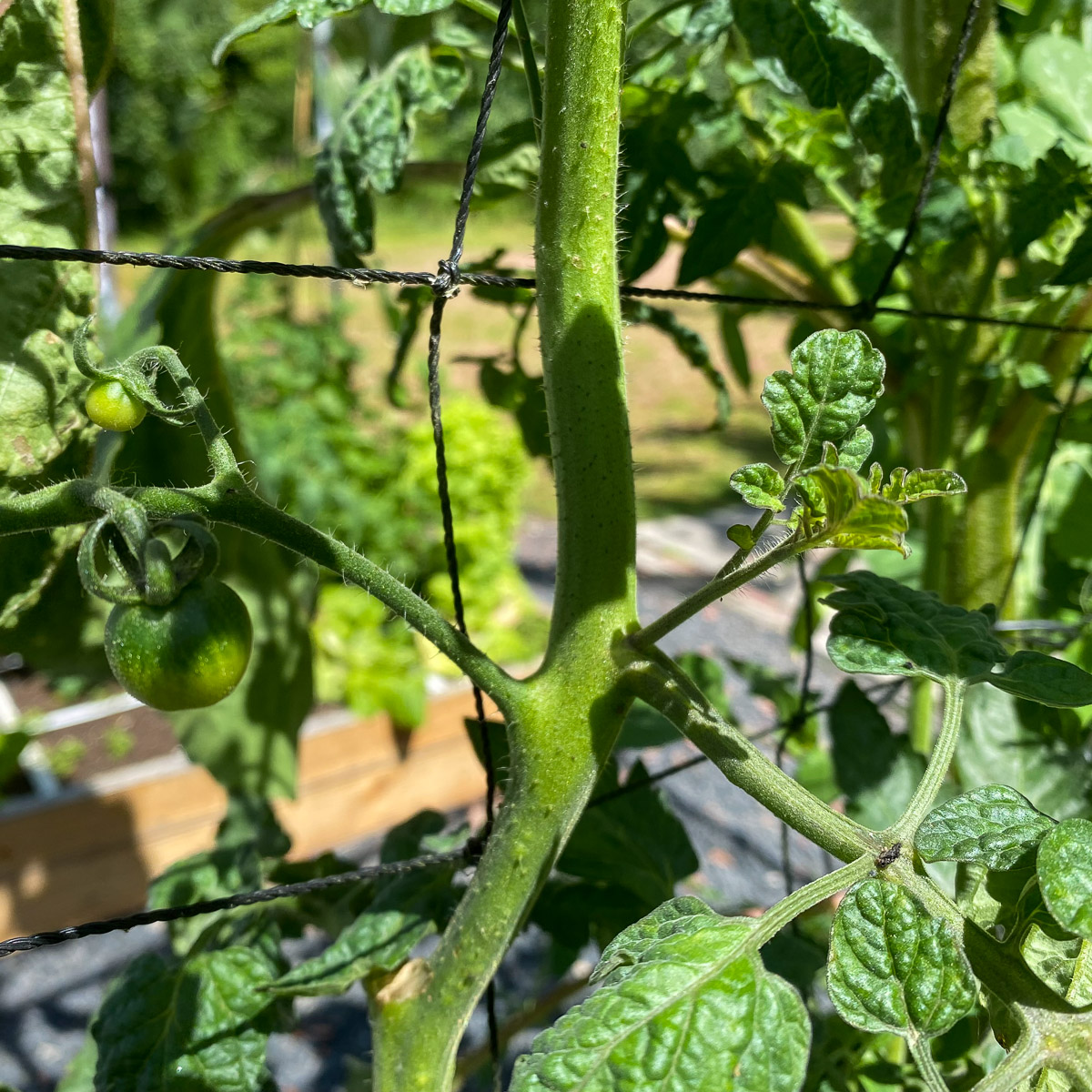
Check regularly for new suckers and remove them straight away, as they can quickly become enormous side branches. Also check places where you removed them before, as a new one sometimes grows in the same spot.
Read more about removing tomato suckers here.
You do not need to remove suckers from short bush tomatoes. They are meant to grow into bushy plants.
Read more about removing tomato suckers here.
You do not need to remove suckers from short bush tomatoes. They are meant to grow into bushy plants.
Remove unattractive leaves
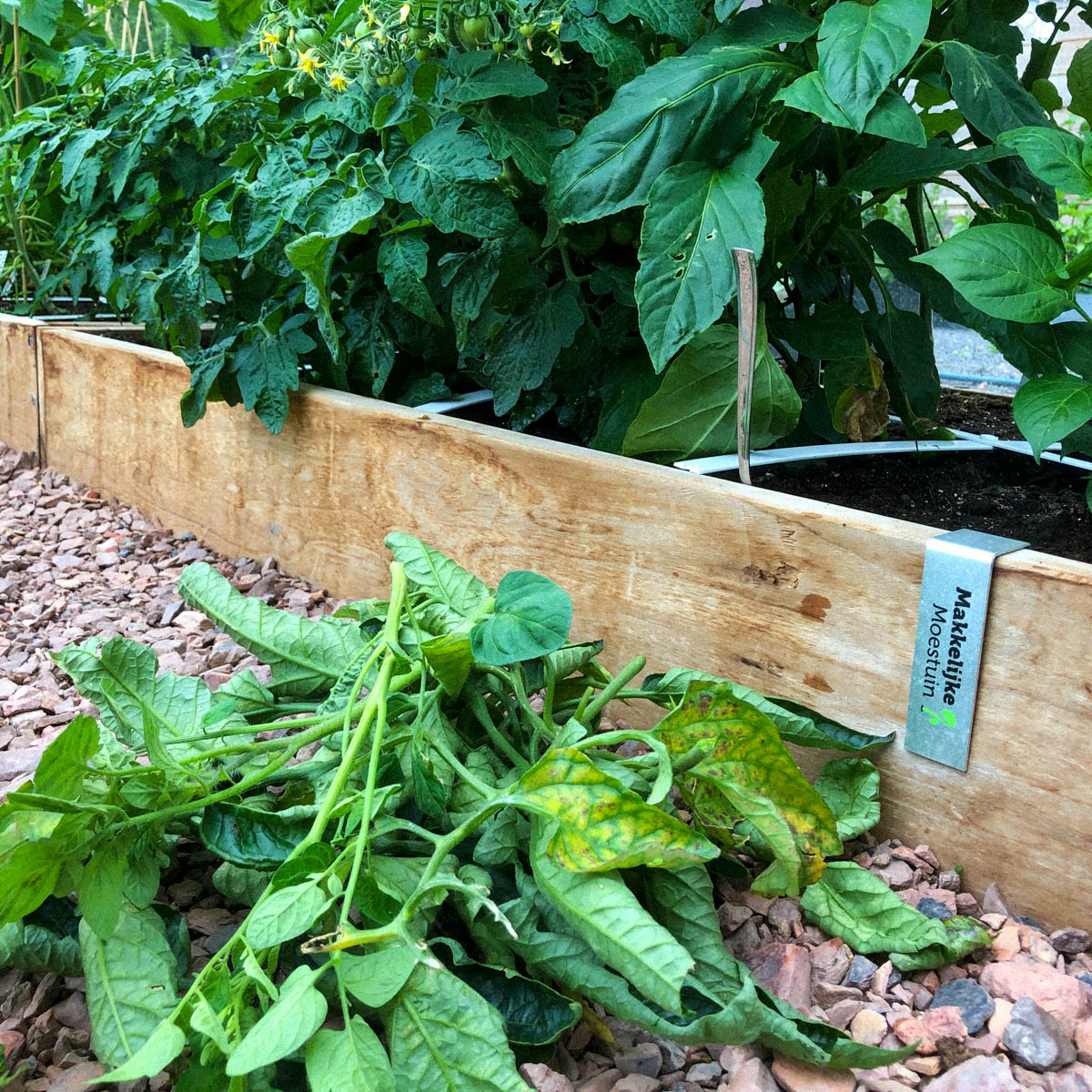
The lowest leaves on tomato plants will eventually begin to look unattractive. They may develop yellow patches, dry out or curl.
The plant no longer benefits from them, so simply cut them off. At professional tomato growers, you will often see stems that are completely bare near the bottom.
The plant no longer benefits from them, so simply cut them off. At professional tomato growers, you will often see stems that are completely bare near the bottom.
Watering
In dry weather, give the plants a little water every day. Regular, even watering is the key, because tomatoes that are almost ripe can split if they suddenly receive much more water.
If you use our water reservoirs, you do not need to do this because they keep the MM-mix damp.
If you use our water reservoirs, you do not need to do this because they keep the MM-mix damp.
When can you harvest tomatoes?
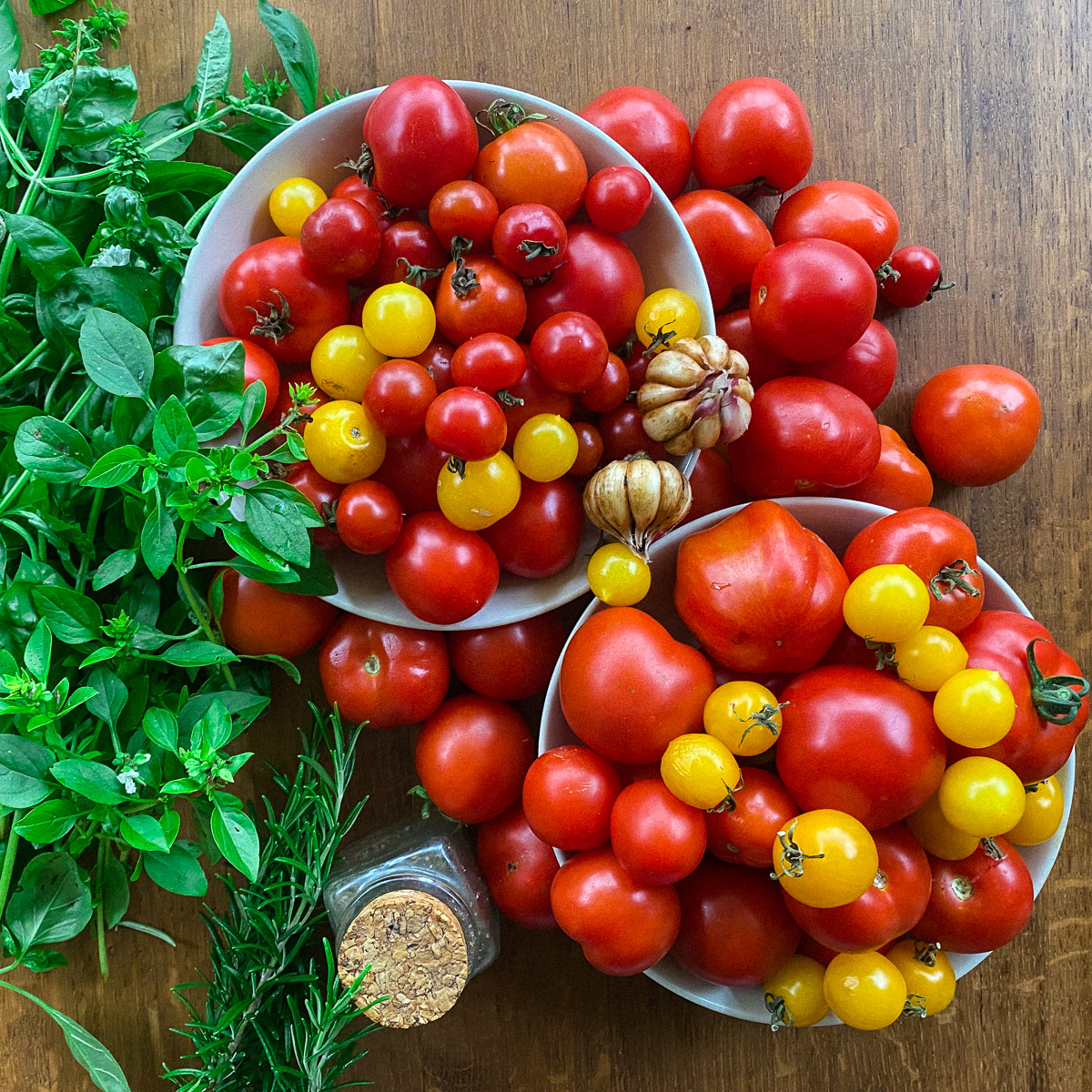
Usually not until August, unless you started very early. Harvest the Sweety tomatoes when they are a beautiful red, and do the same with the bush tomato.
Harvest the yellow bush tomatoes as soon as they are a good yellow colour but still firm. That is when they taste best.
Cucumbers
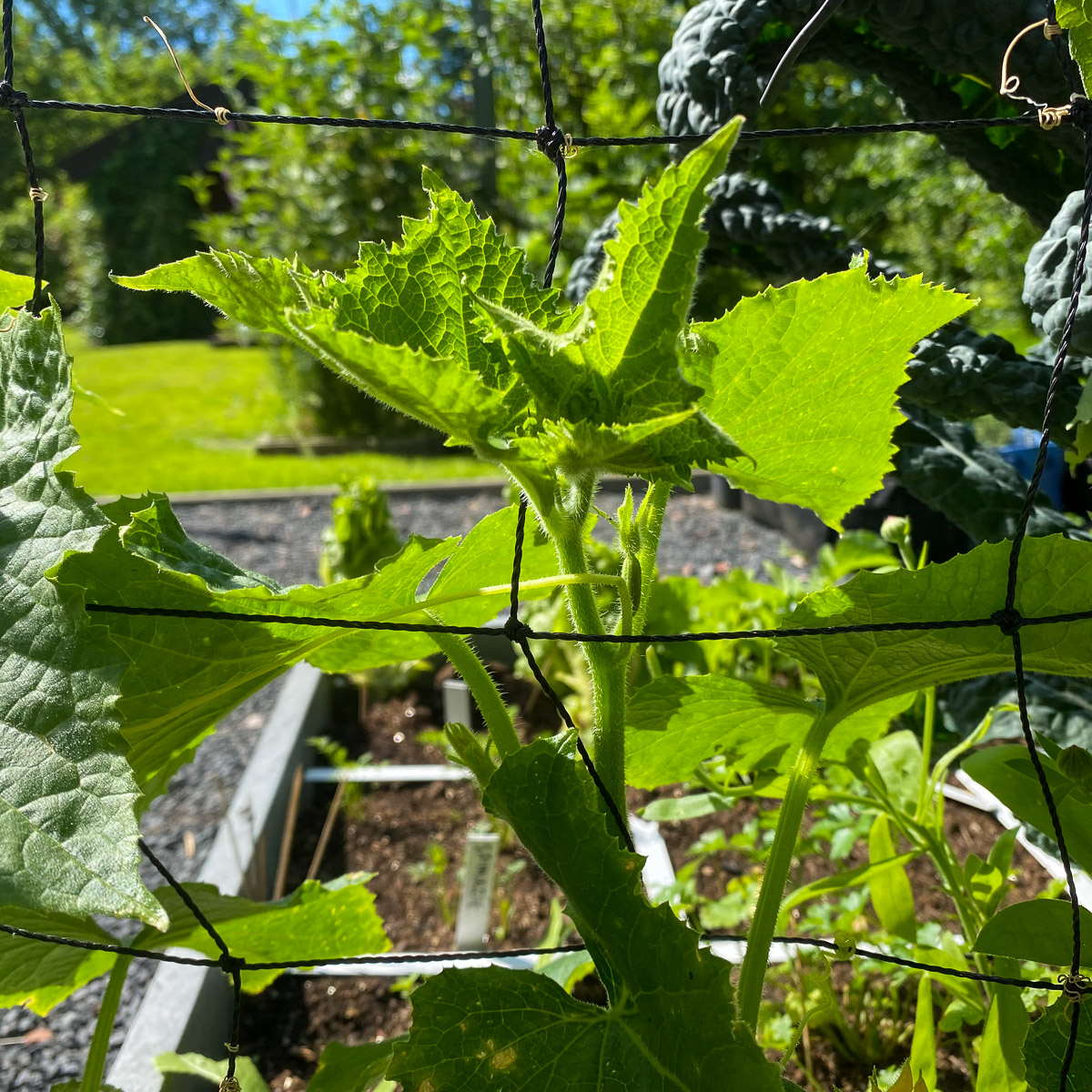
Cucumbers are trailing plants with long stems. We currently sell 2 varieties: the Iznik mini cucumber and the slightly smaller snack cucumber. The latter grows so quickly that you can sow it throughout July. Plant both beside a trellis so they can grow upwards.
They cling on with tendrils, but I still weave them through the net a little to give them extra support:
They cling on with tendrils, but I still weave them through the net a little to give them extra support:
Side shoots on cucumbers
Once cucumber plants begin growing well, they quickly become a tangle of stems, leaves on long stalks and side shoots bearing more flowers and tiny cucumbers.
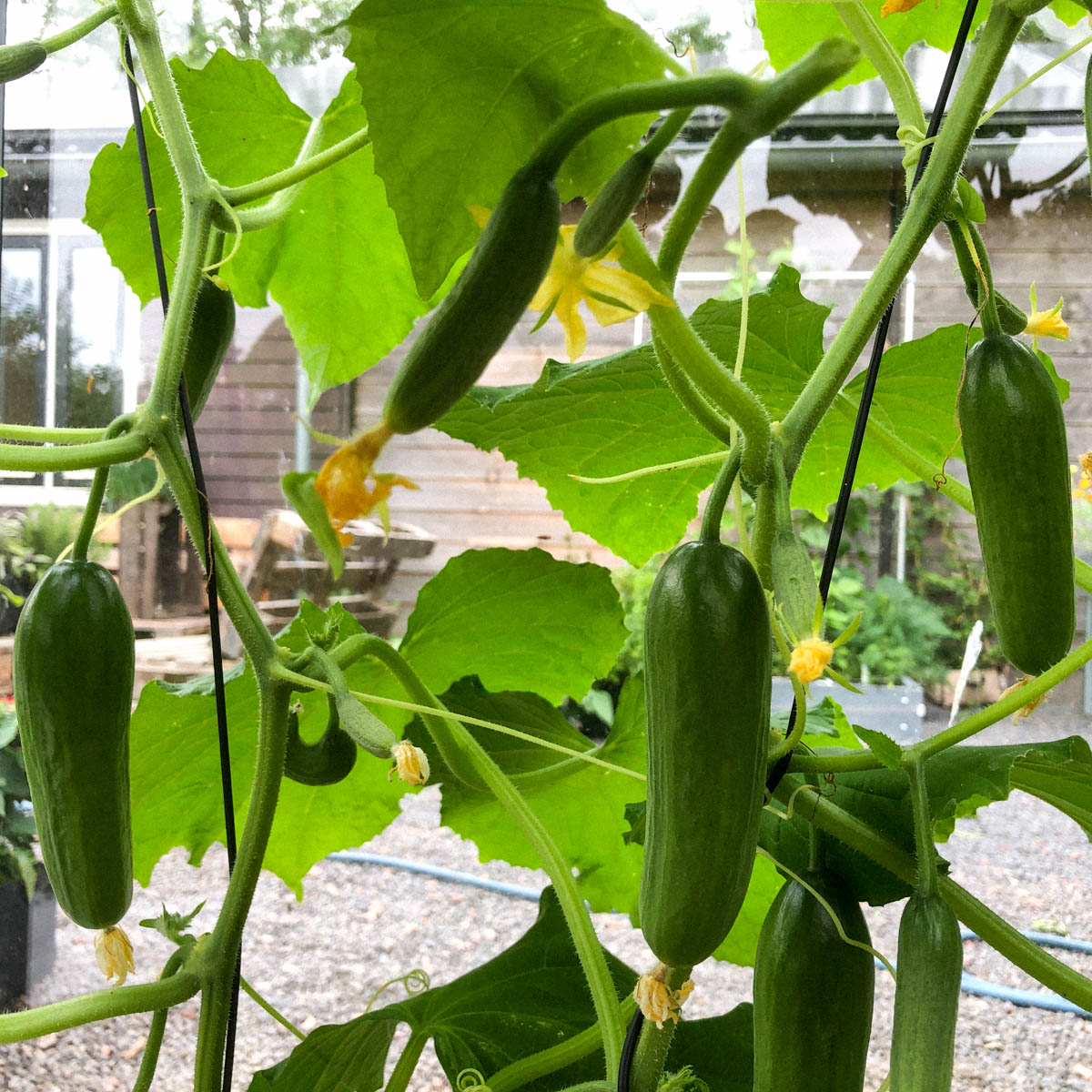
Removing cucumber side shoots is a little more complicated than removing them from tall tomatoes. With tomatoes, you simply remove every sucker immediately.
If you do that with cucumbers, you lose a large part of the harvest because cucumbers also grow on the side shoots. Wait until after the first flowers and fruits before cutting off a side shoot.
If you do that with cucumbers, you lose a large part of the harvest because cucumbers also grow on the side shoots. Wait until after the first flowers and fruits before cutting off a side shoot.
Let me explain with some photos:
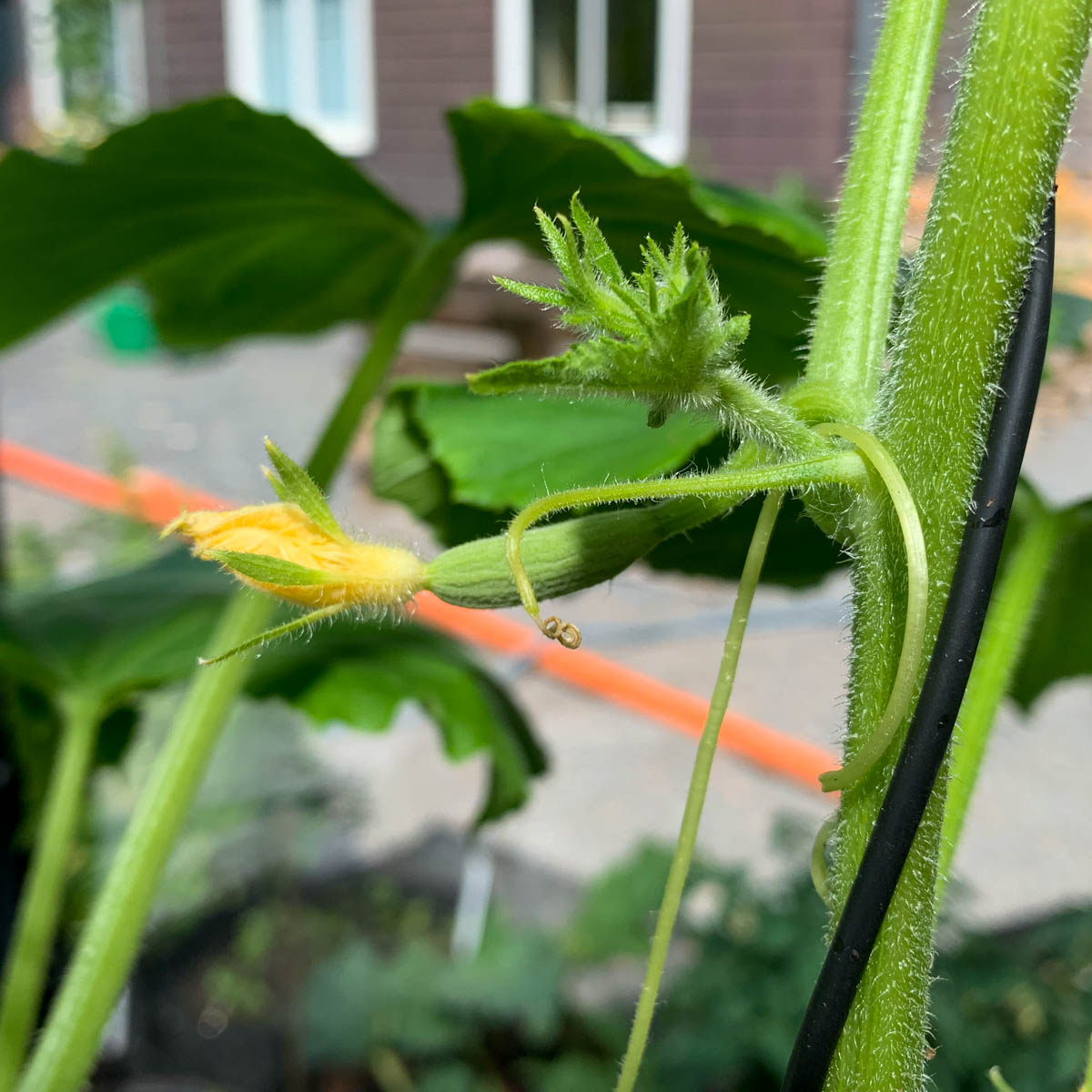
Above, you can see a side shoot beginning to grow from a leaf axil. A tiny fruit is already visible.
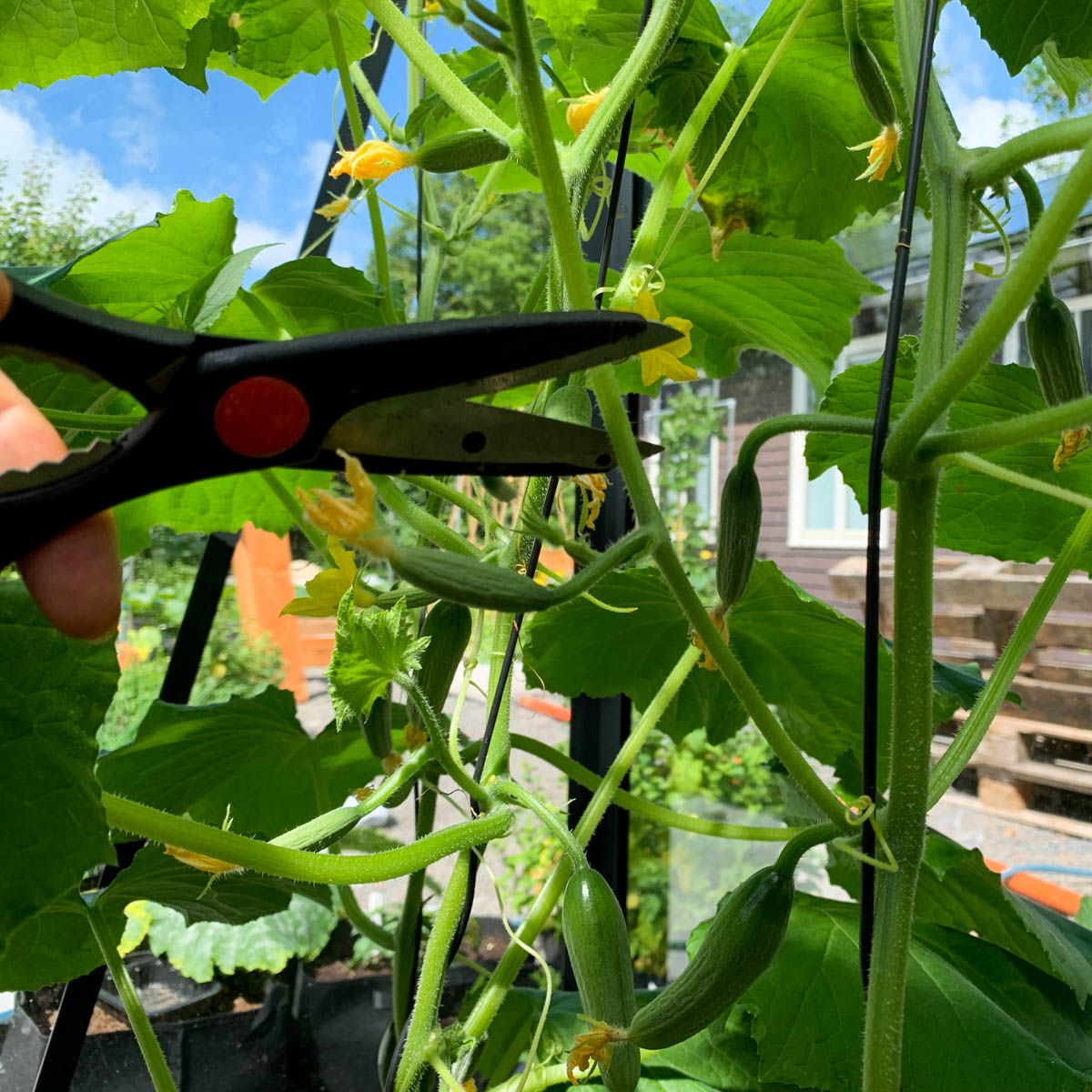
Such shoots grow very quickly. Once one is about 10 to 20 cm long, more flowers and fruit will appear. Cut the shoot off just beyond them:
When should you harvest cucumbers?
Quickly. The Iznik mini cucumbers taste best when they are about 12 to 15 cm long, while the snack cucumbers are best at 8 to 10 cm. If you let them grow larger, they are slightly less tasty and the plant produces fewer new fruits.
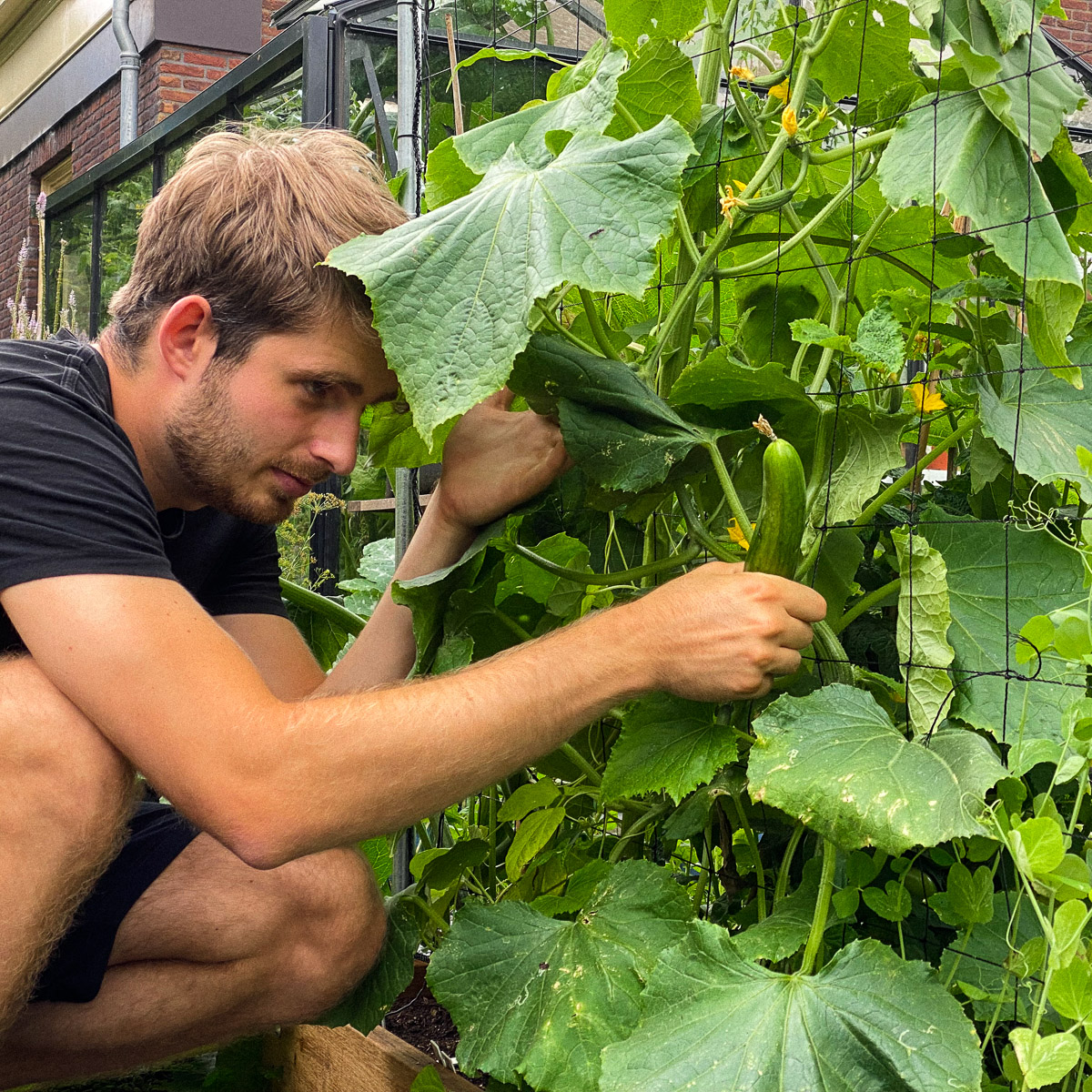
Ordinary cucumbers, such as the Marketmore variety we used to grow, become larger. Harvest those at about 20 cm.
Never leave cucumbers on the plant for too long. This slows the plant's growth, and many varieties also become slightly bitter.
Courgettes
Our climbing courgette plants become very large. But because they develop a long stem, you can guide them upwards and fit one into a square beside the trellis.
At first, the plant looks like an ordinary courgette because it takes quite a while for the stem to lengthen. If you do not keep a close eye on it and the stem has already grown large, you may no longer be able to guide it upwards without snapping it.
At first, the plant looks like an ordinary courgette because it takes quite a while for the stem to lengthen. If you do not keep a close eye on it and the stem has already grown large, you may no longer be able to guide it upwards without snapping it.
Point the plant towards the trellis from the beginning, using a bamboo cane if needed, and tie it in as soon as you can.
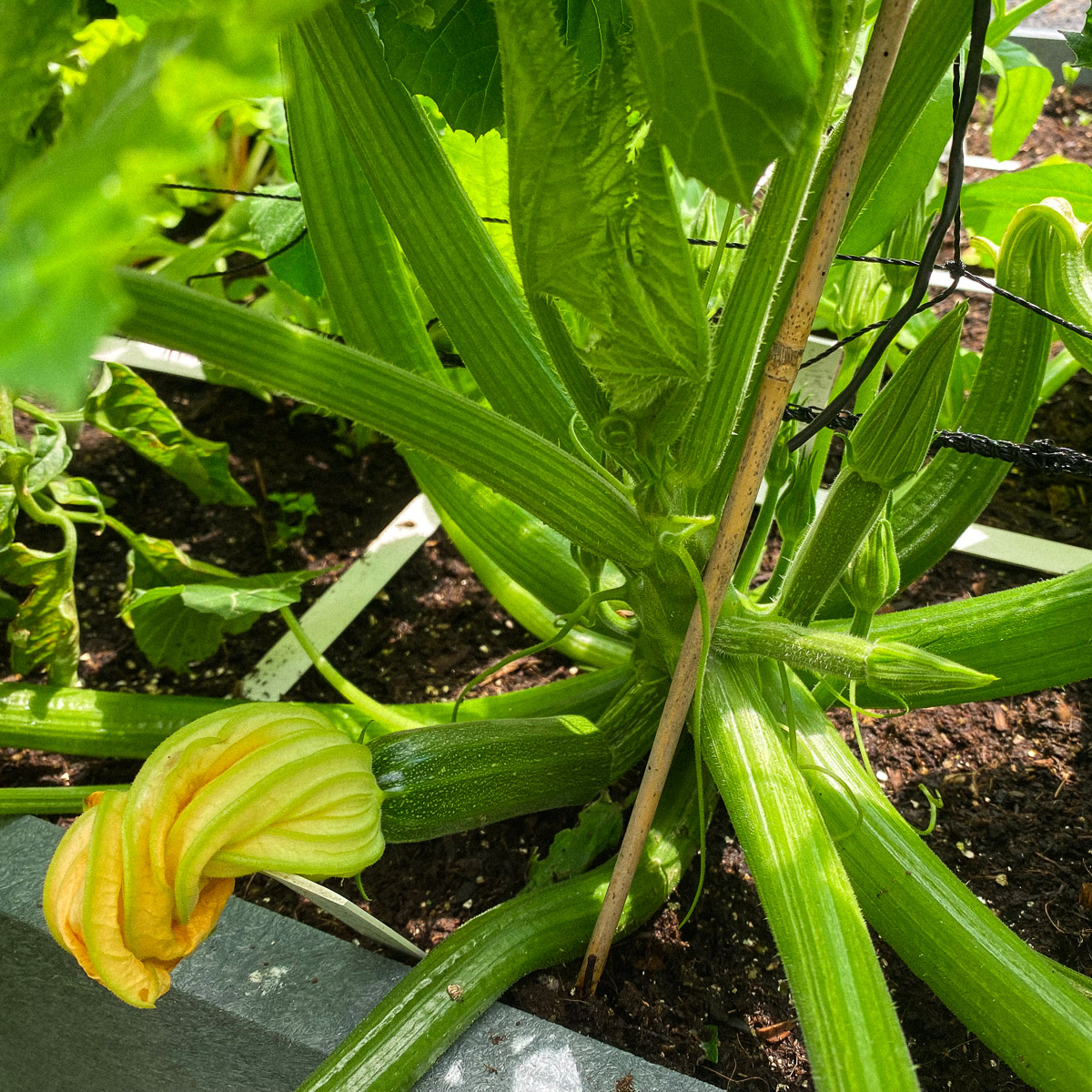
During July and the following months, the stem becomes longer and is much easier to tie in.
Remove large leaves that are in the way or shade other plants. Leave plenty of healthy leaves, as the plant uses them to produce much of the energy it needs.
When should you harvest courgettes?
Again, while they are still fairly small, at around 20 cm. Courgettes grow incredibly quickly, just like cucumbers. One moment you see a tiny one, and less than a week later it looks like this:
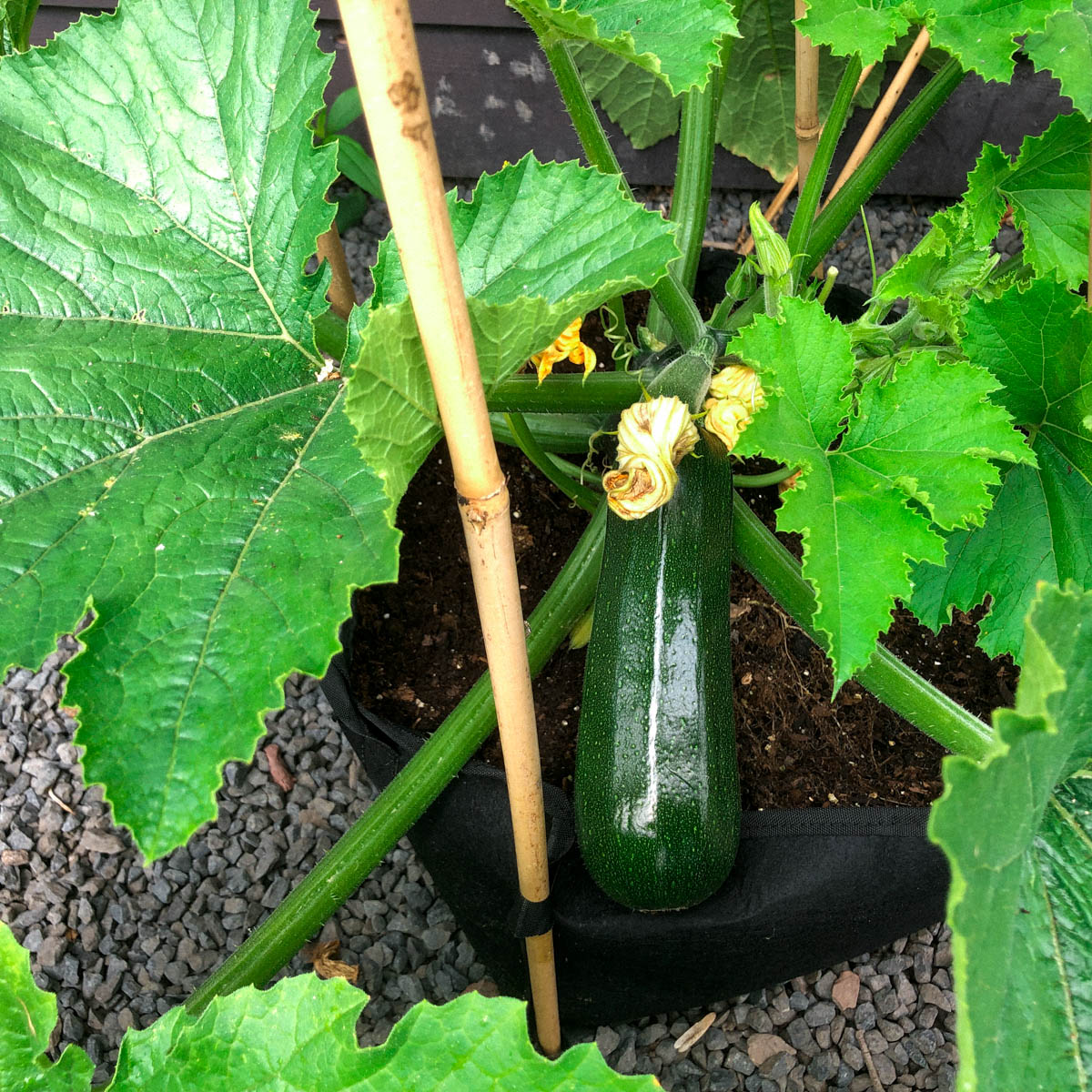
This variety does not usually develop side shoots, so you do not need to watch for them.
Read more about this climbing courgette here.
Read more about this climbing courgette here.
Pumpkins
Like cucumbers, pumpkins are trailing plants. Their vines become much thicker and longer, and their leaves are much larger.
Most pumpkins are too heavy to hang from a trellis. Our baby pumpkin is small enough to grow this way.
Most pumpkins are too heavy to hang from a trellis. Our baby pumpkin is small enough to grow this way.
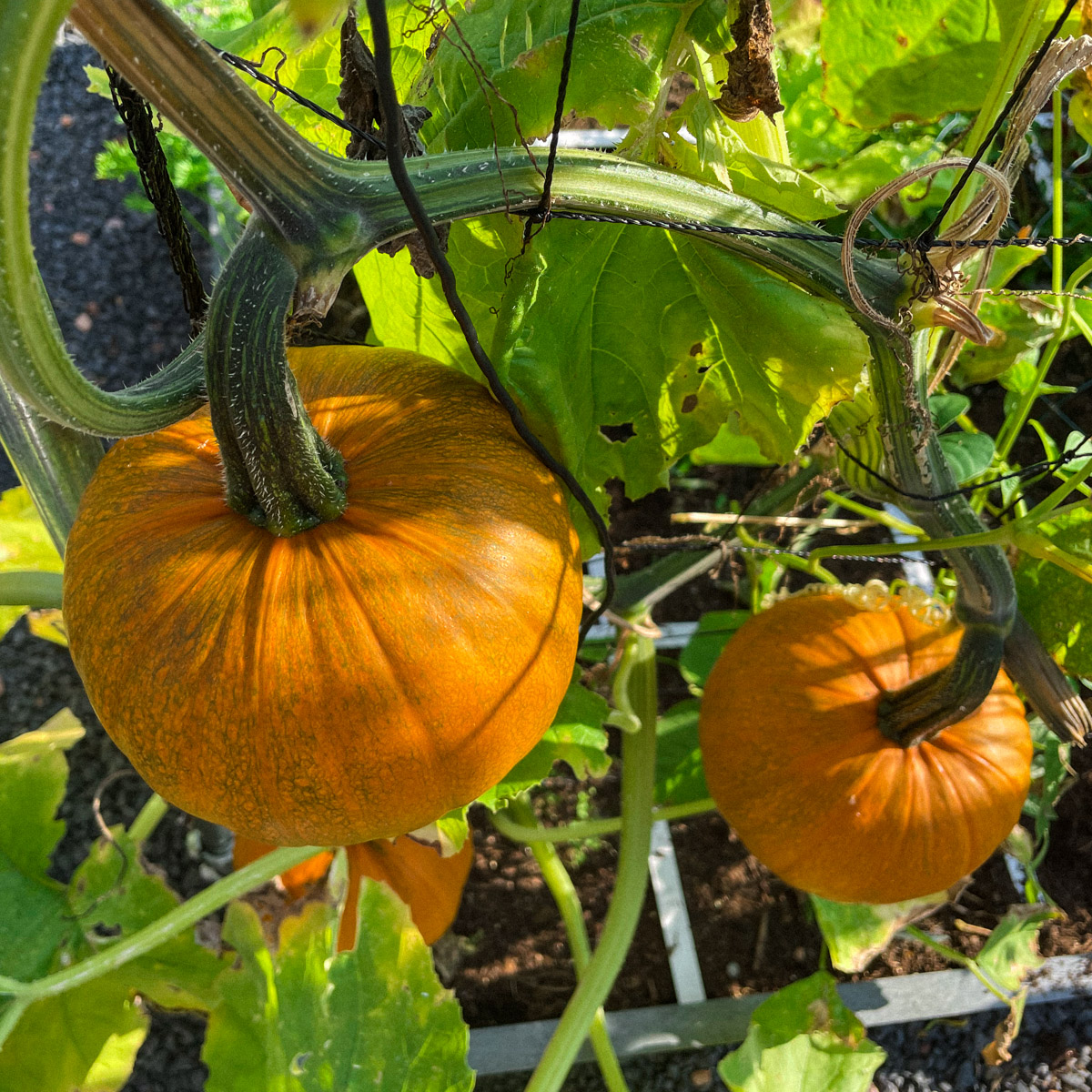
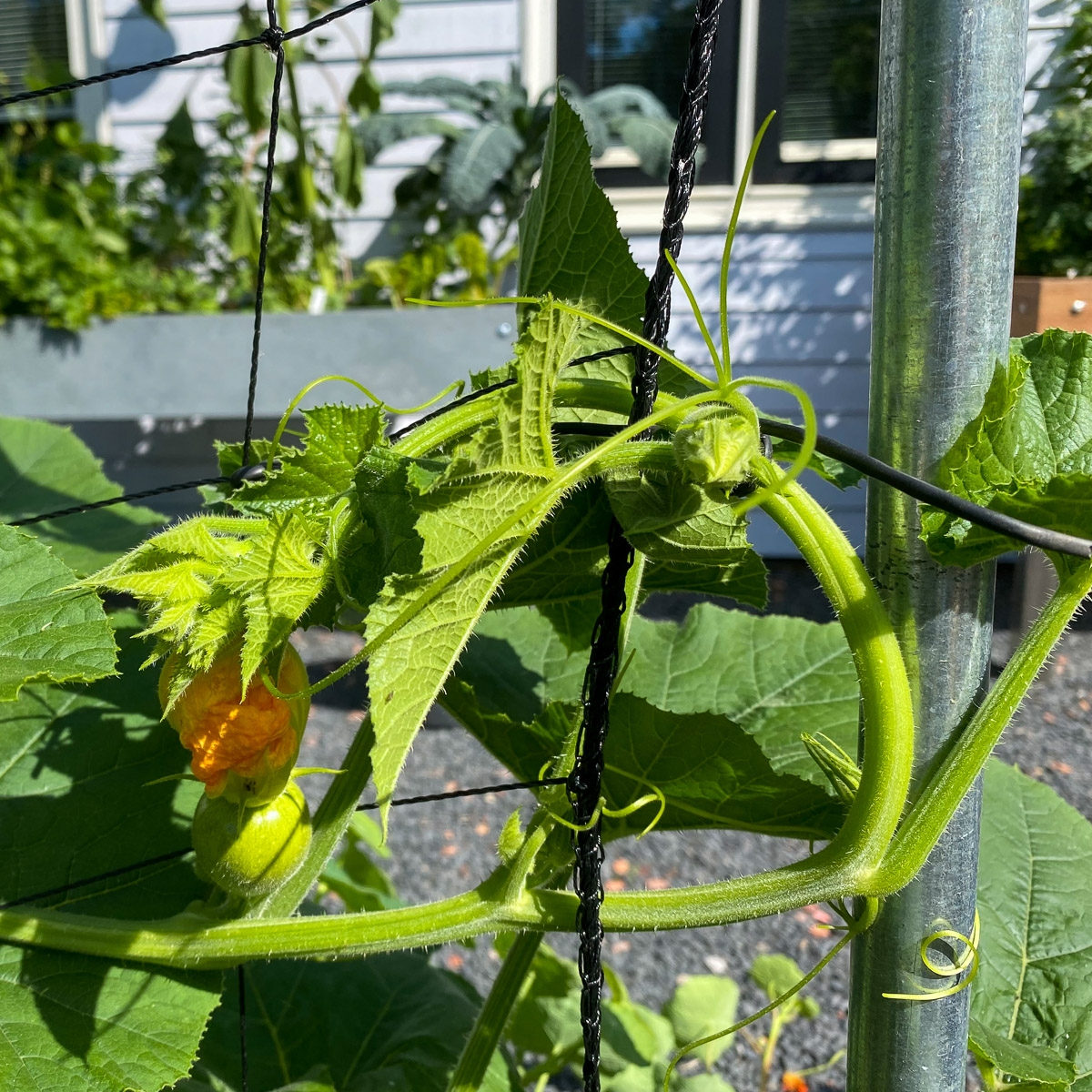
Because the main stem becomes so long, weave it through the trellis in horizontal loops. Do this regularly because it grows very quickly. Be gentle: the tip of the stem is flexible but also snaps easily.
Pumpkin side shoots
A pumpkin also produces many vigorous side shoots. Remove them as soon as possible.
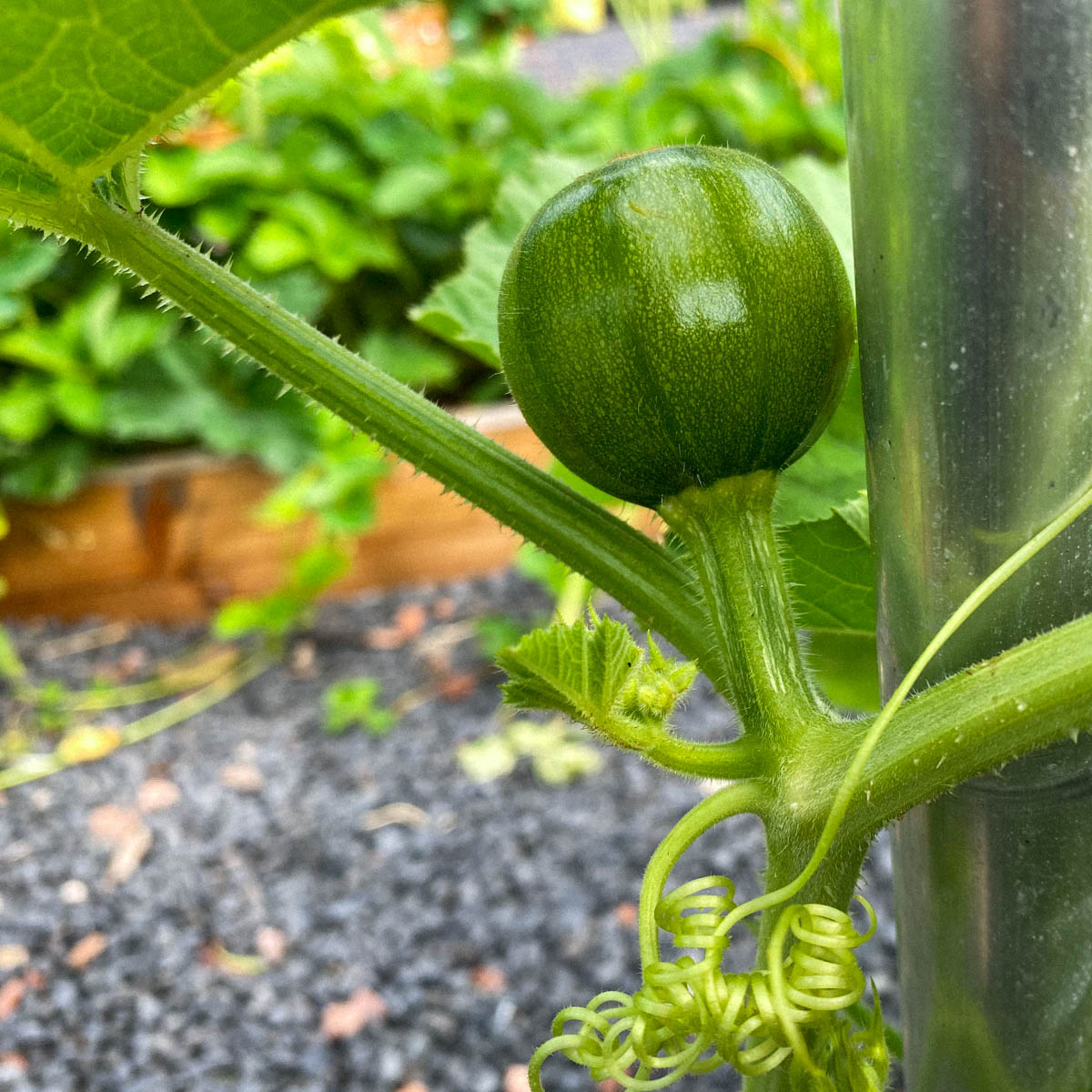
When should you harvest pumpkins?
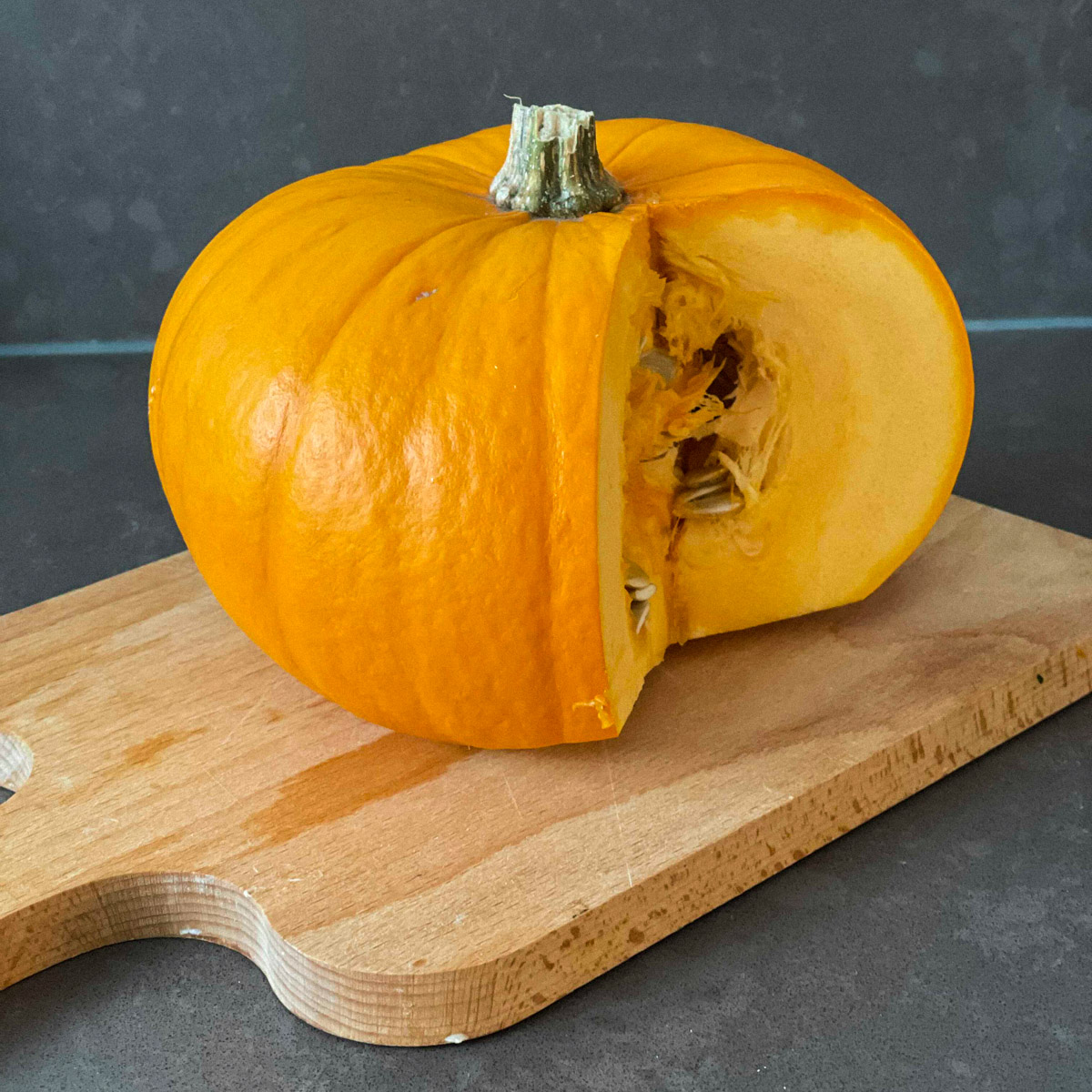
A pumpkin is ready to harvest when it is evenly orange and its stem has completely dried. This usually happens around September, or sometimes even October. By then, the rest of the plant may already look very unattractive.
If a pumpkin falls off earlier, place it on a sunny windowsill and let it continue ripening.
If a pumpkin falls off earlier, place it on a sunny windowsill and let it continue ripening.
A little each day is all it takes
Does caring for summer vegetables take a lot of time? Not at all. You can do these jobs during your daily inspection or whenever you go into the garden to harvest something.
That is what it is all for, after all. A little extra attention now gives you a longer and larger harvest later.
Enjoy!