
Blossom-end rot in tomatoes
Do you see a brown or black patch on the bottom of a tomato? It is probably blossom-end rot, also known as BER.
It may look alarming, but it does not harm the rest of the plant and it is not contagious.
It may look alarming, but it does not harm the rest of the plant and it is not contagious.
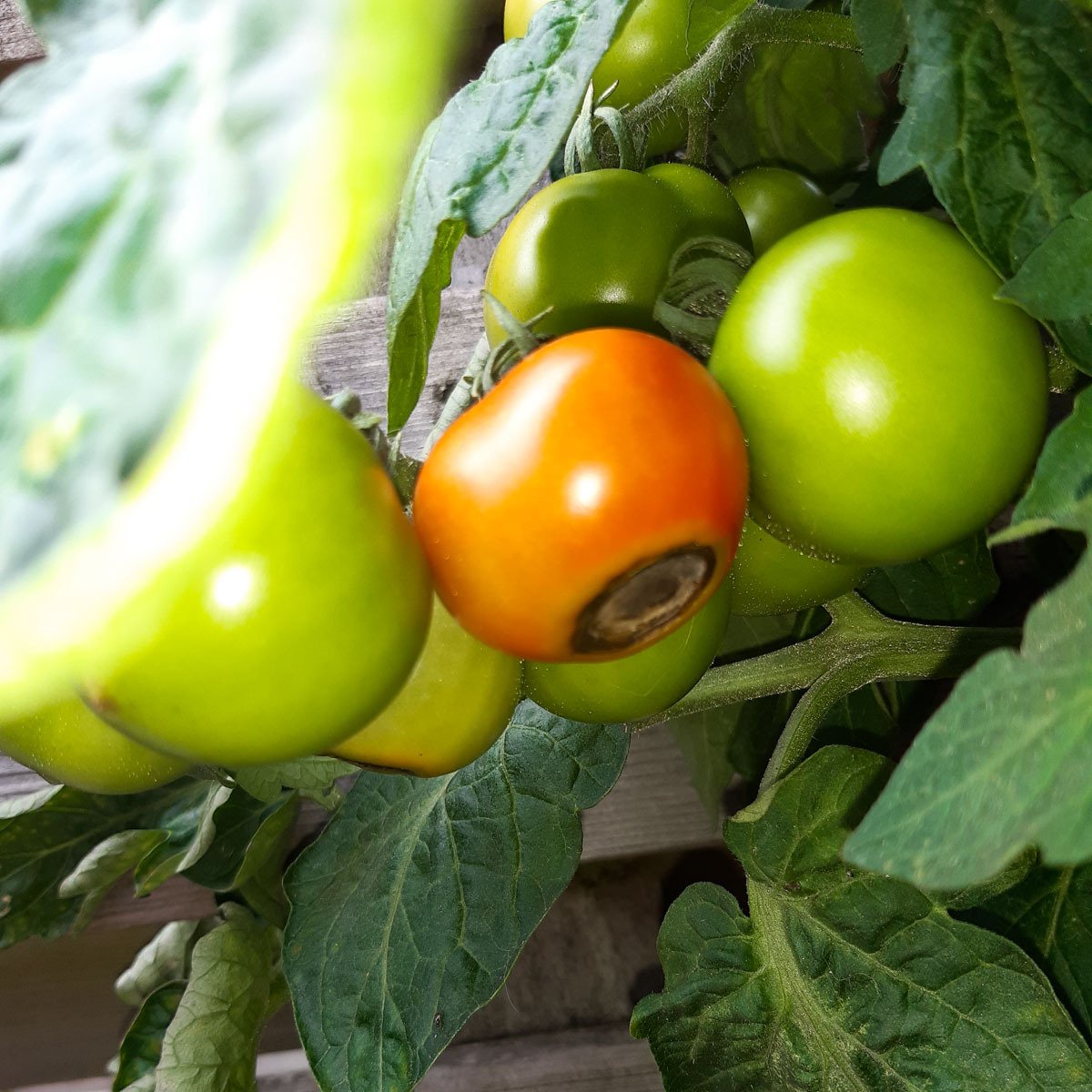
What causes it?
Blossom-end rot is usually caused by irregular watering.
If the soil becomes very dry and then receives a lot of water at once, the plant may temporarily be unable to transport enough moisture and calcium to the fruit.
Young tomatoes are especially susceptible.
If the soil becomes very dry and then receives a lot of water at once, the plant may temporarily be unable to transport enough moisture and calcium to the fruit.
Young tomatoes are especially susceptible.
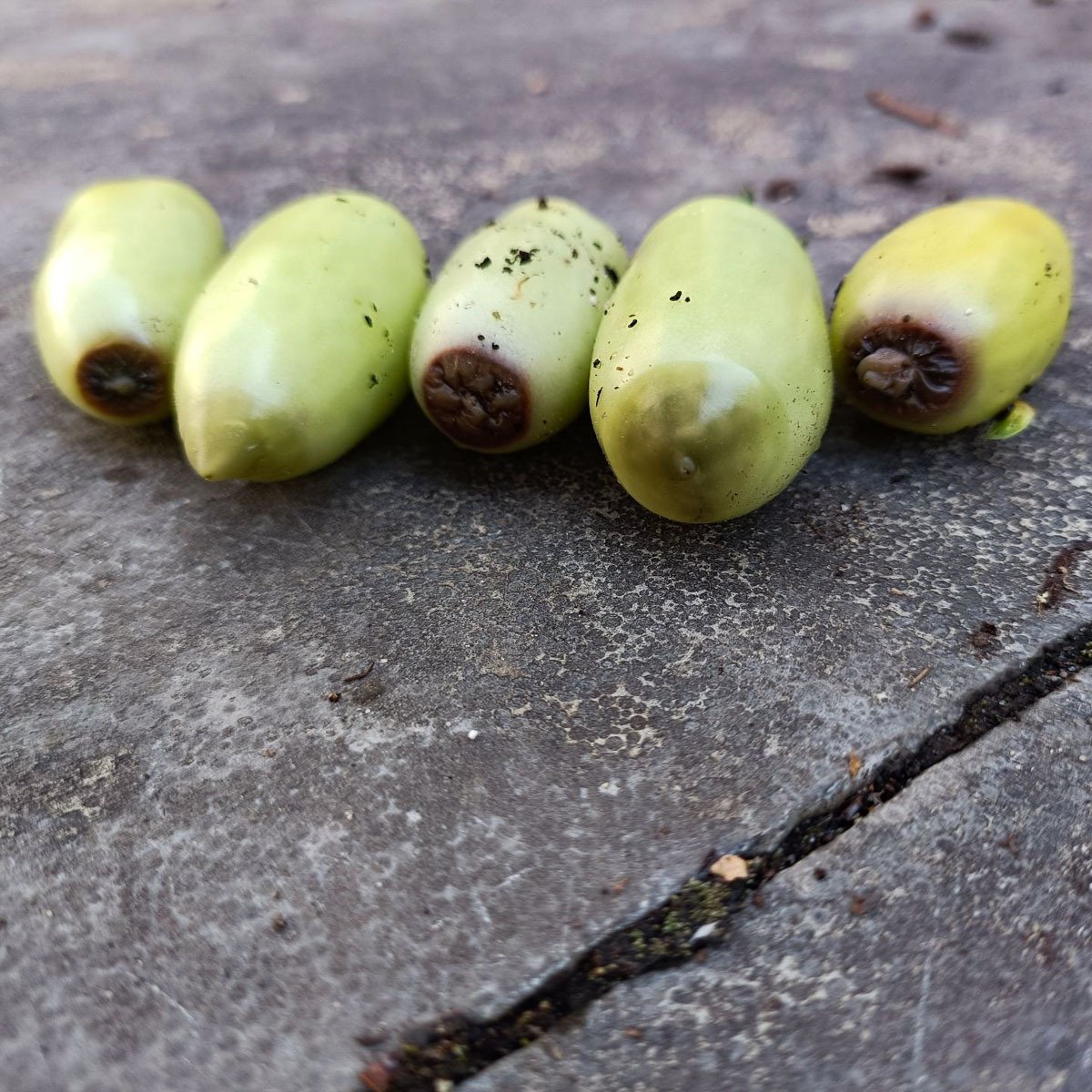
Is it harmful?
No. It is not contagious and it will not kill the plant.
The affected tomatoes will not recover, so remove them. They are no use to you and will eventually start to rot.
New tomatoes can still develop normally.
The affected tomatoes will not recover, so remove them. They are no use to you and will eventually start to rot.
New tomatoes can still develop normally.
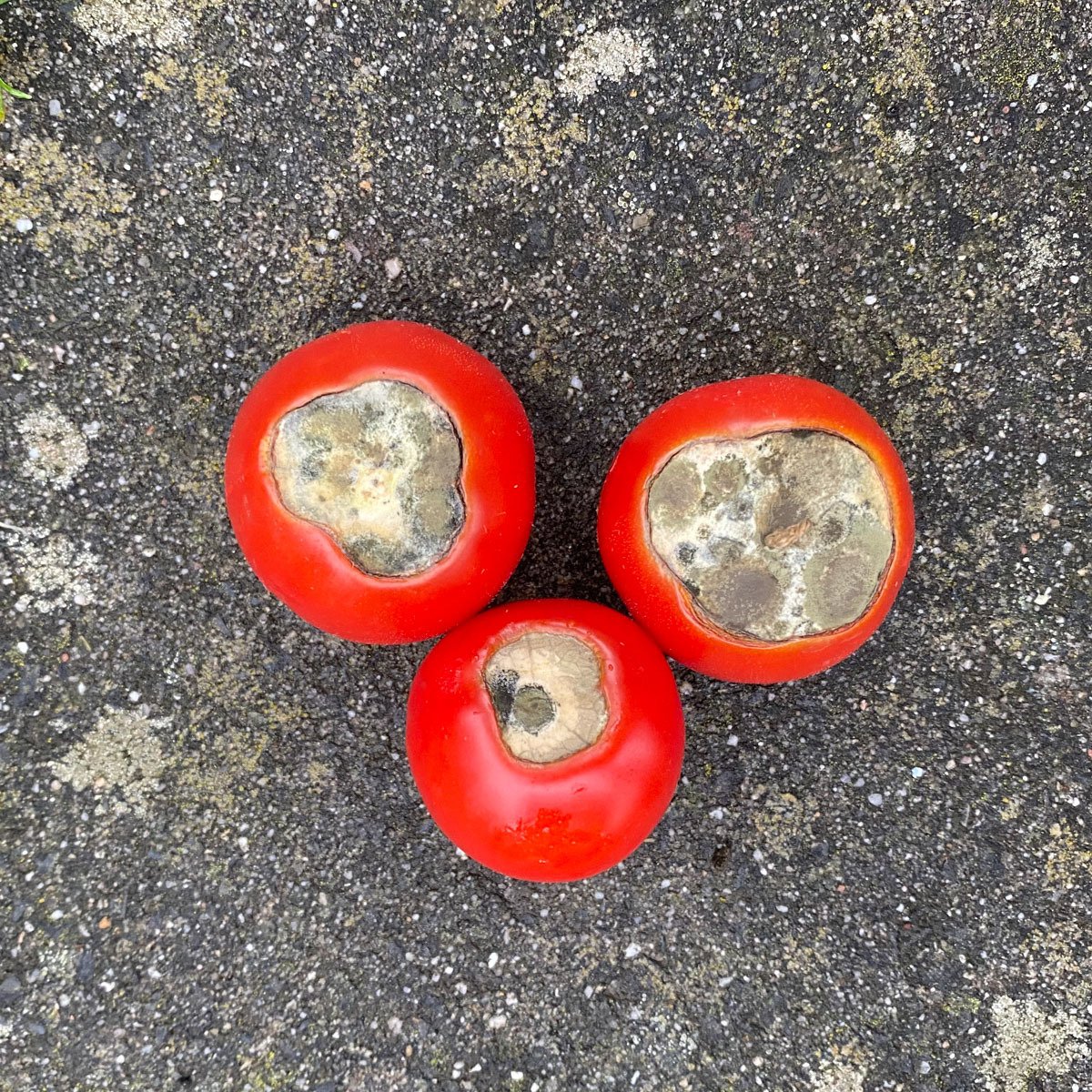
How can you prevent it?
Simple: do not let your garden soil dry out. Keep it slightly moist and water regularly during hot, dry weather.
Give your plants enough nutrients, but not too much. Excess nitrogen encourages lots of leaf growth at the expense of the tomatoes.
If you use our water reservoirs with Makkelijke Moestuin Soil, you probably will not have this problem at all. The soil then stays evenly moist.
Once again, prevention is better than cure 🙂
Good luck!
Give your plants enough nutrients, but not too much. Excess nitrogen encourages lots of leaf growth at the expense of the tomatoes.
If you use our water reservoirs with Makkelijke Moestuin Soil, you probably will not have this problem at all. The soil then stays evenly moist.
Once again, prevention is better than cure 🙂
Good luck!