
Help! Slugs and snails in your Makkelijke Moestuin
How do you keep slugs and snails out of your Makkelijke Moestuin?
Tips for protecting the vegetables you sowed with such care, even during a slug plague.
Tips for protecting the vegetables you sowed with such care, even during a slug plague.
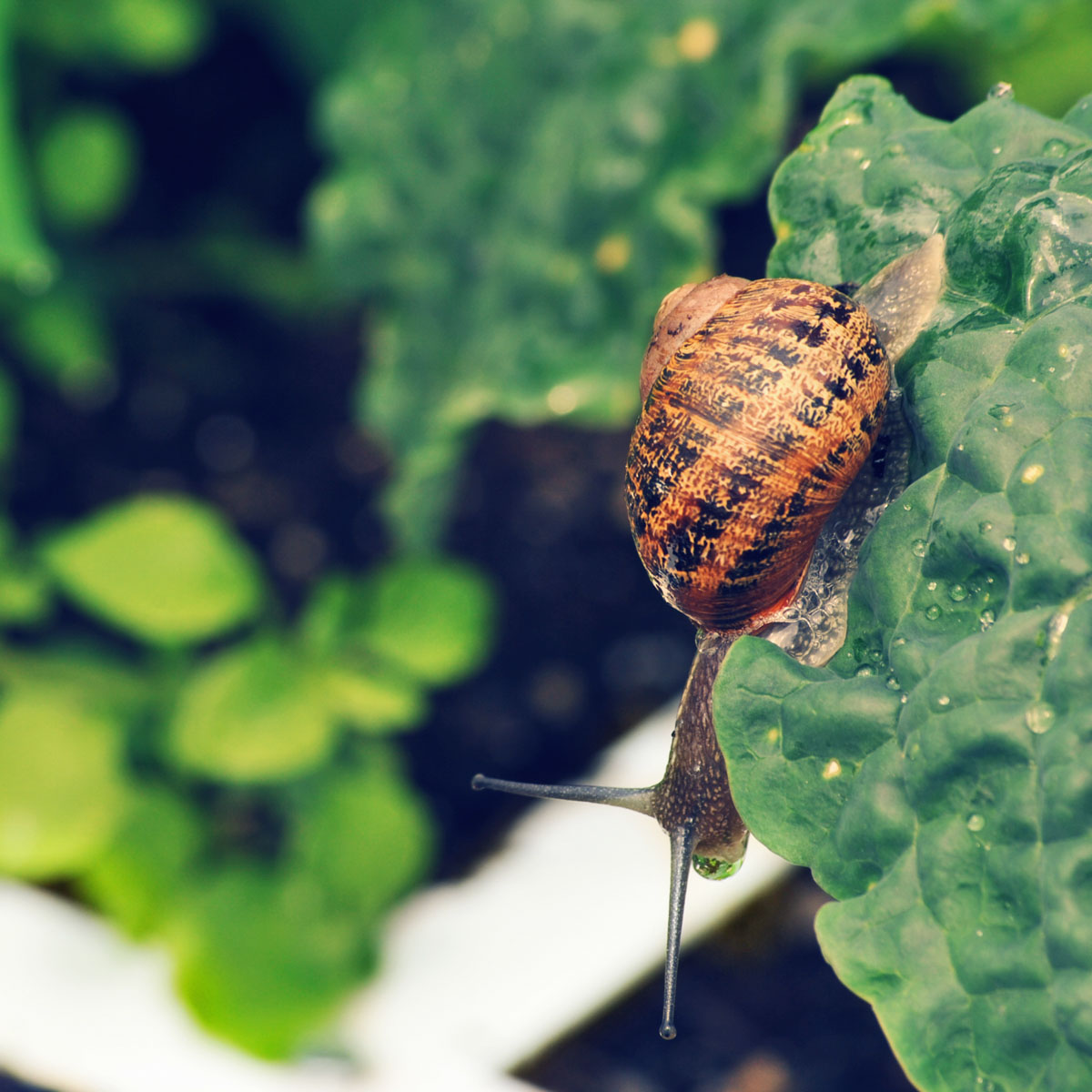
More and more slugs and snails
Every year, there are more slugs and snails.
That's because of:
That's because of:
- Mild winters. More and more slugs and snails survive winter, so they can start reproducing rapidly again early in spring: up to 500 eggs per year.
- Lots of rain. Slugs and snails love moisture, and in recent years spring and summer have been getting wetter too.
- Few natural enemies. Many gardens have fewer hedgehogs, toads, birds, and ground beetles. So slugs and snails get free rein.
- New species. Especially the Spanish slug is becoming more common. This brown to bright-orange slug is large, greedy, and hard to stop.
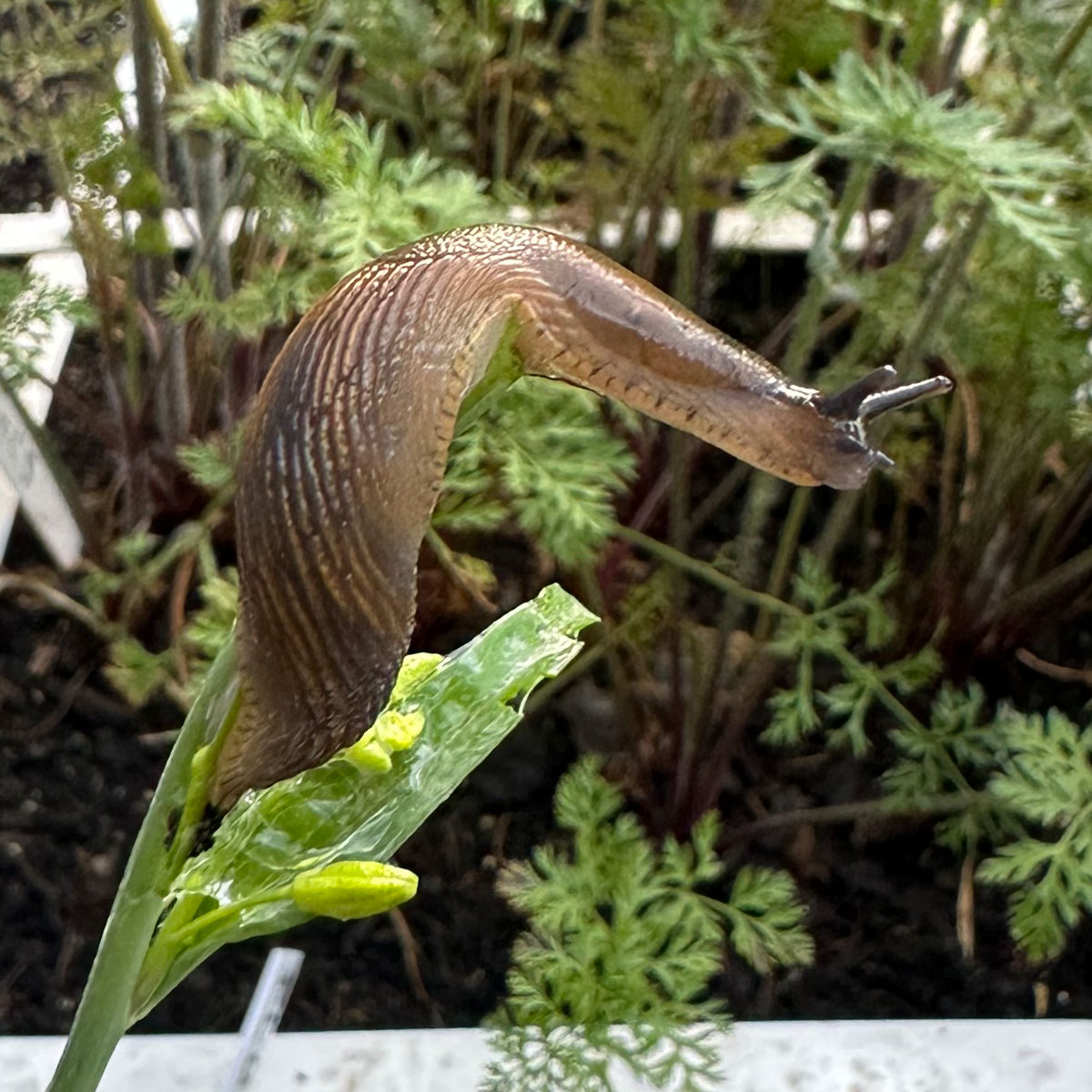
Not much fun, is it?
Luckily, you can protect the vegetables in your MM raised beds from slugs and snails.
How do you protect your plants from slugs?
That mainly depends on where your raised beds are and how many slugs and snails live there.
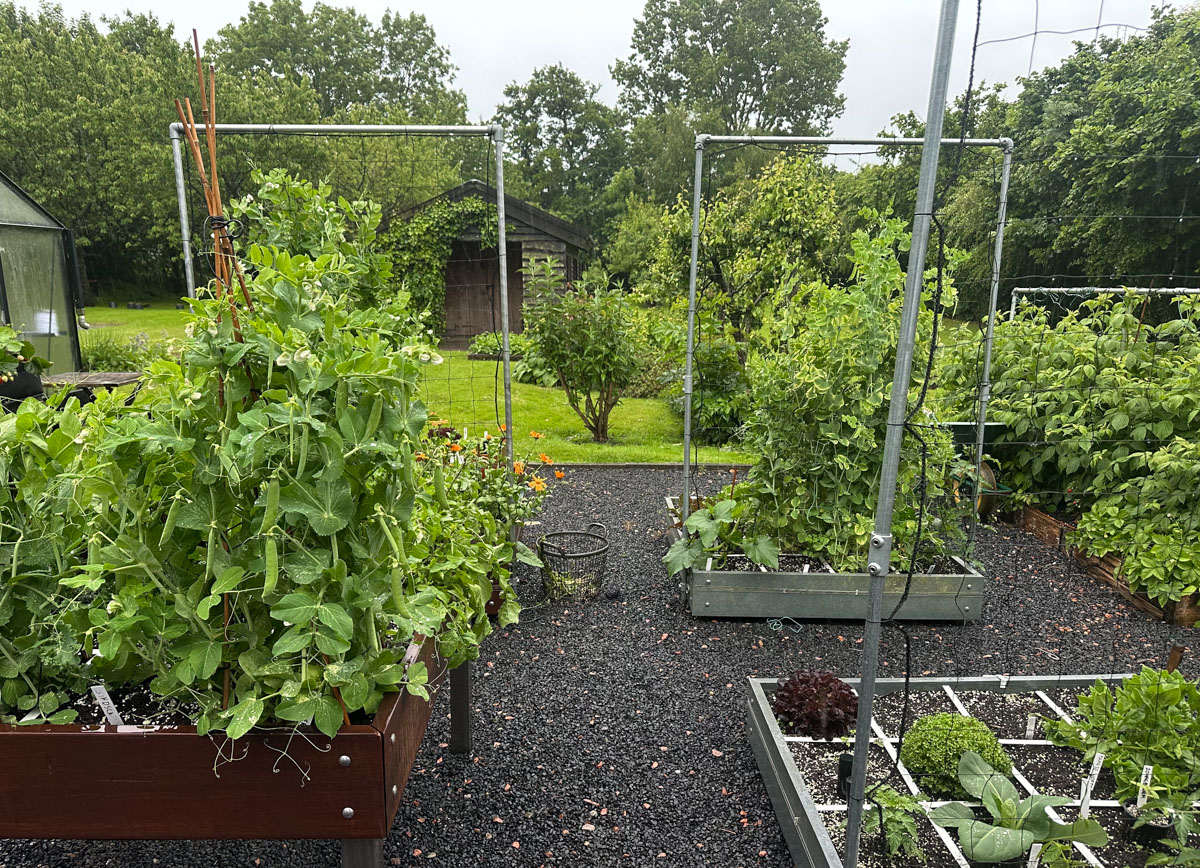
About 20% of Makkelijke Moestuin gardeners live in a true slug paradise. That quickly means hundreds of slugs and snails, or more.
In an area like that, you can use every tip and trick, but nothing will ever be truly enough. We know all about that, because our raised beds are there too:
About 20% of Makkelijke Moestuin gardeners live in a true slug paradise. That quickly means hundreds of slugs and snails, or more.
In an area like that, you can use every tip and trick, but nothing will ever be truly enough. We know all about that, because our raised beds are there too:
Which approach suits you?
Not sure what to do first? Choose the situation that sounds most like yours:
- Only a few slugs and snails now and then? Start by making your raised bed and the paths around it less appealing: here's how to keep slugs and snails at a distance.
- Mainly protecting young plants? Then garlic spray can help as an extra layer of protection.
- Lots of slugs and snails, or feeding damage every year? Then the MM electric slug fence is usually the most relaxed solution.
- Already have the electric fence? Then you're probably looking for the manual: /en/slugs.
Electric fence
So 90% of the time we spent on maintenance went into keeping slugs and snails out of our raised beds and catching them.
After years of frustration and experimenting, we developed our own product: the MM electric slug fence. A slug or snail gets a small shock and goes no further. (So it does not die from it.)
And it does help:
After years of frustration and experimenting, we developed our own product: the MM electric slug fence. A slug or snail gets a small shock and goes no further. (So it does not die from it.)
And it does help:
Whether you're dealing with large or small slugs and snails, slugs or shelled snails: this electric fence stops (almost) all of them.
You can find it in the shop:
You can find it in the shop:
- MM electric slug fence for 4-square raised beds (60 x 60 cm)
- MM electric slug fence for 8-square raised beds (60 x 120 cm)
- MM electric slug fence for 16-square raised beds (120 x 120 cm)
(Note: this electric fence is specially made for the current MM-Hero or MM-Bamboo raised beds, not yet for other raised beds.)
More about this electric fence
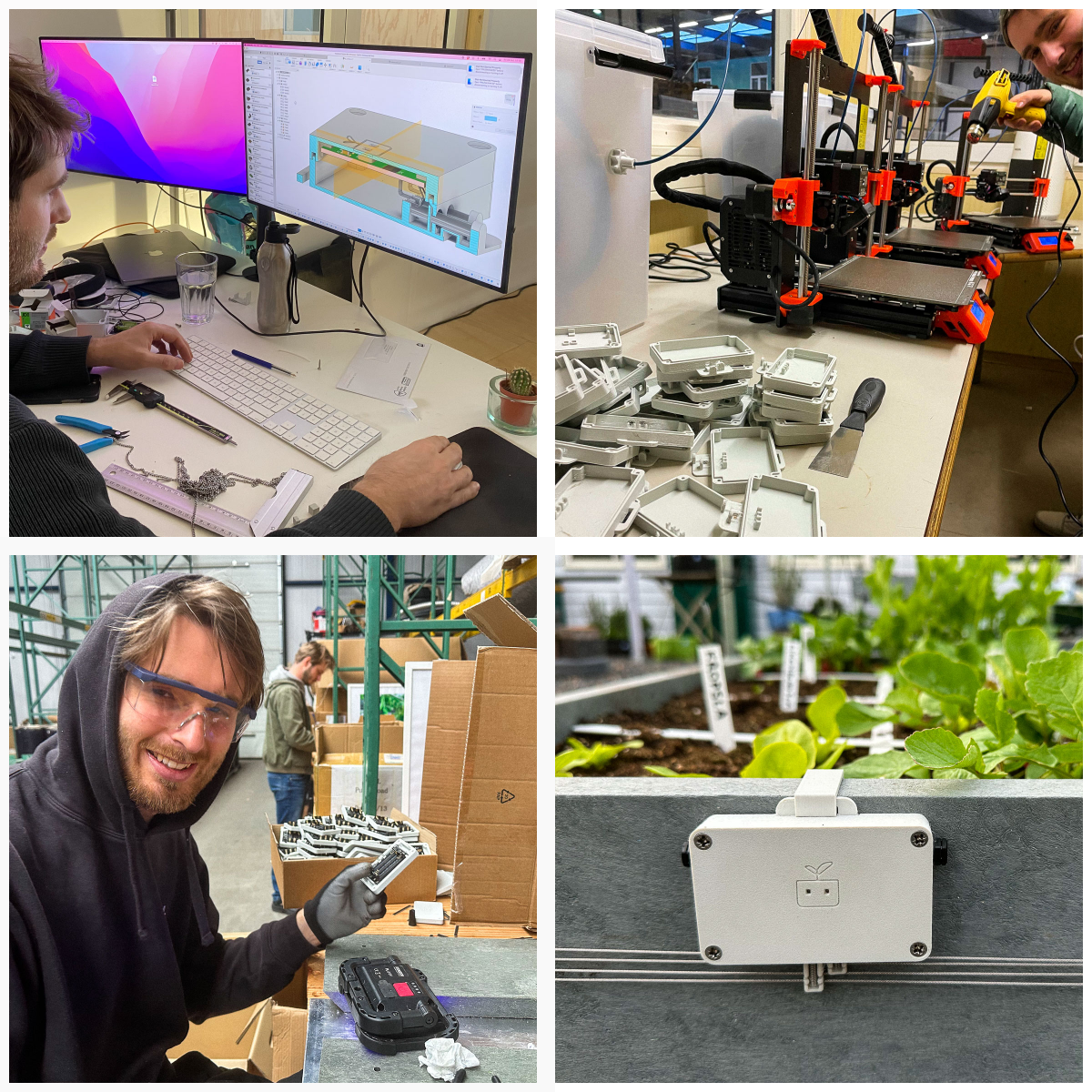
We developed and made this electric fence ourselves. We're super proud of it, because it was harder than we expected. Coming up with and making the first device is one thing, but getting it to work in all kinds of weather - and with hordes of slugs and snails - is the real job.
But we managed it :-)
But we managed it :-)
The other 80%
Fortunately, for 80% of people gardening with us, slugs are not such a big deal.
That means you have a few snails here and there. You can easily catch them or lure them away from your vegetables.
That means you have a few snails here and there. You can easily catch them or lure them away from your vegetables.
Make your garden unappealing to slugs and snails
1. Mix your plants together
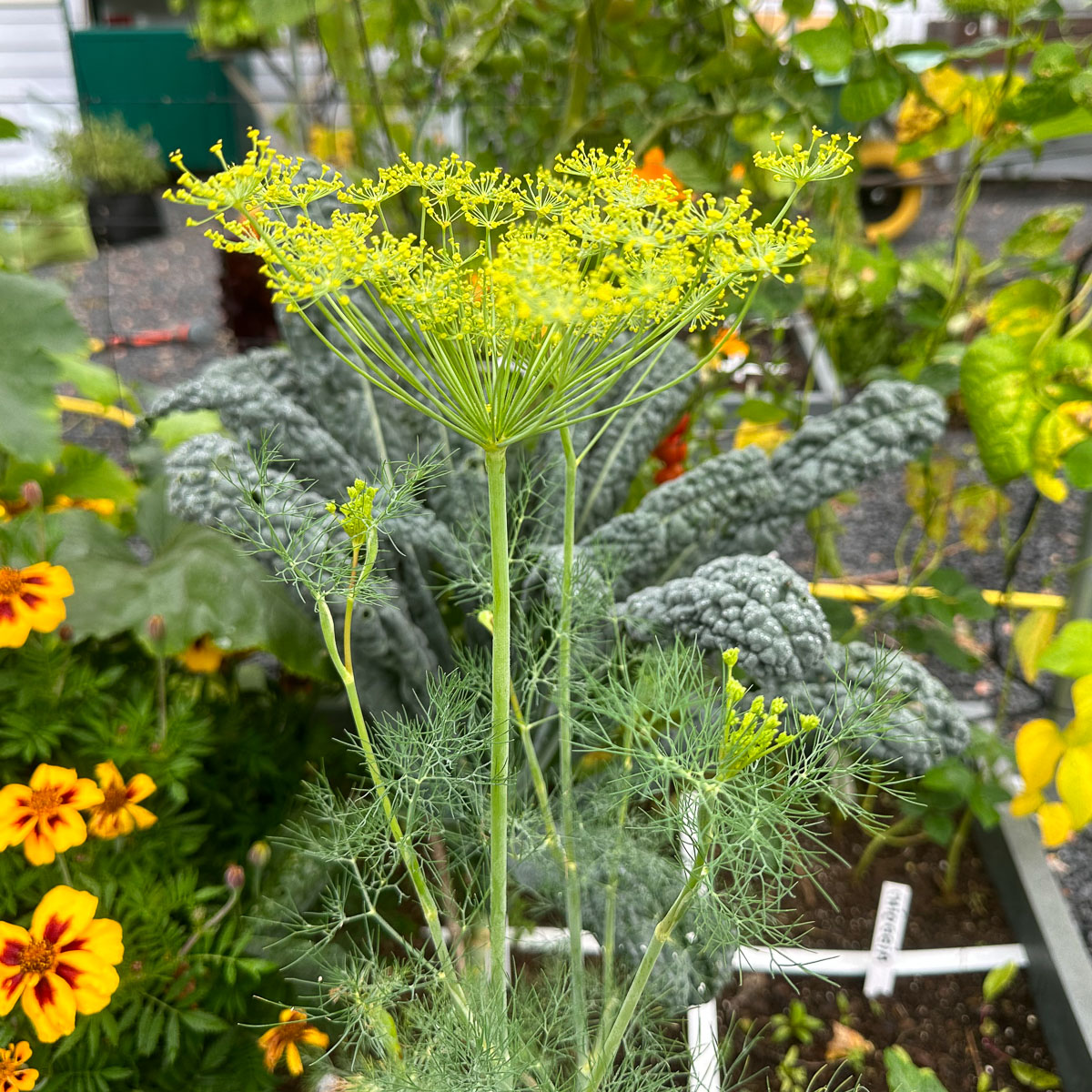
Put plants that slugs and snails love - such as lettuce, peas, and cabbages - next to plants they like less or not at all, such as carrots, nasturtiums, marigolds, anise hyssop, and dill.
In a Makkelijke Moestuin, you do that almost automatically through the app's instructions.
In a Makkelijke Moestuin, you do that almost automatically through the app's instructions.
2. Dry surfaces and paths
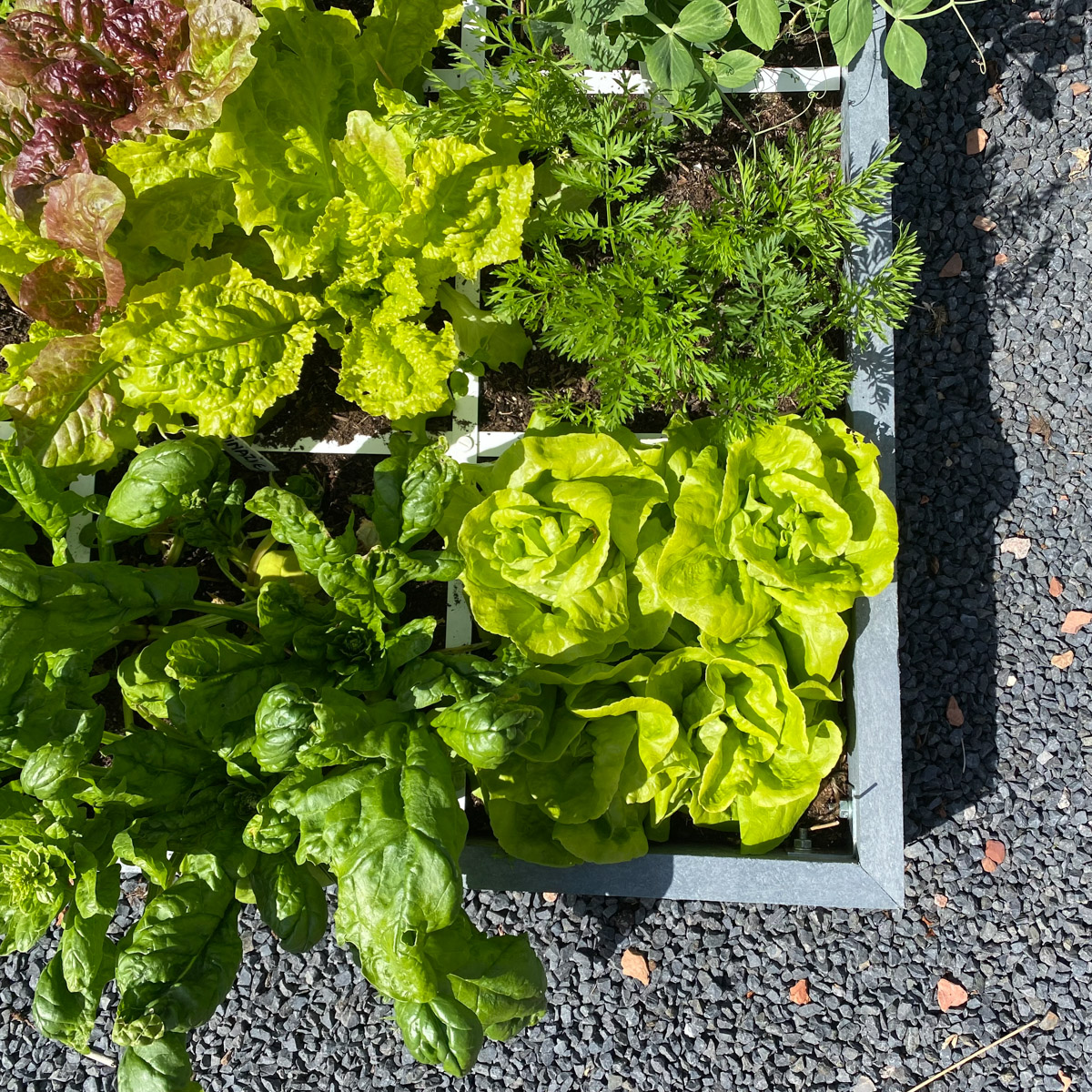
If it does not rain too much, the top layer of the MM-mix usually stays fairly dry. That's handy, because slugs and snails don't like that. Slugs especially dislike it.
What lies around your raised bed matters too. Slugs and snails like gravel or shells least, cross (wet) wood chips more easily, and grass or bare soil is no problem at all.
3. Check your plants regularly
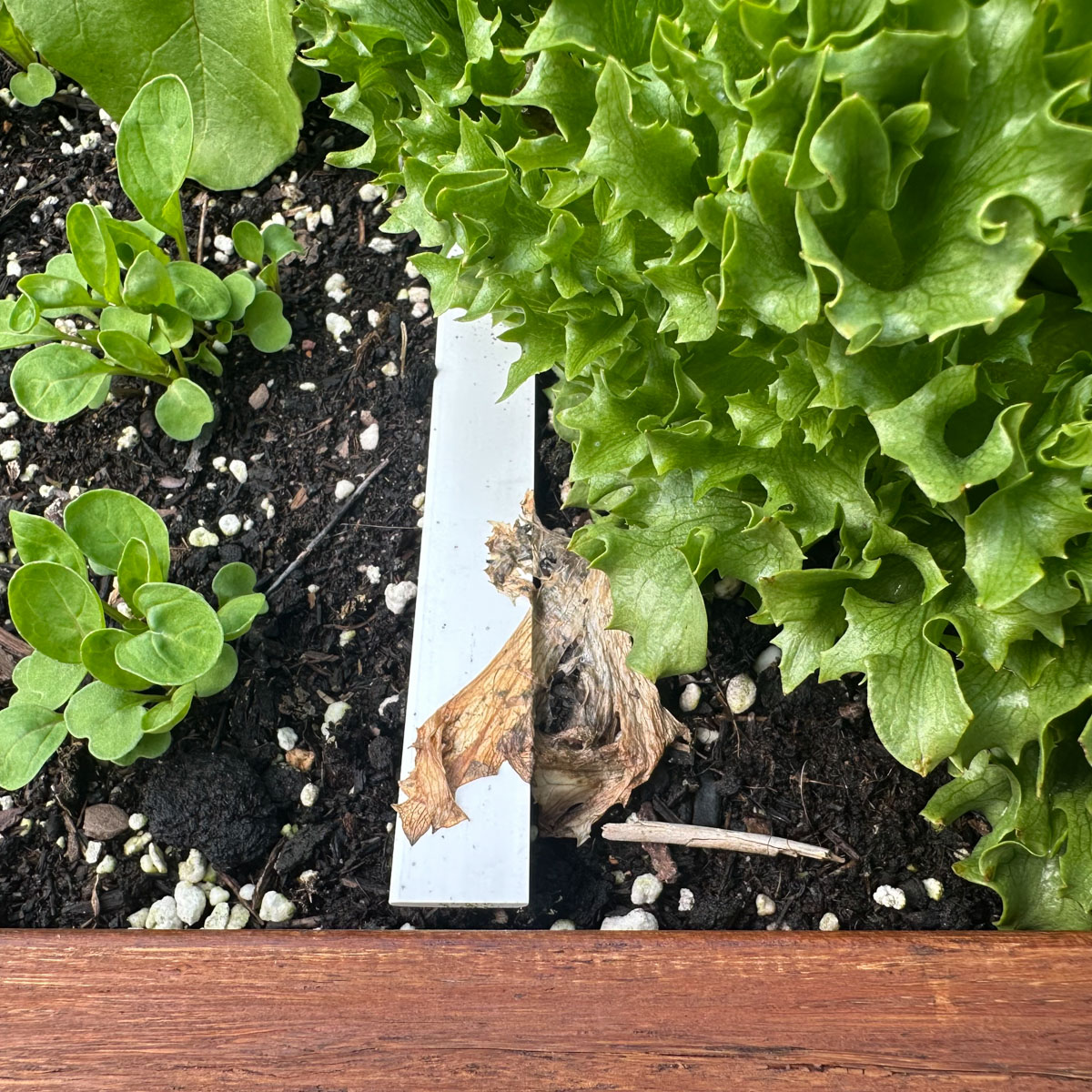
Slugs and snails love seedlings, cabbage leaves, and tender heads of lettuce, but also old and wilted leaves. So remove yellow and shriveled leaves as soon as possible.
Baiting and catching slugs and snails
Because in a Makkelijke Moestuin you water at the base of your plants, you quickly notice when slugs and snails are attacking them. The app also regularly reminds you to do a slug check.
As soon as you see even a little feeding damage, look for the culprit(s) right away.
As soon as you see even a little feeding damage, look for the culprit(s) right away.
Slugs and snails lay an insane number of eggs: under ideal conditions, up to 70 eggs 6 times a year. So the earlier you find them, the less trouble you'll have for the rest of the year.
During the day, they hide in dark, preferably damp places, always protected from the sun. Snails with shells are easier to find than slugs, because slugs can easily burrow into the soil or even crawl under pots or MM-minis.
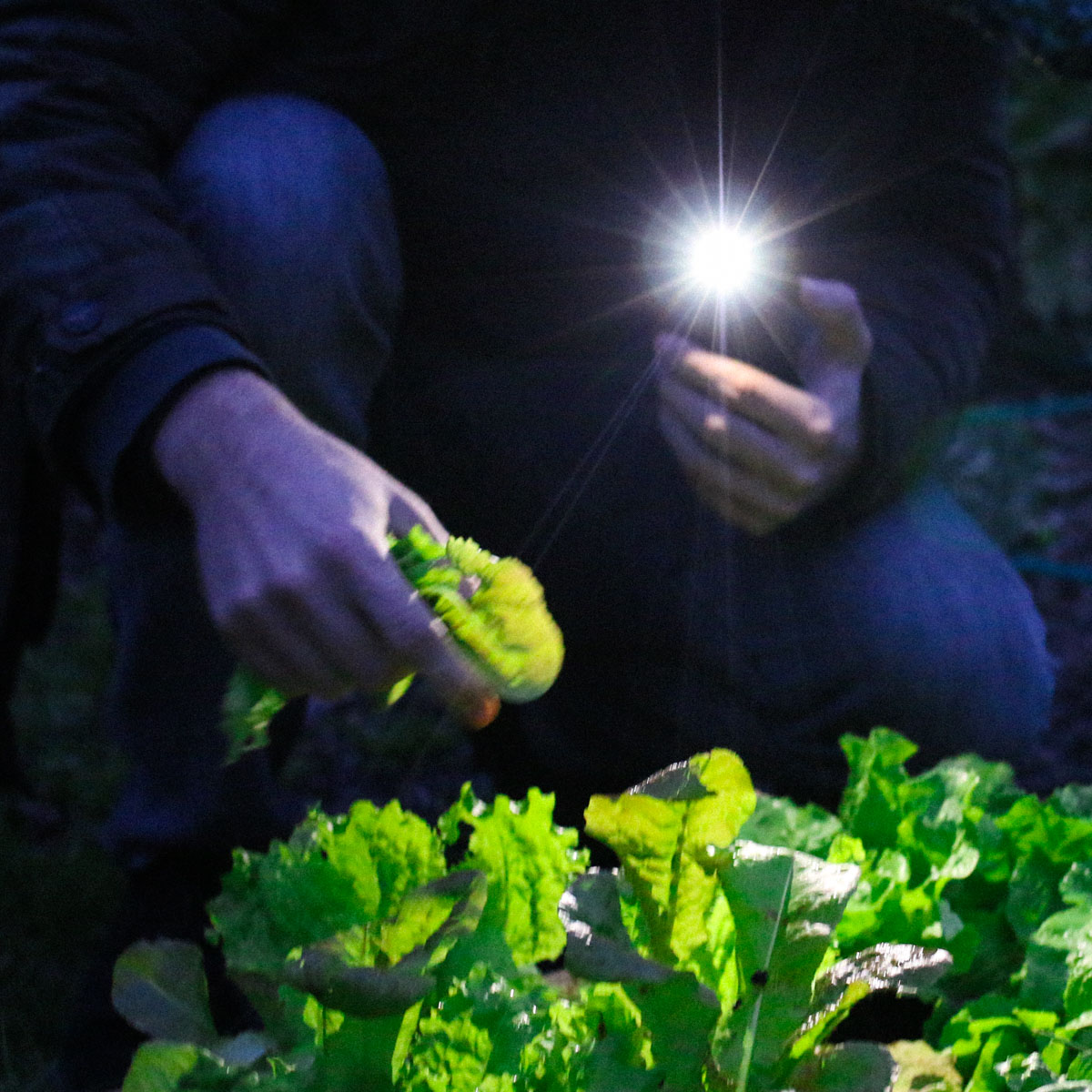
If you can't find them right away, go looking in the dark.
During the day, they hide in dark, preferably damp places, always protected from the sun. Snails with shells are easier to find than slugs, because slugs can easily burrow into the soil or even crawl under pots or MM-minis.
If you can't find them right away, go looking in the dark.
Baits
Instead of searching everywhere, you can also lure them in with something they really like.
1. Beer
Slugs and snails, just like me, enjoy a beer. So it's easy to lure them to a beer trap. You can buy those ready-made, but they're also easy to make yourself.
2. Bait plants
1. Beer
Slugs and snails, just like me, enjoy a beer. So it's easy to lure them to a beer trap. You can buy those ready-made, but they're also easy to make yourself.
2. Bait plants
Put down a few plants that are on a slug's favorite menu, such as Chinese cabbage. Then they'll leave the other plants alone.
3. A nice hiding place
The upside-down rind of half a melon is an ideal hiding place for slugs and snails, just like a wet newspaper or a rhubarb leaf. Put one near plants that keep getting eaten, and in the morning you'll find whole families underneath.
The upside-down rind of half a melon is an ideal hiding place for slugs and snails, just like a wet newspaper or a rhubarb leaf. Put one near plants that keep getting eaten, and in the morning you'll find whole families underneath.
4. Laying mash (feed for laying hens)
Slugs and snails like laying mash even more than beer: they come to it in hordes. They eat their fill, leave your plants alone for a while, and are easy for you to collect.
Slugs and snails like laying mash even more than beer: they come to it in hordes. They eat their fill, leave your plants alone for a while, and are easy for you to collect.
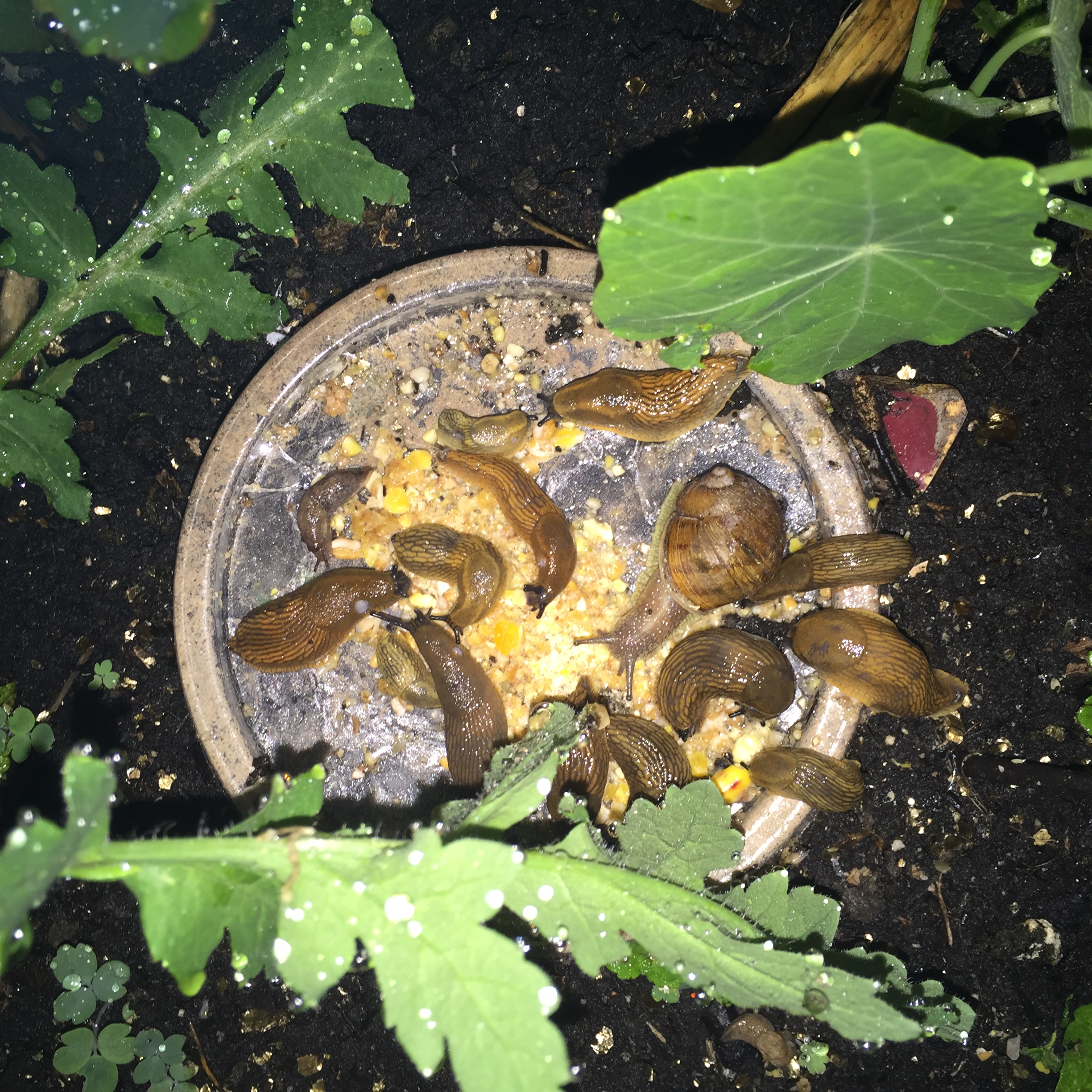
The downside of baits is that you still have to collect those slugs and snails and then do something with them.
If you do not want to kill them - which ecological gardeners say is actually better - you need to take them somewhere else: at least 30 meters away. Otherwise they'll simply be back the next day.
Create an impenetrable barrier
A barrier should prevent slugs and snails from getting anywhere near the plants. Then you no longer have to worry about them, and you don't have to keep checking either.
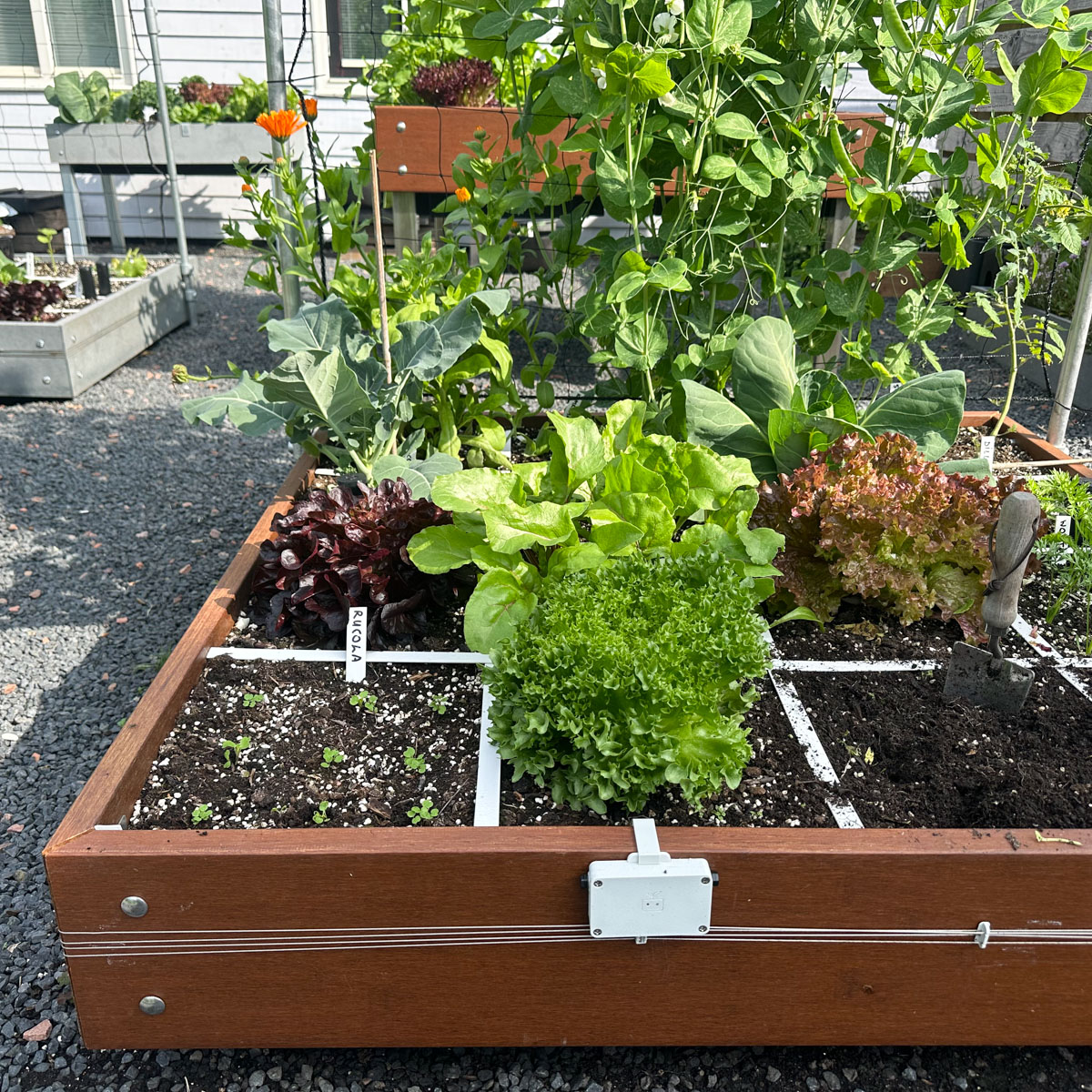
For raised beds on the ground, an electric slug fence - like ours - is the only thing that really helps. Do keep an eye out for anything else slugs and snails could use as a bridge, such as tall grass, overhanging plants, or a bucket leaning against your raised bed.
For table beds on smooth steel legs, you usually don't need an electric slug fence, because slugs and snails don't really enjoy climbing up smooth metal. But if it rains for a long time and/or they're extra active and hungry, they won't let that stop them either.
Don't put a table bed right against a wall or fence either. Keep it about 20 cm away. Otherwise slugs and snails can climb up along the wall or fence and still reach your vegetables.
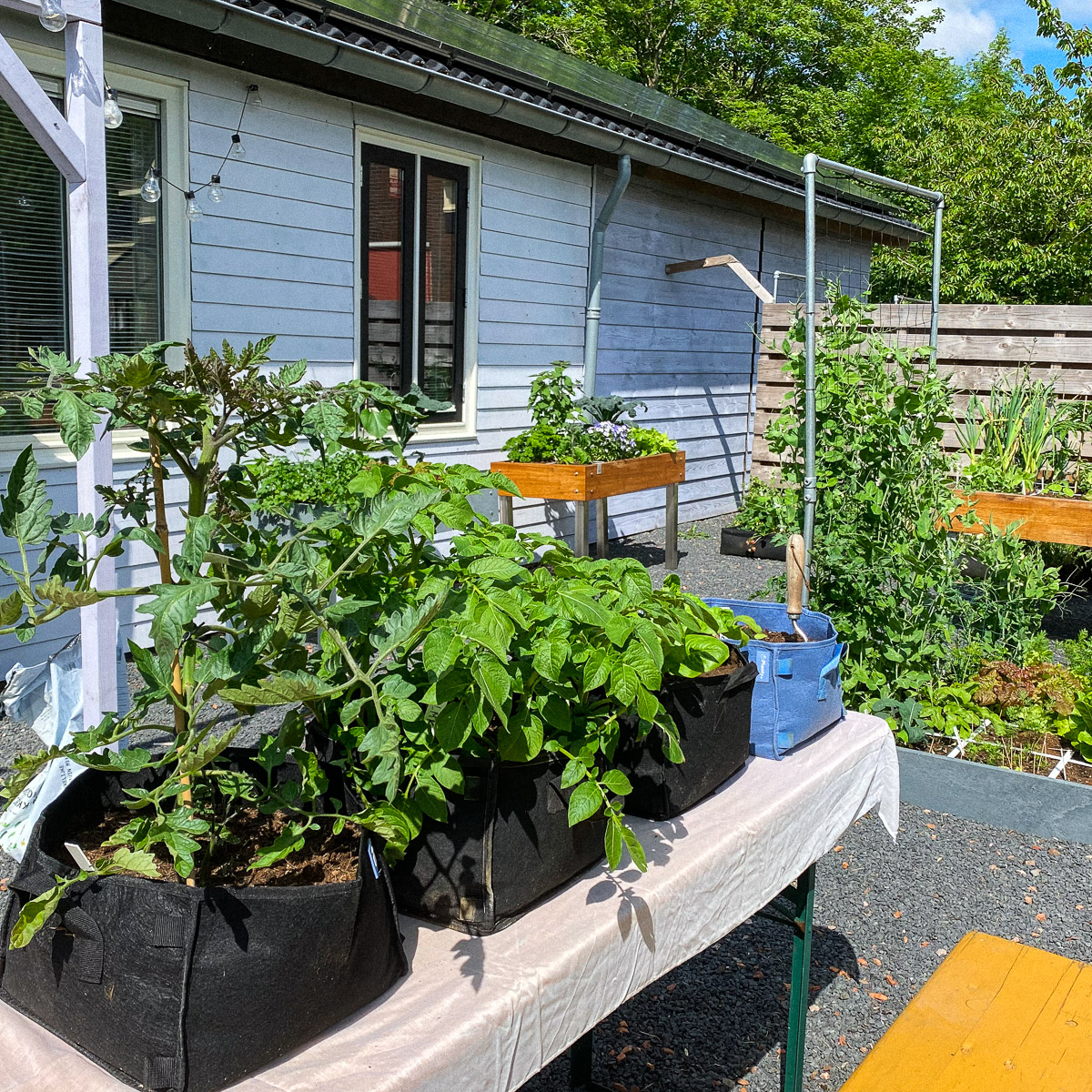
Pots and containers - such as our air boxes and MM-minis - can be protected fairly well by putting them on a table or another raised surface.
First lay an overhanging piece of fabric or plastic over it, hanging freely down, so it does not touch the ground or the containers. As long as it's thin and flutters nicely, most slugs and snails won't get past it.
First lay an overhanging piece of fabric or plastic over it, hanging freely down, so it does not touch the ground or the containers. As long as it's thin and flutters nicely, most slugs and snails won't get past it.
And all those other remedies you read about? Before we developed the electric slug fence, I tried them all.
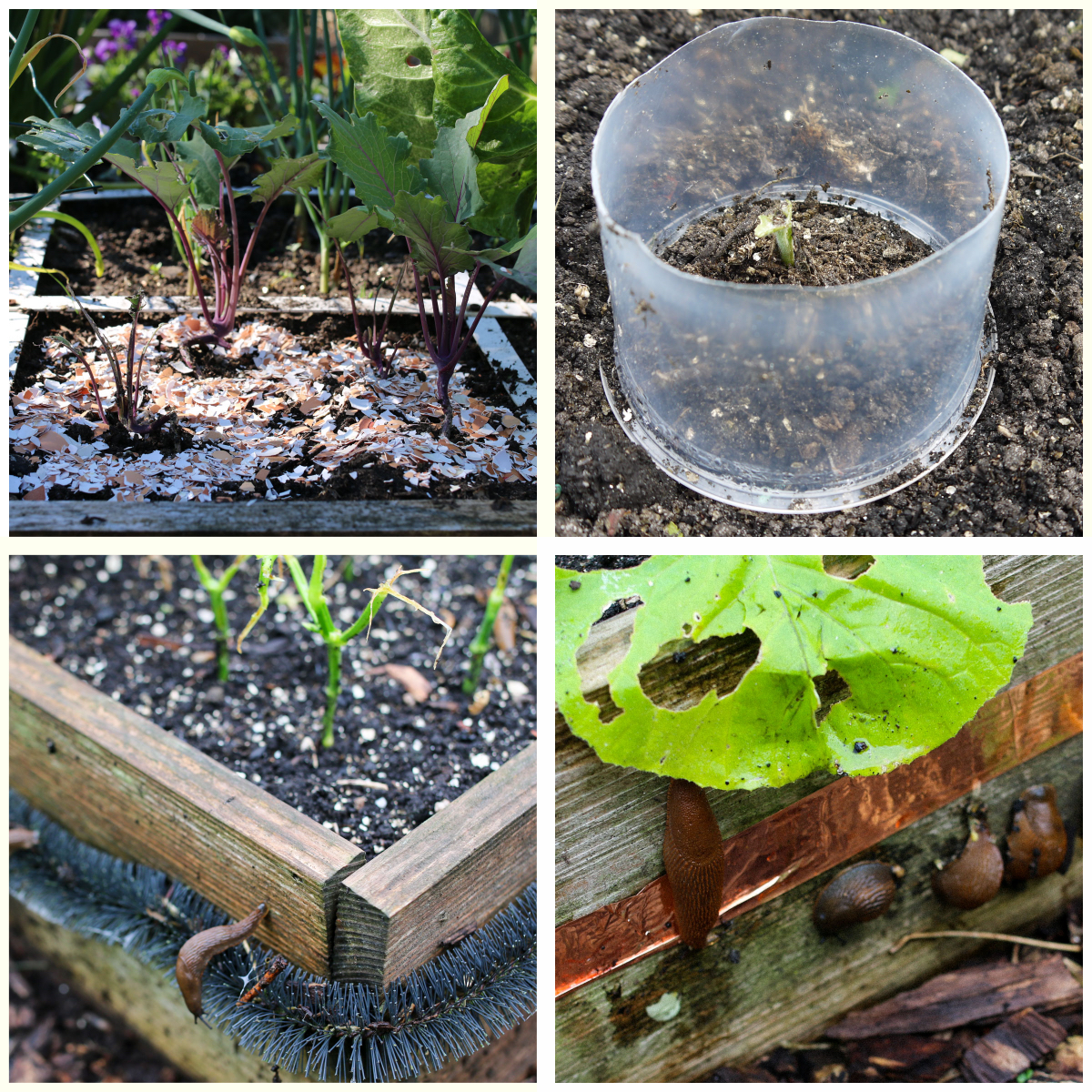
Apparently they only work when there are just a few slugs and snails, because for us they barely had any effect:
Apparently they only work when there are just a few slugs and snails, because for us they barely had any effect:
What does not stop slugs and snails, or barely does?
Eggshells
I once read about a natural barrier made from pieces of eggshell:
I once read about a natural barrier made from pieces of eggshell:
So that doesn't work 🤨
Plastic cups - with petroleum jelly
You can try protecting vulnerable seedlings with plastic cups, smeared on the outside with petroleum jelly. Apparently it works elsewhere, but unfortunately not here:
You can try protecting vulnerable seedlings with plastic cups, smeared on the outside with petroleum jelly. Apparently it works elsewhere, but unfortunately not here:
The slug brush
In 2015, a brush manufacturer launched the Slug Brush. It seemed brilliant, but when it started raining heavily, the slugs and snails just crawled straight over it.
Copper tape or copper wire
Some people swear by copper - so also by copper tape or copper wire - because it reacts with slug and snail slime and gives off a small electrical charge. But copper only works well when it is completely clean and dry. On top of that, slugs are less sensitive to it than snails.
Killing slugs and snails
Okay. You're so fed up with slugs and snails that you'd gladly finish them off.
What? Kill them? Come on Jelle: live and let live!"
What? Kill them? Come on Jelle: live and let live!"
Yes, yes, I know. And I feel the same way.
But many eco-minded vegetable gardeners make an exception for slugs.
Not only because they're so fed up with nibbled heads of lettuce, but mainly because slugs keep laying more eggs, can be dangerous for other animals (including your pets!), and can seriously upset the natural balance.
Not only because they're so fed up with nibbled heads of lettuce, but mainly because slugs keep laying more eggs, can be dangerous for other animals (including your pets!), and can seriously upset the natural balance.
- One slug or snail can easily produce 600 eggs a year. They don't even need another slug or snail, because most are hermaphrodites.
- They lay their eggs in clusters of 15 to 50, in the soil or under plant waste.
- The eggs hatch when it is nice and warm and damp. But until then, they can survive for a long time.
- In the past, there were on average 2 generations of slugs and snails per year. During the wet summers of the past 5 years, that has easily become 3 or 4.
- A slug or snail is already adult after 8 weeks and then lays eggs itself. To grow that fast, it eats up to 50% of its own body weight in food every day.
- Slugs and snails can be dangerous for other animals because they can carry diseases and parasites. That is not only harmful for hedgehogs, but also for dogs and cats.
And it is not only native slugs and snails causing trouble. A few species from elsewhere have been spreading rapidly over the past 10 years. Such as:
The Spanish slug
The Spanish slug
The Spanish slug tolerates drought well and lays as many as 400 eggs at a time.
Because these species interbreed with our local slugs and snails, their offspring are even better adapted to our climate. For example, the eggs are resistant to drought and also to cold.
On top of that, it is barely eaten by its natural enemies (it tastes bitter and produces a lot of slime).
Because these species interbreed with our local slugs and snails, their offspring are even better adapted to our climate. For example, the eggs are resistant to drought and also to cold.
On top of that, it is barely eaten by its natural enemies (it tastes bitter and produces a lot of slime).
Ways to kill slugs and snails
Beer trap for slugs and snails
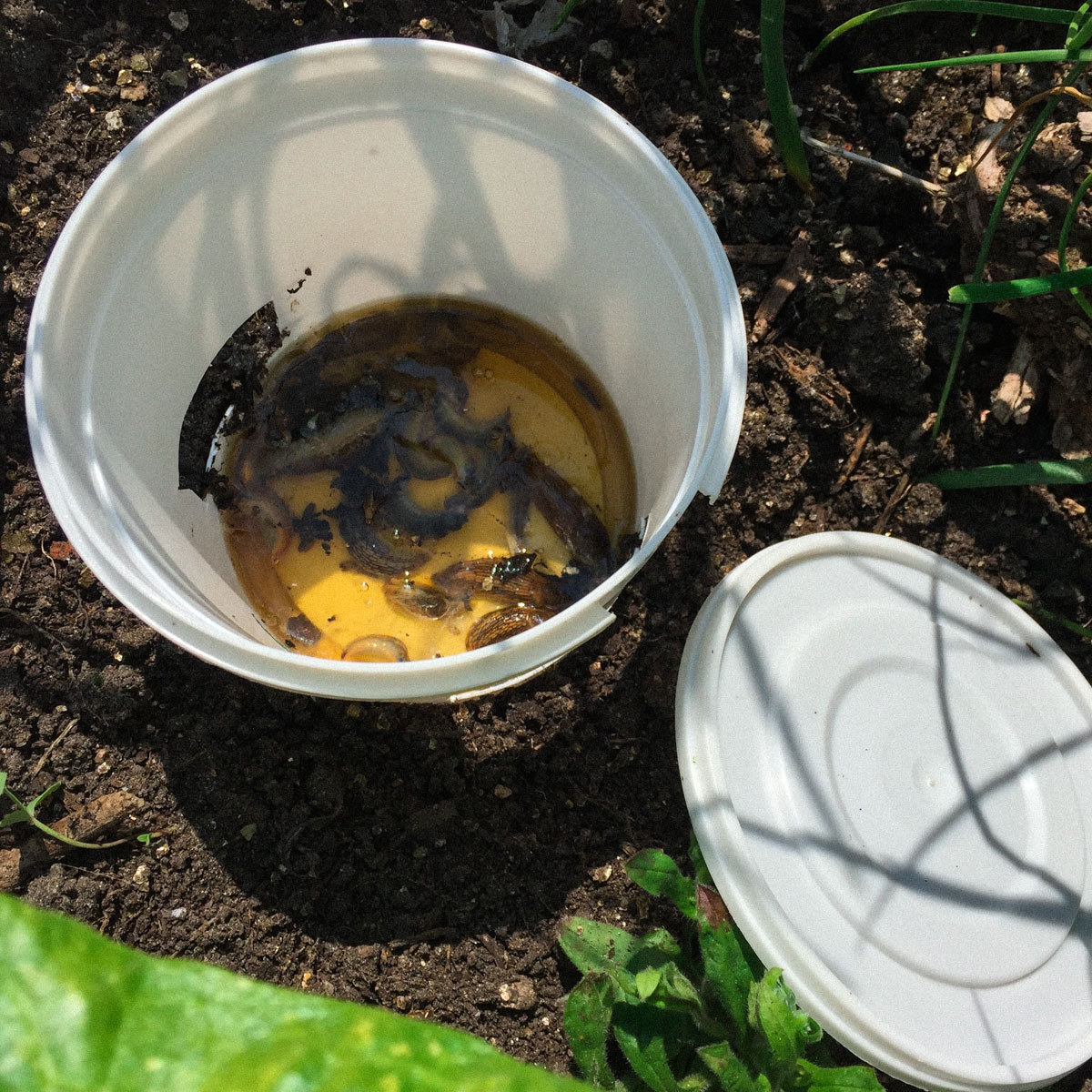
You can make a beer trap, for example, from a yogurt cup with a lid. Cut a few openings about 4 cm from the bottom that slugs and snails can crawl through. Then press the cup into the MM-mix, fill it with a shallow layer of beer, and put the lid on.
The slugs and snails are drawn to the beer, get nicely tipsy, and die a boozy drowning death. Not the worst way to go, right?
The slugs and snails are drawn to the beer, get nicely tipsy, and die a boozy drowning death. Not the worst way to go, right?
Slug pellets with ferric phosphate
You use these blue slug pellets against slugs. The ferric phosphate paralyzes the crop gland, so the slugs can no longer eat, retreat, and die after 2 to 4 days. For us and other animals, the pellets do no harm - even if they eat the affected slugs.
My own experience is that it helps, but it is definitely not enough. And if it rains hard, you need to scatter them again every day.
Nematodes: mainly against slugs
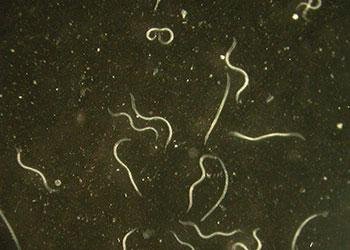
Nematodes are tiny roundworms that go looking for slugs in the soil. That's why they mainly work against slugs: during the day, those hide on or under the ground.
Here's how it works: a nematode enters a slug and starts reproducing inside it. That weakens the slug, it stops eating after about a week, and then dies. But until then, it happily keeps eating. Once the slug is dead, the nematodes - now many more of them - go looking for new slugs.
I found it quite a hassle to dissolve the nematode mix in water and then pour it over your garden within half an hour - otherwise the nematodes die. Besides, they're fairly expensive, it takes at least a week before you see results, and you need to repeat the treatment every 6 to 8 weeks 😐
Still, nematodes are completely natural, only work on slugs, and are totally harmless to your plants, other animals, and you.
Nematodes: mainly against slugs
Nematodes are tiny roundworms that go looking for slugs in the soil. That's why they mainly work against slugs: during the day, those hide on or under the ground.
Here's how it works: a nematode enters a slug and starts reproducing inside it. That weakens the slug, it stops eating after about a week, and then dies. But until then, it happily keeps eating. Once the slug is dead, the nematodes - now many more of them - go looking for new slugs.
I found it quite a hassle to dissolve the nematode mix in water and then pour it over your garden within half an hour - otherwise the nematodes die. Besides, they're fairly expensive, it takes at least a week before you see results, and you need to repeat the treatment every 6 to 8 weeks 😐
Still, nematodes are completely natural, only work on slugs, and are totally harmless to your plants, other animals, and you.
Killing the slugs and snails yourself
If you actively go hunting yourself - and catch a whole load of slugs and snails - you can of course kill them too. And no: that is not cruel, as long as you do it quickly and as painlessly as possible. For the slugs and snails, it is even a shorter ordeal than with poison pellets and nematodes.
For example, you can drown them in beer, sugar water, or very hot water. Or collect them in a container with a lid and put it in the freezer. In any case, do not put them in salt water, because that is far too nasty.
If you actively go hunting yourself - and catch a whole load of slugs and snails - you can of course kill them too. And no: that is not cruel, as long as you do it quickly and as painlessly as possible. For the slugs and snails, it is even a shorter ordeal than with poison pellets and nematodes.
For example, you can drown them in beer, sugar water, or very hot water. Or collect them in a container with a lid and put it in the freezer. In any case, do not put them in salt water, because that is far too nasty.
Afterwards, put the dead slugs and snails in a sheltered spot in the garden. Birds, hedgehogs, toads, and ground beetles will be very happy with them.
The leopard slug: the one slug you actually do want to see
There is one slug you actually do want to see in your garden, and that is the leopard slug.
This enormous slug can grow up to 20 cm long and has a light grey to brown body with dark spots or stripes:
This enormous slug can grow up to 20 cm long and has a light grey to brown body with dark spots or stripes:
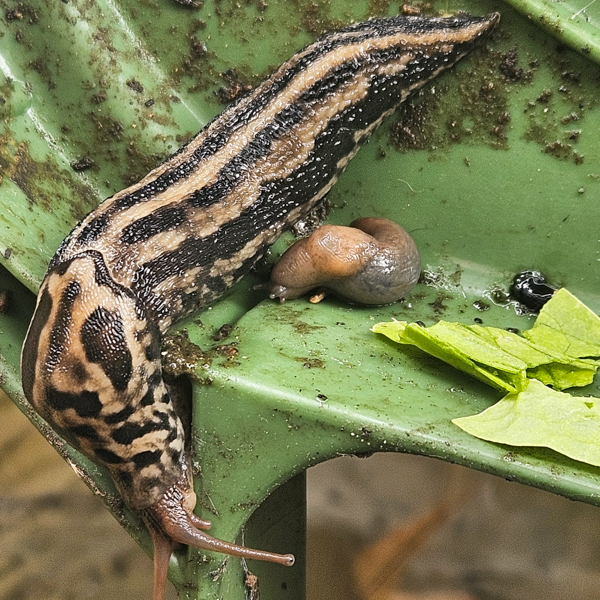
Leopard slugs do not eat living plants - such as your heads of lettuce - but they do like eating the eggs and young of other slugs and snails. And especially those of the Spanish slug 😀
We now see them here more and more often, and when we do, we just let them get on with it. That's why we ourselves have stopped using poison pellets and other remedies that can harm them too. (The electric slug fence does not: it gives them a small shock, but doesn't kill them.)
We now see them here more and more often, and when we do, we just let them get on with it. That's why we ourselves have stopped using poison pellets and other remedies that can harm them too. (The electric slug fence does not: it gives them a small shock, but doesn't kill them.)
So, now you know a lot about slugs and snails, and what you can do about them.
Good luck in your battle!