
How to identify and manage tomato blight
Phytophthora infestans is a contagious, fungus-like disease to which tomatoes and potatoes are highly susceptible. How do you recognise it, and what can you do?
Growing your own tomatoes
Nothing is more fun, or more delicious, than tomatoes from your own garden.
You start them indoors, nurture them on the windowsill, harden them off according to a careful schedule and give them the best spot in your raised bed.
You start them indoors, nurture them on the windowsill, harden them off according to a careful schedule and give them the best spot in your raised bed.
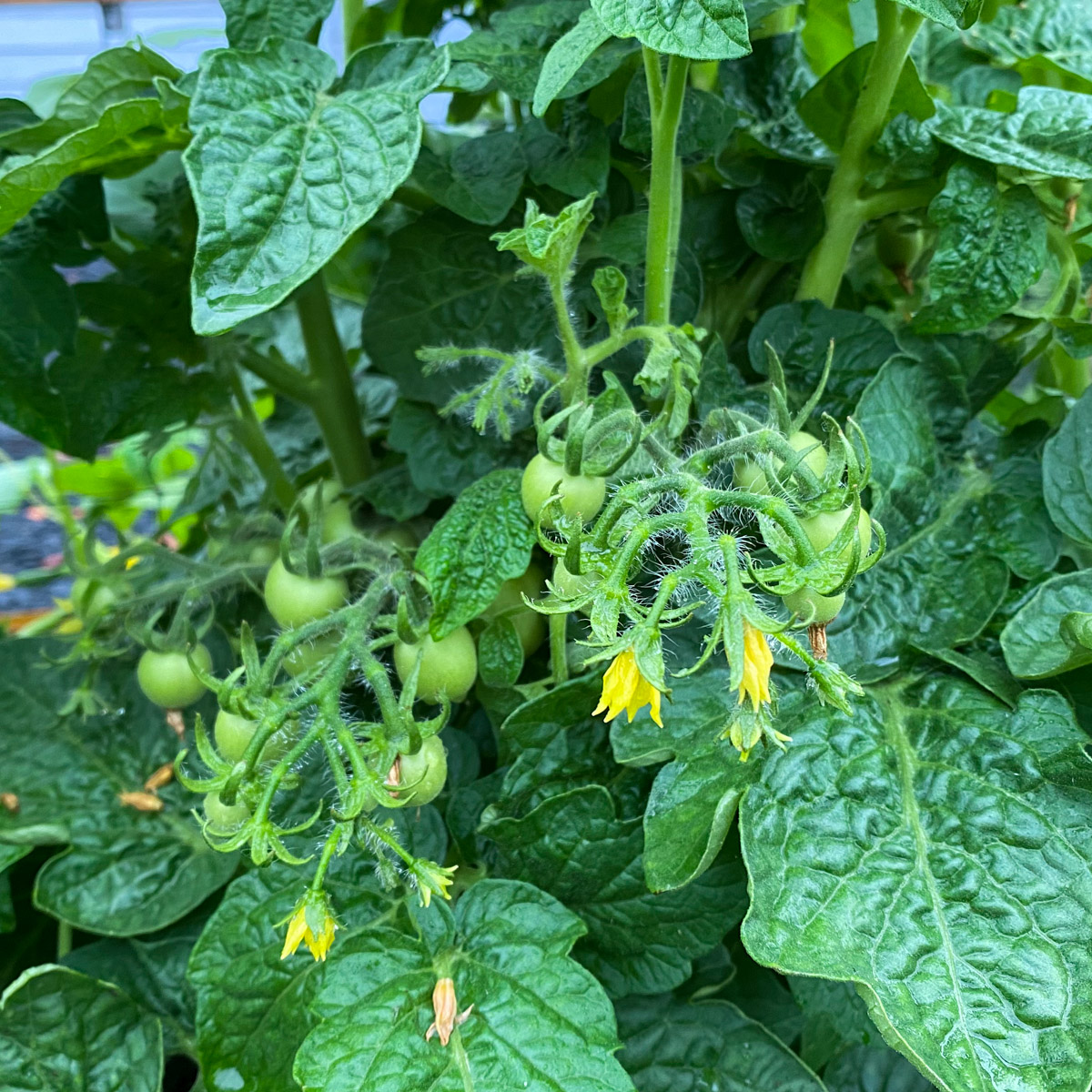
Weeks later, you spot the first flowers, then green tomatoes and even a few that are beginning to change colour. You could not be happier.
Help, something is wrong
Then you suddenly see something that does not look right: curling leaves, strange patches, splitting tomatoes or fruit with unpleasant marks. Of course, that is frustrating.
But not every mark means you need to give up on the plant, and it is certainly not always the dreaded tomato blight that everyone talks about.
Watch this video first to get a good idea of what to look for:
Watch this video first to get a good idea of what to look for:
What is tomato blight?
Tomato blight is a fungus-like disease. Tomatoes and potatoes are highly susceptible to it, which is why it is also commonly called potato blight.
During wet periods in summer, it spreads very quickly through the air. Cool weather makes it spread even faster.
How do you identify it?
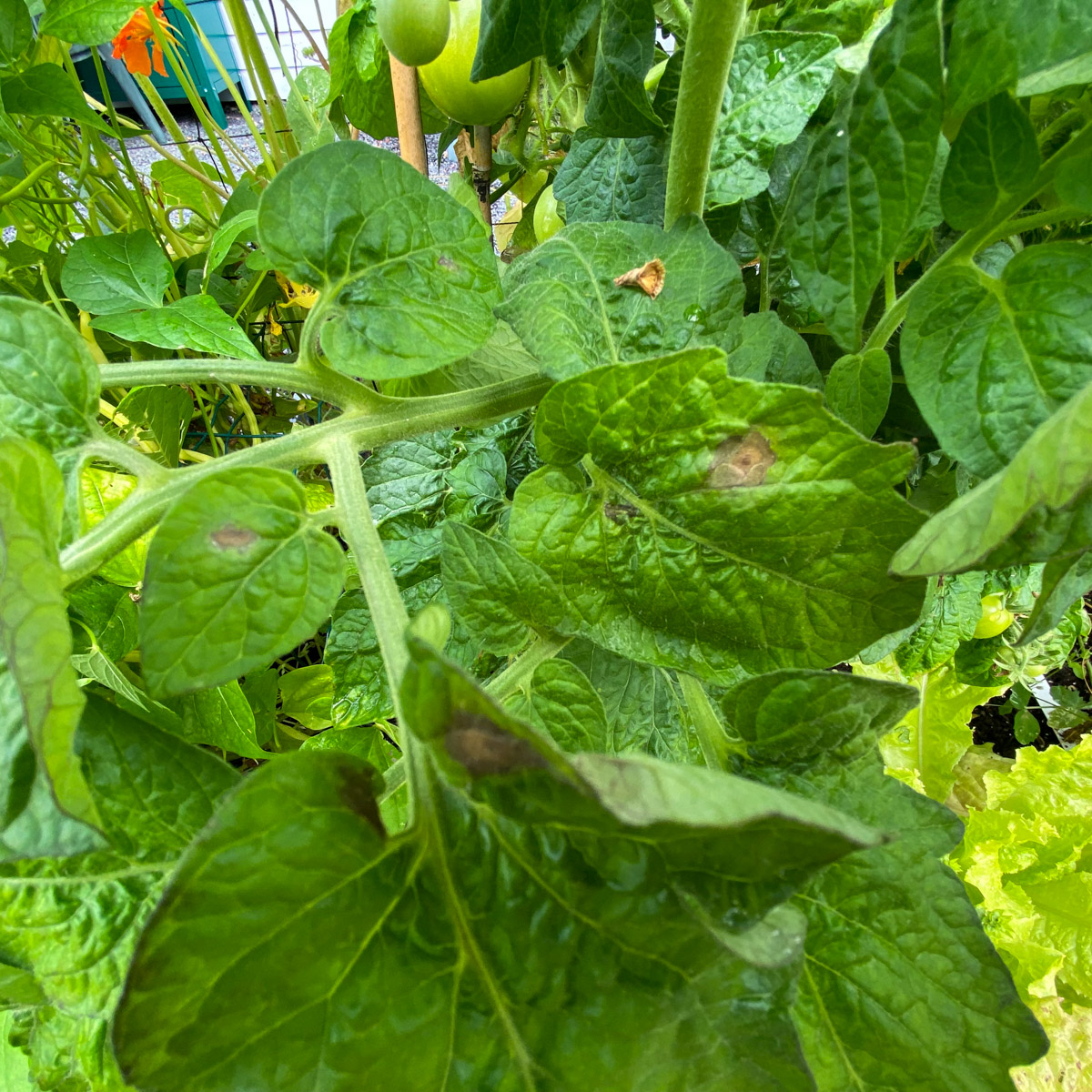
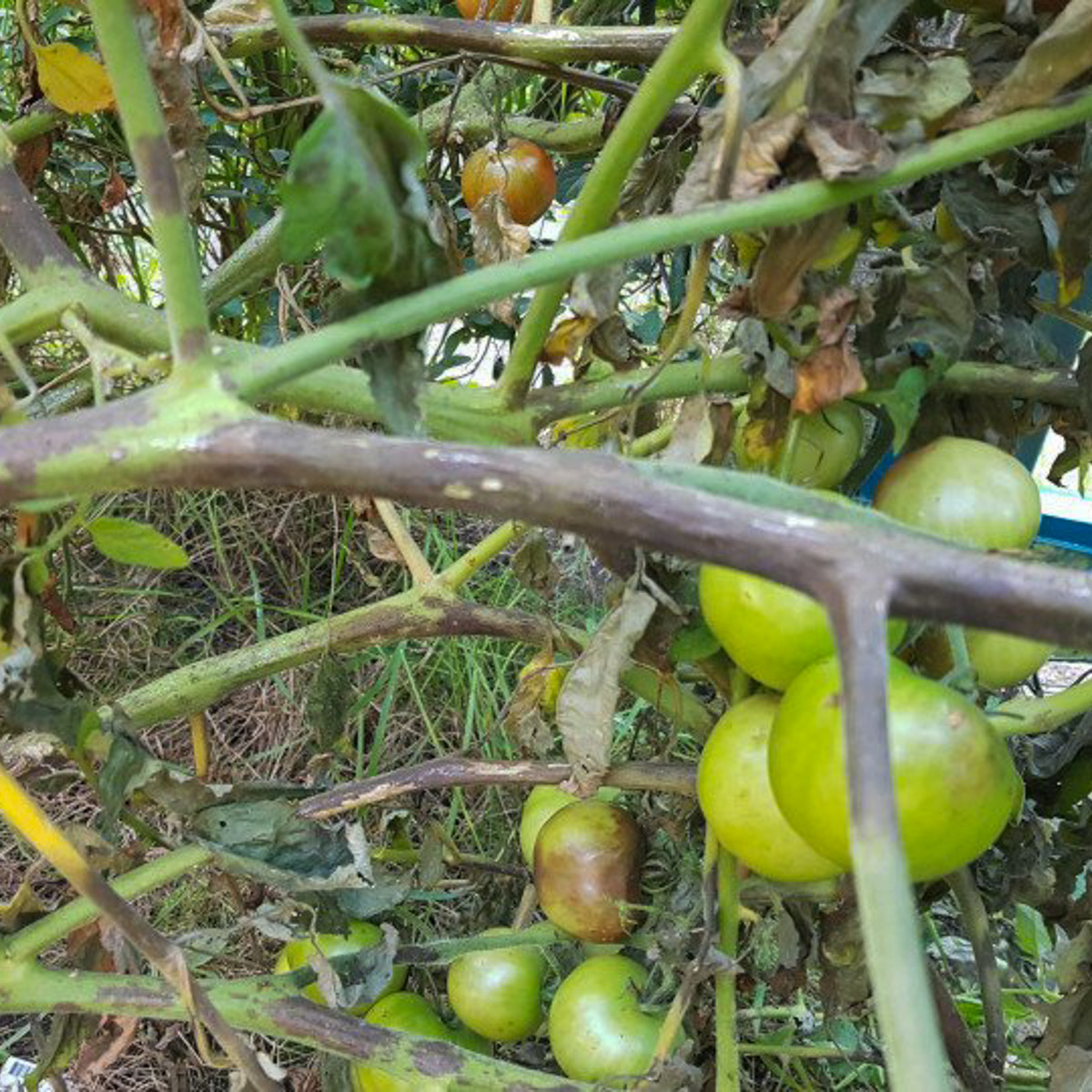
At first, you will only see round brown patches on the leaves, often with a yellowish or pale green edge.
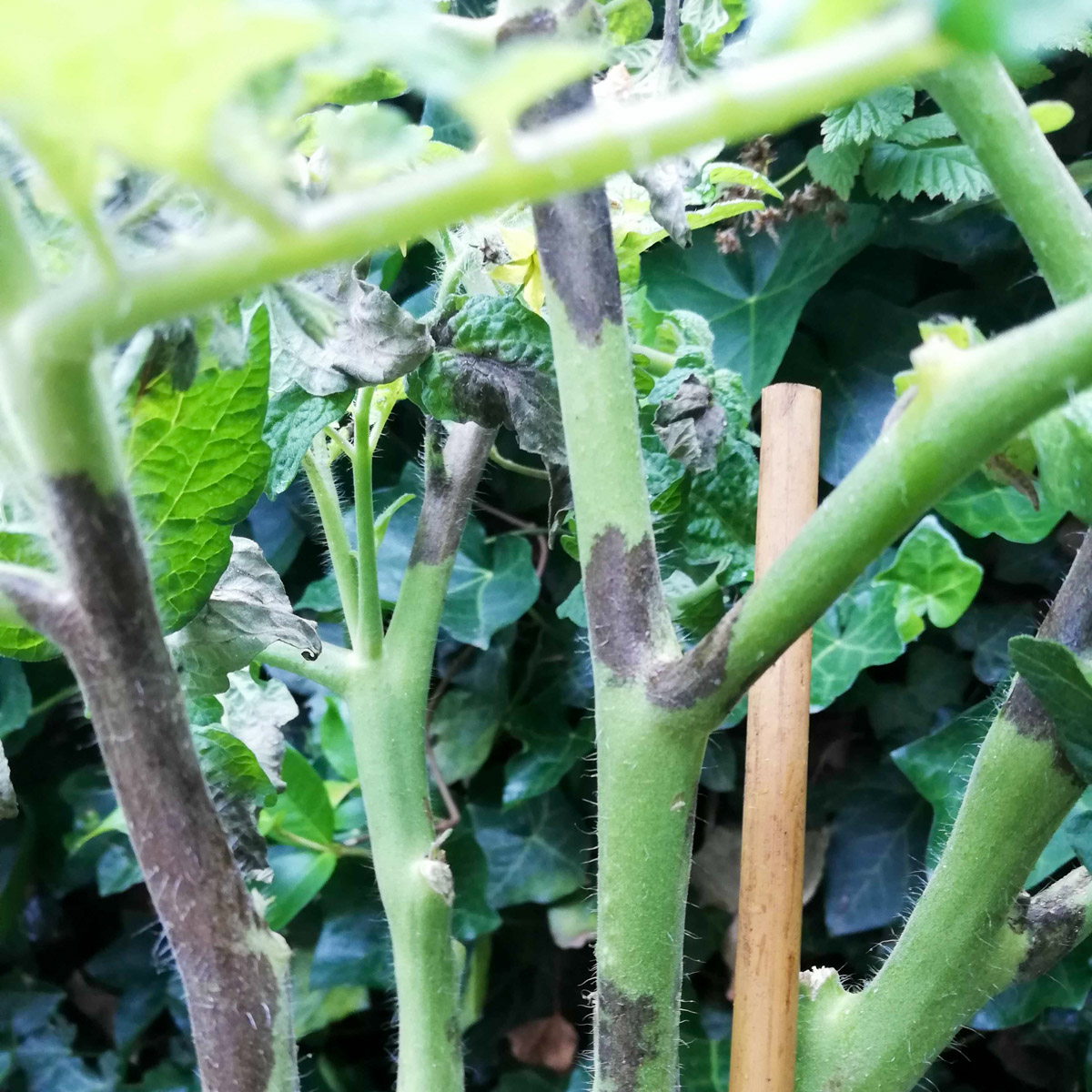
The disease then spreads to the main stem and flower stems, where dark patches become increasingly black:
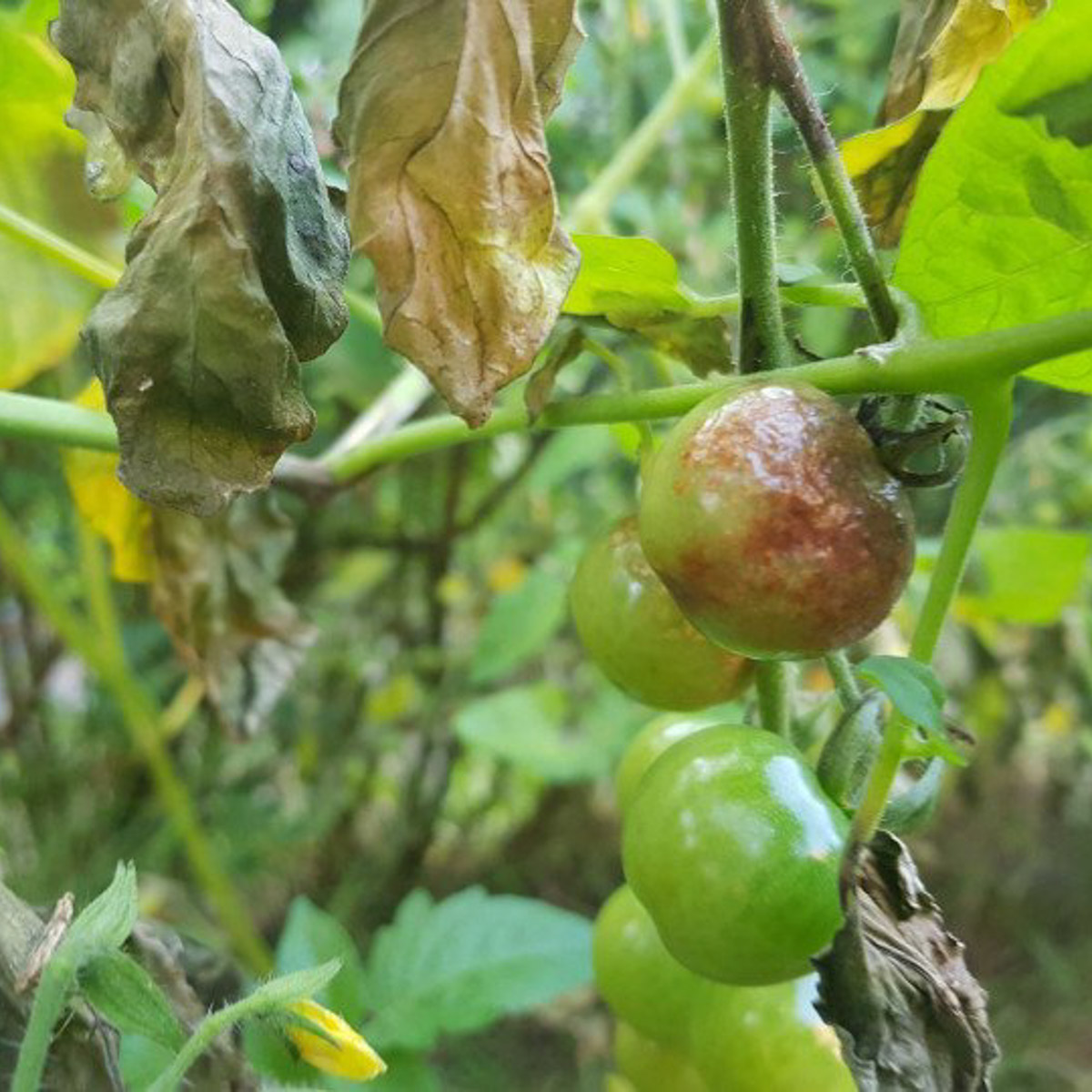
The tomatoes develop brownish patches:
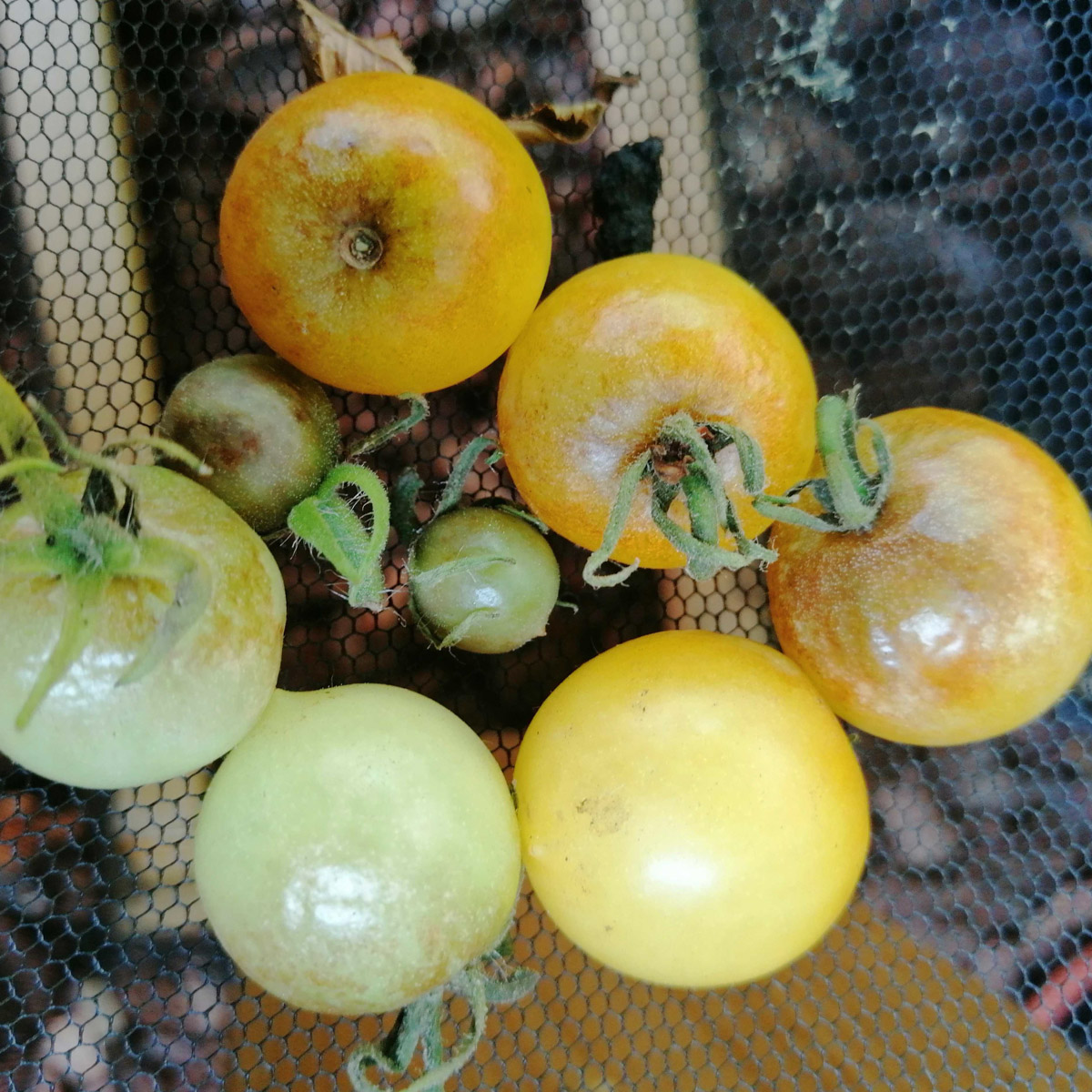
Eventually, all the leaves become unattractive and mouldy, and the entire plant dies.
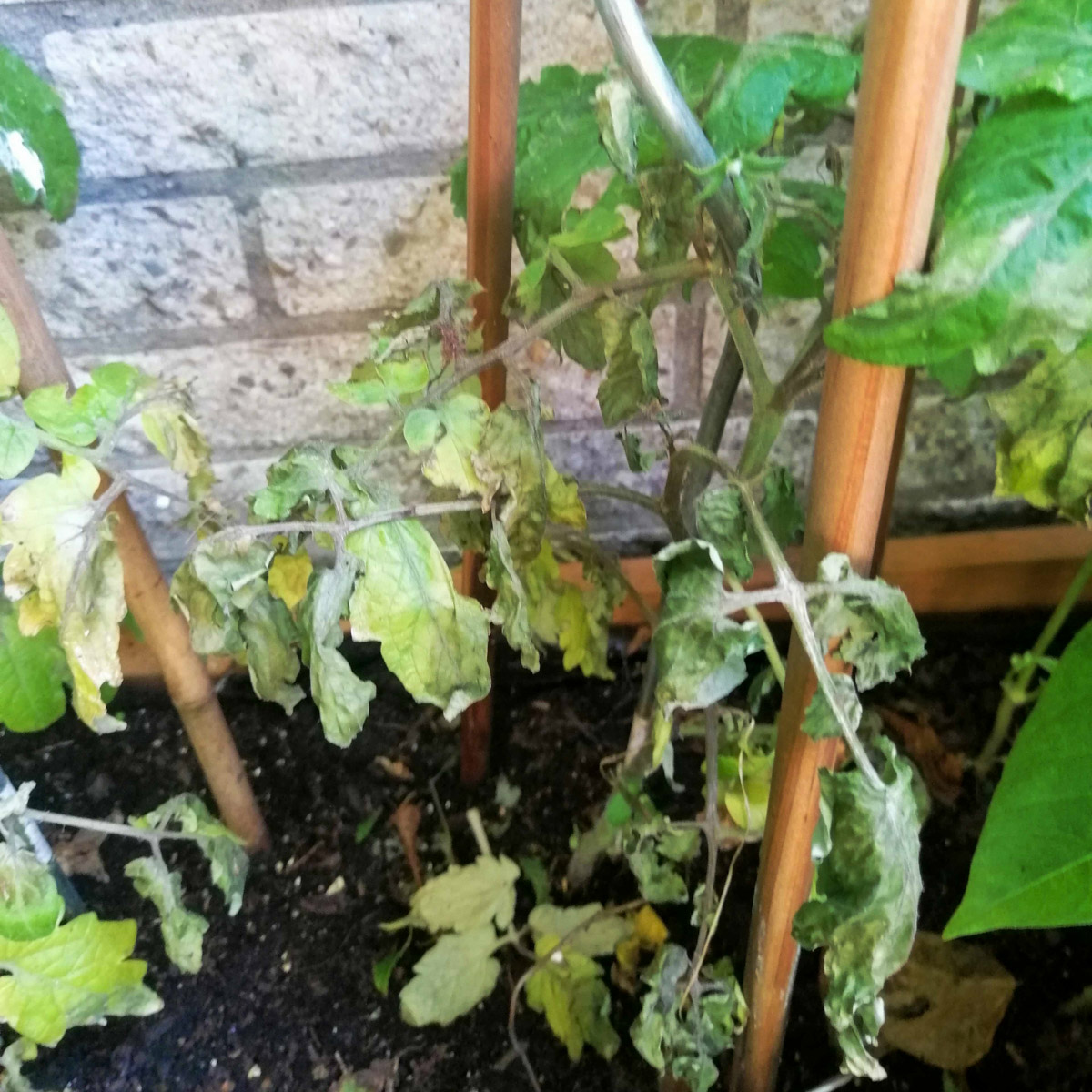
What can you do about it?
Care for your plants as well as you can. Water regularly at the base, give them an extra tablespoon of plant food every 5 weeks, and support them when needed.
Remove suckers from tall tomatoes and make sure rainwater can dry quickly. Occasionally remove a healthy leaf as well to improve airflow through the plant.
Inspect the plants regularly, especially during warm, damp weather and towards the end of summer.
Remove affected leaves straight away, along with any tomatoes that develop an unusual colour. There is then a good chance that the plant will recover.
Remove suckers from tall tomatoes and make sure rainwater can dry quickly. Occasionally remove a healthy leaf as well to improve airflow through the plant.
Inspect the plants regularly, especially during warm, damp weather and towards the end of summer.
Remove affected leaves straight away, along with any tomatoes that develop an unusual colour. There is then a good chance that the plant will recover.
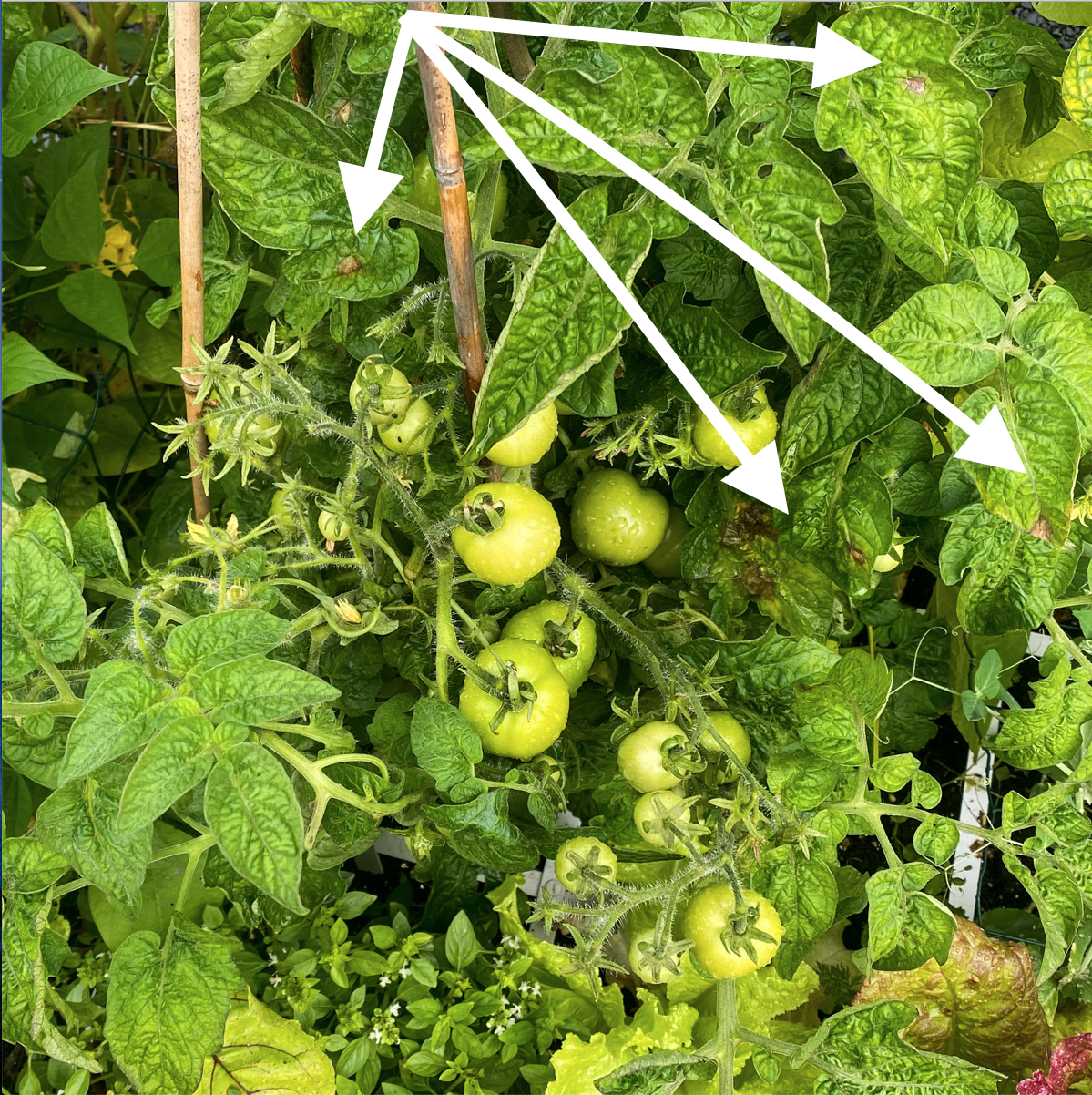
Remove unattractive leaves regularly. They are much more susceptible to disease than healthy leaves.
The remaining leaves will also dry more quickly after rain, and the tomatoes will ripen faster when leaves are not shading them.
The remaining leaves will also dry more quickly after rain, and the tomatoes will ripen faster when leaves are not shading them.
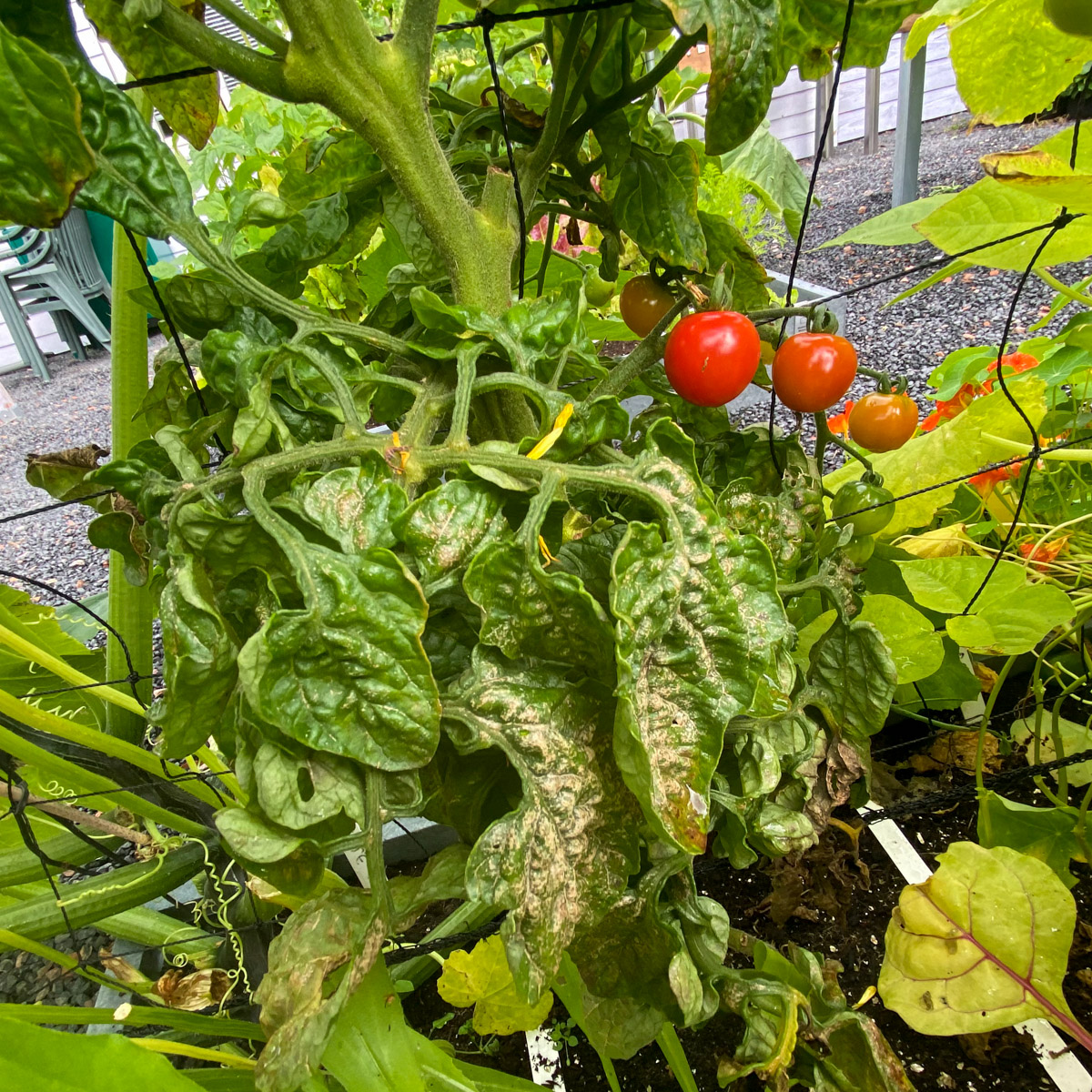
If you are worried that this will leave too few leaves, professional growers often remove almost all the lower leaves from tomato stems by late July. As long as fresh leaves continue growing above them, that is not a problem.
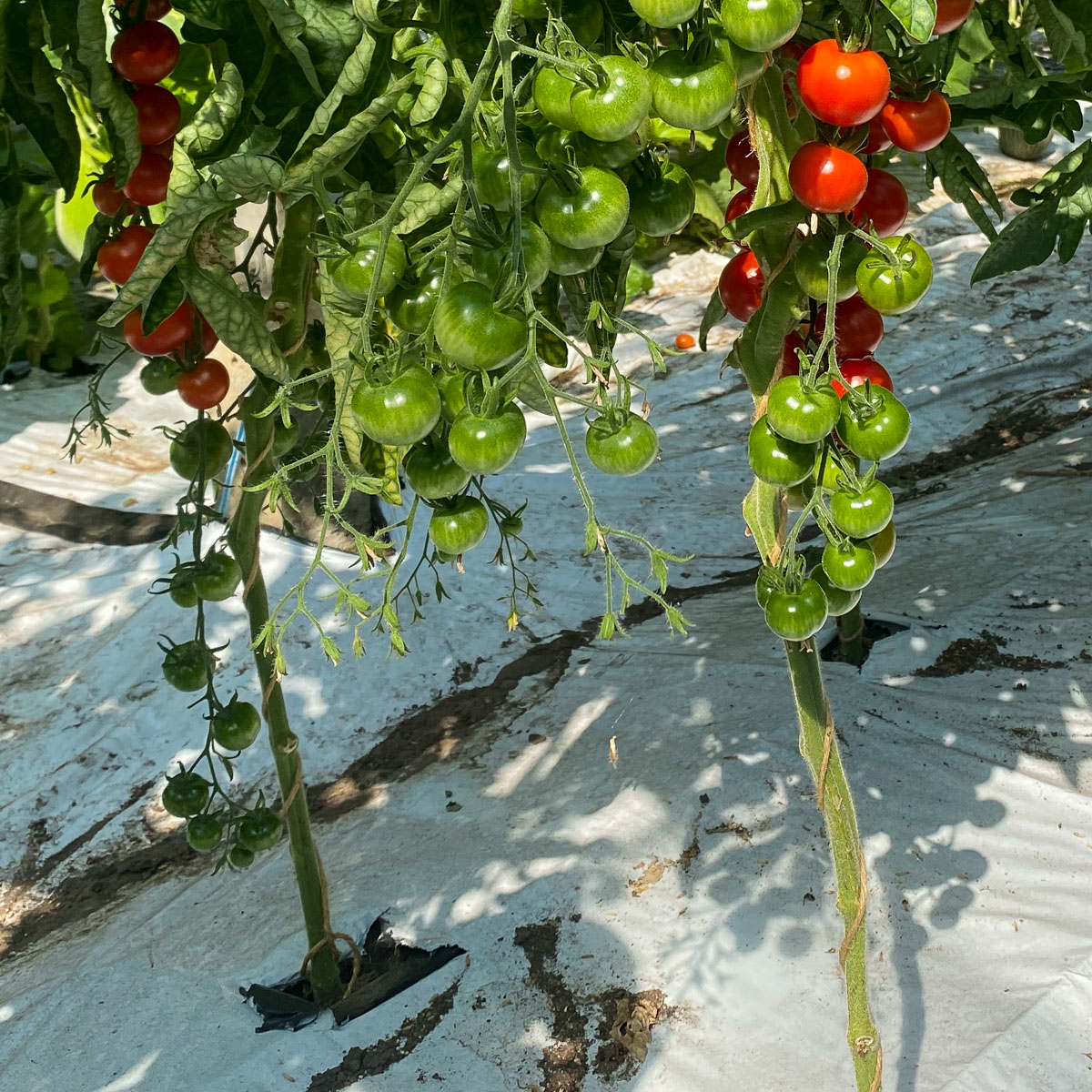
Keep a close eye on your plants
After removing all affected leaves, keep a close eye on the tomato plants. As soon as you see another patch, cut away that part of the leaf.
Sometimes this solves the problem and the plant can continue growing healthily. But if new infections keep appearing, remove the plant decisively.
Do not wait too long. If the stems and fruit are already badly affected, the disease can spread into the MM-mix, and you should not grow tomatoes in that raised bed for the next few years.
Sometimes this solves the problem and the plant can continue growing healthily. But if new infections keep appearing, remove the plant decisively.
Do not wait too long. If the stems and fruit are already badly affected, the disease can spread into the MM-mix, and you should not grow tomatoes in that raised bed for the next few years.
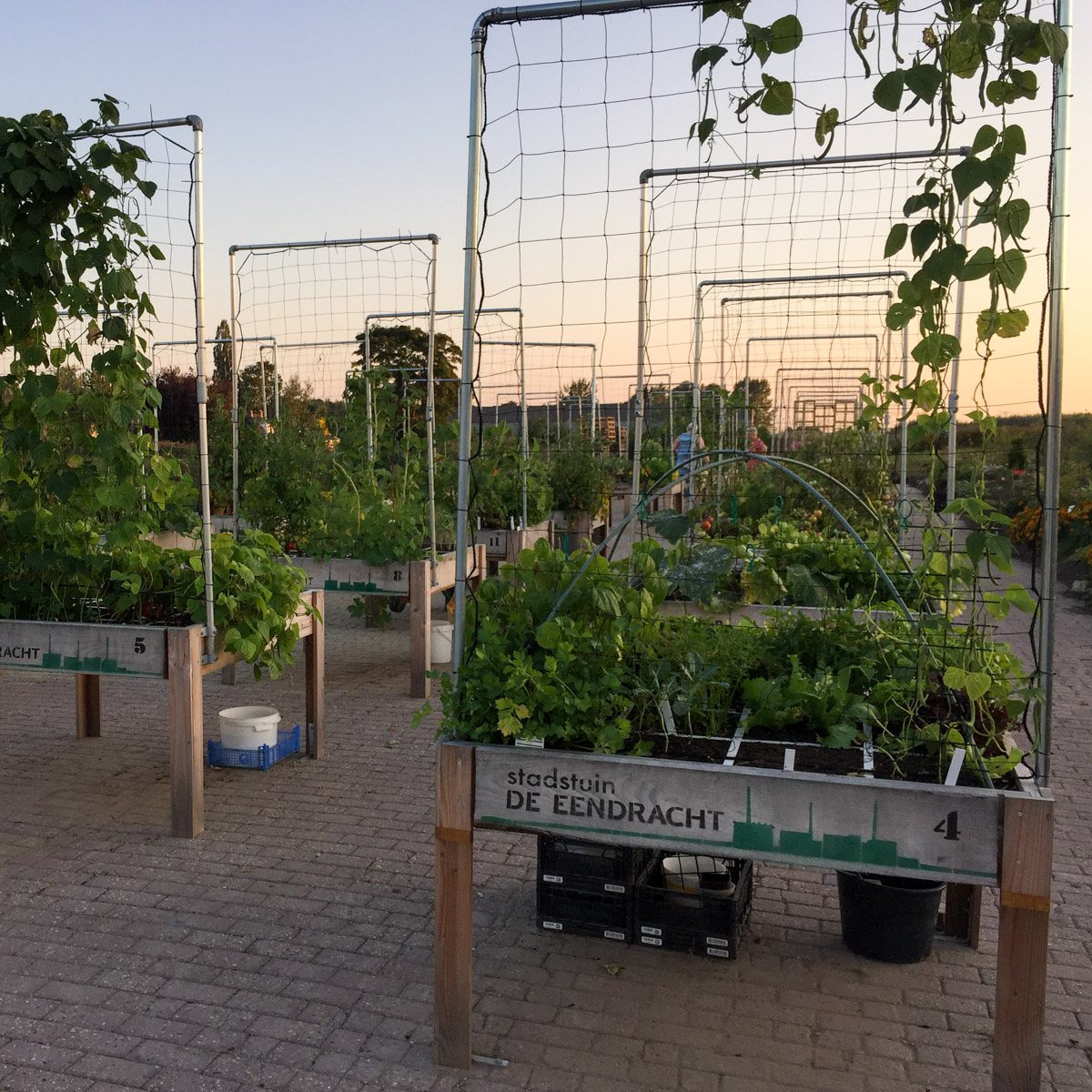
Pay attention to your surroundings too
If there are diseased tomatoes or potatoes near your garden, there is a good chance your tomato plants will be affected next.
In an allotment or community garden, it is therefore very important to keep an eye not only on your own tomato plants but also on your neighbours' plants.
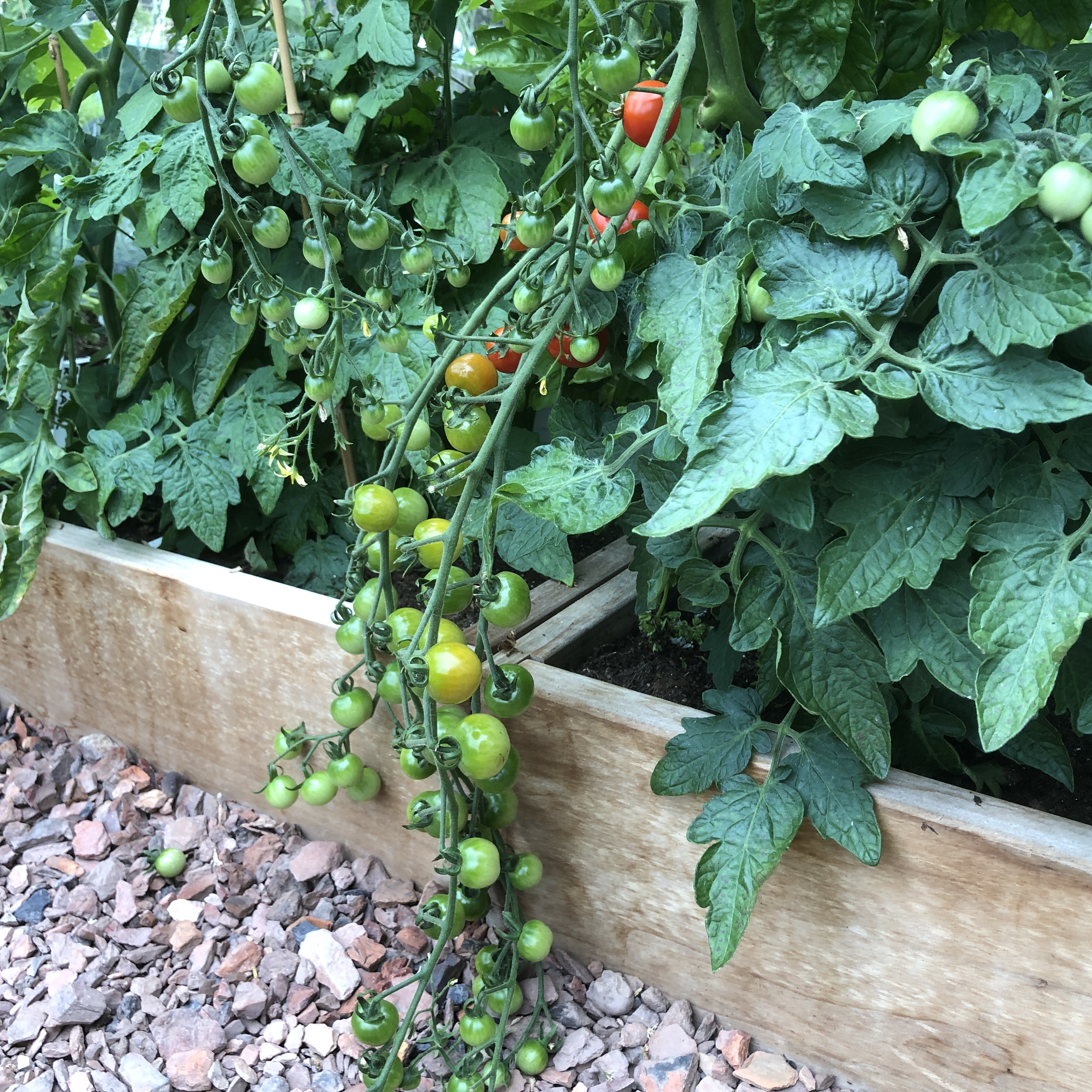
Not every tomato is equally susceptible
Not every tomato variety is equally susceptible to blight. The Sweety cherry tomato and yellow snack tomato have been bred to be less susceptible, which is also reflected in their price.
But they can still be affected.
But they can still be affected.
Save your tomatoes
If you discover the disease too late and the plant has tomatoes that are not fully red yet, you do not necessarily need to give up on them.
Collect the tomatoes that are already beginning to turn red and place them on a dish. Add a ripe banana, then cover everything with a large, clear plastic bag.
Collect the tomatoes that are already beginning to turn red and place them on a dish. Add a ripe banana, then cover everything with a large, clear plastic bag.
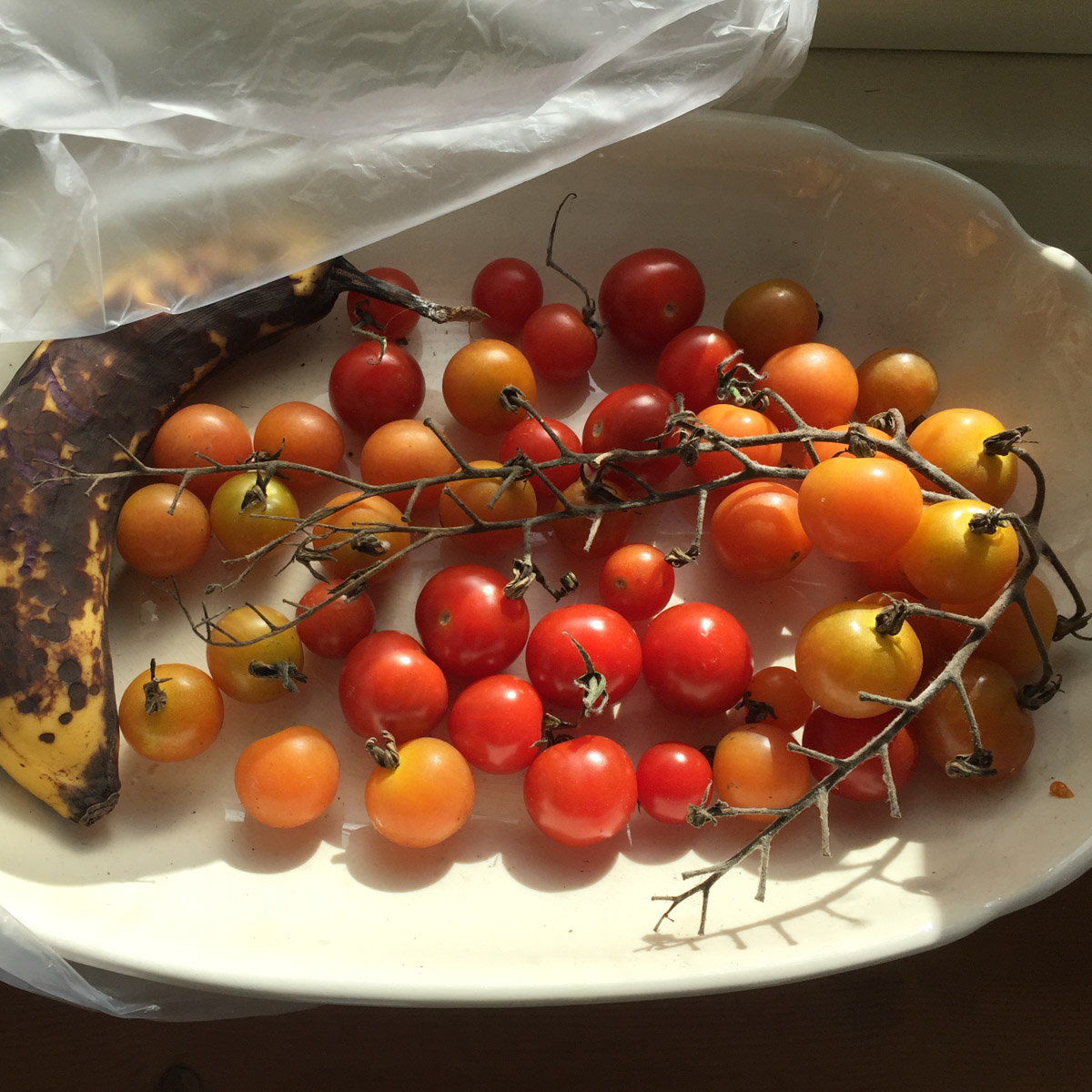
Place the dish on a sunny windowsill. Check it regularly and remove any affected tomatoes immediately.
There is a good chance that the remaining tomatoes will turn a beautiful red over the following days.
Good luck!
Good luck!