
Cabbage white caterpillars (and holes in your plants)
Sure, those white butterflies fluttering around look nice. But their caterpillars will eat every last leaf of your kale plants if you let them.
I'll walk you through how to protect your plants from cabbage whites:
I'll walk you through how to protect your plants from cabbage whites:
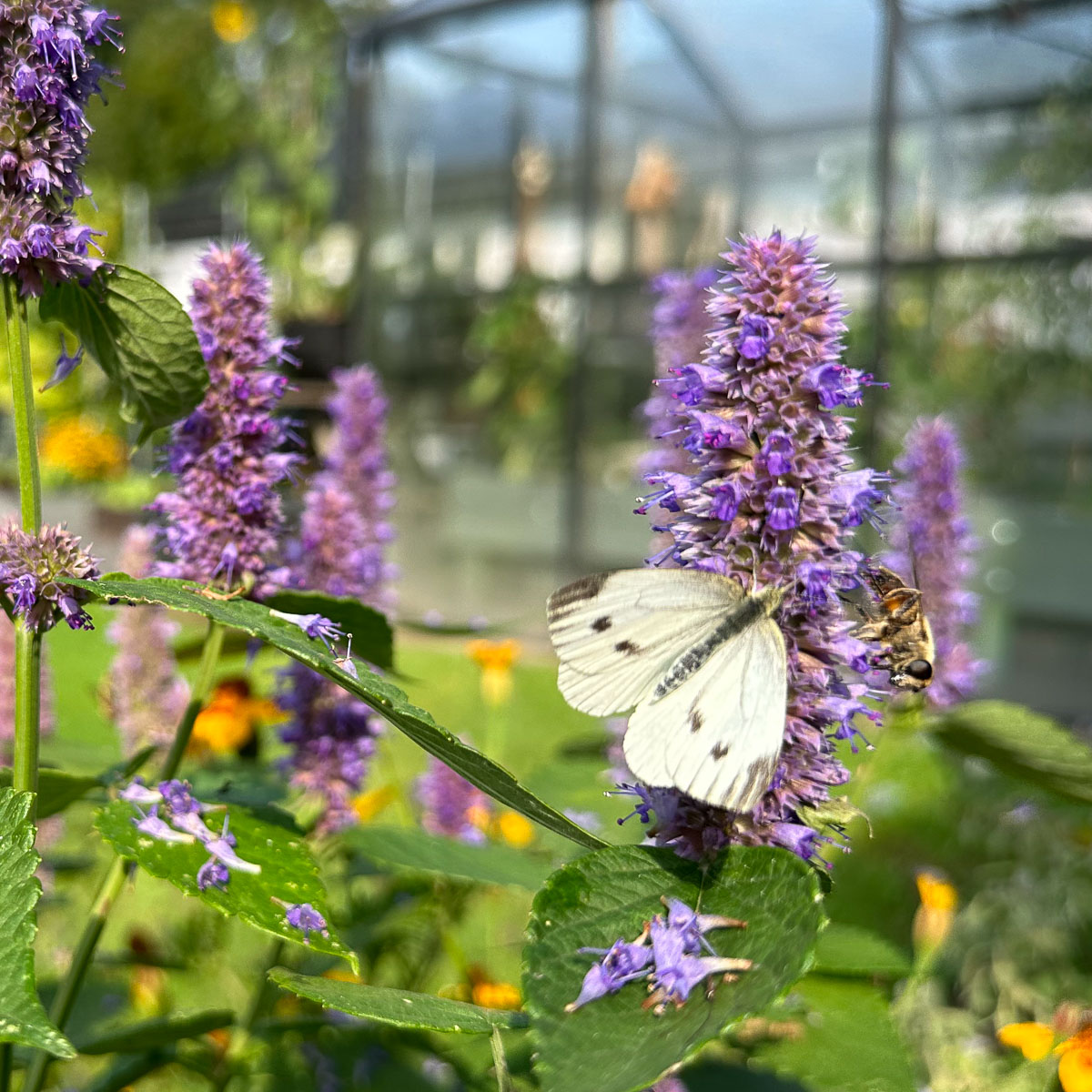
The dreaded cabbage white
The cabbage white is notorious: its green and black-yellow caterpillars will eat huge holes in the leaves of your vegetables. If you listen closely, you can hear them munching away.
As the name suggests, they're white butterflies that love plants in the cabbage family. Especially kale.
As the name suggests, they're white butterflies that love plants in the cabbage family. Especially kale.
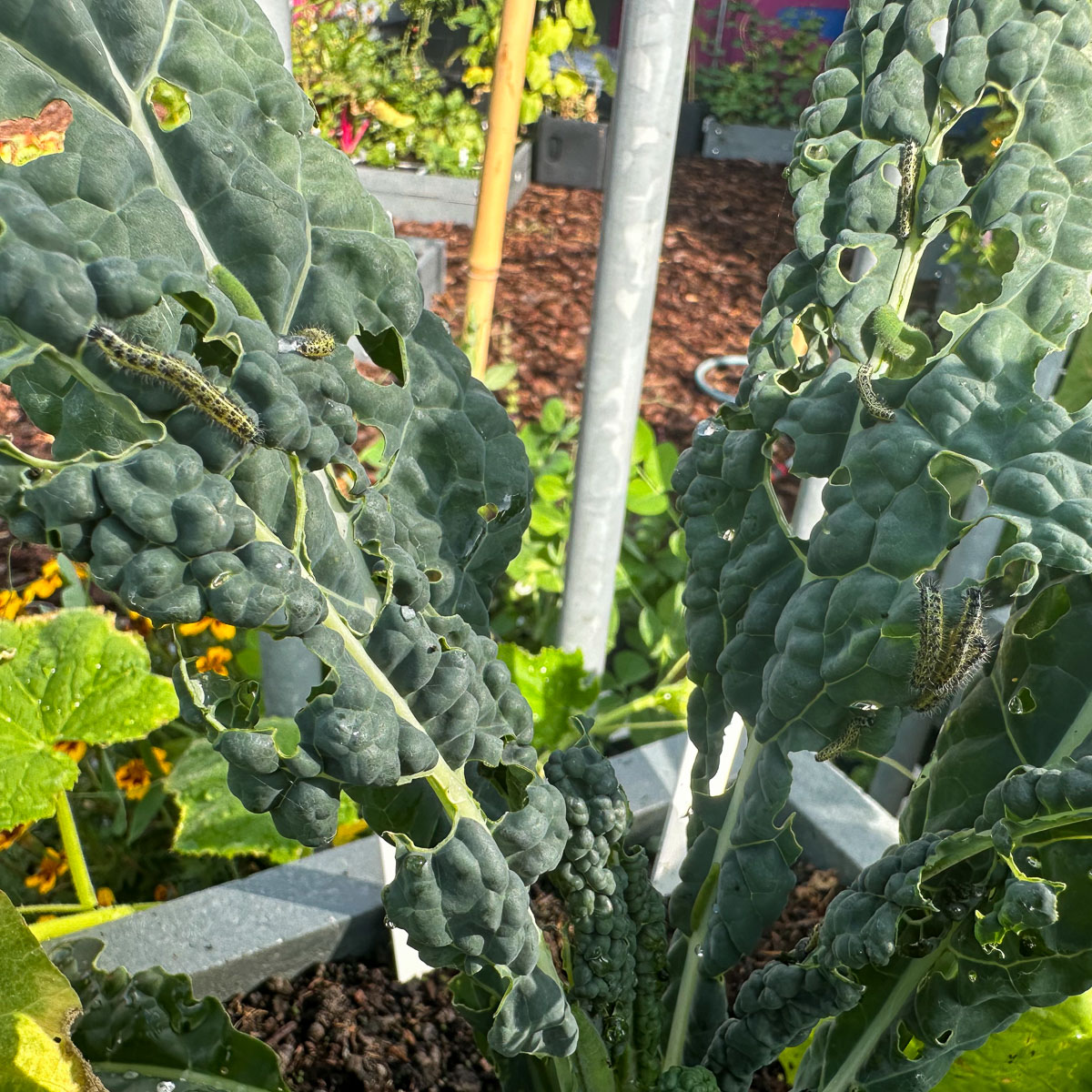
Small cabbage white caterpillars prefer young leaves. But the larger ones will eat older leaves too.
Nothing is safe. That's why I put so few kale plants in my garden, except for dino kale.
But sometimes I even discover cabbage white caterpillars on my beautiful lettuce heads: grrrrrrr.
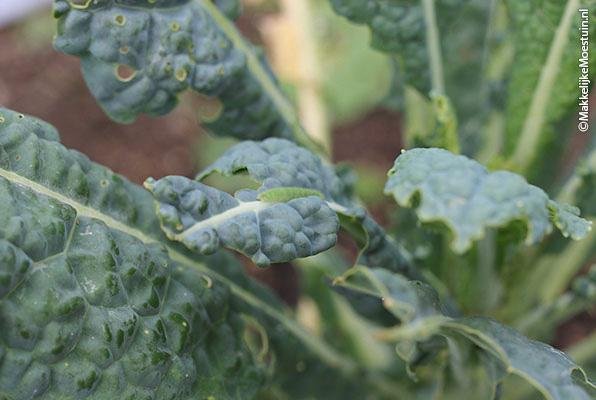
You only know that something's wrong when the holes appear. The caterpillars themselves are not easy to spot, especially the green ones:
Nothing is safe. That's why I put so few kale plants in my garden, except for dino kale.
But sometimes I even discover cabbage white caterpillars on my beautiful lettuce heads: grrrrrrr.
You only know that something's wrong when the holes appear. The caterpillars themselves are not easy to spot, especially the green ones:
How do you prevent caterpillar attacks?
There's only one thing that really helps: putting insect netting or a crop cover over your kale plants.
Our crop cover, the MM-Muts, works perfectly:
Our crop cover, the MM-Muts, works perfectly:
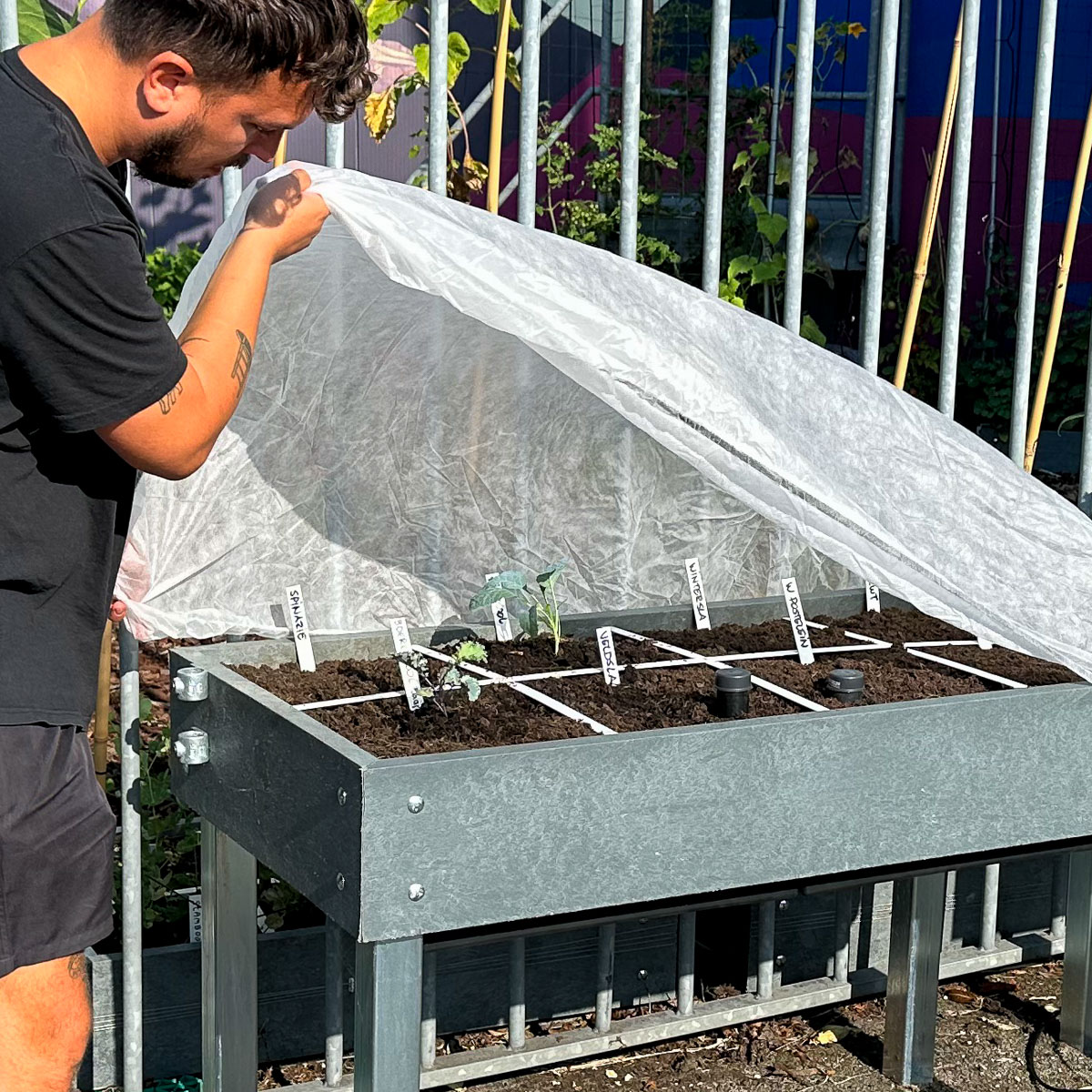
The MM-muts prevents butterflies from laying their eggs.
This is how Margriet does it:
This is how Margriet does it:
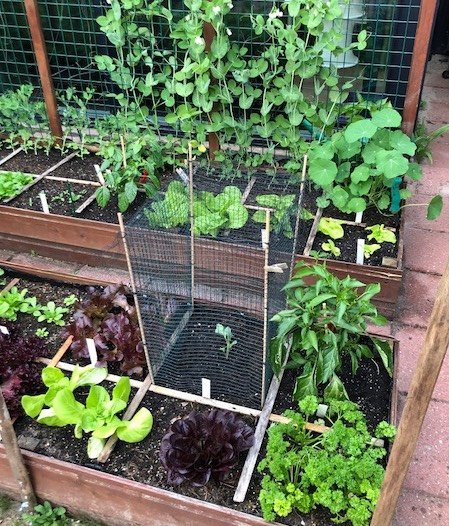
She wrote:
"Last year the butterflies ate my dino kale really early in the season. I hope I can outsmart them this year.
I made a 'cage' that fits perfectly in one patch (30x30cm). First I folded some mesh netting into a cube. Then I attached a square piece of netting onto the top with pegs. So I can still get in, but the butterflies can't.
Hope it works! Haha, eat that, butterflies!"
"Last year the butterflies ate my dino kale really early in the season. I hope I can outsmart them this year.
I made a 'cage' that fits perfectly in one patch (30x30cm). First I folded some mesh netting into a cube. Then I attached a square piece of netting onto the top with pegs. So I can still get in, but the butterflies can't.
Hope it works! Haha, eat that, butterflies!"
Create a diversion
I put Indian cress in my garden every year:
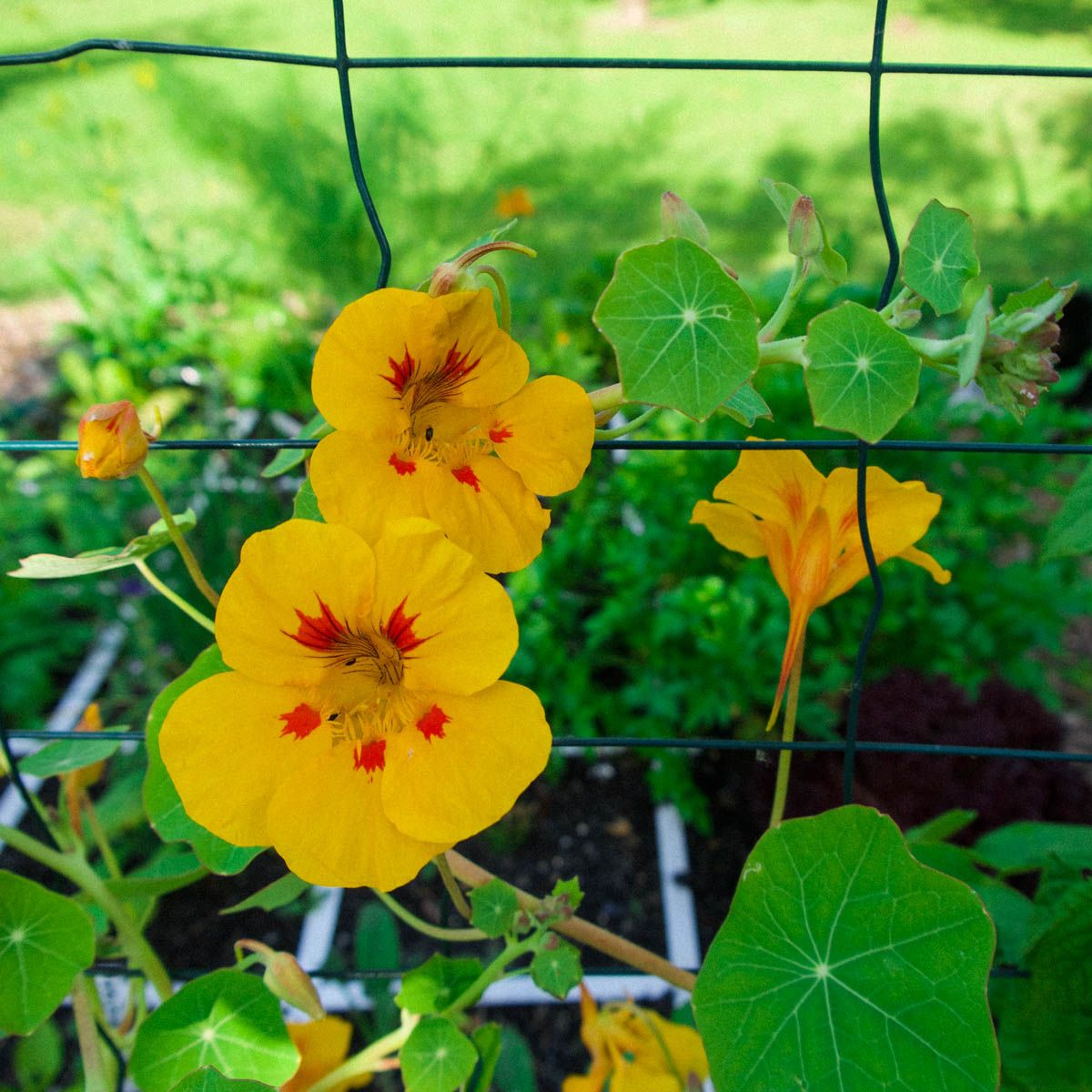
Butterflies like laying their eggs on these leaves too, increasing the chance that they will leave your cabbage plants alone.
They dislike strongly scented plants such as dill, cilantro, sage, rosemary, mint, marjoram, thyme, onion, or garlic. Make an infusion from these plants and spray it on your crops.
Or, more simply, sow or plant the fresh herbs among your vegetables or place them in an MM-Mini next to your raised bed.
They dislike strongly scented plants such as dill, cilantro, sage, rosemary, mint, marjoram, thyme, onion, or garlic. Make an infusion from these plants and spray it on your crops.
Or, more simply, sow or plant the fresh herbs among your vegetables or place them in an MM-Mini next to your raised bed.
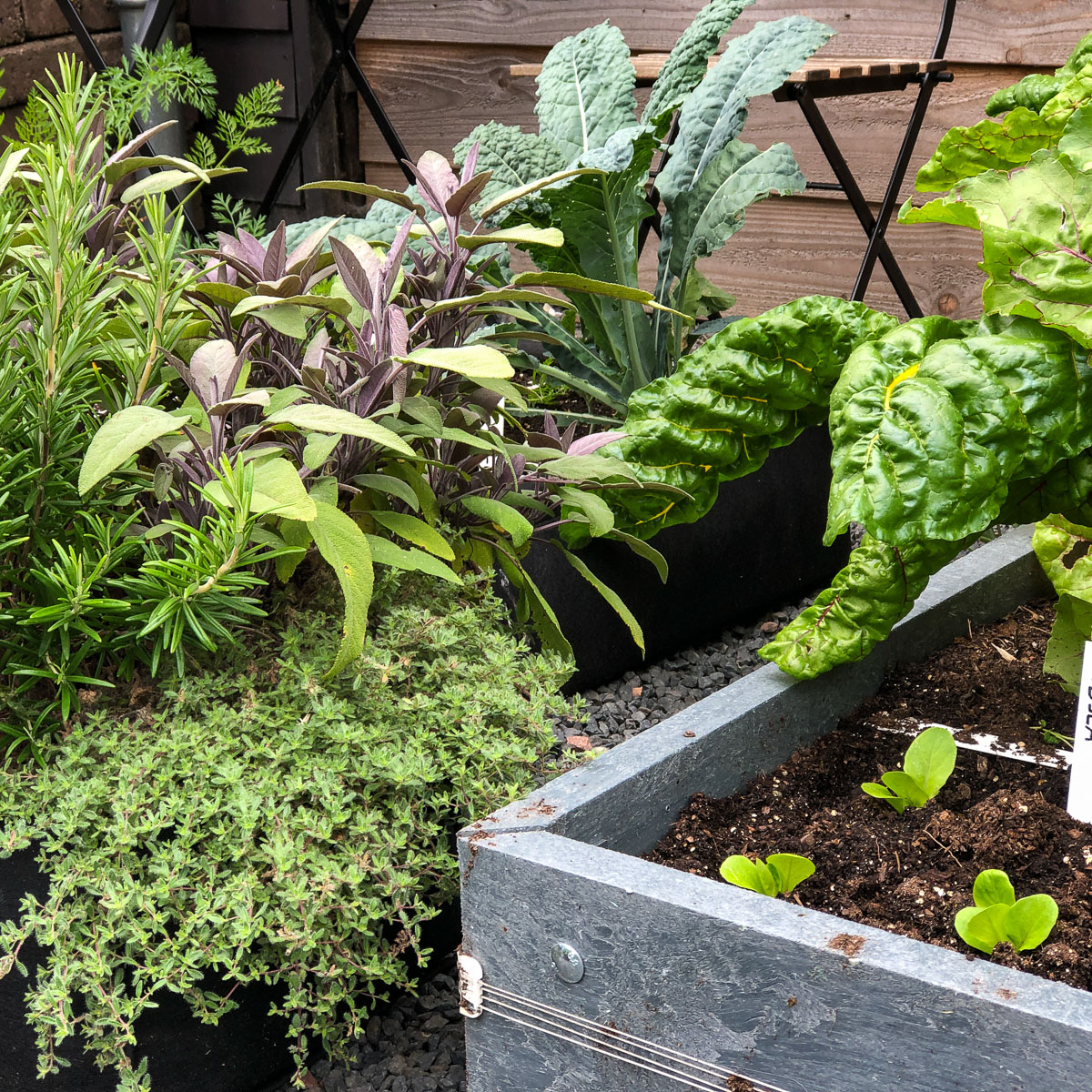
Give it a try, why not?
Pepper and garlic deterrents
Another tip: give your black pepper shaker a really good shake over your dino kale. It won't harm your plants, and butterflies hate it. Snails too.
But choose your pepper wisely: when I ran out of black pepper, I sprinkled pure cayenne over my plants. It knocked my little basil plants out.
So, stick to powdered white or black pepper.
Using a garlic spray also helps.
But choose your pepper wisely: when I ran out of black pepper, I sprinkled pure cayenne over my plants. It knocked my little basil plants out.
So, stick to powdered white or black pepper.
Using a garlic spray also helps.
The one spray that does it all
A homemade garlic spray doesn't only help fight off caterpillars, but also combats slugs and all sorts of other pests: ants, aphids, larvae, and whiteflies.
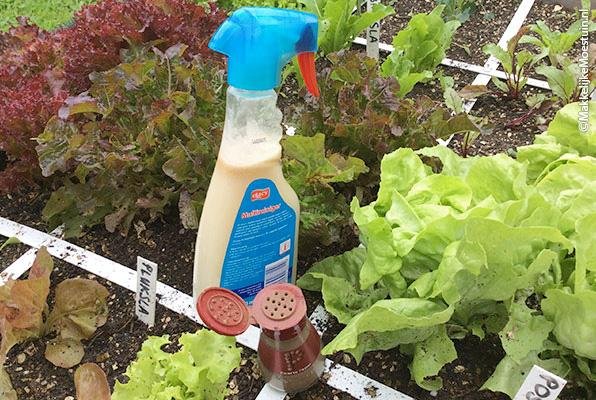
You can find the recipe here.
Spray your plants with it every few days. Don't forget to get the underside of the leaves too. After it rains, spray again.
Repeat until you don't see any more pests. Then spray again a week later to kill off any newly hatched larvae and eggs.
Spray your plants with it every few days. Don't forget to get the underside of the leaves too. After it rains, spray again.
Repeat until you don't see any more pests. Then spray again a week later to kill off any newly hatched larvae and eggs.
But what if your plant is already badly damaged?
If the plant has been almost completely eaten, it is better to give up on it and remove it from your raised bed, especially when the plants are still very small.
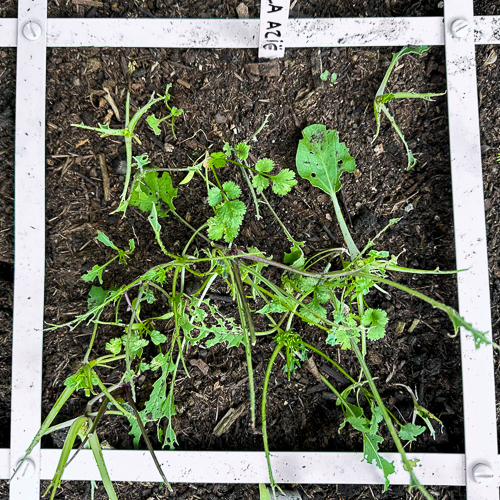
And what if your plant is already damaged?
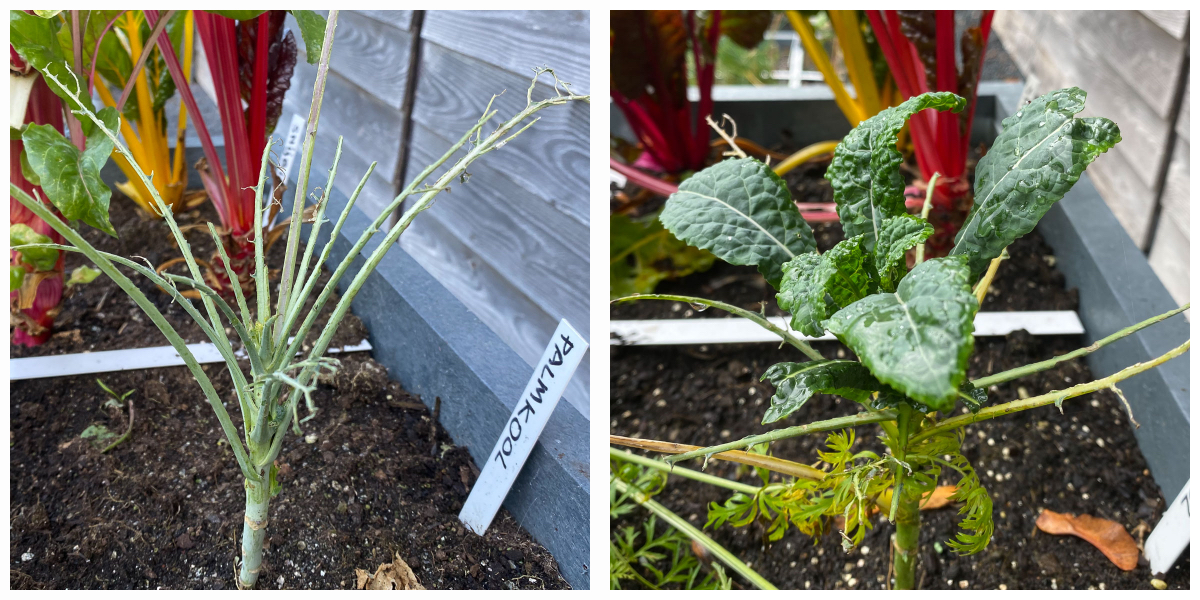
With larger plants, you can wait and see how they recover. Leaves with a few holes taste just as good as flawless leaves, and you will not see the difference in soups or smoothies.
And no, they will not make you ill, even if you accidentally eat an egg or a tiny caterpillar 😉
And no, they will not make you ill, even if you accidentally eat an egg or a tiny caterpillar 😉
You can simply leave Dino kale in place. No matter how scruffy it looks, the plant will continue producing new leaves.
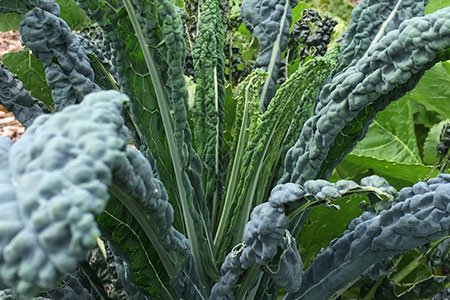
If you remove the caterpillars and keep new ones away, you can still harvest a lot of kale leaves in the fall and winter.
So, what's should you do next?
As soon as you see butterflies, check your vegetables regularly.
Search for caterpillars in the leaves of your brassicas - plants in the kale family. If you see them, carefully pick them off and put them somewhere else. (Don't kill them: overuse of pesticides - like Round-up - means there are fewer and fewer insects.)
Also, check the underside of the leaves once in a while for any eggs. Immediately rub them away.
Search for caterpillars in the leaves of your brassicas - plants in the kale family. If you see them, carefully pick them off and put them somewhere else. (Don't kill them: overuse of pesticides - like Round-up - means there are fewer and fewer insects.)
Also, check the underside of the leaves once in a while for any eggs. Immediately rub them away.
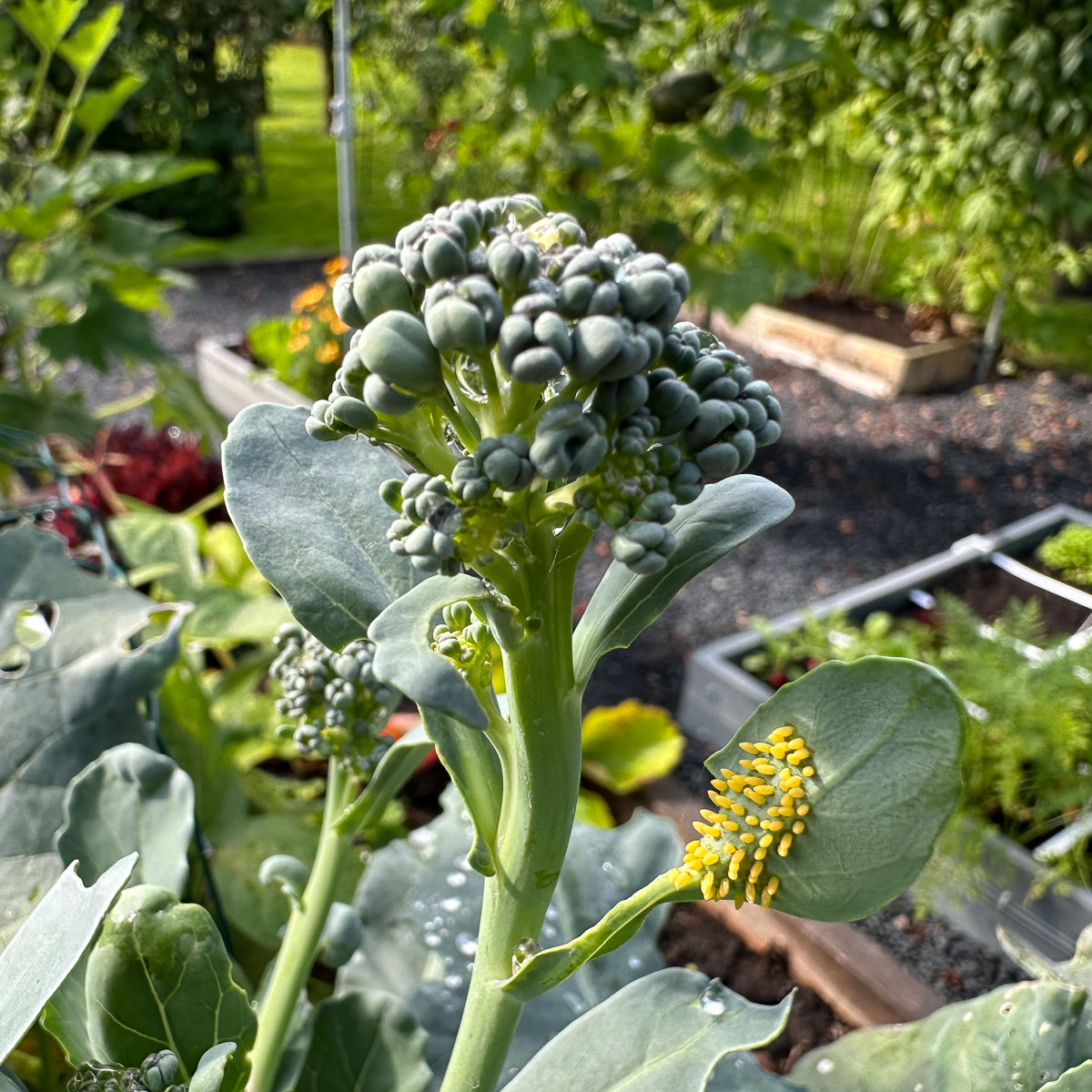
The large white butterfly lays a whole cluster of yellow eggs together, making them easy to spot. The small white butterfly spreads its eggs over several places, so they are less noticeable.
Do not leave the eggs in place. Put the piece of leaf with the eggs somewhere else, or rub them away between your thumb and forefinger.
To prevent new eggs, use garlic spray or protect the plants with an MM cover or an insect-mesh cage.
Do not leave the eggs in place. Put the piece of leaf with the eggs somewhere else, or rub them away between your thumb and forefinger.
To prevent new eggs, use garlic spray or protect the plants with an MM cover or an insect-mesh cage.
Good luck!