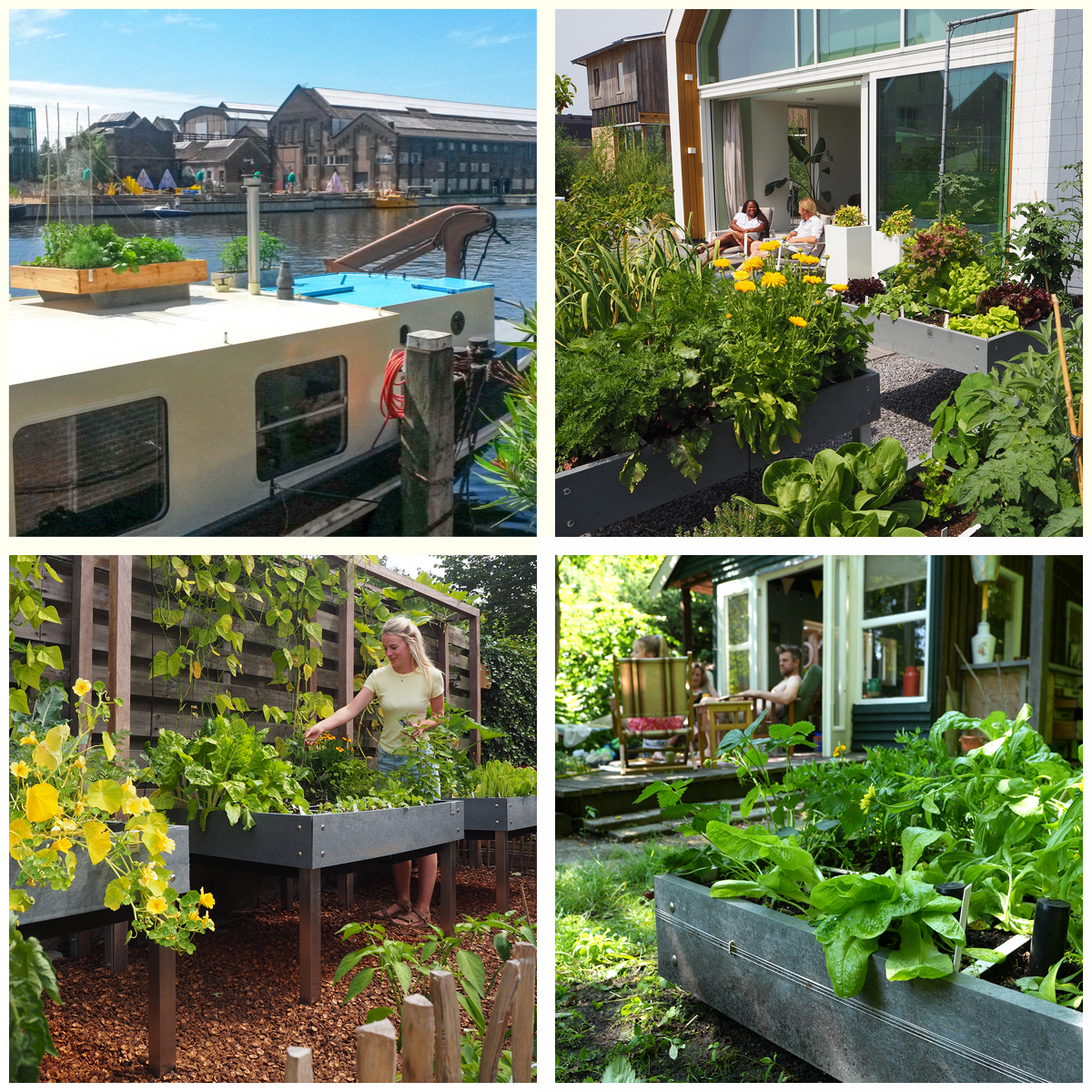
Raised beds can go in all sorts of places, including a balcony or roof terrace. But the spot needs to meet a few conditions: enough sunlight, easy to see and, ideally, a little shelter.
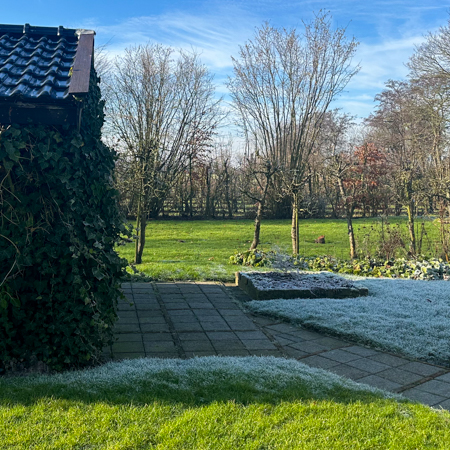
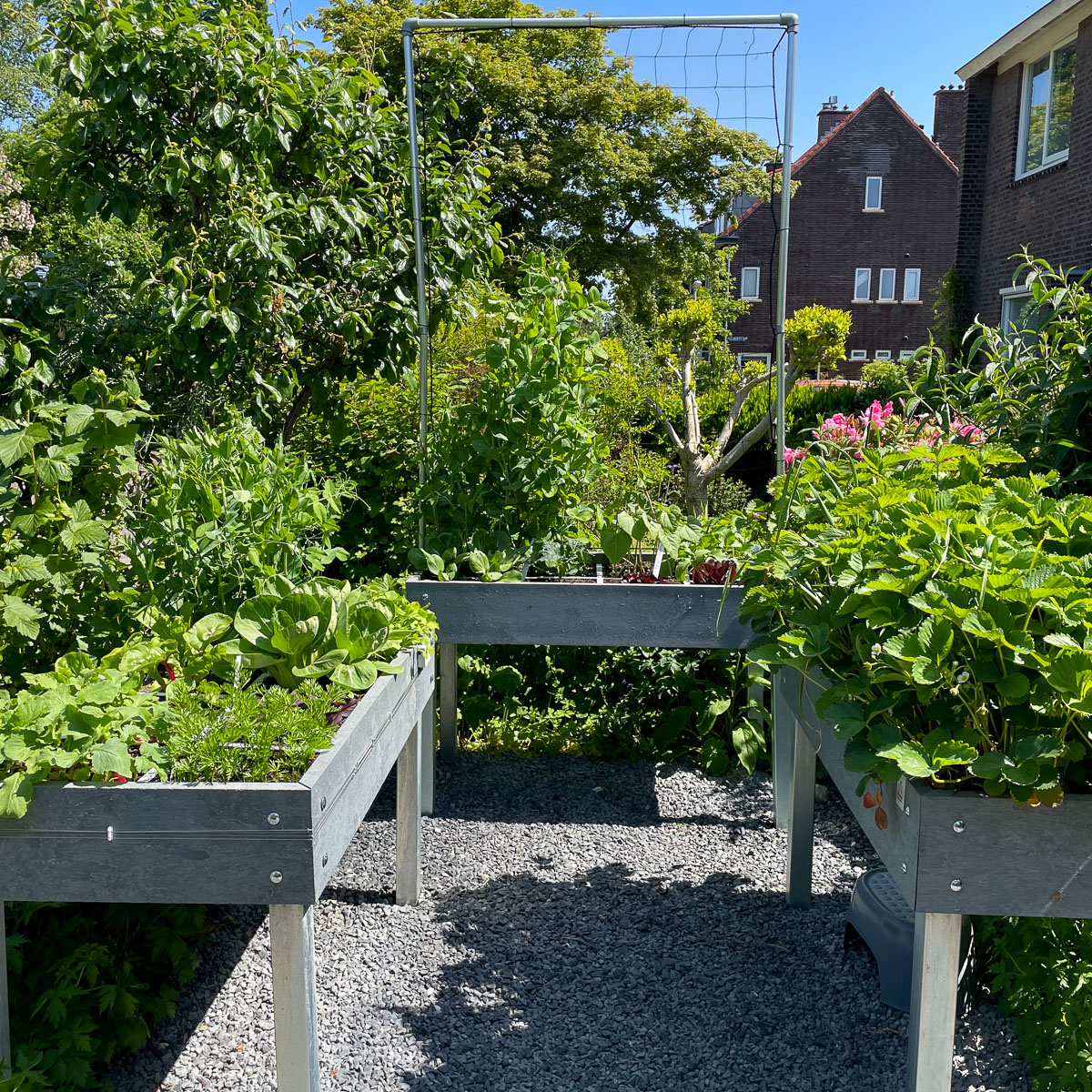
Jelmer's back garden: a great spot!
Jelmer's back garden: a great spot!
In last week's blog, I told you about our raised beds and how they already give your plants most of what they need: light, water, nutrients, air and space. Haven't read it yet? You'll find it here.
But put a raised bed somewhere that gets hardly any sun and your plants still won't grow well. So today, I'll explain where you can and can't put your raised beds, and what to bear in mind.
Where can you put a Makkelijke Moestuin?
A better question might be: where can't you? Growing in raised beds means you don't need open ground, which gives you a huge amount of freedom.
That means you can grow in a small city garden, on a balcony or roof terrace, in your front or back garden, or even on the roof of a boat.
Raised beds can go in all sorts of places
For the best results, though, the spot should have:
at least 6 hours of sunlight a day, preferably 8 or even more
shelter from the wind
a clear view from your home, as close to your kitchen as possible
Without these, your plants won't grow as well.
When we started with the Makkelijke Moestuin in 2008, we hadn't really thought this through. A few of my first raised beds were fully exposed to the wind, and the one my mum built from bricks was in the shade for much of the day:
Saskia's very first raised bed, from 2008
We soon noticed that the plants in those beds didn't grow as well as the ones that got enough sun and less wind.
To help you avoid that, I'll take you through everything:
Vegetables need at least 6 hours of sunlight
Almost all plants need sunlight to grow well. They use it to make much of their own food, particularly sugars that provide the energy to grow.
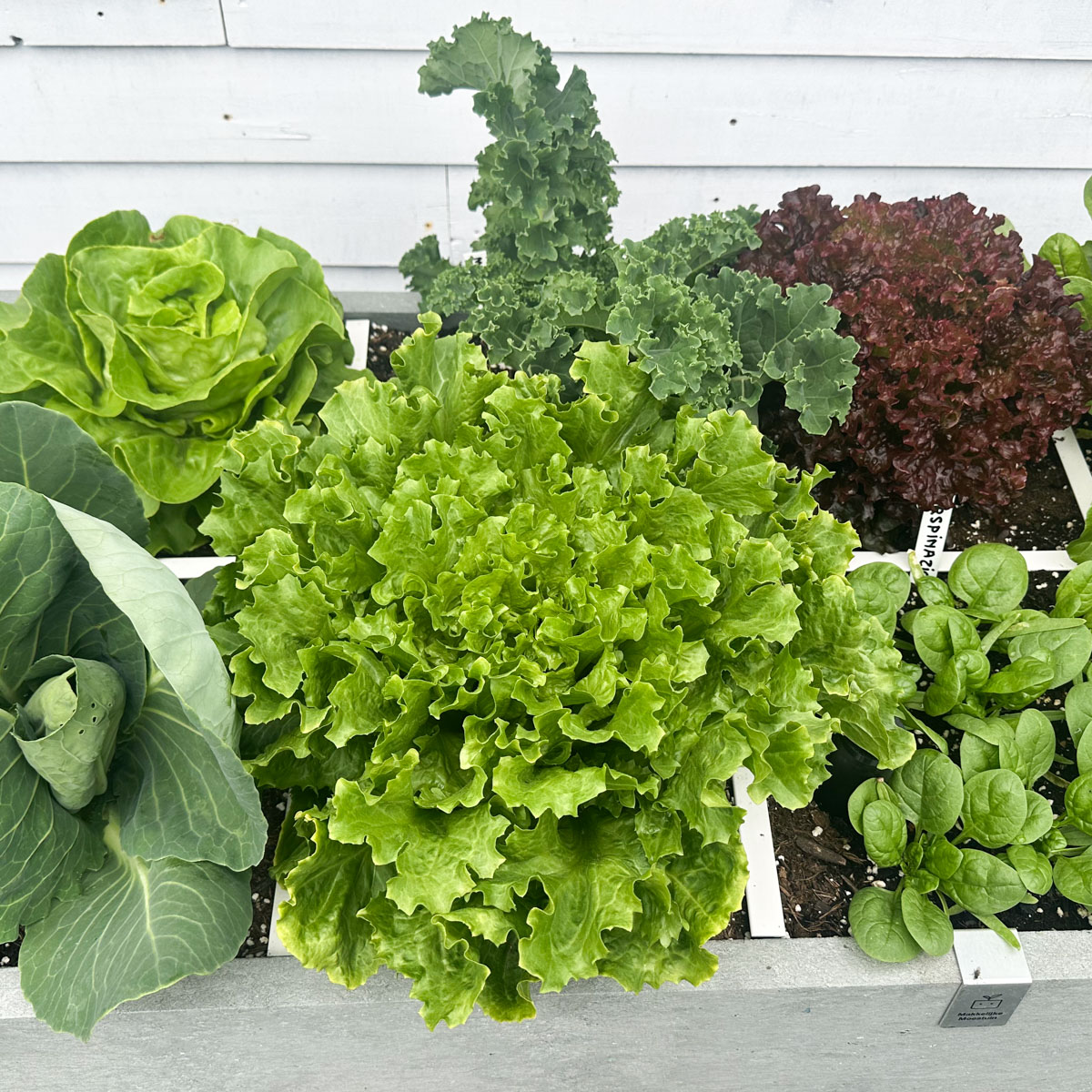
Leafy vegetables need at least 6 hours of sunlight
So put your raised bed somewhere that gets enough sun in summer. For leafy vegetables such as lettuce and spinach, that means six hours of sunlight.
Other vegetables need more: they do better with 8 hours of sun.
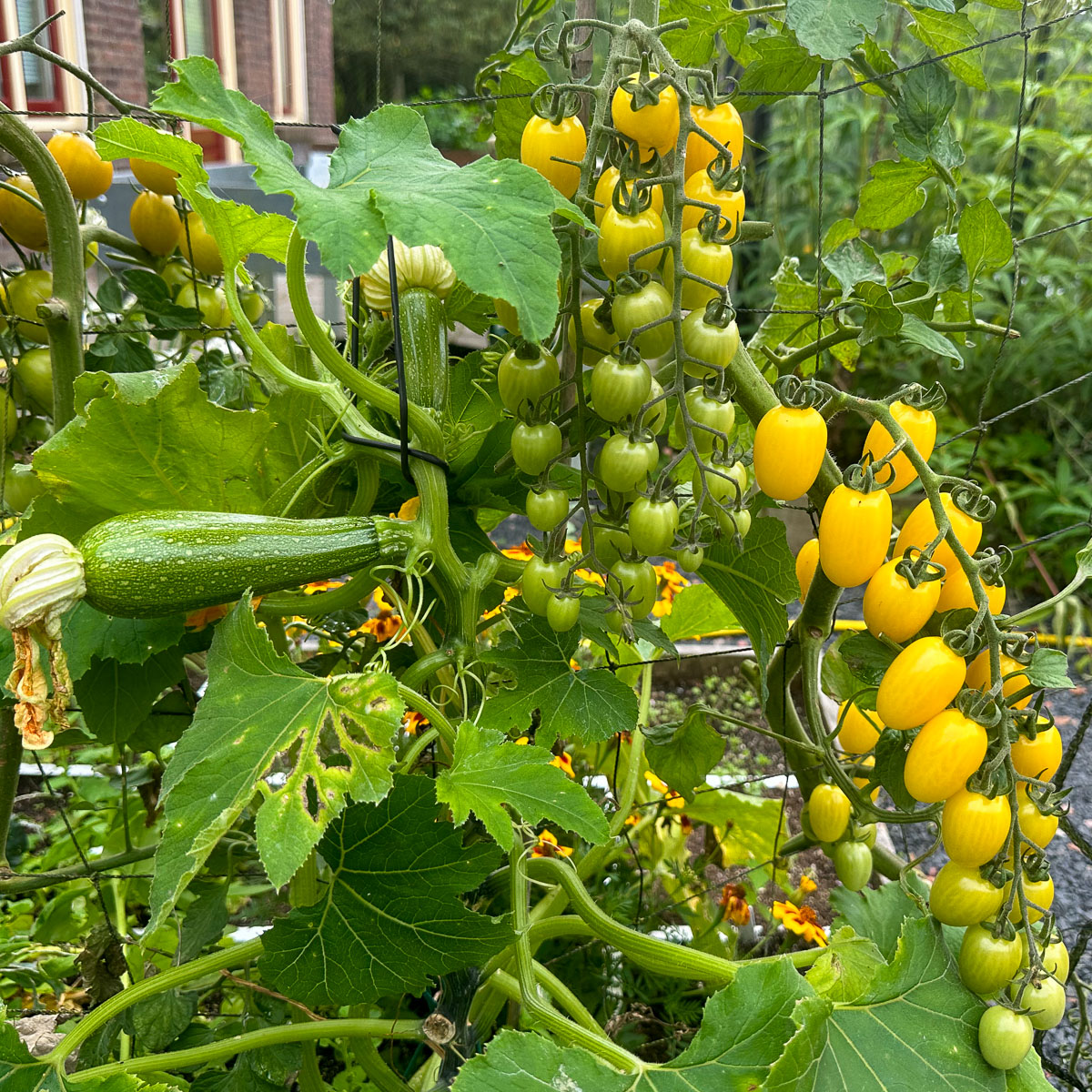
Tomatoes and other summer vegetables prefer a little more:
Yellow snack tomatoes and climbing courgettes produce more, tastier fruit in full sun
How do you work out the hours of sunlight?
First, look at which parts of your garden get sun. Choose a sunny day and check at different times. Some spots might be in full sun in the morning but in shade by the afternoon.
Note down when each spot gets sun and when it doesn't, then add up the hours.
Bear the time of year in mind too. A spot that's mostly shaded in early spring may get enough sunlight in summer, when the sun is much higher in the sky.
With trees, it's often the other way round. In summer, when they're in full leaf, they cast much more shade than in spring or autumn:
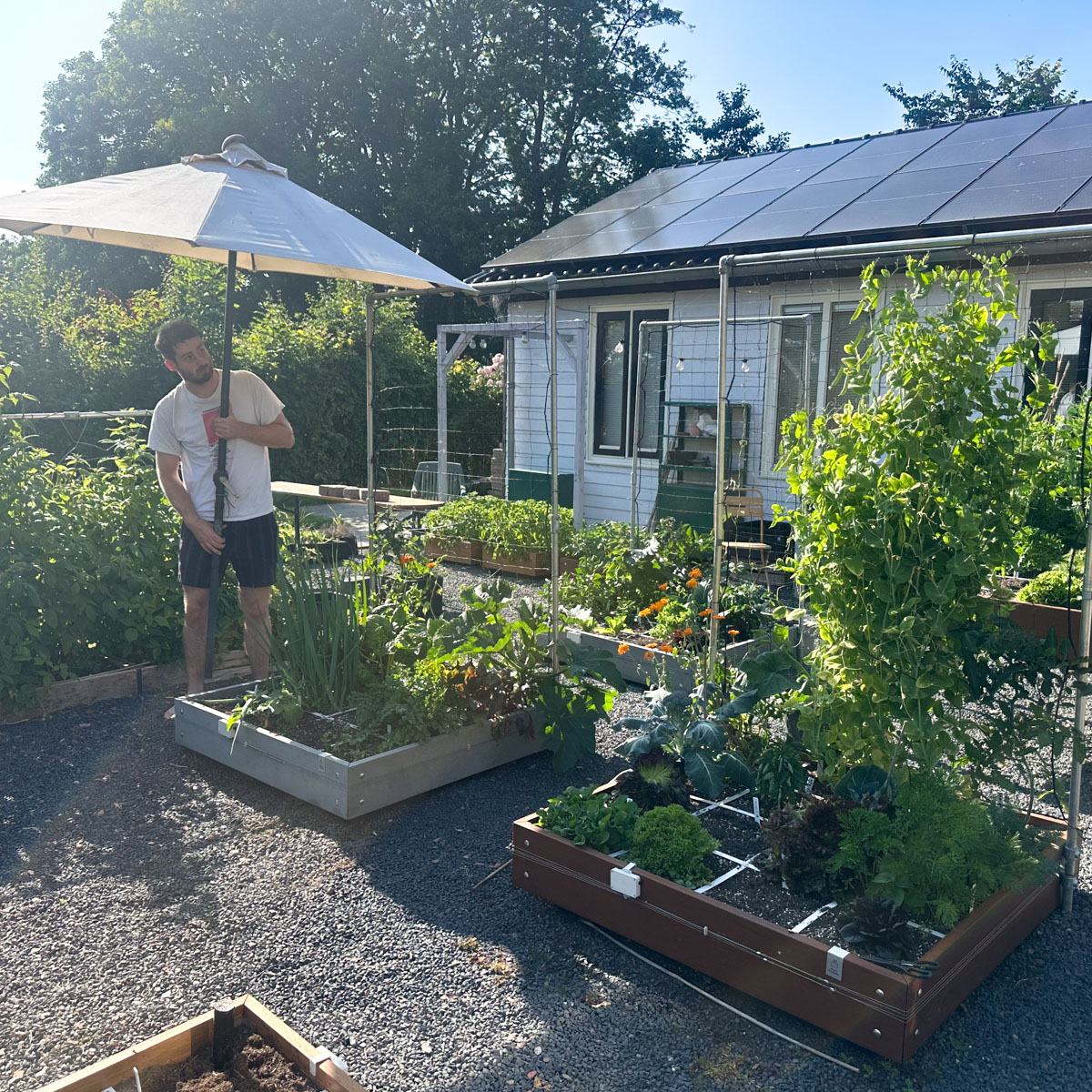
Karina keeps her garden boxes in the front yard
The bare trees you see in spring cast plenty of shade in summer
Even so, you can find a spot that gets 8 hours of sunlight in almost any garden, even if it isn't the most obvious place.
Perhaps raising your bed off the ground helps, or your front garden is a better spot, as it is for Manja:
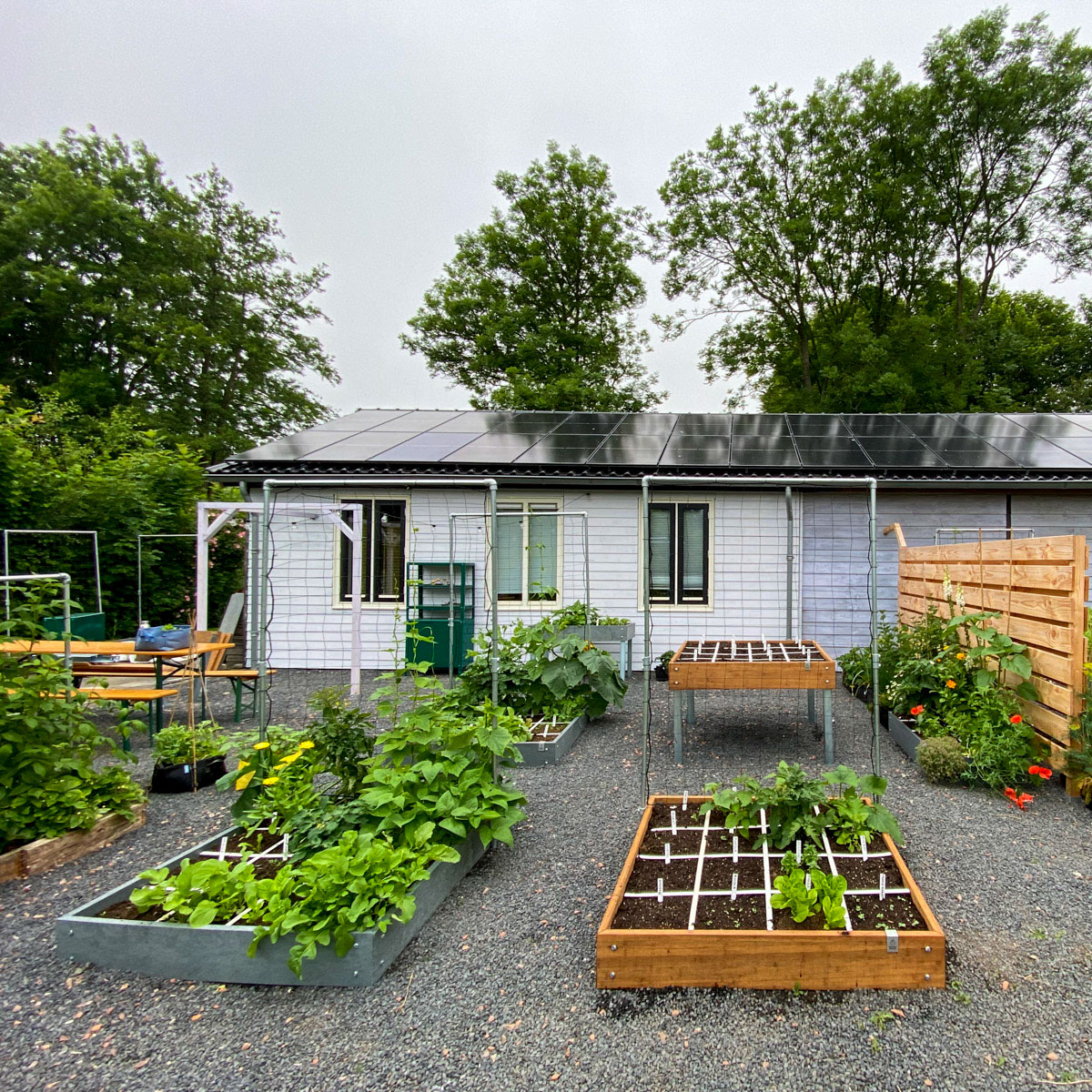
Manja's MM raised beds are in her front garden
Choose the best spot you can: it can make the difference between a modest harvest and a great one.
And if you have several raised beds, feel free to put them in different places if that works better in your garden. They don't all have to stand next to each other.
The hours mentioned above mainly apply to summer. In spring and autumn, the days are shorter, the sun is much lower and your plants grow more slowly anyway. At those times, at least 4 hours of sunlight is enough.
What if your garden gets sun all day?
Then you're in luck: your raised beds will get plenty of sunlight from early spring onwards.
But weeks of sunshine and high temperatures in midsummer can be a bit much for most vegetables.
Raised beds make that fairly easy to deal with too: just give them some shade during the hottest part of the day.
It's easy to give your raised beds some shade when they need it
A little shelter from the wind
If possible, give your raised bed some protection from the wind.
In most places, it won't be much of a problem. Here in our garden, though, the wind has free rein. We can clearly see the difference between exposed beds and sheltered ones.
A windbreak can help, including on an open roof terrace.
A fence shelters our office garden from the wind
Keep your raised beds in sight
Out of sight, out of mind definitely applies to a vegetable garden. If your raised bed is tucked away or hidden behind a hedge, it's easy to forget about it and harvest less. Watering can slip your mind too.
So put your raised bed as close to the kitchen as possible, ideally where you can see it from the window. That makes it easy to pop outside and pick something while you're cooking:
Bart's raised beds are right outside his kitchen window
Bart's raised beds are right outside his kitchen window.
No suitable spot at home?
There are plenty of other possibilities. Think of an allotment, a vegetable garden at your parents' or grandparents' home, a garden shared with neighbours, or the communal outdoor space at your block of flats.
Gardening together isn't just practical: it can be great fun too.
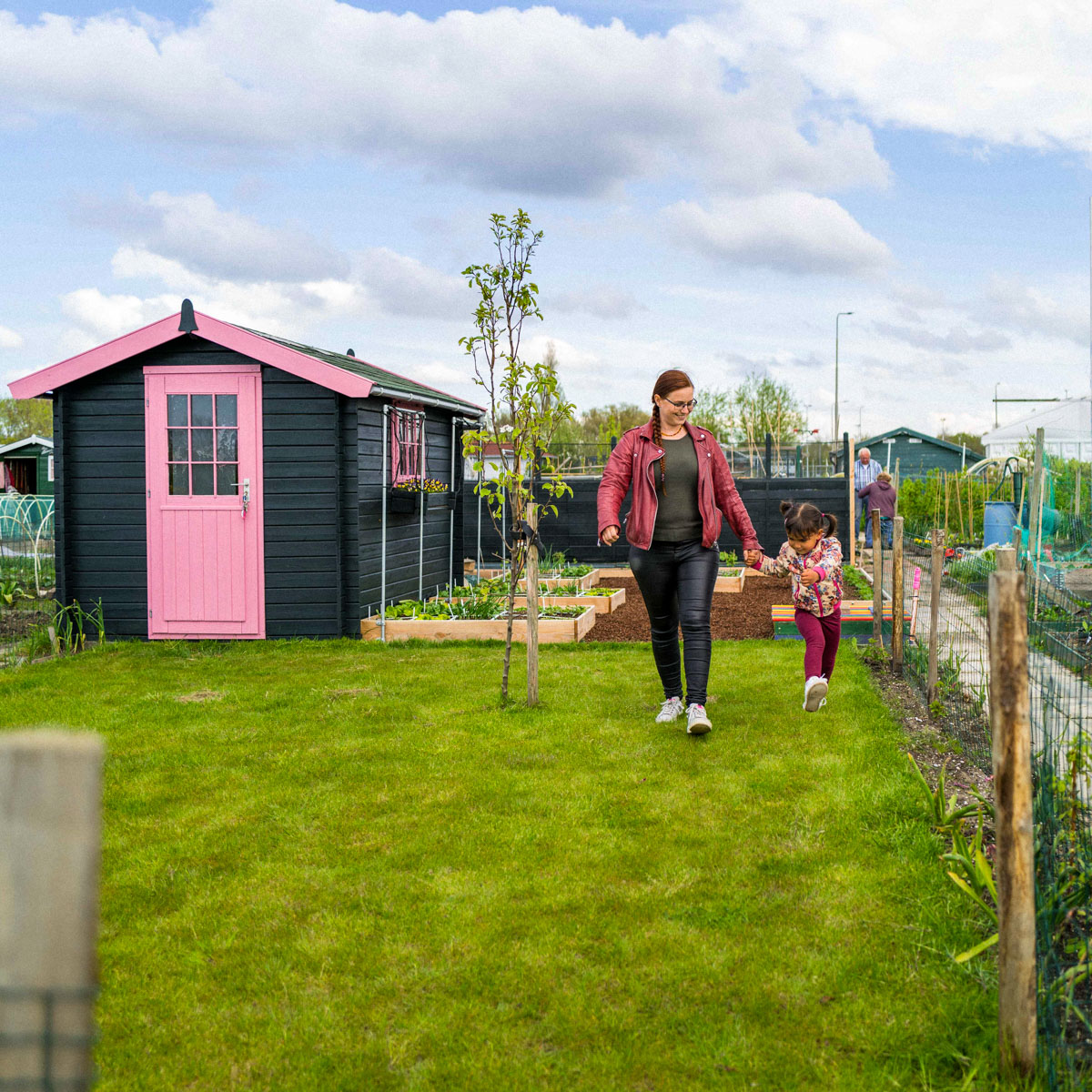
Sneeuwklokje's raised beds at an allotment site
That's all for today
The next blog is about how much space you need for a Makkelijke Moestuin that suits you.
I'll explain not just how much room the different MM raised beds take up, but how much you can harvest from them if you use them well. And believe me, it's more than you might think.