
Why is sunlight so important for your plants?
Plants use sunlight to turn water and carbon dioxide from the air into sugars and starch. This is called photosynthesis, and it's essential for healthy growth.
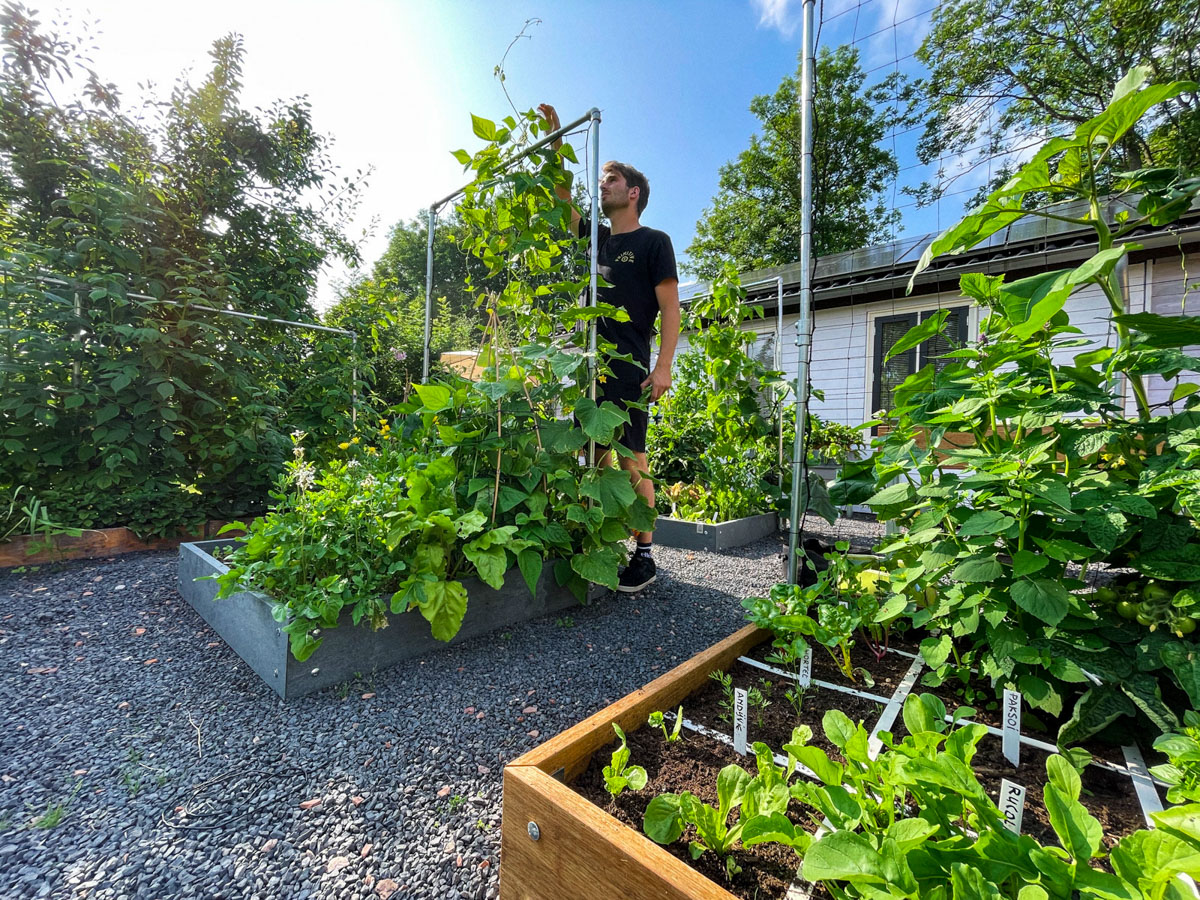
Zelf groentes verbouwen kan daarom alleen op een plek waar voldoende zonlicht komt: minstens 6-8 uur per dag. Heb je die niet, dan hoef je er niet eens aan te beginnen, want dan zal het niet lukken.
Dat komt omdat planten voldoende zonlicht nodig hebben om voedsel te maken, en zonder voedsel kunnen ze niet groeien. Staat een plant (te veel) in de schaduw, dan groeit ze slecht of helemaal niet.
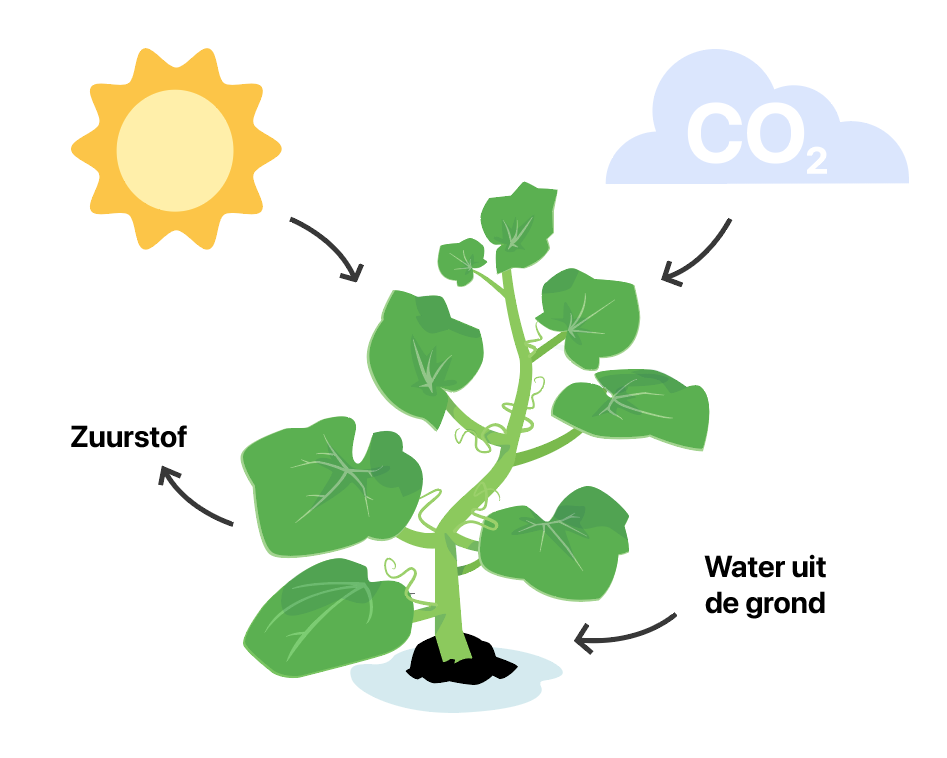
Die voeding maakt-ie door met het zonlicht water en lucht om te zetten naar suikers en zetmeel.
Dat noem je fotosynthese:
Dat noem je fotosynthese:
How exactly does photosynthesis work?
Time for a little biology:
- The chlorophyll in the plant's leaves absorbs sunlight. This provides the energy needed.
- The roots take up water (H2O) from the soil and carry it through the plant's vascular tissue to the leaves.
- The stomata, tiny openings in the leaves, take in carbon dioxide (CO2) from the air.
- Inside the chloroplasts, energy from sunlight converts water and CO2 into:
- Sugar (glucose, C6H12O6): the plant uses this as an energy source and a building material.
- Oxygen (O2): this is released back into the air.
Written as a formula: 6CO2 + 6H2O + light energy → C6H12O6 + 6O2.
What does the plant use glucose for?
The plant uses some of this sugar straight away as energy, or food.
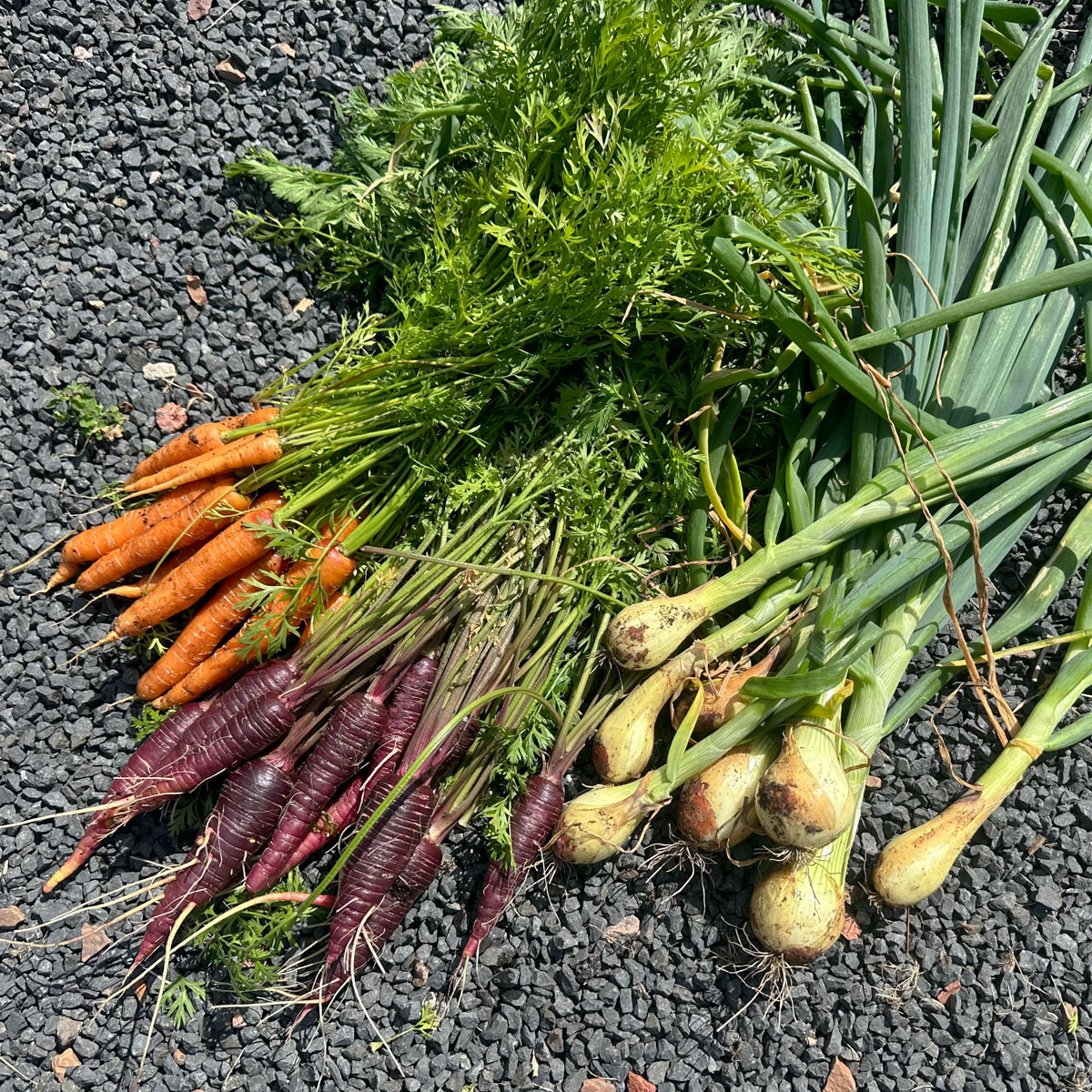
It stores the rest for later, for example in carrots, beetroot, onions and stems, or converts it into starch. This happens especially in potatoes, cereals and legumes such as beans and peas.
It stores the rest for later, for example in carrots, beetroot, onions and stems, or converts it into starch. This happens especially in potatoes, cereals and legumes such as beans and peas.
Does this give plants all the food they need?
No, but it provides an important part of it. Photosynthesis produces sugars, and without those sugars there's no energy or growth.
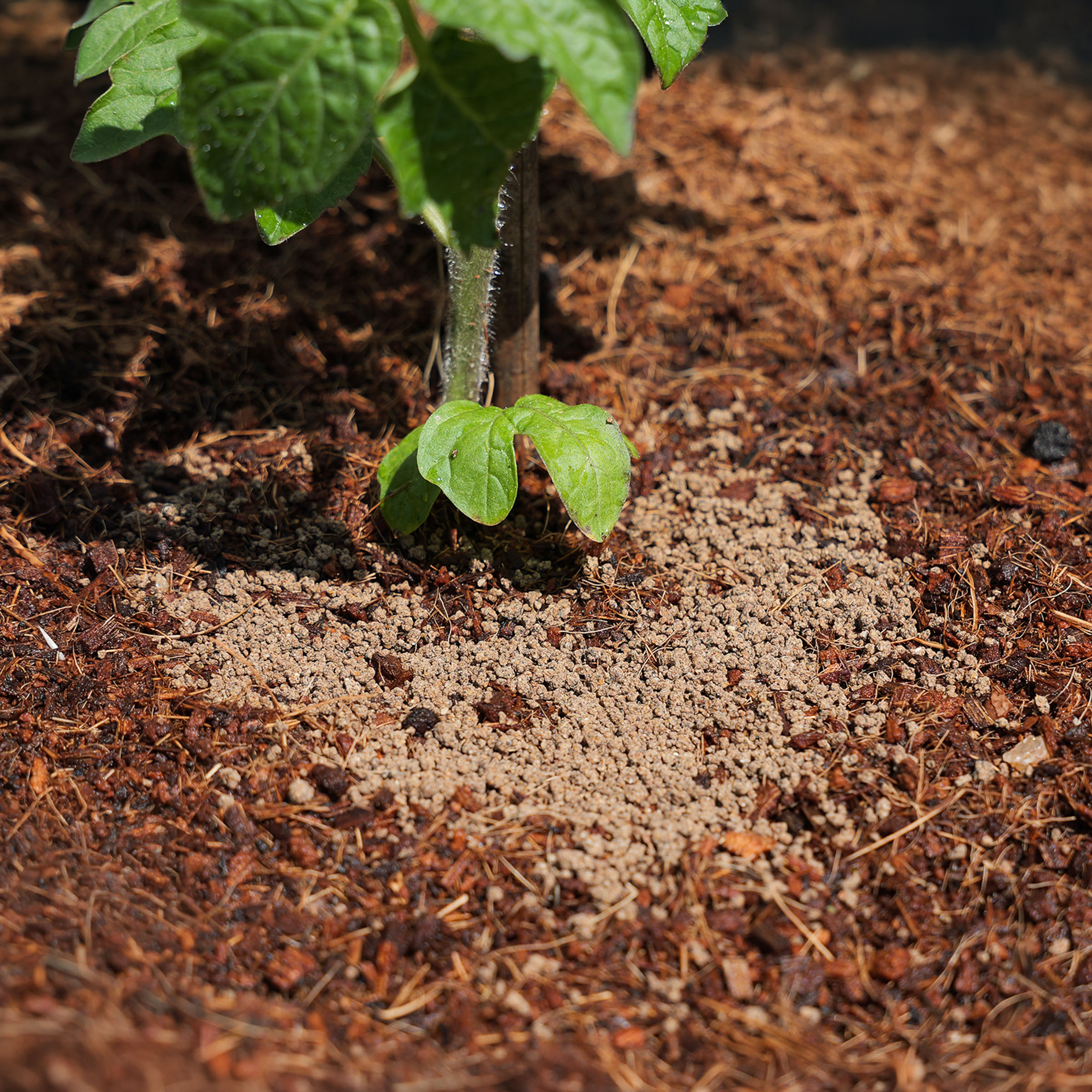
To grow strong and healthy, a plant also needs minerals and nutrients, including nitrogen (N), phosphorus (P), potassium (K), calcium, magnesium, iron and trace elements.
In a Makkelijke Moestuin, your plants get these from the mix. Vegetables are quite hungry plants, so you need to top up those nutrients from time to time with MM plant food:
To grow strong and healthy, a plant also needs minerals and nutrients, including nitrogen (N), phosphorus (P), potassium (K), calcium, magnesium, iron and trace elements.
In a Makkelijke Moestuin, your plants get these from the mix. Vegetables are quite hungry plants, so you need to top up those nutrients from time to time with MM plant food:
What if it's cloudy all the time?
For photosynthesis, plants mainly use the blue and red light in the spectrum of sunlight.
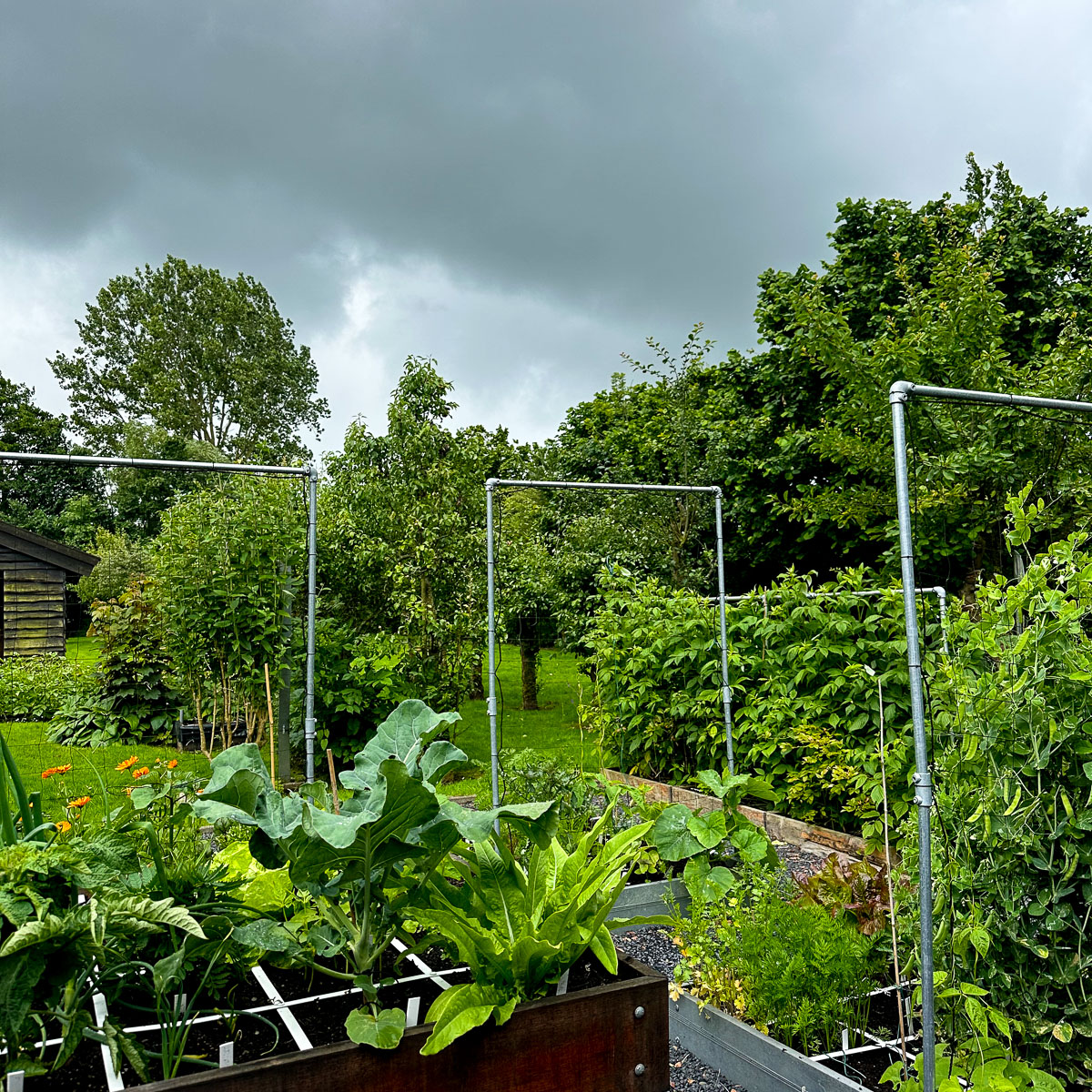
That light is also present in daylight when it's cloudy or raining, but at a much lower intensity than in direct sunlight. Daylight still allows photosynthesis, but direct sunlight is even better.
That light is also present in daylight when it's cloudy or raining, but at a much lower intensity than in direct sunlight. Daylight still allows photosynthesis, but direct sunlight is even better.
Do you need to remember all of this?
No, not at all. Just remember that your plants really need sunlight.
That's why your raised beds need a spot with at least 6-8 hours of sunlight. Six hours is enough for leafy vegetables, while other vegetables grow better with eight hours.
Tomatoes and other sun-loving vegetables prefer even more.
That's why your raised beds need a spot with at least 6-8 hours of sunlight. Six hours is enough for leafy vegetables, while other vegetables grow better with eight hours.
Tomatoes and other sun-loving vegetables prefer even more.
Stop your plants shading one another
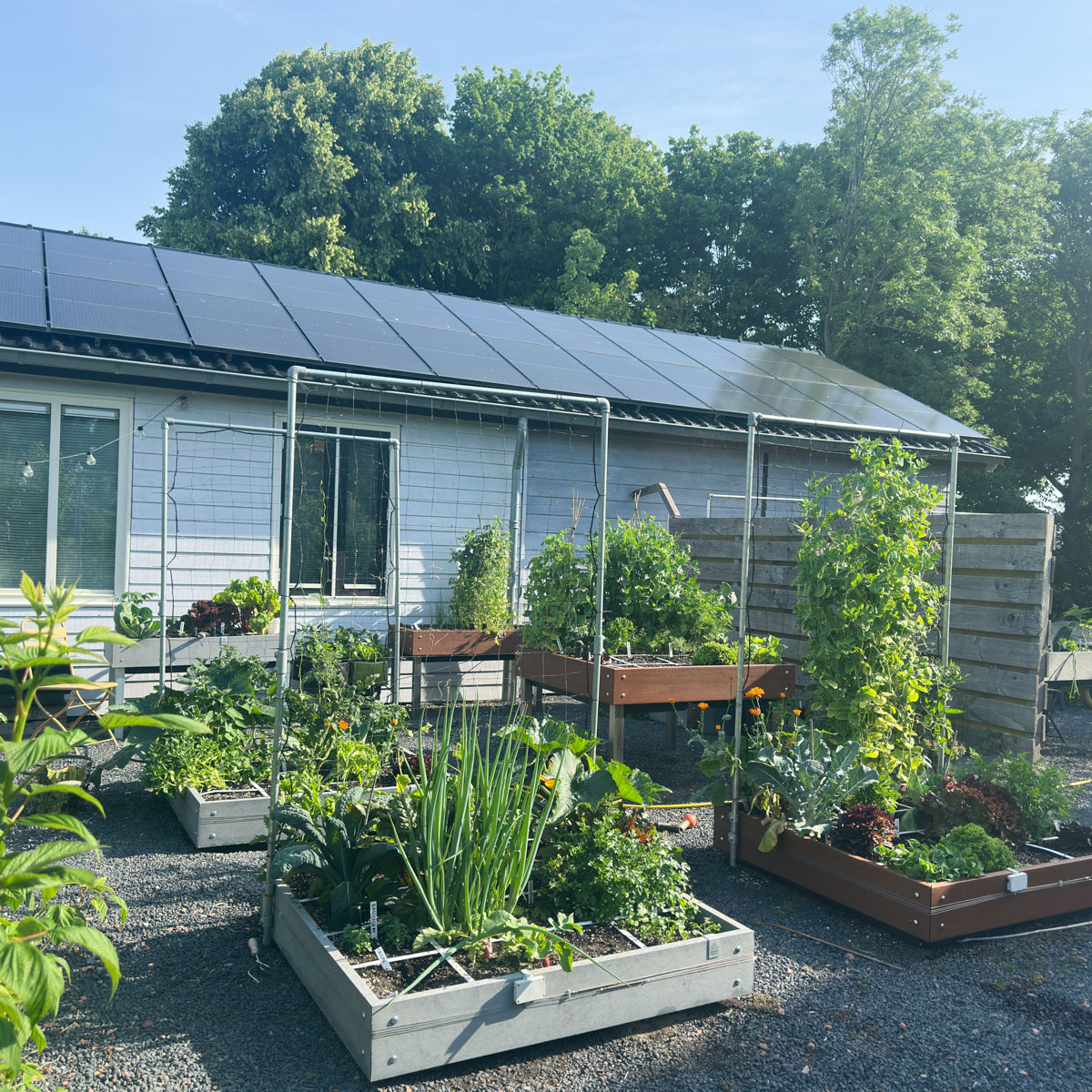
Try to keep your plants from shading each other too much. You probably can't prevent it completely, but these steps make a big difference:
- Put your trellis on the north side of the raised bed.
- Sow or plant tall crops in the back squares.
- Place shorter plants at the front.
Keep your plants in check
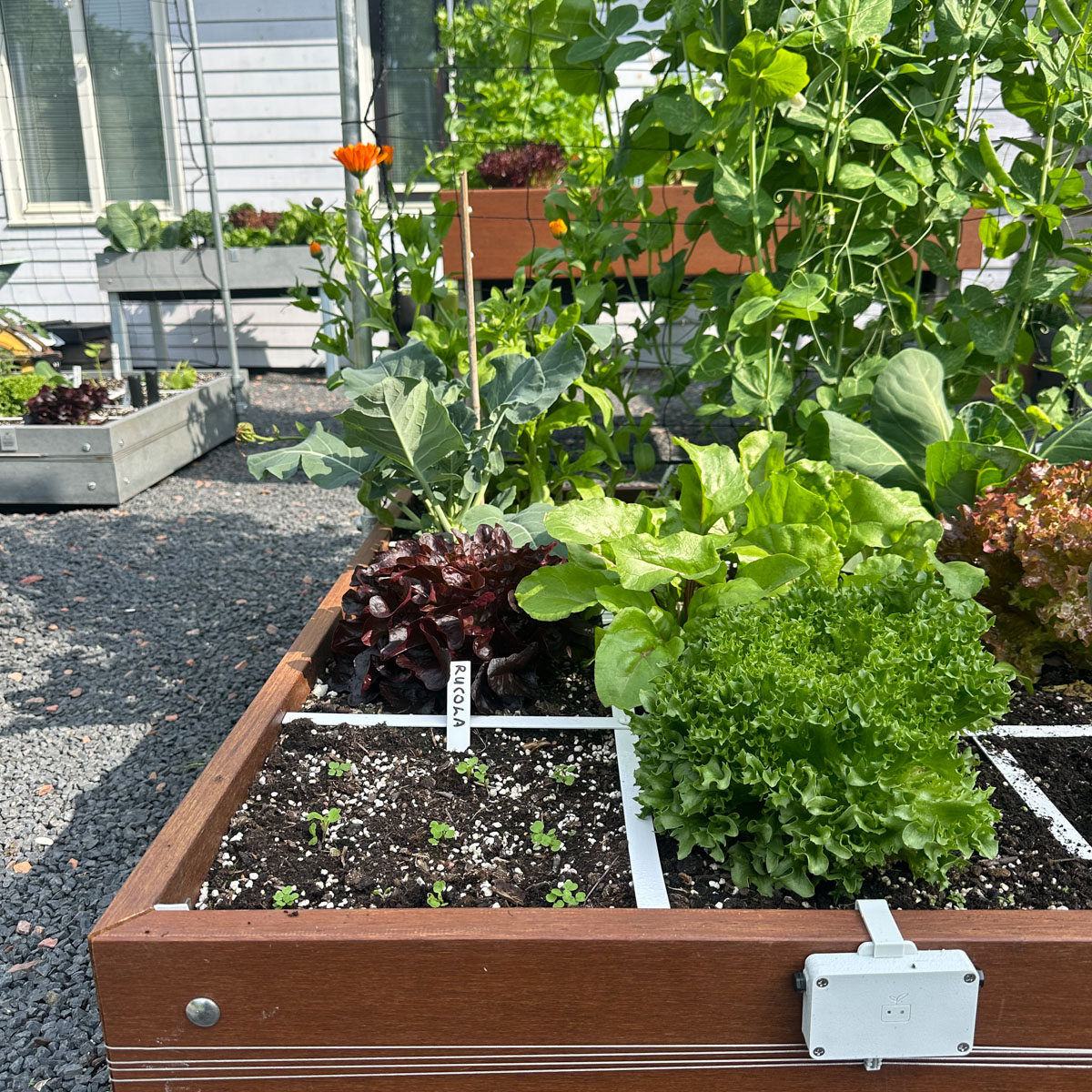
As your plants grow, keep an eye on whether larger ones are shading their smaller neighbours too much.
From time to time, trim back a few overhanging leaves, especially on large plants that stay in your raised bed for a long time. A healthy plant with plenty of leaves can cope with this just fine.
From time to time, trim back a few overhanging leaves, especially on large plants that stay in your raised bed for a long time. A healthy plant with plenty of leaves can cope with this just fine.
Harvest on time
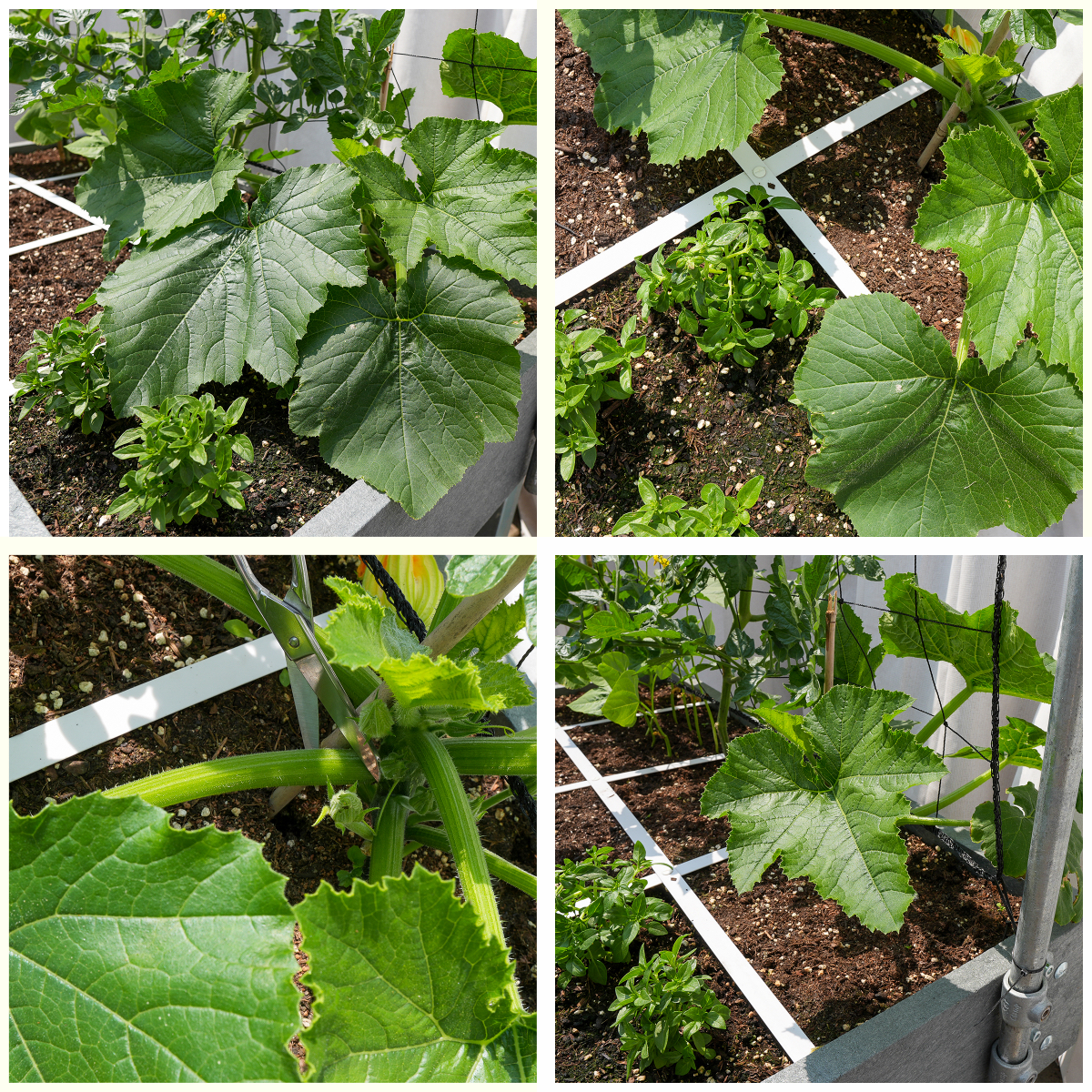
Harvesting on time is just as important. Take the mini-head lettuce in the photo below.
The front lettuce looks lovely, but it's so big that it shades the other heads. They've stayed smaller and are already starting to bolt. The one in the back corner has given up altogether:
The front lettuce looks lovely, but it's so big that it shades the other heads. They've stayed smaller and are already starting to bolt. The one in the back corner has given up altogether:
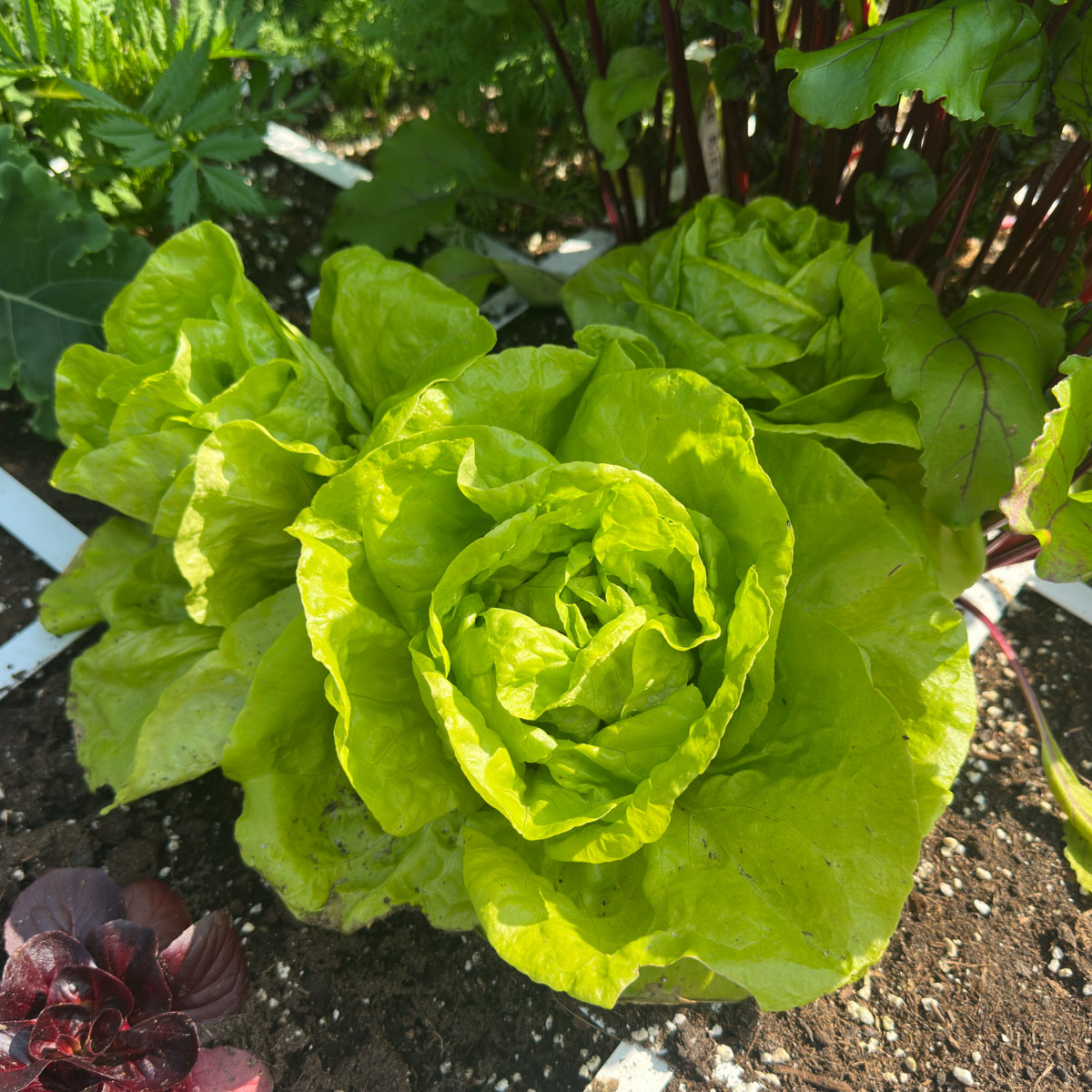
Harvesting on time isn't just good for neighbouring plants: younger vegetables taste better too. And you make room for the next round straight away. A win-win!
Can plants get too much sunlight?
Ja, maar alleen als het óók heel warm is (boven de 28°C), de lucht droog is en/of de planten te weinig water krijgen.
Vooral jonge zaailingen hebben het dan heel moeilijk, net als de groentes die je net in je bak hebt geplant. Ook bladgroentes zoals sla en spinazie kunnen daar minder goed tegen.
Om deze kwetsbare planten te beschermen moet je ook het bovenste laagje van de mix goed vochtig houden. Doe dat liefst in de vroege ochtend - aan de voet van de planten en niet op het blad - en óók bij gebruik van de waterreservoirs.
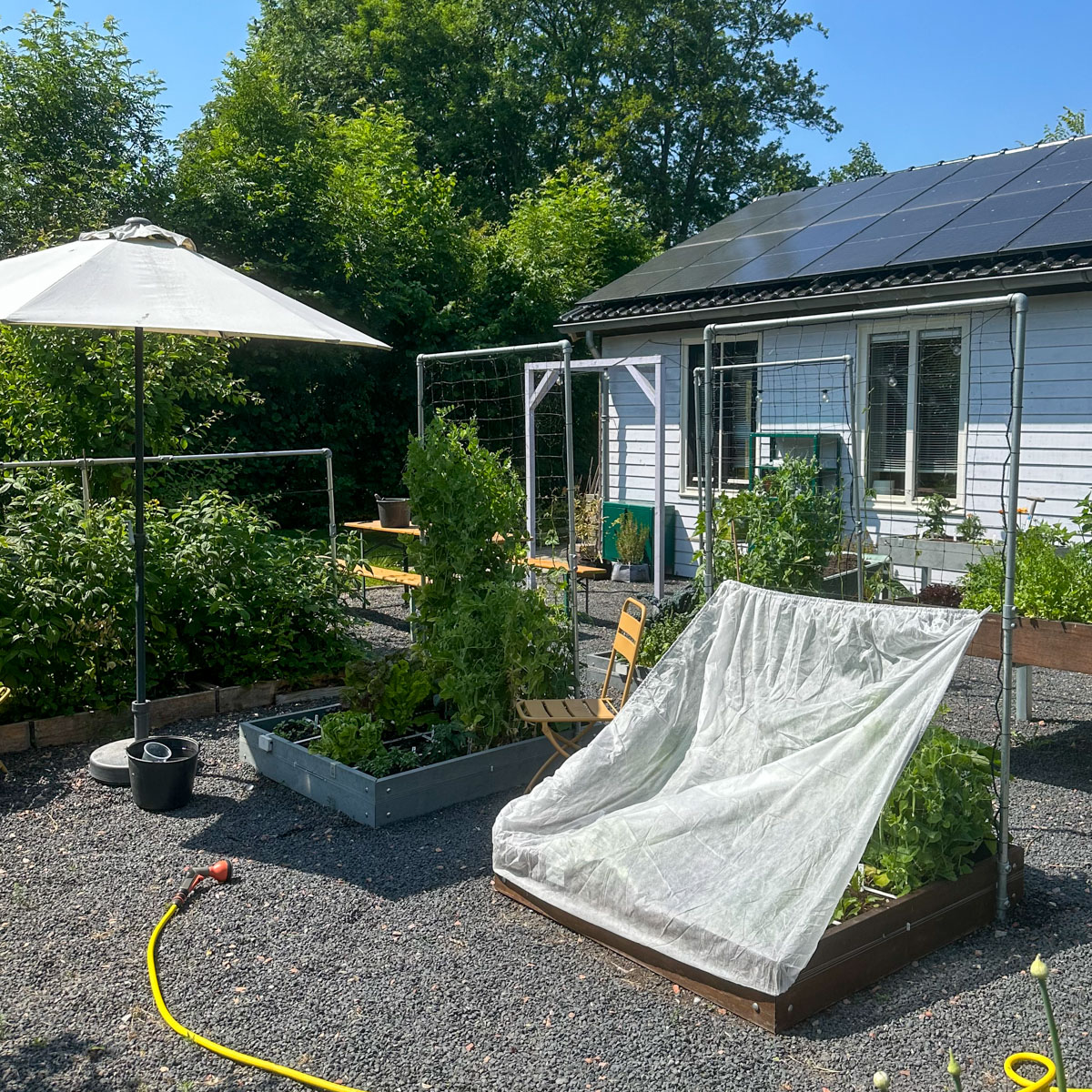
Daarnaast kun je ze rond het midden van de dag ook nog wat extra schaduw geven. Bijvoorbeeld met een parasol of een MM-muts. Zo'n muts is vooral handig bij zaailingen.
Voor alle andere planten is die volle zon niet zo'n probleem, zolang ze maar genoeg water krijgen. Maar dat spreekt voor zich, toch?
Vooral jonge zaailingen hebben het dan heel moeilijk, net als de groentes die je net in je bak hebt geplant. Ook bladgroentes zoals sla en spinazie kunnen daar minder goed tegen.
Om deze kwetsbare planten te beschermen moet je ook het bovenste laagje van de mix goed vochtig houden. Doe dat liefst in de vroege ochtend - aan de voet van de planten en niet op het blad - en óók bij gebruik van de waterreservoirs.
Daarnaast kun je ze rond het midden van de dag ook nog wat extra schaduw geven. Bijvoorbeeld met een parasol of een MM-muts. Zo'n muts is vooral handig bij zaailingen.
Voor alle andere planten is die volle zon niet zo'n probleem, zolang ze maar genoeg water krijgen. Maar dat spreekt voor zich, toch?
Sunlight and photosynthesis in brief
Your plants need sunlight or daylight to grow.
They use that light for photosynthesis, converting water and carbon dioxide from the air into sugars, which can also be stored as starch.
With enough light, they grow strong and healthy. With too little, they become weak and spindly. Without light, they die.