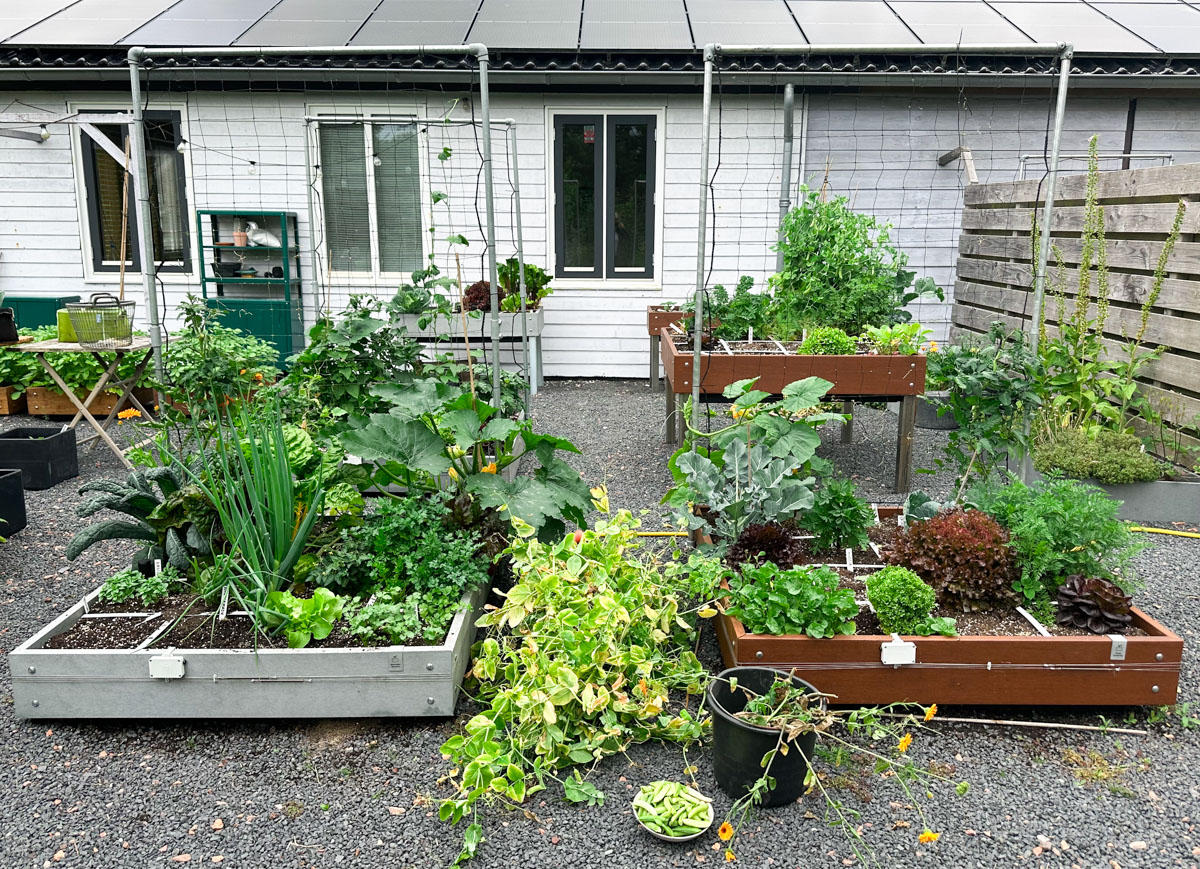
In a Makkelijke Moestuin, you sow vegetables in squares rather than rows, straight into the right place and at the right spacing. You also grow as many different vegetables as possible in each raised bed and rotate your crops as you go.
Today, I'll explain how to get the biggest possible harvest from your raised beds.
Why does the MM sowing system produce so much?
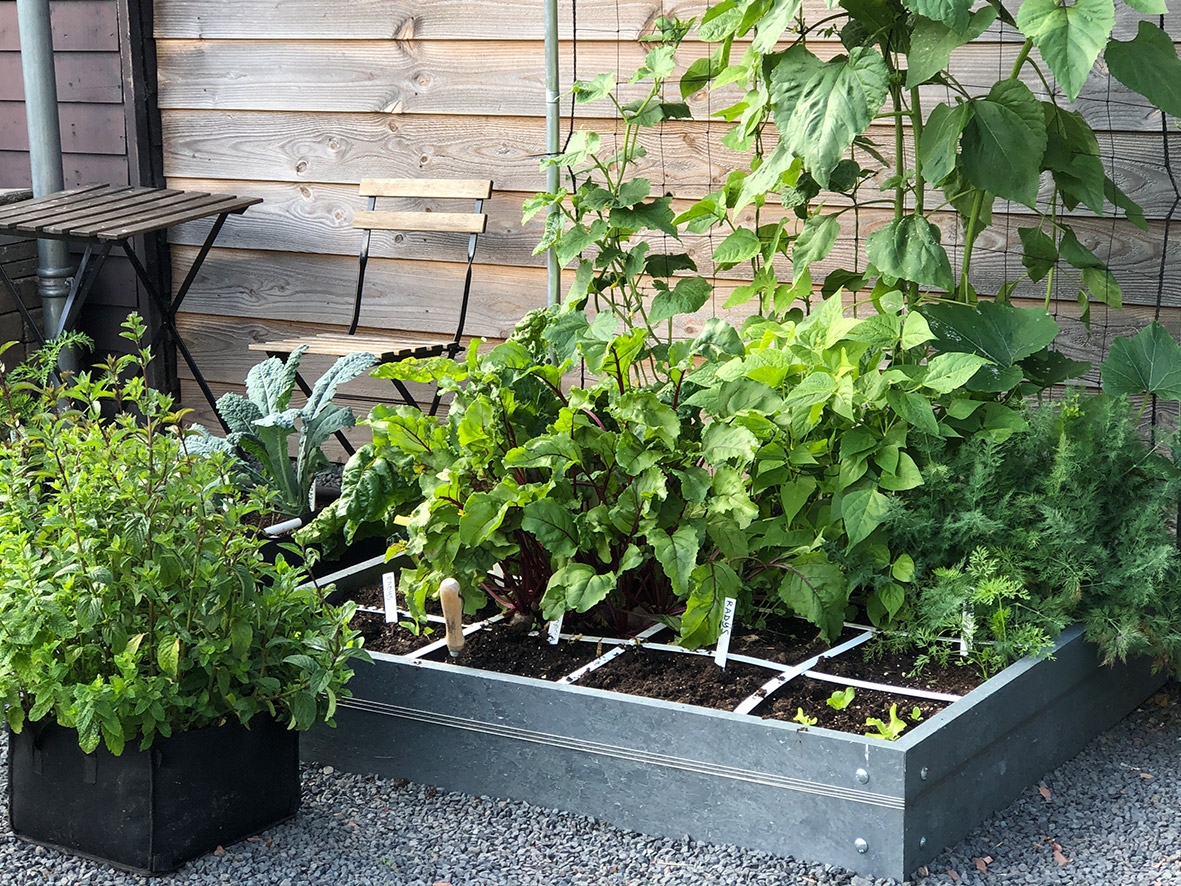
Our largest raised bed, with 16 squares, measures 120 x 120 cm. It doesn't take up much room, but you can still get a huge harvest from it. That's because you follow a system rather than just sowing at random.
You choose seeds and herbs that produce a lot, sow at the right time of year, take the height of each plant into account, grow a different vegetable in each square and give your plants exactly enough space.
Sounds tricky? Not at all: you'll soon get the hang of it. And if you use our MM app, you don't even need to think about it, because the app does that for you:
The MM app tells you exactly when, where and how to sow.
Still, it's useful to understand why we do this. So I'll take you through each point.
1. Vegetables that give you plenty to harvest
You can grow all sorts of vegetables and herbs in a raised bed. But if you want to harvest a lot, choose varieties that grow quickly and easily, take up as little space as possible and keep producing for as long as possible. And, of course, they should taste much better than supermarket vegetables.
Many of our vegetables look quite ordinary, but they're rather special.
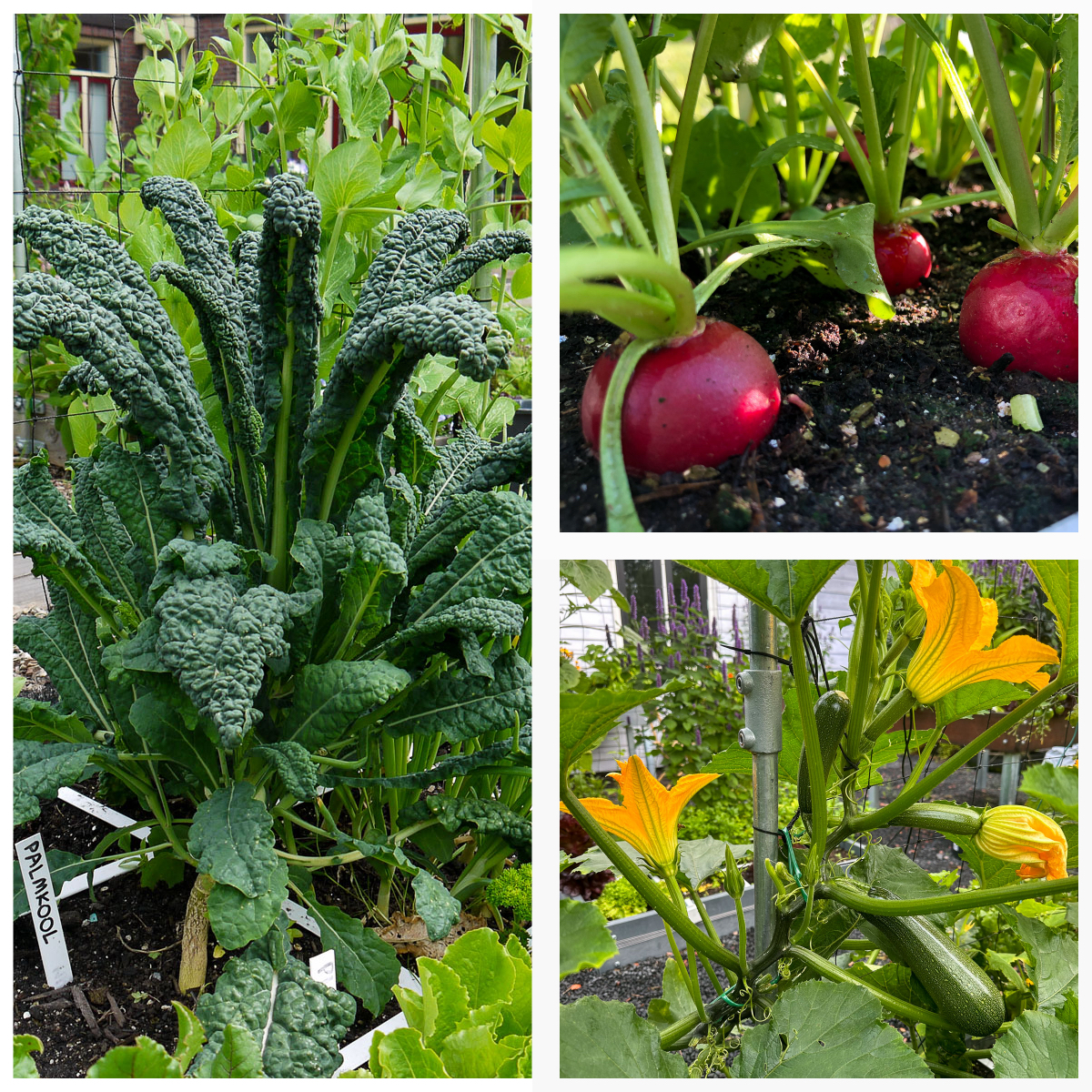
Our courgette grows upwards on a trellis, our radishes grow huge, and our Tuscan kale takes up just one 30 x 30 cm square. Most types of cabbage, by contrast, soon need a whole square metre.
Tuscan kale, giant radish and climbing courgette
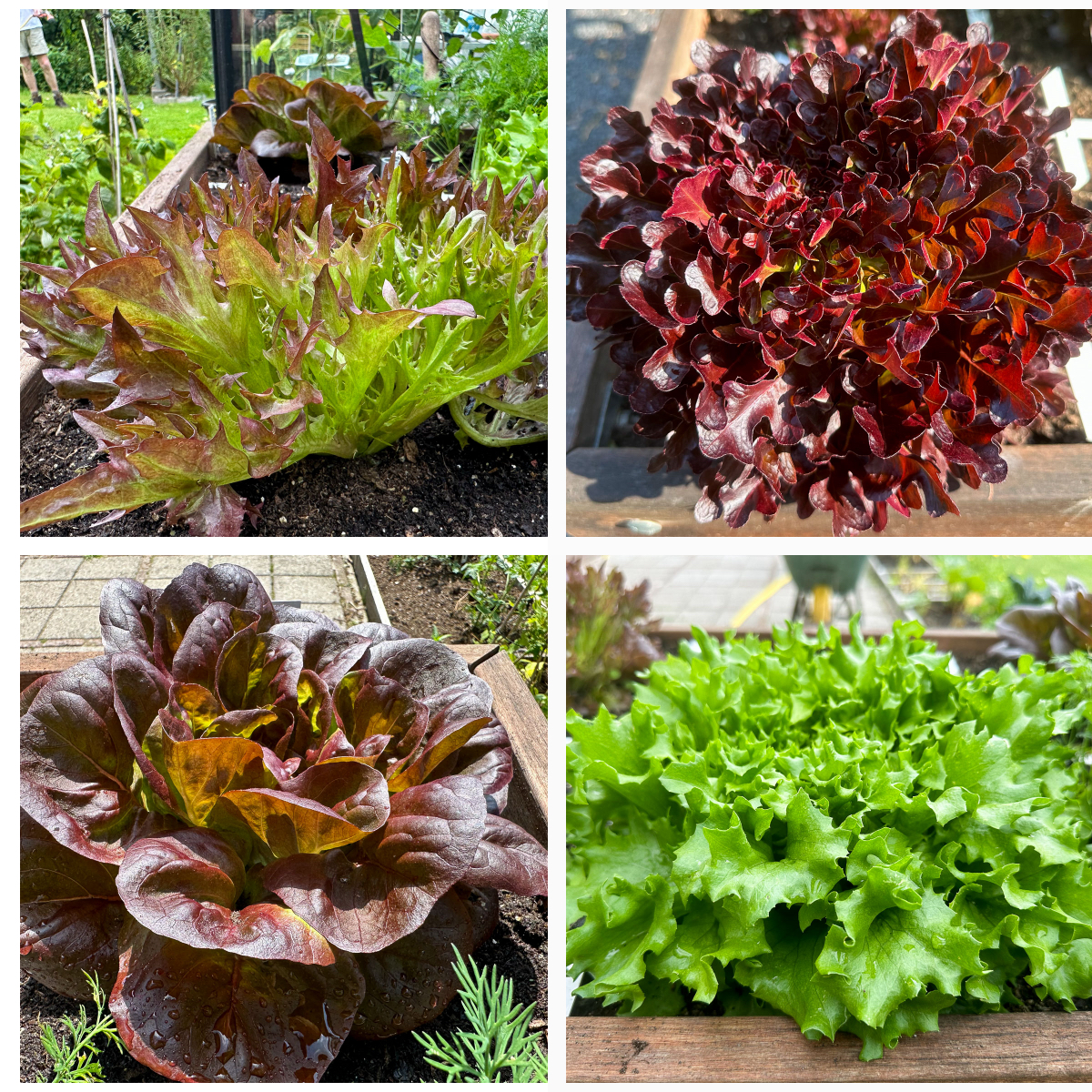
The same goes for lettuce. Take our cut-and-come-again lettuces: they fill the whole square, but you can harvest a huge number of leaves. The plants keep growing from the centre, so you can enjoy them for a long time.
Cut-and-come-again lettuce: Crispy, oakleaf, red butterhead and green Batavia
These are just a few examples, but the variety you choose really does make a difference.
That's why we're always looking for the best varieties. When we find one, it soon joins our shop and the app.
Some plants need warmth to grow well, while others don't cope with it so well.
If you sow in the middle of winter, nothing happens: it's too cold and dark. But some vegetables don't do well if you sow them in midsummer either, because it's too warm.
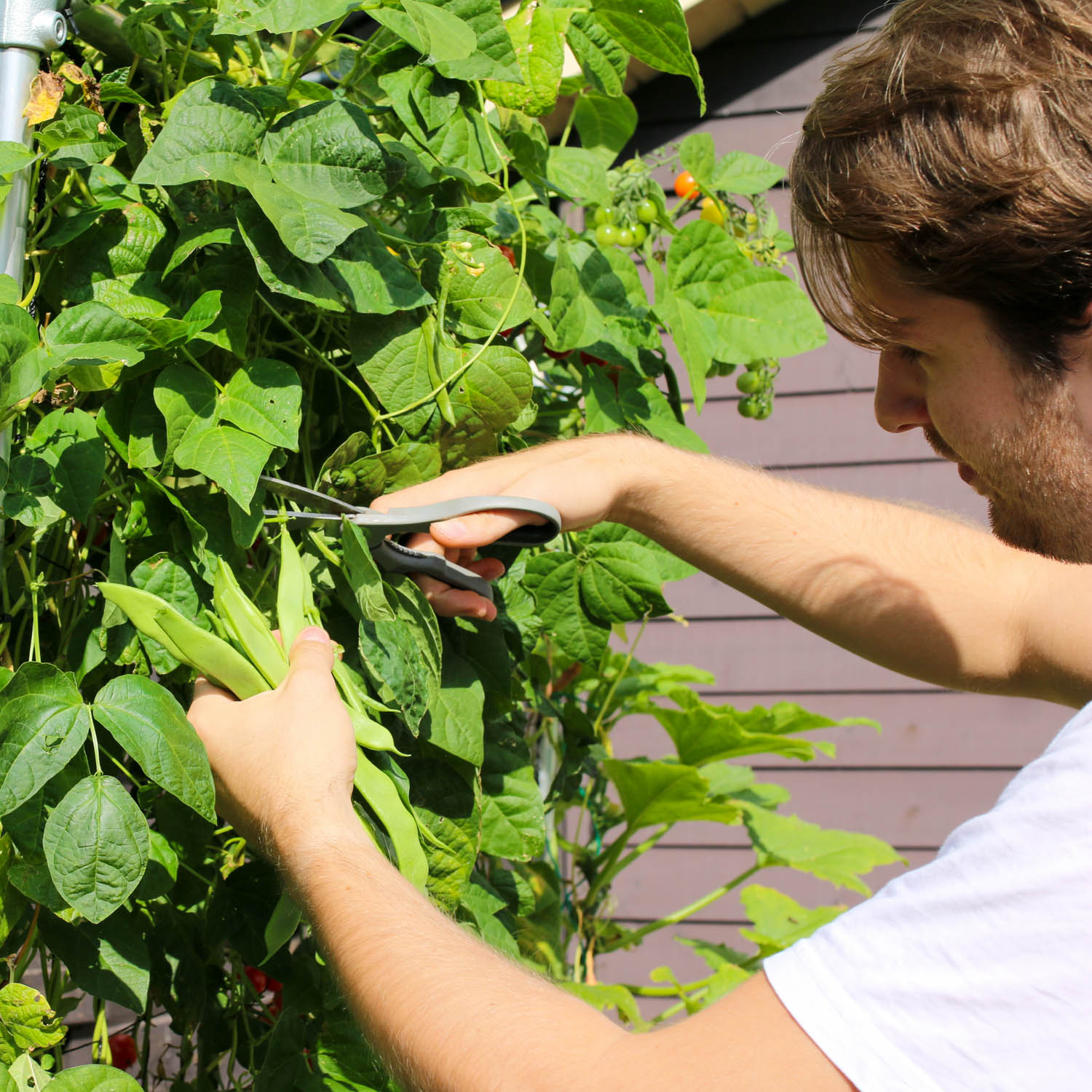
Beans like warmth. Sow them in May and June, and they'll grow well, giving you delicious beans to pick from July onwards:
Harvest Romano beans from July to September
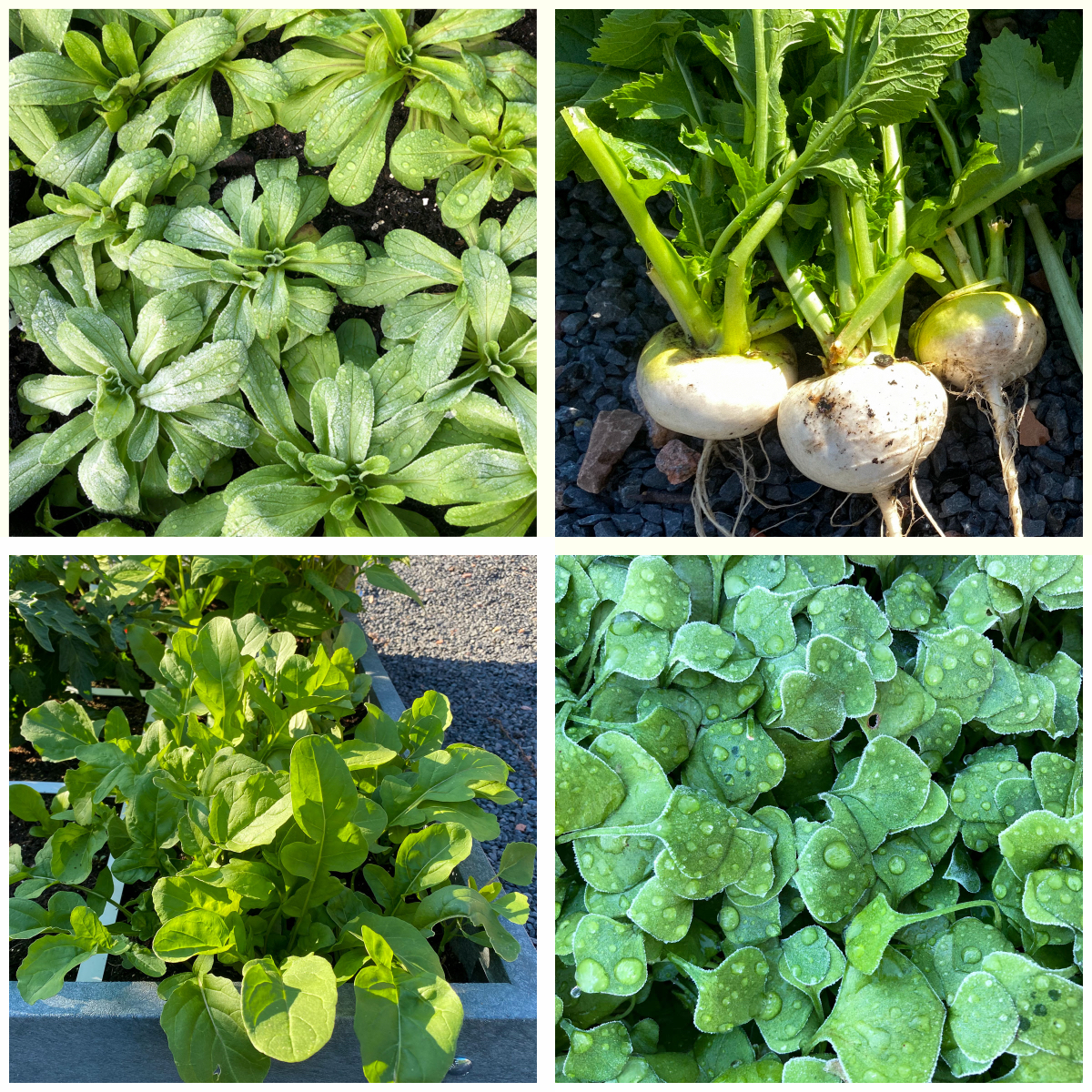
Lamb's lettuce and turnips prefer cooler weather and don't do as well in summer.
Rocket isn't fussy: you can sow it from early March to the end of September. Winter purslane, meanwhile, is ideal for sowing in autumn and harvesting throughout winter.
Lamb's lettuce, turnips, rocket and winter purslane
Summer vegetables such as tomatoes and cucumbers can't tolerate cold at all, and need plenty of warmth as young plants. That's why you start them indoors and don't put them outside until late May.
3. Plant height determines where it goes in the raised bed
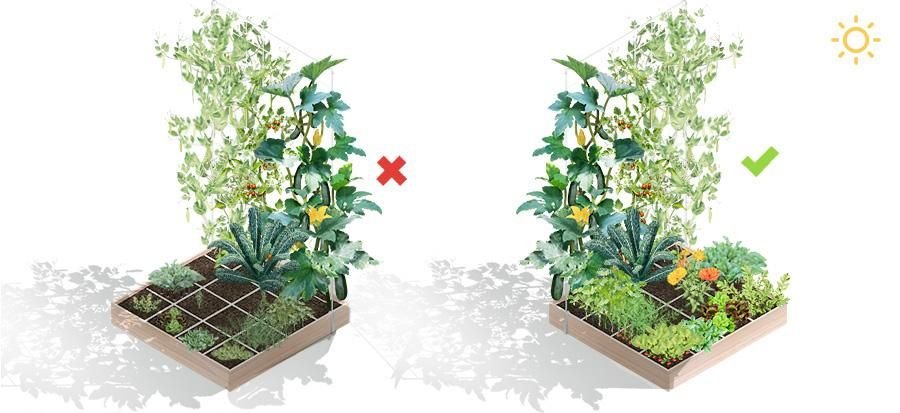
Plants need sunlight. If taller plants shade them, they won't grow well.
To prevent that, we always put the trellis on the north side of the raised bed, with the front facing south.
The trellis always goes on the north side of your raised bed
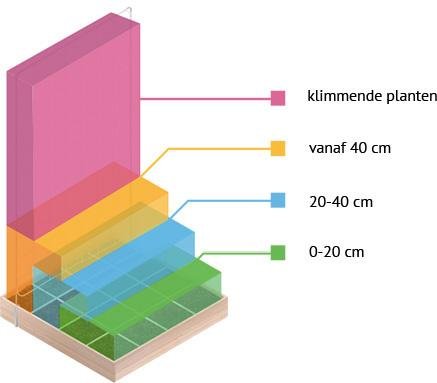
We then arrange the plants from shortest to tallest. The shortest go at the front, on the south side, and the tallest at the back.
The diagram below shows how this works in a 16-square raised bed, but the same principle applies to other sizes.
Short plants at the front, taller ones further back
Our seed packets show the maximum height of each plant.
If you use the app, choose the square you want to sow and it will show you which vegetables suit that spot best.
4. A different vegetable in each square
Growing a different vegetable in each square lets you grow plenty of different varieties in a small space.
It doesn't just look lovely: it also stops you sowing too much of one crop and having to harvest it all at once. This way, you naturally spread out your harvests.
Full raised beds with a different vegetable in each square
You'll also have fewer problems with diseases and pests. Pests tend to favour some plants and dislike others. Mixing everything together makes them less likely to strike.
Add plants that attract beneficial insects and you're doing even better, because those insects help too.
Liquorice mint attracts bees and hoverflies, and tastes lovely in tea too.
Plant groups and crop rotation
There's something else too. If you keep growing plants from the same family in the same patch of soil, they gradually do less well, become weaker and are more likely to suffer from diseases and pests.
People with conventional vegetable gardens make detailed plans to move their crops to different places over the years. That's called crop rotation.
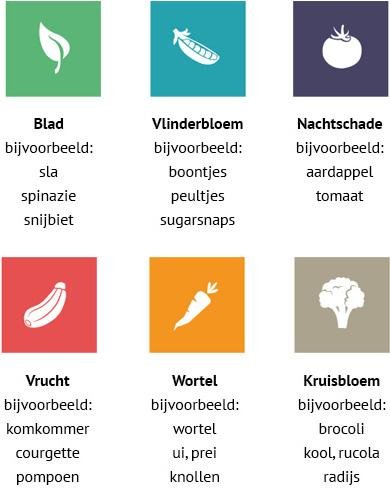
In the Makkelijke Moestuin, we do it differently. Each plant group has its own colour:
Each plant group has its own colour
A note about the picture: it's very old. Back then, we still misspelt broccoli and grouped chard with the leafy vegetables. Chard has since moved to the root vegetable group.
The top strip on each seed packet uses the same colours, so you can see at a glance which group the plants belong to.
Mix these groups as much as possible, and don't grow the same group twice in a row in the same square, and you're already practising a form of crop rotation.
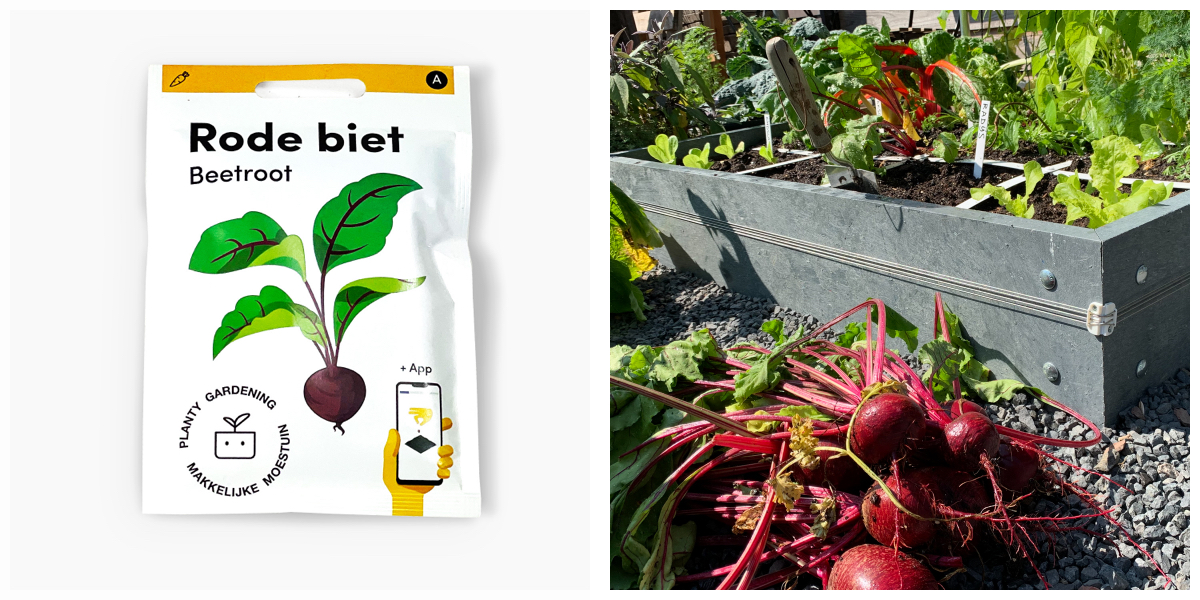
The app helps with this too. When you finish harvesting a square of beetroot, which belongs to the orange group, and want to sow again, the app suggests a vegetable from a different colour group. Lettuce, for example, belongs to the green group.
Beetroot belongs to the root vegetable group
This helps prevent most problems and keeps your plants growing well.
At the end of the year, or the start of the season, remove the grid and thoroughly mix the soil mix in your raised bed. Then you can start afresh in the new year.
5. Sow at the right spacing from the start
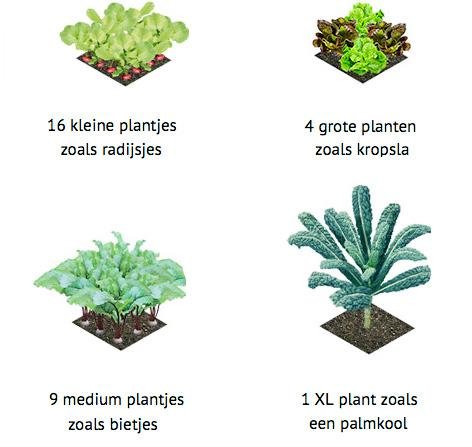
The 30 x 30 cm squares are just the right size for all our vegetables. Large plants need more room, so only one fits in a square, while smaller plants can share a square.
Almost all vegetables fit into one of four sizes: small, medium, large and XL:
Some varieties need more space than others.
If you sow or plant them at the right spacing from the start, they'll have enough room to grow. You'll also need to do little or no thinning or transplanting later. That saves work and seeds.
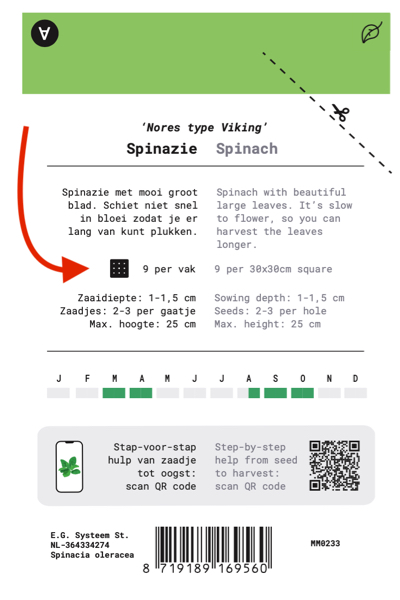
Each packet of Makkelijke Moestuin seeds has a small square showing how many plants fit in a square:
The app shows you all of this too.
6. Sow again as soon as a square is empty
As soon as you've finished harvesting a square, get it ready for the next round. That keeps your squares filled throughout the growing season and makes the best use of the space in your raised bed.
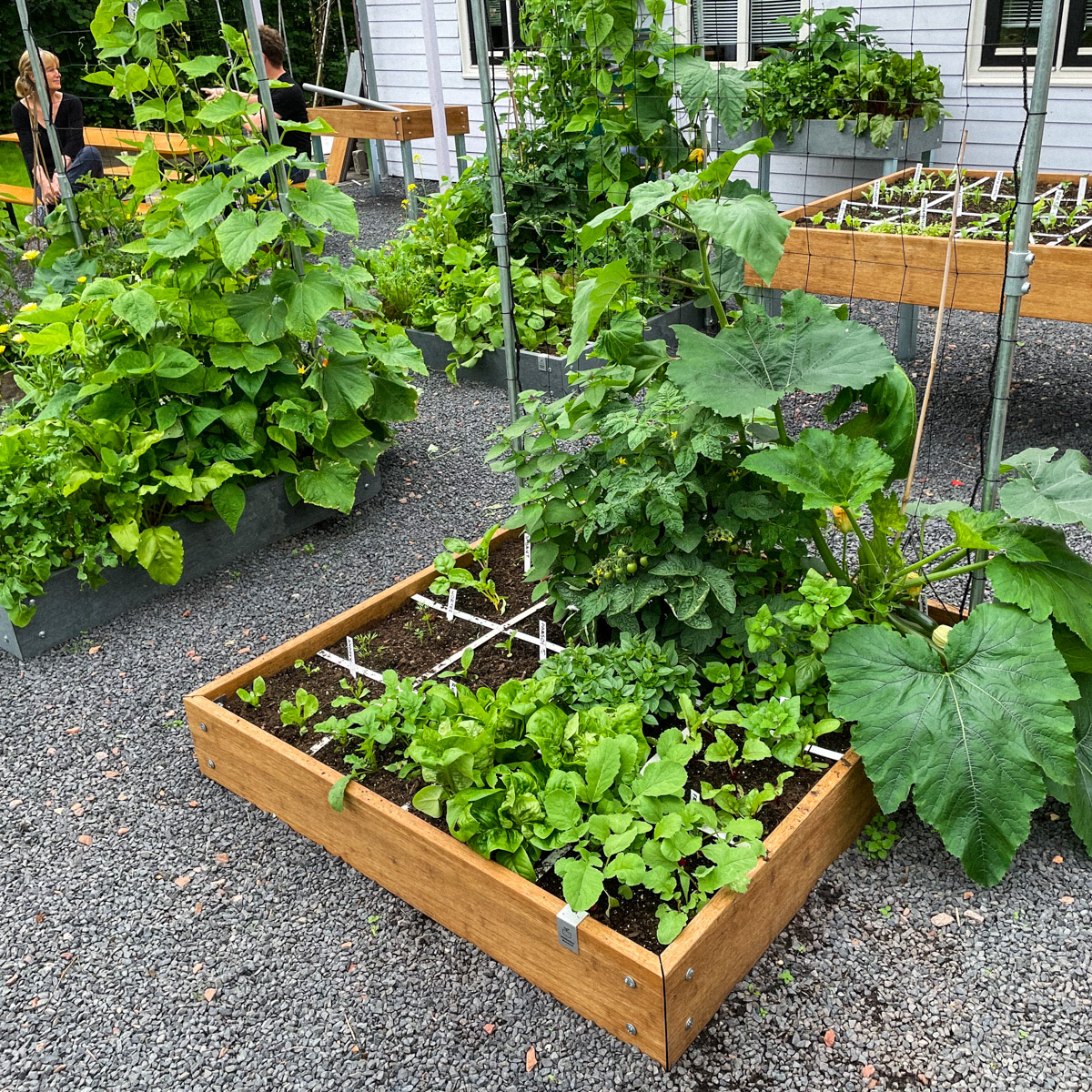
The photo below was taken in late June. We've just harvested the last sugar snaps and removed the plants. Many of the squares at the front already have their second crop growing:
Finished harvesting a square? Put something new in straight away.
If the weather cooperates, you can start sowing from 1 March and carry on until October.
That means some squares grow three or four different vegetables in a year. No wonder the harvest is so generous.
That's all for today
Now you know how our sowing system works and why we harvest so much from our raised beds.
At the time, I said I'd leave the practical details of sowing for later. That explanation is now in the knowledge base: