Why a Makkelijke Moestuin is such a good thing: it helps prevent and clear up loads of rubbish, while giving children something wonderful.
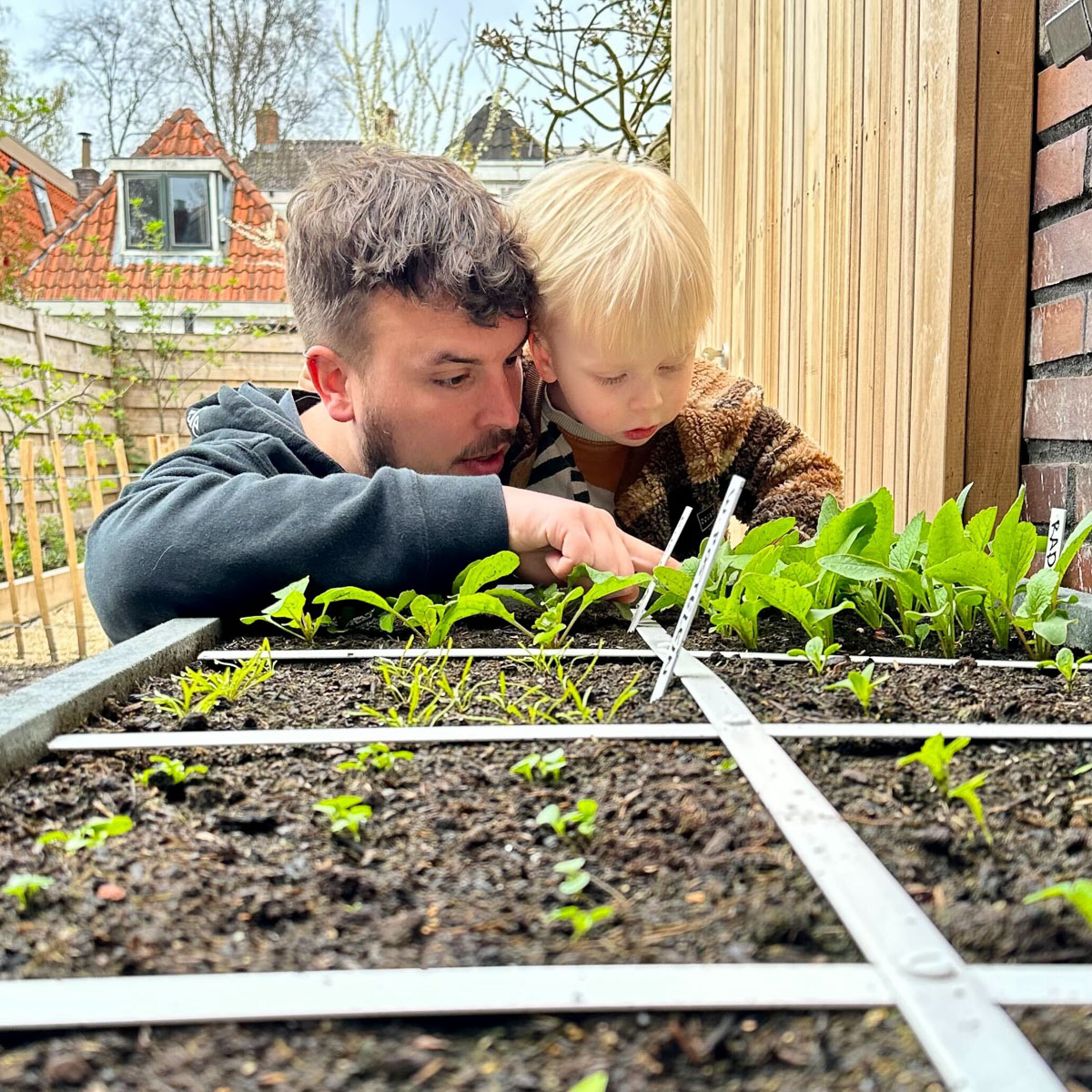
Jelmer and Abel next to a MM-Hero table planter.
Look: Jelmer and his son by an MM-Hero table planter. This raised bed is made from recycled plastic and stainless steel, making it so strong that it will still be there when Abel grows up.
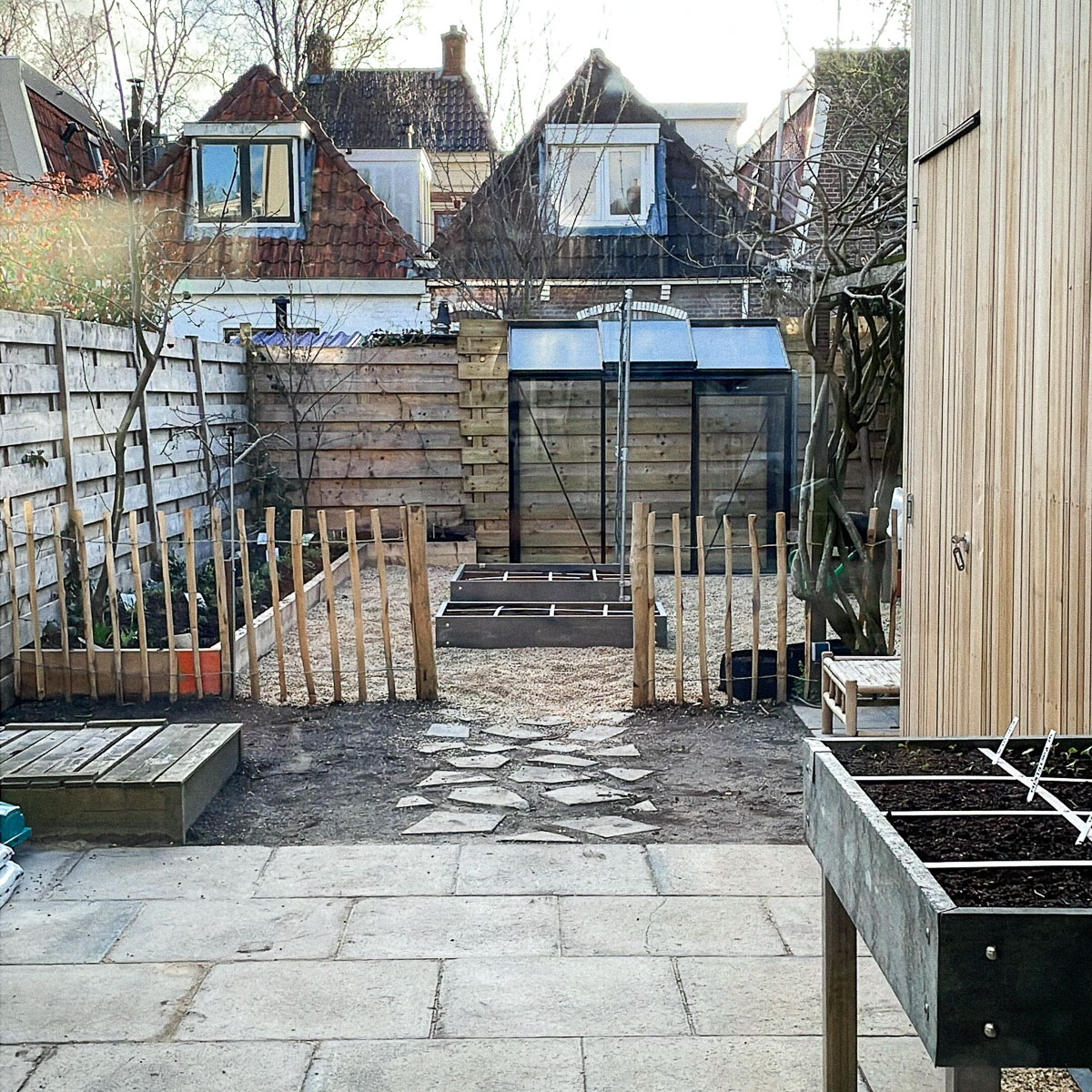
There are several more raised beds like it in Jelmer's garden. This photo was taken three weeks earlier, just after they had been installed, when they were still almost bare:
Jelmer's newly created garden
Hmm, plastic in the vegetable garden: is that a good idea?
I often get asked whether the plastic could harm your plants. Can anything rub off or leach strange substances into the water or MM-mix? That sort of thing. Plastic already causes enough problems, so why use even more?
I understand the concern. A vegetable garden makes you think of nature, and plastic doesn't immediately seem to belong there. After all, you grow your own crops to harvest healthy vegetables, full of valuable vitamins and minerals and without all the rubbish and nasty substances you hear so much about:
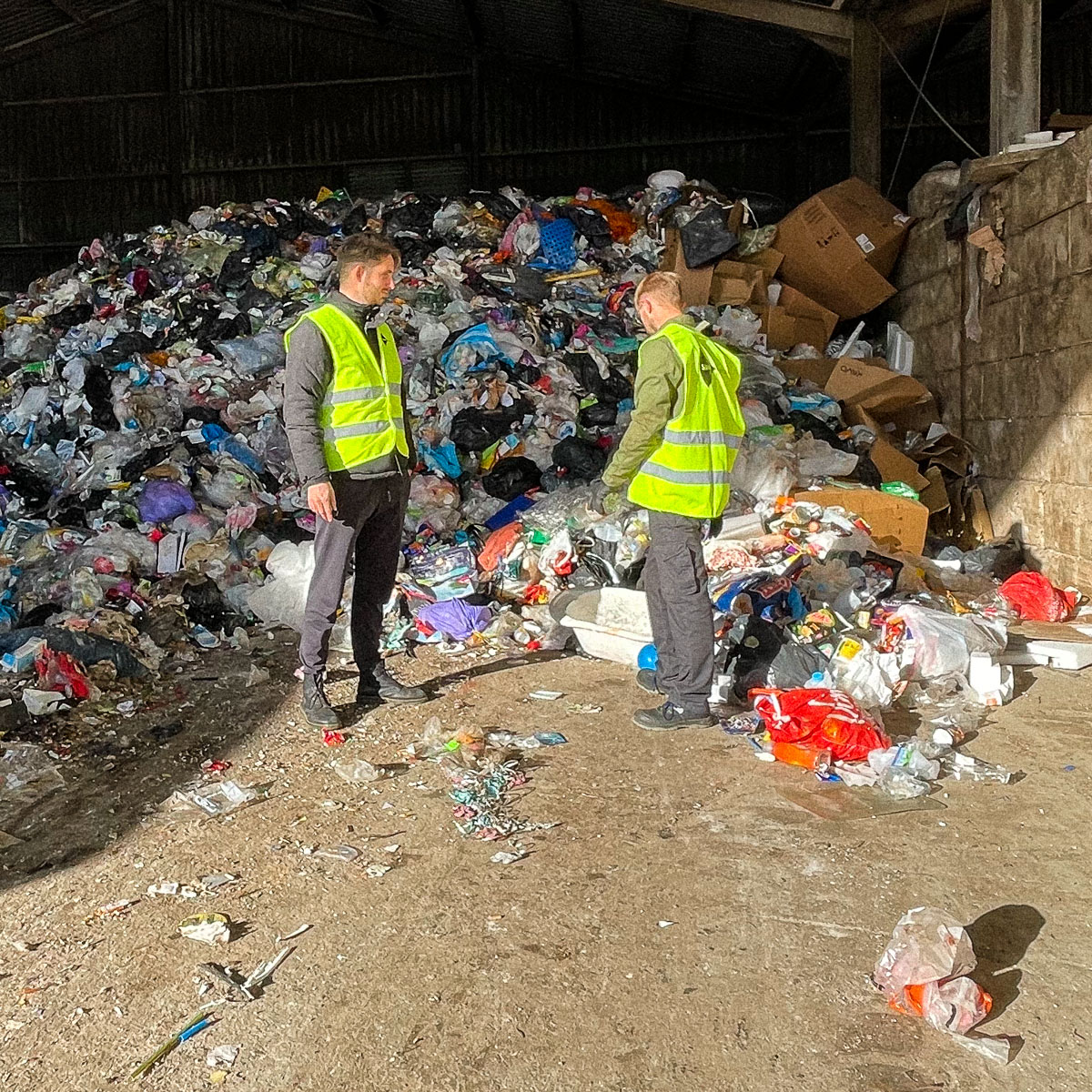
This kind of plastic does not make you happy
But did you know it's the other way round with our raised beds?
Take the MM-Hero raised beds. They help us clear up mountains of nasty plastic that would otherwise end up in incinerators, while the material used for the boards is also extremely safe.
I'm not just saying that: it has been proven by an independent organisation that carries out this kind of research.
So Arjen can safely eat the plants he's inspecting here:
Arjen inspects the plants
Want to know more about the MM-Hero raised beds?
On this page, I explain:
what they're made from
how much plastic rubbish we keep out of nature
how they differ from other recycled-plastic products
whether they release anything into your garden or vegetables
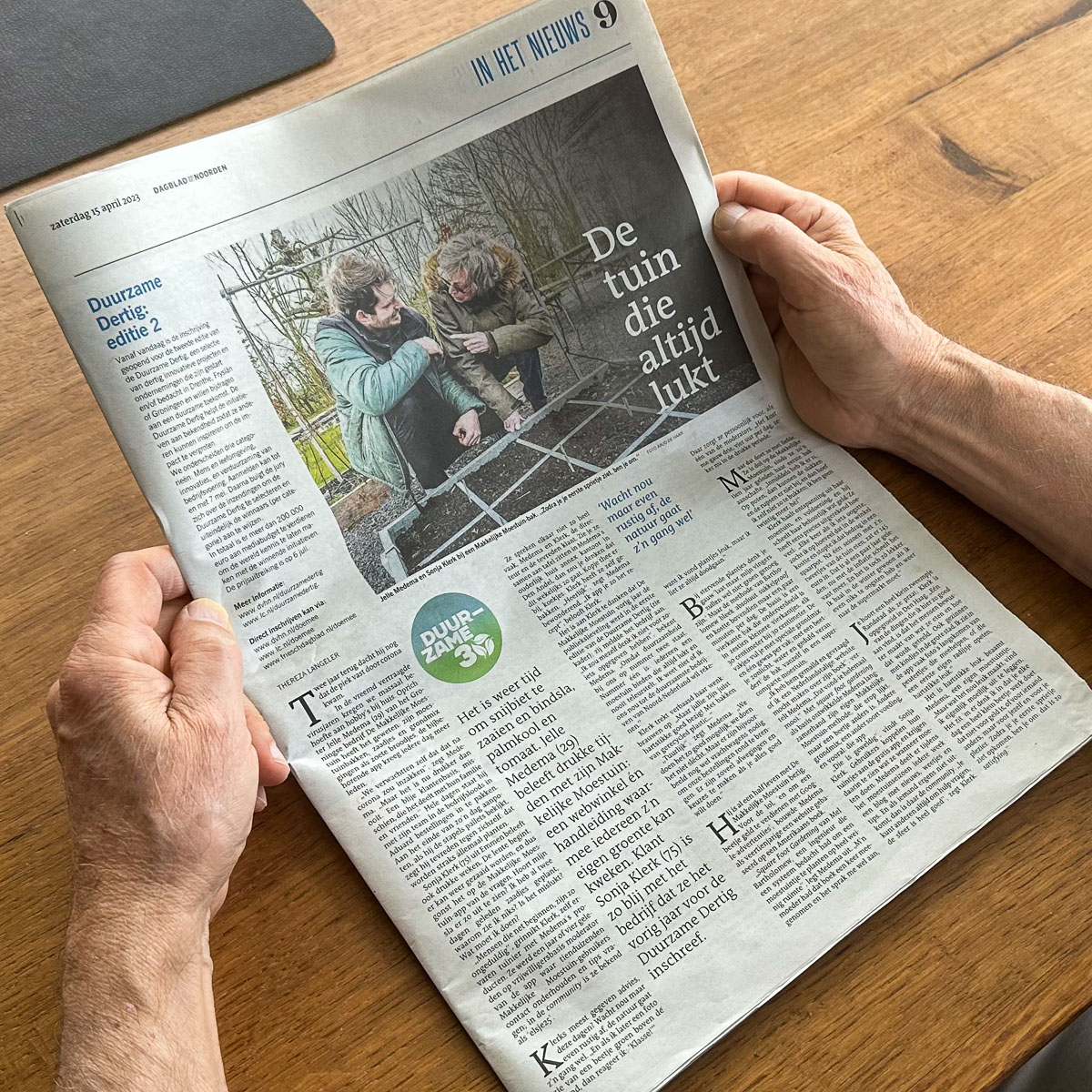
Remember this? Last year, Elsje25 nominated us for the Duurzame30 awards.
Because we received by far the most votes, we won the public choice award: a major article in the newspapers of the northern Netherlands. In March, a journalist came to interview Elsje and me, and the article appeared in the newspaper that weekend.
So thank you, Elsje, for nominating us, and thank you for voting 😀
My father with the Dagblad van het Noorden newspaper
As MM gardeners, we're doing a great job
Staying with sustainability for a moment: whether or not you have an MM-Hero or one of our other raised beds, having a vegetable garden already makes a positive difference.
When you grow some of your vegetables in your own garden, you naturally reduce waste and emissions. And because tens of thousands of others now do the same with us, it adds up to a significant difference.
So if you ask whether we're sustainable, I'd say yes. But that isn't our top priority.
What does come first is helping you grow your own vegetables successfully and as easily as possible, preferably with products that last a long time so they don't end up as rubbish after only a year.
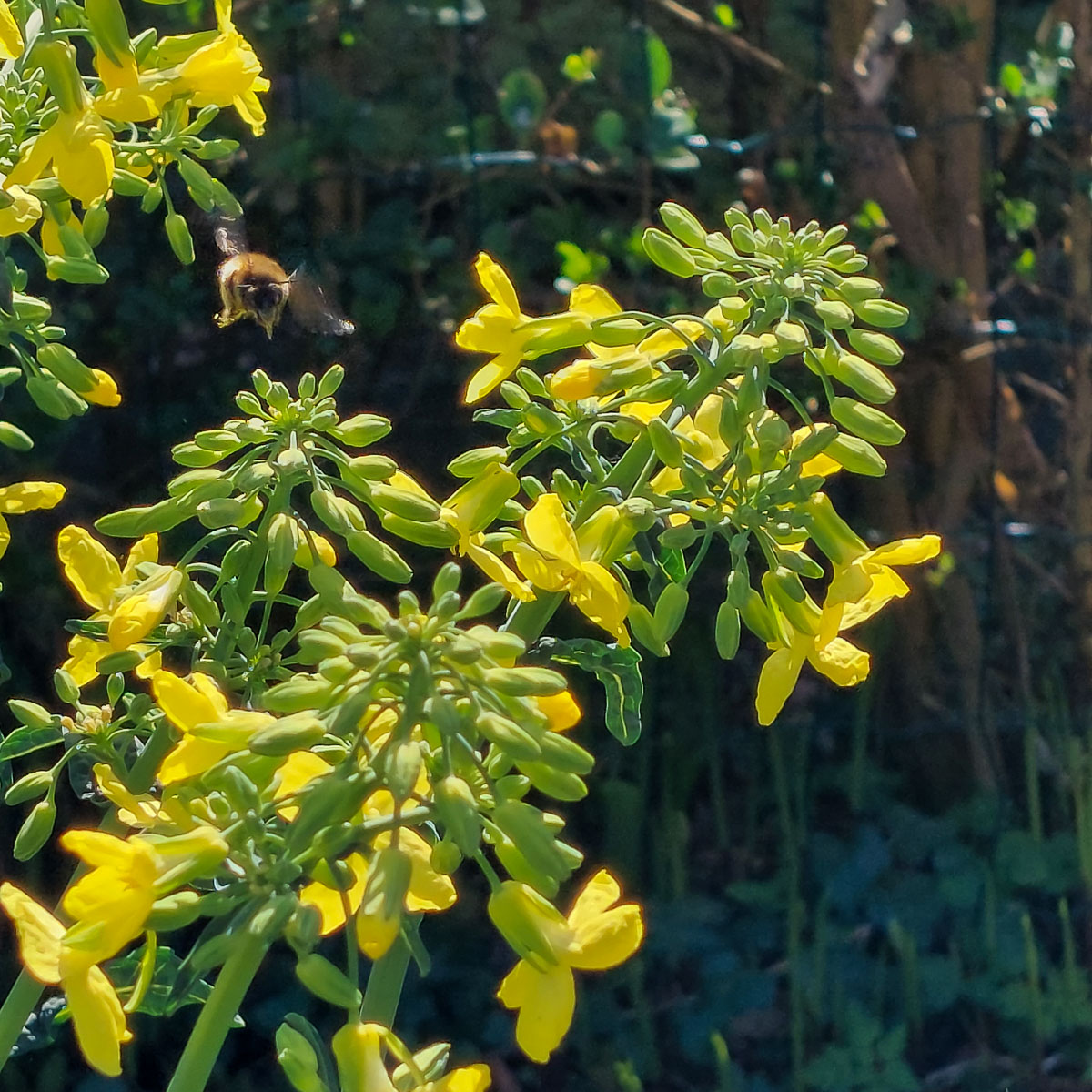
The more people who start vegetable gardening, the better it is for the environment. Just think of all the bees and bumblebees that find a safe home in those gardens. That's especially important today.
Flowering palm cabbage: early spring food for honeybees (photo: EllenL)
But to get all that done, we also have to do things that are still a little less sustainable.
For example, our packages are still delivered by diesel trucks, the mix is packed in (recycled) plastic bags, and we use quite a lot of energy in our warehouse.
So we keep looking for even better solutions. As long as it is not at the expense of the best result.
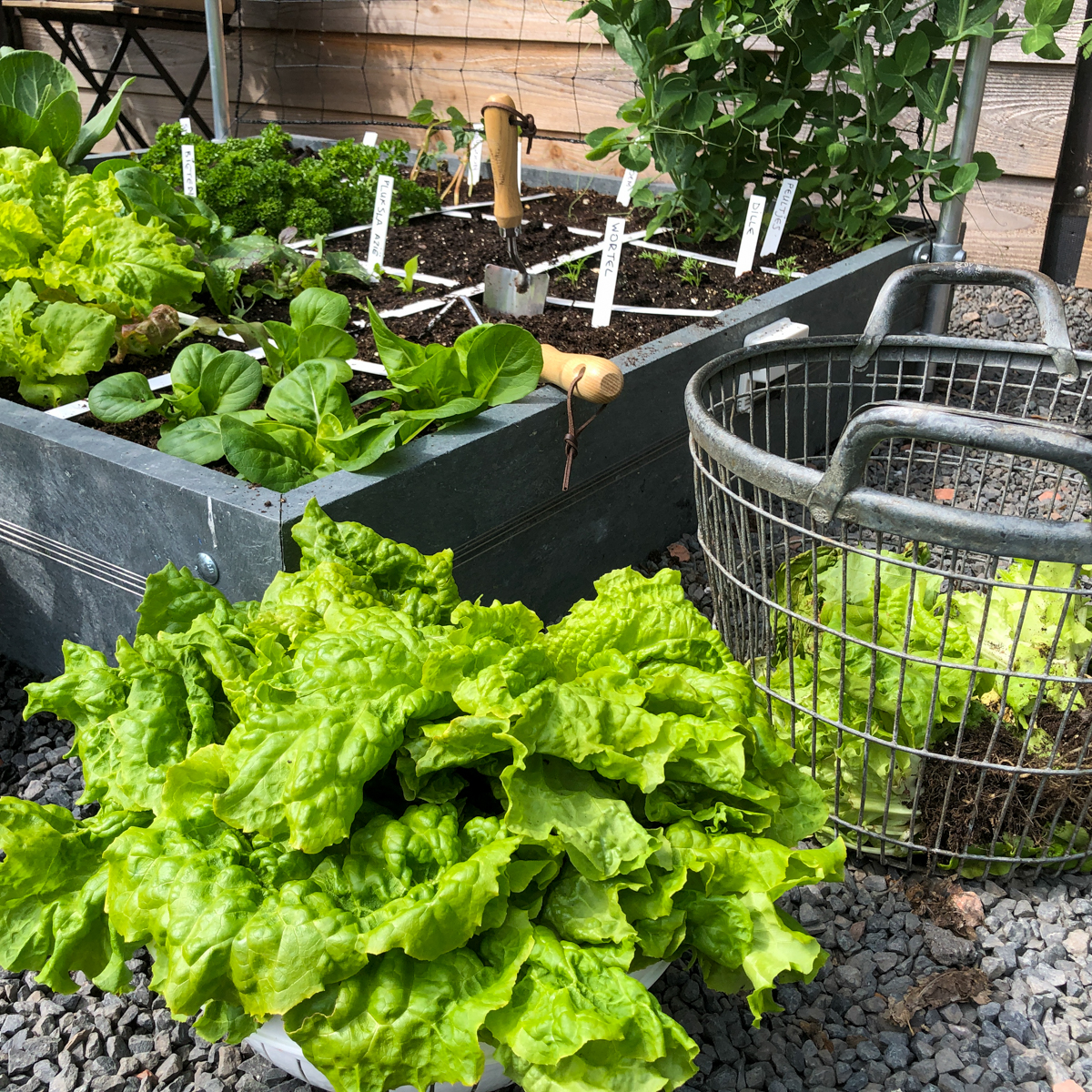
Harvesting a lot: that's what it's all about
And what about the children?
Well, sustainable vegetable gardening and children go hand in hand.
If we do our best to leave the world a little cleaner, they'll have a better future. And they'll get plenty of healthy vitamins while growing up.
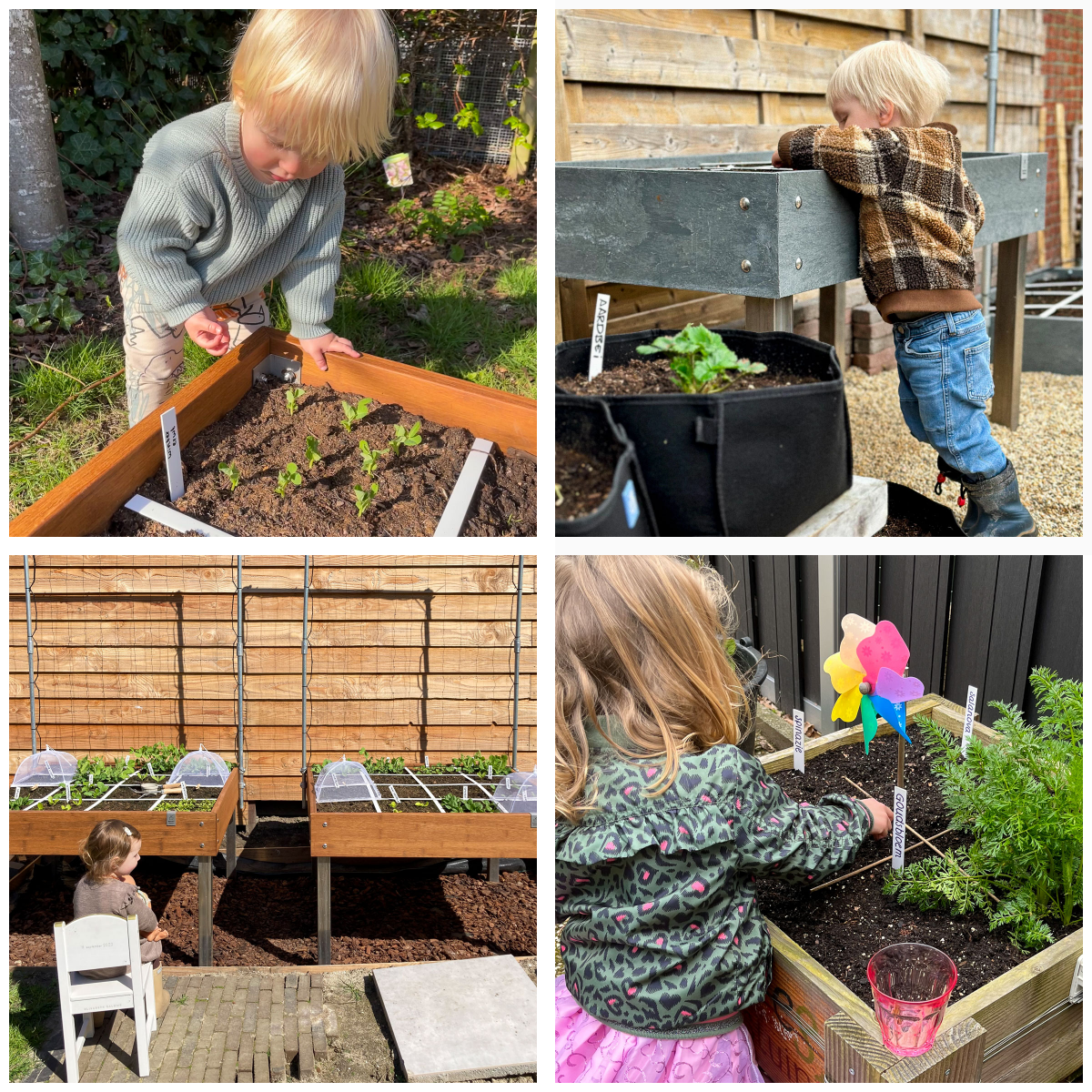
Besides, children love all those little plants:
Super exciting: those little plants
Just look at Evanna's son, who wants to do everything himself; Abel, who inspects the raised beds every day; Myrthee's daughter, who wants to water the plants every day; and Au3's daughter, who sows her own spinach.
Finally nice weather?
So. I think I've told everything I wanted to.
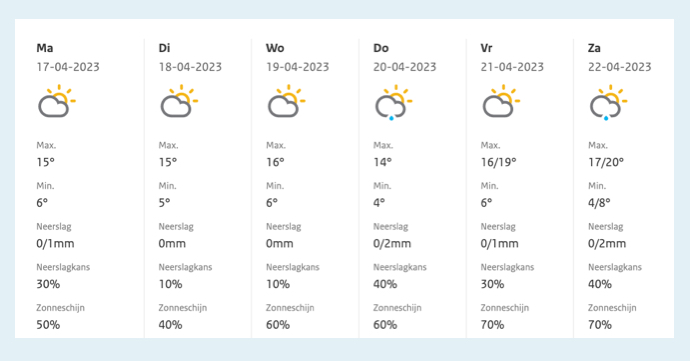
On to the coming week. According to KNMI, it will be quite nice spring weather. No objection to that, right?
Source: KNMI
The temperature will rise so the plants will grow faster. Who knows, maybe next weekend I'll be able to harvest the first leaves 🙂